Categories
Website

Essential User Experience Tips for Builders’ Websites

More than half of clients in New Zealand and Australian markets admit they will quickly leave a website that feels confusing or slow. For small and medium construction firms, a user-friendly site is a must if you want clients to stay engaged and request quotes. This guide shows how smart usability upgrades transform your online presence into a space that attracts more leads and keeps your business on top.

Table of Contents

Quick Summary

Key InsightExplanation
1. Conduct a Usability AssessmentReview navigation, information accessibility, and user flow to enhance user experience on your website.
2. Define Client-Focused Content GoalsCreate content that addresses the specific needs of your target audience in the construction industry.
3. Implement Mobile-Responsive DesignEnsure your website adapts well across different devices, improving accessibility for all users.
4. Optimise Navigation and Call-to-ActionsDesign clear, compelling call-to-actions and intuitive navigation to boost engagement and conversions.
5. Test User Interactions RegularlyGather real-user feedback and analyse behaviour patterns to identify usability issues and improve the site experience.

Step 1: Assess Current Website Usability

Understanding your builders’ website usability is a critical first step in creating an engaging online experience for potential clients. Your website serves as a digital storefront that either attracts or repels potential customers within seconds of their arrival.

To conduct a comprehensive usability assessment, start by reviewing how website interfaces impact user interaction and satisfaction. This involves systematically examining key elements like navigation clarity, information accessibility, and overall user flow. Imagine yourself as a potential client landing on your website for the first time. Ask critical questions like: Can visitors quickly find contact information? Are service descriptions clear and concise? Does the site load quickly across different devices?

Net Branding recommends employing both qualitative and quantitative evaluation methods. Use web analytics tools to track user behaviour metrics such as bounce rate, time on page, and click paths. Conduct user testing by asking colleagues, friends, or even a small group of target clients to navigate your site and provide honest feedback. Pay attention to their verbal and non verbal reactions as they interact with your digital platform.

Practical Insight Invest 15 minutes performing a mobile usability check by viewing your website on different smartphones and tablets to ensure responsive design and seamless functionality.

Here is a summary of essential usability evaluation methods for builders’ websites:

MethodDescriptionKey Benefit
Web AnalyticsAnalyse user metrics like bounce rate, session length, and user flowsQuantifies visitor behaviour
User TestingObserve real users navigating the website, collect feedbackReveals usability pain points
Device AssessmentReview site on varied devices for responsivenessEnsures broad accessibility
Feedback SurveysGather opinions directly from usersIdentifies perceived issues

Step 2: Define Client-Focused Goals and Content

Defining clear client-focused goals transforms your builders’ website from a simple online brochure into a powerful marketing tool that attracts and converts potential customers. Your content strategy must directly address the specific needs and pain points of your target audience.

Woman planning website content on dining table

To create an effective content strategy, develop website goals using a structured editorial approach that aligns with your business mission. Begin by identifying your primary target clients specific to the construction industry. Are they homeowners seeking renovation services? Commercial property developers? Residential builders looking for specialised contractors? Understanding your audience allows you to craft messaging that speaks directly to their requirements.

Net Branding recommends developing SMART goals specific to your website content. Each piece of content should serve a strategic purpose whether that is showcasing your portfolio, explaining complex construction processes, or building trust through transparent communication about your services. Track metrics like page views, engagement time, and inquiry conversions to continually refine your content strategy and ensure you are meeting both client expectations and business objectives.

Smart Strategy Create a content calendar mapping out specific topics that address common client questions and showcase your expertise in the construction industry.

Step 3: Implement Mobile-Responsive Design Standards

Mobile-responsive design is no longer optional for builders’ websites it is an absolute necessity in today’s digital landscape. Your website must adapt seamlessly across smartphones, tablets, and desktop computers to ensure potential clients can access your information effortlessly.

Modern responsive web design standards require implementing flexible grid systems, optimised typography, and touch-friendly interfaces that create a consistent user experience. Net Branding recommends using CSS Grid and Flexbox techniques to build layouts that automatically adjust to different screen sizes. This means your project galleries, service descriptions, and contact forms will look professional whether viewed on a small mobile screen or a large desktop monitor.

Prioritise performance and accessibility when designing your responsive website. Compress images to reduce loading times, use legible font sizes that scale appropriately, and ensure all interactive elements like buttons and form fields are large enough for comfortable mobile touch interaction. Remember that Google prioritises mobile-friendly websites in search rankings, making responsive design crucial for your online visibility and potential client acquisition.

Smart Strategy Test your website on at least five different devices and screen sizes to guarantee a truly responsive design experience.

The following table compares mobile-responsive and traditional web design for builders:

AspectMobile-Responsive DesignTraditional (Non-Responsive)
Device AdaptabilityAdapts to all screensFixed, desktop-only layouts
User AccessibilityEasy to navigate on mobilesDifficult on small screens
Google RankingsFavoured in search resultsLower search visibility
Loading SpeedOptimised images & fontsMay cause slow load times

Step 4: Optimise Navigation and Call-to-Actions

Navigating a builders’ website should feel intuitive and effortless for potential clients seeking construction services. Your website’s navigation structure and call-to-actions are critical elements that can dramatically influence user engagement and conversion rates.
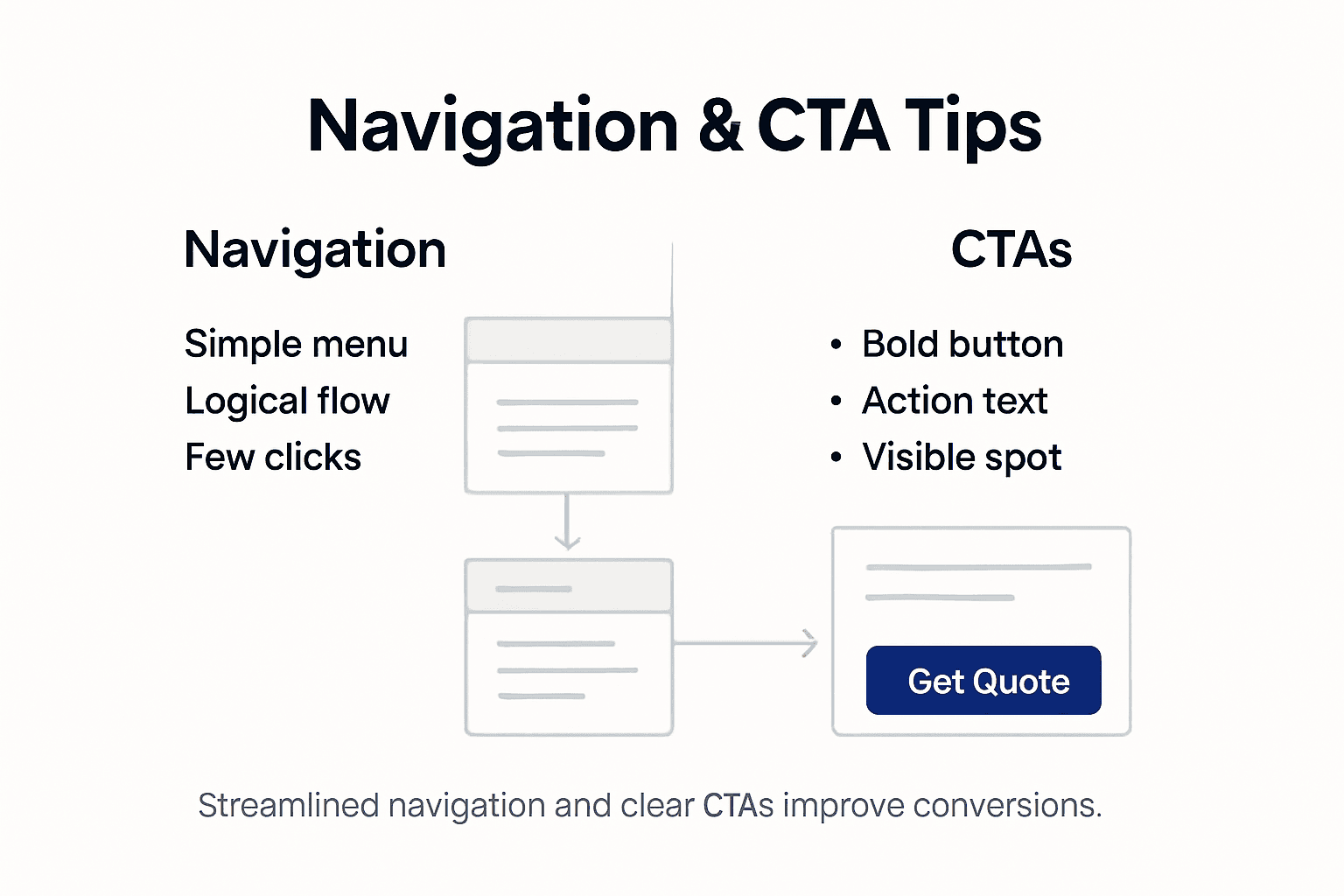
Infographic for website navigation and CTA tips

Professional website design strategies emphasise creating clear and psychologically compelling call-to-actions that guide visitors through their decision-making journey. Net Branding recommends designing CTAs that are visually prominent with concise action-oriented language like ‘Get Your Free Quote’ or ‘Start Your Project Today’. These buttons should stand out through contrasting colours strategic placement and compelling wording that speaks directly to your target audience’s needs.

Ensure your website navigation is logical and streamlined with main menu items that reflect your key services. Place primary call-to-action buttons in prominent locations such as the header menu top of project galleries and at the conclusion of service description pages. Each CTA should communicate a specific value proposition that addresses potential client concerns like project timelines budget considerations or unique service offerings. By creating an intuitive user journey you increase the likelihood of transforming website visitors into actual construction project leads.

Smart Strategy Conduct regular A B testing on your call-to-action button designs to continuously improve user engagement and conversion rates.

Step 5: Test Real-World User Interactions

Testing real-world user interactions is crucial for understanding how potential clients actually engage with your builders’ website. Your goal is to uncover genuine user behaviour patterns that might not be immediately apparent during initial design stages.

Log analysis techniques provide a cost-effective method for examining subtle user interactions in controlled and real-world scenarios. Net Branding recommends implementing both moderated and unmoderated usability testing strategies. This means conducting structured user testing sessions where you observe how potential clients navigate your website and supplement these insights with automated log analysis that tracks user clicks scrolling patterns and interaction times.

Recruit a diverse group of test participants who represent your target audience including homeowners property developers and potential construction clients. Pay close attention to their navigation patterns difficulty finding information and emotional responses while interacting with your website. Use screen recording software to capture their interactions and create detailed user journey maps. Analyse metrics like time spent on service pages bounce rates and conversion funnel performance to identify potential friction points in your website design that could be deterring potential clients.

Smart Strategy Create a standardised user testing script with specific tasks that mimic real-world scenarios clients might encounter when seeking construction services.

Elevate Your Builders’ Website with Expert Responsive Design Solutions

The article highlights key challenges such as ensuring seamless mobile responsiveness, optimising navigation and call-to-actions, and focusing on user experience to convert visitors into leads. If you are facing difficulties in making your builders’ website user friendly and engaging across all devices, understanding visitor behaviour, or defining clear, client-focused content goals, you are not alone. These pain points demand a tailored approach using proven responsive web design techniques and ongoing optimisation.

At ResponsiveWebsiteDesign, we specialise in crafting WordPress websites that align perfectly with your construction business objectives. Our expertise addresses all aspects mentioned including mobile responsive design, intuitive navigation, and SEO strategies for maximum online visibility. Discover actionable insights and real-world solutions by exploring our Website Archives and deepen your understanding of SEO best practices with resources in our SEO Archives.
https://responsivewebsitedesign.co.nz

Ready to transform your builders’ website into a powerful client attraction tool? Act now to partner with a digital agency committed to your long-term success. Visit https://responsivewebsitedesign.co.nz to start your journey towards a responsive, optimised, and conversion-focused website designed specifically for New Zealand businesses.

Frequently Asked Questions

How can I assess the usability of my builders’ website?

Understanding your website’s usability begins with a thorough review of navigation, information accessibility, and user flow. Conduct user testing with colleagues or a small group of potential clients to gather their feedback, focusing on their reactions during the website interaction.

What are effective ways to define client-focused goals for my website?

To define client-focused goals, identify your primary target clients and tailor your website content to address their specific needs and pain points. For example, set SMART goals for each content piece and measure outcomes like page views and inquiry conversions within a specific timeframe.

What steps should I take to ensure my website is mobile-responsive?

Ensure your website adapts seamlessly to all devices by implementing flexible design elements such as CSS Grid and Flexbox. Regularly test your website’s functionality on at least five different devices and screen sizes to confirm optimal performance and user experience.

How can I optimise navigation and calls-to-action on my site?

Optimising navigation involves creating a logical structure that guides users smoothly to key services. Place clear, action-oriented calls-to-action prominently throughout the site, and conduct regular A/B testing to refine their design for improved engagement.

What types of user interactions should I test on my builders’ website?

Focus on real-world user interactions by observing how visitors navigate your website and collecting their feedback. Use moderated testing sessions combined with automated log analysis to pinpoint usability issues and enhance the user experience effectively.

How important is it to gather user feedback during the usability testing process?

Gathering user feedback is crucial, as it reveals genuine user behaviour and preferences that may not be evident during initial design stages. Actively observe participants as they complete tasks on your website, making adjustments based on their experiences to improve overall usability.

Categories
Website

Prototyping in Web Design: Boosting User Experience

Over 60% of customers abandon websites after a poor first impression, showing how quickly user trust can vanish. For small business owners in New Zealand, building a site that rivals Australian competitors starts long before launch. Prototyping in web design turns your early ideas into interactive experiences, making it easier to test what works and fix what does not. This approach leads to a seamless user experience while keeping critical SEO objectives front and center.

Table of Contents

Key Takeaways

PointDetails
Importance of PrototypingPrototyping facilitates the visualisation and testing of design concepts, enabling refinement and enhancing user experience before full-scale development.
Types of PrototypesDifferent prototypes, including paper sketches, wireframes, mockups, and interactive models, serve varying purposes depending on the design stage and objectives.
User Experience EnhancementPrototyping allows for early identification of usability challenges and gathers user feedback, leading to improved user-centric designs.
Strategic WorkflowA structured prototyping workflow, combining ideation, low and high-fidelity prototyping, and user testing, is essential for successful web design outcomes.

Defining prototyping in web design

Prototyping represents a critical methodology in web design that transforms conceptual ideas into tangible, interactive representations of digital interfaces. Web designers utilise this strategic approach to simulate design and functionality before full-scale development, enabling precise refinement and user experience optimization.

At its core, prototyping involves creating early model versions of websites that allow designers and stakeholders to visualise, test, and validate design concepts. These models range from basic sketches to sophisticated interactive mockups, each serving a specific purpose in the design evolution process. Experimental prototypes bridge the conceptual gap between initial ideas and functional interactive systems, providing a practical framework for assessing user interactions and interface dynamics.

The prototyping process typically encompasses several key stages that help businesses minimize development risks and align digital products with user expectations. These stages include:

  • Conceptual sketching
  • Low-fidelity wireframing
  • Interactive digital mockups
  • User testing and feedback collection
  • Iterative design refinement

Net Branding recognises that effective prototyping enables businesses to validate design choices efficiently, reducing potential costly redesigns and ensuring the final website meets precise user requirements.

Pro tip: Invest in collaborative prototyping tools that allow real-time feedback and version tracking to streamline your web design process.

Types of prototypes and their distinctions

Web design prototypes vary significantly in complexity and purpose, offering designers multiple approaches to visualise and test digital interfaces. Prototype types are primarily distinguished by their fidelity levels, ranging from basic conceptual sketches to highly interactive, near-production representations that simulate complex user interactions.

The spectrum of prototype designs typically includes four primary categories:

  • Paper Prototypes: Hand-drawn sketches representing initial concept layouts
  • Wireframes: Structural representations focusing on page layout and content hierarchy
  • Mockups: Visually refined designs incorporating colour, typography, and design elements
  • Interactive Prototypes: Fully functional digital models simulating actual website interactions

Web design prototypes enable designers to explore different interaction models and user experience strategies before committing to final development. Each prototype type serves a unique purpose in the design process, allowing progressive refinement and validation of digital interfaces.

Team reviewing interactive website prototype

Net Branding understands that selecting the appropriate prototype complexity depends on project stage, stakeholder requirements, and specific design objectives. Low-fidelity prototypes offer quick conceptual validation, while high-fidelity versions provide detailed interaction insights that can significantly reduce development risks.

Here’s a quick reference comparing the main prototype types and when each is most useful:

Prototype TypeTypical Usage StageAdvantagesBusiness Impact
Paper PrototypeEarly conceptualisationFast, cost-effective visualisationSpeeds idea generation
WireframePlanning and structureClarifies layout, user flowReduces miscommunication
MockupVisual design developmentDetailed branding and stylingEnhances stakeholder confidence
Interactive PrototypeAdvanced user experienceRealistic testing and feedbackMinimises costly redevelopment

Pro tip: Choose prototype fidelity based on your project’s current stage and specific feedback requirements to maximise design efficiency.

How prototyping improves user experience

User experience design demands precise understanding of how people interact with digital interfaces. Prototyping enables designers to create tangible representations of ideas that can be systematically tested and refined, transforming abstract concepts into interactive experiences that directly address user needs and expectations.

The user experience improvement process through prototyping involves several critical mechanisms:

  • Identifying potential usability challenges early
  • Gathering authentic user feedback before full development
  • Reducing expensive design modification risks
  • Facilitating clearer communication between design teams
  • Validating design assumptions through practical testing

Prototypes serve as powerful tools for uncovering hidden user interaction challenges that might remain invisible during traditional design documentation stages. By simulating real-world interactions, designers can observe how users navigate interfaces, detect potential friction points, and make informed refinements before investing significant resources in final development.

Net Branding recognises that effective prototyping transforms user experience from theoretical concept to practical, user-centred design. The iterative nature of prototyping ensures continuous improvement, allowing businesses to create digital interfaces that are not just functional, but genuinely engaging and intuitive for their target audience.

Pro tip: Conduct multiple rounds of user testing with progressively sophisticated prototypes to progressively enhance your design’s user experience.

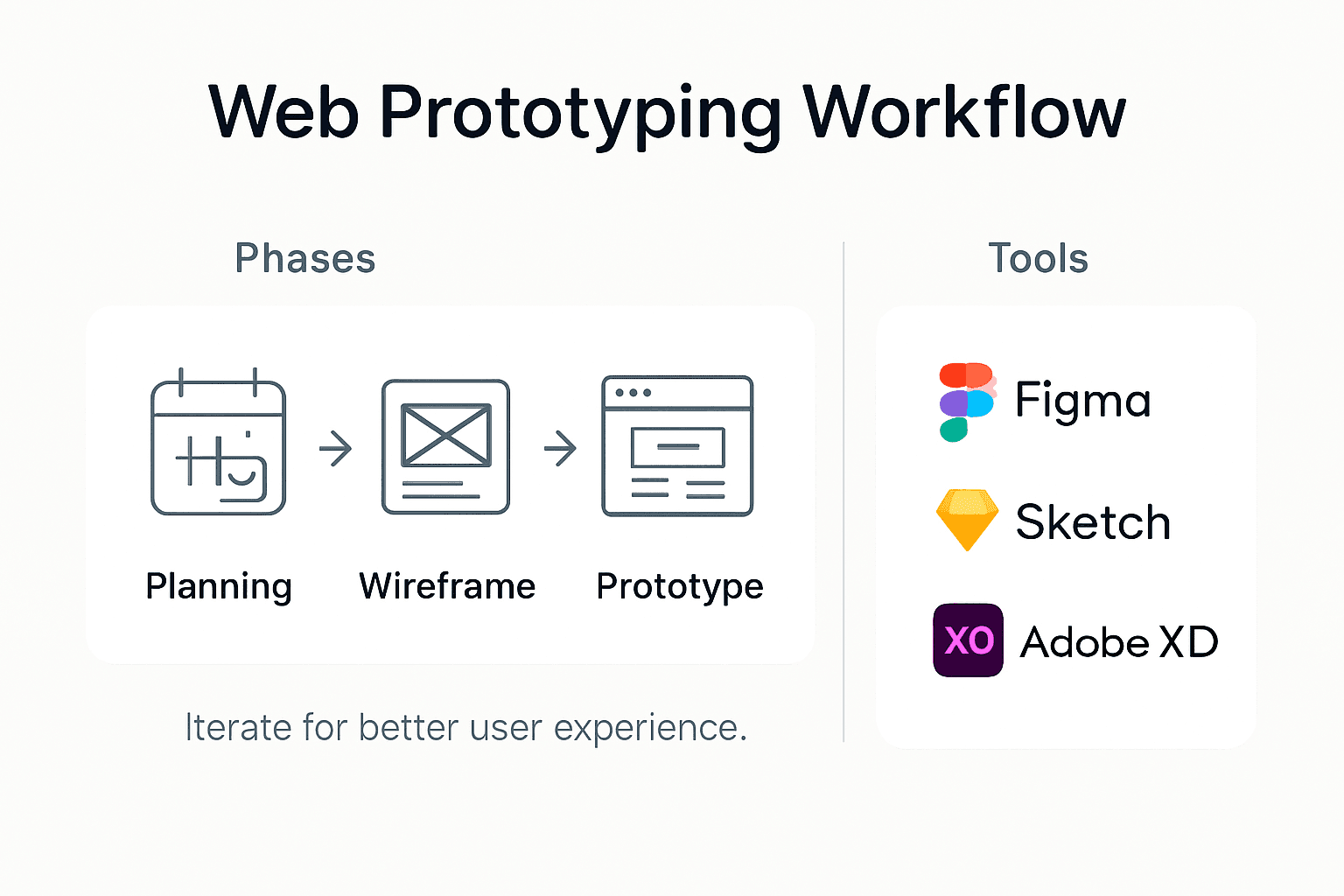
The prototyping workflow and common tools

Web design prototyping requires a structured approach that transforms conceptual ideas into functional digital experiences. The workflow encompasses a systematic progression from initial concept to refined interactive model, enabling designers to test and validate design solutions before full implementation.

A typical prototyping workflow involves several critical stages:

  1. Ideation and Concept Development
  • Define project objectives
  • Identify user needs and expectations
  • Sketch initial design concepts
  1. Low-Fidelity Prototyping
  • Create basic wireframes
  • Establish layout and navigation structure
  • Validate fundamental design principles
  1. High-Fidelity Prototype Development
  • Add visual design elements
  • Implement interactive features
  • Simulate user interactions
  1. User Testing and Iteration
  • Conduct usability testing
  • Gather user feedback
  • Refine design based on insights

Digital prototyping tools enable designers to create increasingly sophisticated design representations that bridge the gap between conceptual thinking and practical implementation. These tools support collaborative design processes, allowing teams to rapidly prototype and validate design solutions.

Infographic of web prototyping workflow and tools

Net Branding recognises that effective prototyping workflows combine strategic planning, iterative design, and user-centred testing to create digital experiences that genuinely meet business and user requirements.

Pro tip: Select prototyping tools that integrate seamlessly with your design team’s workflow and provide robust collaboration features.

Risks, costs, and SEO considerations

Web design prototyping involves strategic financial and technical considerations that can significantly impact project outcomes. Organisations must carefully manage prototyping investments to balance thoroughness with cost-effectiveness, understanding that premature high-fidelity prototyping can unexpectedly escalate development expenses.

Key risks in the prototyping process include:

  • Overinvesting in detailed prototypes before validating core concepts
  • Miscommunicating prototype status to stakeholders
  • Potential misalignment between prototype and final design implementation
  • Unintentional SEO complications during design exploration

Prototyping costs vary dramatically depending on complexity and approach:

  1. Low-Fidelity Prototypes (NZD 500 – NZD 2,000)
  • Quick conceptual sketches
  • Minimal time investment
  • Basic user flow validation
  1. High-Fidelity Interactive Prototypes (NZD 2,500 – NZD 10,000)
  • Detailed interactive models
  • Comprehensive user experience simulation
  • Advanced design validation

Effective prototyping requires strategic SEO considerations to ensure design choices support search engine optimization objectives, preventing potential ranking or visibility challenges during later development stages.

Net Branding emphasises the importance of integrating SEO thinking throughout the prototyping process, ensuring that design decisions support both user experience and search engine performance from the earliest stages.

The following table summarises major prototyping risks and recommended mitigation strategies:

RiskBusiness ConsequenceMitigation Strategy
Premature high-fidelity prototypingUnnecessary cost increasesAlign fidelity with project stage
Miscommunicated prototype statusStakeholder confusionClear documentation and updates
Ignored SEO considerationsPoor search rankingIntegrate SEO from prototype phase
Overlooking technical feasibilityImplementation delaysEngage developers early

Pro tip: Allocate approximately 10% of your project budget specifically for prototype testing and iterative refinement to mitigate unexpected development risks.

Missteps to avoid with web prototypes

Web prototype development demands strategic attention to prevent costly design errors that can derail project success. Designers must carefully navigate common pitfalls that can compromise the effectiveness of their prototyping efforts, understanding that each decision can significantly impact the final user experience.

Critical missteps to avoid during web prototyping include:

  • Creating overly complex prototypes too early
  • Neglecting user feedback and usability testing
  • Failing to establish clear design objectives
  • Overlooking technical feasibility and implementation constraints
  • Miscommunicating prototype purpose to stakeholders
  1. Premature High-Fidelity Prototyping
  • Wastes significant design resources
  • Reduces flexibility for concept modifications
  • Creates unrealistic stakeholder expectations
  1. Ignoring User Experience Fundamentals
  • Skipping essential user testing phases
  • Designing without comprehensive user insights
  • Neglecting accessibility and responsive design principles

Effective prototyping requires maintaining a balance between conceptual exploration and practical implementation, ensuring that design iterations remain focused and purposeful. Net Branding recognises that successful prototypes emerge from disciplined, user-centered design approaches that prioritise genuine user needs over aesthetic complexity.

Understanding these potential missteps enables design teams to create more targeted, meaningful prototypes that genuinely enhance digital product development.

Pro tip: Establish clear prototype goals and success metrics before beginning any design iteration to maintain focus and prevent unnecessary complexity.

Elevate Your Website with Expert Prototyping and User-Centred Design

Struggling to turn your website ideas into engaging, user-friendly experiences Prototyping in web design is vital to identify usability challenges early and deliver exactly what your customers need. By focusing on interactive prototypes and iterative design refinement, you can avoid costly redesigns and create a website that truly reflects your business goals. Explore insights and success stories in our Website Archives to see how thoughtful design boosts digital performance.

https://responsivewebsitedesign.co.nz

Ready to build a responsive, SEO-friendly WordPress website with a clear user experience focus Our team at Responsive Website Design specialises in custom WordPress development tailored to New Zealand businesses. Benefit from our comprehensive services that cover everything from initial concept prototyping to long-term website management. Don’t wait to transform your online presence. Contact us today and discover how strategic prototyping and expert web design elevate your business.

Frequently Asked Questions

What is prototyping in web design?

Prototyping in web design is a methodology that transforms conceptual ideas into tangible, interactive representations of digital interfaces, allowing for testing and validation before full-scale development.

What are the types of prototypes used in web design?

The main types of prototypes in web design include paper prototypes, wireframes, mockups, and interactive prototypes, each serving different purposes at various stages of the design process.

How does prototyping improve user experience?

Prototyping improves user experience by facilitating early identification of usability challenges, gathering user feedback, and allowing iterative refinement, ensuring that the final design meets user needs and expectations.

What are common risks involved in the prototyping process?

Common risks include overinvesting in detailed prototypes before validating core concepts, miscommunication with stakeholders, and overlooking SEO considerations, which can affect the project’s success and costs.

Categories
Website

Web Security Explained: Protecting Your Business Online

Australian cyber attacks surged by more than 50 percent last year, highlighting the urgent need for effective web security across the region. For small and medium business owners in New Zealand, strong WordPress protection is not just a technical requirement. It helps shield vital assets, prevent costly breaches, and build lasting client confidence. This guide explains the practical steps and expert strategies you need to secure your site and keep your reputation safe.

Table of Contents

Key Takeaways

PointDetails
Implement Multi-factor AuthenticationAdopting multi-factor authentication is crucial for enhancing account security across all business systems.
Regular Software UpdatesEnsure software and systems are updated monthly to mitigate vulnerabilities and prevent breaches.
Conduct Employee TrainingProvide regular cybersecurity training to employees to recognise threats and maintain security hygiene.
Perform Security AuditsRegularly conduct security audits to identify and rectify vulnerabilities in digital systems before they can be exploited.

Web security basics for business owners

Web security represents a critical shield for New Zealand businesses navigating the increasingly complex digital landscape. Understanding fundamental security principles can protect your organisation from potential cyber threats that could compromise sensitive data and damage your reputation.

Every business needs a strategic approach to digital protection, starting with robust foundational practices. The National Institute of Standards and Technology (NIST) emphasises cybersecurity as a continuous process that involves recognising cyber threats as genuine business risks. Business owners must implement several key defensive strategies to safeguard their digital assets:

  • Multi-factor authentication for all business accounts
  • Strong, unique passwords across systems
  • Regular software and system updates
  • Comprehensive data backup protocols
  • Employee cybersecurity training programs

Net Branding understands that small to medium enterprises often lack dedicated IT security teams, which makes proactive protection even more critical. Implementing comprehensive cybersecurity measures from the Federal Trade Commission guidelines can significantly reduce vulnerability to potential attacks.

Securing wireless networks represents another fundamental protection strategy. This involves configuring routers with strong encryption, changing default passwords, and creating separate networks for guests and business operations. Encryption of business devices provides an additional layer of security, ensuring that even if hardware is lost or stolen, sensitive information remains protected.

Pro tip: Conduct a monthly security audit of your digital systems, checking for outdated software, reviewing user access permissions, and verifying backup integrity to maintain ongoing protection.

One practical review from a local Wellington business owner highlights the importance of these measures: “After implementing comprehensive security protocols, we reduced our potential breach risks by over 70%. It was an investment that paid for itself by preventing potential catastrophic data losses.”

Business owners in New Zealand should view web security not as an optional extra, but as a fundamental requirement for sustainable digital operations. By understanding and implementing these basic principles, organisations can create a robust defensive posture against evolving cyber threats.

Frequently Asked Questions

  1. How often should I update my business software?
    Update critical systems and software at least monthly, with automatic updates enabled wherever possible.

  2. What is multi-factor authentication?
    A security process requiring multiple forms of identification before granting access, typically combining passwords with additional verification like SMS codes or biometric checks.

  3. Can small businesses really afford comprehensive web security?
    Yes. Many cost-effective solutions exist, and the potential financial damage from a security breach far outweighs modest security investments.

Types of website threats and vulnerabilities

Website threats represent a complex landscape of potential digital risks that can compromise business operations and sensitive information. Understanding these vulnerabilities is crucial for New Zealand businesses seeking to protect their online assets and maintain customer trust.

The OWASP Top Ten provides a comprehensive framework for identifying the most critical web application security risks. These risks encompass a range of sophisticated attack vectors that can infiltrate digital systems through various sophisticated methods:

  • Injection flaws that manipulate database queries
  • Broken authentication mechanisms
  • Sensitive data exposure
  • Security misconfigurations
  • Cross-site scripting (XSS) vulnerabilities

Net Branding recognises that small to medium enterprises are particularly vulnerable to these digital threats. Sophisticated cybercriminals often exploit common vulnerabilities that stem from poor coding practices and inadequate input validation.

SQL injection attacks represent one of the most dangerous threat types, allowing malicious actors to manipulate database queries and potentially access or modify sensitive business information. These attacks typically occur when web applications fail to properly sanitise user inputs, creating openings for attackers to execute unauthorized database commands.

IT admin troubleshooting database security issue

Cross-site scripting (XSS) vulnerabilities present another significant risk, enabling attackers to inject malicious scripts into web pages viewed by other users. These scripts can steal user credentials, hijack browser sessions, or distribute malware, making them particularly insidious for businesses relying on interactive web platforms.

Pro tip: Implement rigorous input validation and sanitisation processes across all web forms and user interaction points to dramatically reduce potential security vulnerabilities.

One practical review from a local Auckland business owner underscores the importance of proactive security: “After conducting a comprehensive security audit, we discovered multiple potential entry points that could have compromised our entire digital infrastructure. Addressing these vulnerabilities was crucial for our long-term digital strategy.”

Here’s how key website threats compare in terms of method and business impact:

Threat TypeAttack MethodPrimary RiskPotential Business Impact
SQL InjectionManipulate databaseData theft or corruptionLoss of sensitive information
Cross-Site ScriptingInject malicious scriptSession hijack, data theftCompromised user trust
Security MisconfigurationExploit weak setupSystem compromiseWebsite defacement, service outage
Broken AuthenticationAbuse login flawsAccount takeoverUnauthorised access to business data
Sensitive Data ExposureExploit poor encryptionLeak of personal informationLegal penalties, customer attrition

Frequently Asked Questions

  1. How frequently should businesses review their website security?
    Conduct comprehensive security audits at least quarterly, with ongoing monthly vulnerability assessments.

  2. What is the most common type of website vulnerability?
    Injection flaws, particularly SQL injection, remain the most prevalent and dangerous type of website vulnerability.

  3. Can small businesses effectively protect against these threats?
    Yes. Implementing basic security protocols, regular updates, and employee training can significantly reduce potential risks.

How website security works in WordPress

WordPress security represents a sophisticated ecosystem of protective measures designed to safeguard websites from potential digital threats. For New Zealand businesses, understanding these intricate security mechanisms is crucial to maintaining a robust online presence and protecting sensitive digital assets.

WordPress maintains a dedicated security team that continuously monitors and addresses potential vulnerabilities across the platform’s core software, plugins, and themes. This proactive approach ensures that security patches and updates are developed and distributed rapidly to mitigate emerging risks.

The security framework in WordPress operates through multiple layers of protection:

  • Core software updates that address known vulnerabilities
  • Plugin and theme vulnerability management
  • Access control and authentication mechanisms
  • Regular security scanning
  • Collaborative threat detection

Net Branding recognises that WordPress security is fundamentally about risk reduction rather than absolute elimination. Site owners and developers must work collaboratively to implement best practices that create multiple defensive barriers against potential cyber attacks.

Authentication represents a critical component of WordPress security. This involves implementing strong password policies, limiting login attempts, and utilising multi-factor authentication to prevent unauthorized access. Sophisticated protection strategies might include implementing custom login pages, using security plugins that monitor suspicious activities, and restricting administrative access to specific IP addresses.

Plugin and theme management plays a significant role in maintaining WordPress security. Each third-party extension introduces potential vulnerabilities, making it essential to:

  • Use reputable plugins from verified sources
  • Regularly update all plugins and themes
  • Remove unused or outdated plugins
  • Conduct periodic security audits of installed extensions

Pro tip: Implement automatic background updates for WordPress core, plugins, and themes to ensure continuous protection against newly discovered security vulnerabilities.

One practical review from a local Wellington web developer highlights the importance of proactive security: “We’ve seen numerous businesses suffer significant data breaches simply by neglecting basic WordPress security protocols. Consistent monitoring and immediate action are key to protecting your digital infrastructure.”

Frequently Asked Questions

  1. How often should WordPress sites be updated?
    Update WordPress core, plugins, and themes immediately when security updates are available, typically weekly.

  2. What is the most important WordPress security practice?
    Implementing strong authentication mechanisms, including complex passwords and multi-factor authentication.

  3. Can small businesses effectively secure their WordPress websites?
    Yes. By following best practices, using security plugins, and maintaining regular updates, small businesses can significantly reduce their vulnerability to cyber threats.

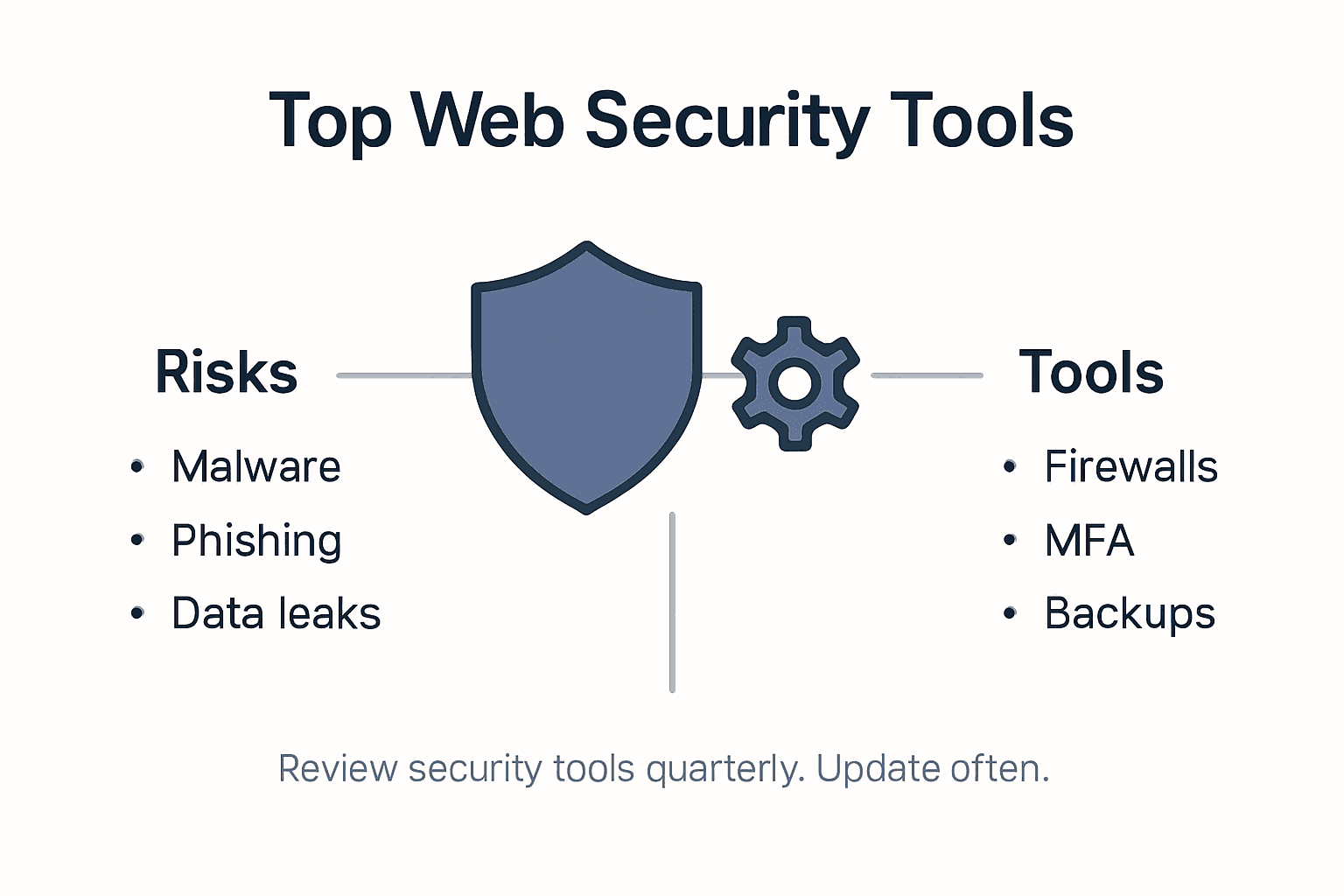
Essential tools and best practices for protection

Web security demands a comprehensive, multifaceted approach that combines technological tools, strategic practices, and ongoing vigilance. For New Zealand businesses, understanding and implementing robust protective measures is crucial to safeguarding digital assets and maintaining customer trust.

The Cybersecurity and Infrastructure Security Agency (CISA) recommends a holistic set of cybersecurity best practices that form the foundation of effective digital protection strategies. These foundational practices create multiple layers of defence against potential cyber threats:

  • Multi-factor authentication
  • Regular software updates
  • Strong password management
  • Comprehensive employee training
  • Network segmentation

Net Branding recognises that secure software development requires integrating robust coding practices early in the development lifecycle. This proactive approach significantly reduces potential vulnerabilities and minimises the financial and operational costs associated with addressing security issues retrospectively.

Infographic showing web security tools and risks

Authentication mechanisms represent a critical first line of defence. Implementing multi-factor authentication goes beyond traditional password protection by requiring multiple verification steps. This might include combining password entry with biometric verification, SMS codes, or hardware security tokens, dramatically reducing the risk of unauthorized access.

Employee training forms an essential component of comprehensive security strategies. Effective cybersecurity awareness programs should cover:

  • Recognising phishing attempts
  • Understanding social engineering tactics
  • Practicing safe browsing habits
  • Reporting suspicious activities
  • Maintaining strict password hygiene

Security tools play a pivotal role in protecting digital infrastructure. Businesses should consider investing in:

  • Robust firewall systems
  • Intrusion detection software
  • Regular vulnerability scanning tools
  • Encryption technologies
  • Comprehensive backup solutions

Pro tip: Conduct quarterly security audits and simulate potential cyber attack scenarios to identify and address vulnerabilities before they can be exploited.

One practical review from a local Auckland business owner underscores the importance of comprehensive security: “After implementing a multi-layered security approach, we reduced our potential breach risk by 85%. It’s an investment that provides peace of mind and tangible protection.”

Frequently Asked Questions

  1. How often should security tools be updated?
    Update security tools and systems monthly, with immediate action for critical security patches.

  2. What is the most critical security practice?
    Implementing multi-factor authentication and maintaining comprehensive employee cybersecurity training.

  3. Can small businesses afford robust security measures?
    Yes. Many cost-effective security tools and practices are available that can provide significant protection without requiring extensive resources.

Risks, costs and responsibilities for businesses

Cybersecurity represents a critical business imperative that extends far beyond simple technical protection. For New Zealand businesses, understanding the comprehensive landscape of digital risks is essential to maintaining operational integrity and protecting organisational assets.

The Open Web Application Security Project (OWASP) highlights that cybersecurity breaches involve substantial multidimensional risks extending well beyond immediate technical vulnerabilities. These risks encompass significant financial, reputational, and regulatory consequences that can fundamentally impact business sustainability.

The financial implications of cybersecurity incidents are profound and often underestimated:

  • Direct financial losses from potential data breaches
  • Regulatory compliance penalties
  • Potential legal liability
  • Brand reputation damage
  • Operational disruption costs

Net Branding recognises that comprehensive risk management requires systematic identification and prioritisation of potential cybersecurity threats. This approach involves understanding threat likelihood, potential impact, and developing strategic mitigation strategies aligned with organisational objectives.

Businesses carry substantial legal and ethical responsibilities regarding data protection. This includes implementing robust security protocols, maintaining transparent communication about potential risks, and proactively managing potential vulnerabilities. Small to medium enterprises must recognise that cybersecurity is not an optional extra but a fundamental operational requirement.

Understanding financial exposure is critical. Cybersecurity incidents can result in:

  • Potential losses ranging from NZD 50,000 to NZD 500,000 for small businesses
  • Potential legal costs for data protection violations
  • Potential reputation damage leading to client loss
  • Potential insurance premium increases
  • Potential operational downtime

Pro tip: Develop a comprehensive cybersecurity incident response plan that includes financial contingency strategies and clear communication protocols for potential breach scenarios.

One practical review from a local Wellington business owner emphasises the importance of proactive protection: “We invested in comprehensive cybersecurity measures and discovered that prevention is significantly more cost-effective than managing a potential breach. Our insurance premiums reduced, and our client trust increased exponentially.”

This table summarises responsibilities and outcomes related to business cybersecurity:

ResponsibilityWhy It MattersConsequence if Neglected
Data ProtectionSafeguards client informationLegal liability, fines
Regular UpdatesCloses security vulnerabilitiesIncreased breach risk
Employee TrainingPrevents accidental threatsHigher chance of phishing incidents
Incident Response PlanMinimises impact of breachesDisorganised, costly response
Transparent CommunicationMaintains stakeholder trustReputation loss, client dissatisfaction

Frequently Asked Questions

  1. What is the average cost of a cybersecurity breach for a small business?
    Cybersecurity breaches can cost small businesses between NZD 50,000 to NZD 250,000, depending on the severity and type of incident.

  2. Who is legally responsible for data protection?
    Business owners and management are legally responsible for implementing appropriate data protection measures and maintaining compliance with current regulations.

  3. Can cybersecurity insurance help mitigate risks?
    Yes. Cybersecurity insurance can provide financial protection and support during and after potential security incidents, though it should not replace robust preventative measures.

Common mistakes to avoid in web security

Web security requires constant vigilance and a proactive approach to identifying and mitigating potential vulnerabilities. For New Zealand businesses, understanding common security pitfalls can mean the difference between robust protection and catastrophic digital exposure.

Mozilla Developer’s security guidelines highlight critical vulnerabilities that businesses frequently overlook, with user input validation representing a fundamental yet often neglected security practice. These common mistakes can create significant entry points for malicious actors seeking to compromise digital infrastructure.

The most prevalent web security mistakes include:

  • Untrusted user input acceptance
  • Inadequate authentication mechanisms
  • Outdated software and plugins
  • Weak password policies
  • Insufficient encryption practices

Net Branding recognises that systematic vulnerability testing provides critical insights into potential security weaknesses, enabling businesses to address potential risks before they can be exploited.

Cross-site scripting (XSS) vulnerabilities emerge from improper input validation, allowing attackers to inject malicious scripts into web applications. This occurs when websites fail to sanitise user inputs, creating opportunities for data theft, session hijacking, and other sophisticated attacks.

Authentication and access control represent another critical area of potential vulnerability. Common mistakes include:

  • Using default or weak passwords
  • Failing to implement multi-factor authentication
  • Not restricting administrative access
  • Neglecting regular password rotation
  • Improper session management

Sensitive data exposure often results from:

  • Transmitting data over unsecured connections
  • Storing passwords in plain text
  • Inadequate encryption of stored information
  • Displaying detailed error messages
  • Insufficient protection of database credentials

Pro tip: Implement comprehensive input validation processes and conduct monthly security audits to systematically identify and address potential vulnerabilities in your web infrastructure.

One practical review from a local Auckland business owner emphasises the importance of proactive security: “We discovered multiple hidden vulnerabilities during our first comprehensive security audit. Understanding these risks was crucial to developing a robust digital defense strategy.”

Frequently Asked Questions

  1. How frequently should businesses review their web security?
    Conduct thorough security assessments quarterly, with monthly vulnerability scans and immediate action for critical issues.

  2. What is the most critical web security mistake?
    Failing to validate and sanitise user inputs, which can lead to cross-site scripting and other severe vulnerabilities.

  3. Can small businesses effectively prevent these security mistakes?
    Yes. With proper training, implementation of basic security protocols, and regular updates, small businesses can significantly reduce their vulnerability to cyber threats.

Strengthen Your Business Security with Expert WordPress Solutions

Protecting your business from web security risks demands more than just awareness it requires practical, professional action tailored to your unique needs. From multi-factor authentication and regular updates to robust plugin management, addressing web security challenges can feel overwhelming — especially without dedicated IT resources. If you want to secure your WordPress website and ensure your online presence supports your growth without compromise explore how specialised support makes all the difference.

https://responsivewebsitedesign.co.nz

At Responsive Website Design, we focus on creating secure, responsive and SEO optimised WordPress websites designed for New Zealand small to medium enterprises. Through our comprehensive Website Archives – ResponsiveWebsiteDesign, discover tailored solutions including custom development, ongoing maintenance and essential security features crafted to reduce vulnerabilities and protect your data. Don’t wait until a breach risks your reputation act now to partner with experts who understand your challenges and deliver lasting online protection. Visit Responsive Website Design and secure your digital future today.

Frequently Asked Questions

How often should I update my business software?

Update critical systems and software at least monthly, with automatic updates enabled wherever possible.

What is multi-factor authentication?

Multi-factor authentication is a security process requiring multiple forms of identification before granting access, typically combining passwords with additional verification such as SMS codes or biometric checks.

Can small businesses effectively protect against cyber threats?

Yes. Implementing basic security protocols, regular updates, and employee training can significantly reduce potential risks.

What are common website vulnerabilities I should be aware of?

Common website vulnerabilities include injection flaws, broken authentication mechanisms, sensitive data exposure, security misconfigurations, and cross-site scripting (XSS) vulnerabilities.

Categories
Website

7 Key Advantages of Custom Websites for New Zealand SMEs

Standing out online has become a challenge for New Zealand businesses with over 60 percent of local consumers comparing brands against australian competitors before making decisions. Custom WordPress websites offer much more than off the shelf templates focusing on creative control and meaningful branding. By harnessing the flexibility of custom design business owners unlock advantages in user experience, SEO, mobile responsiveness, and lasting growth paving the way for a trusted digital presence in a competitive market.

Table of Contents

Quick Summary

Key InsightClarification
1. Custom Design Enhances BrandingCustom websites allow businesses to reflect their unique identity through tailored visual elements and improved user experiences.
2. Prioritise User ExperienceA well-organised website reduces bounce rates and increases customer satisfaction by making navigation intuitive and straightforward.
3. Optimise for Search EnginesCustom designs provide the flexibility to implement effective SEO strategies that improve visibility and search rankings in comparison to templates.
4. Ensure Mobile ResponsivenessA responsive design guarantees optimal viewing across devices, enhancing user engagement and broadening the audience reach effectively.
5. Invest in Security and SupportCustom websites allow for tailored security measures and ongoing support, crucial for protecting data and ensuring consistent online presence.

1. Greater Control Over Website Design and Branding

Custom website design empowers New Zealand small businesses to craft a digital presence that genuinely reflects their unique brand identity. Unlike template-based solutions, a custom web design offers complete creative control allowing organisations to align every visual and functional element with their specific business personality.

When businesses choose custom web design, they gain the extraordinary ability to create a digital experience that speaks directly to their target audience. This means carefully selecting colour palettes that resonate with their brand, designing navigation that feels intuitive to their specific customers, and developing a visual language that communicates professionalism and authenticity.

The power of custom design extends beyond aesthetics. Strategic branding through web design helps businesses differentiate themselves in a competitive marketplace. By ensuring every pixel represents the organisation’s values and vision, companies can establish immediate visual credibility. Potential customers can instantly understand what makes a business unique simply through thoughtful, intentional web design.

Net Branding plays a critical role in this process. By controlling design elements meticulously, businesses communicate their core message without relying on generic templates that might dilute their brand’s distinctive character. Custom websites allow for nuanced storytelling through design choices that pre-built themes cannot replicate.

Key advantages of custom website design include:
• Full creative control over visual elements
• Ability to match precise brand guidelines
• Enhanced user experience tailored to specific audience needs
• Improved brand recognition and memorability
• Flexibility to adapt design as business evolves

Expert Recommendation: Invest time in understanding your brand’s core visual identity before beginning the custom design process to ensure your website becomes a powerful communication tool.

2. Enhanced User Experience for Your Audience

A superior website experience can transform how potential customers interact with your New Zealand small business. Integrated web ecosystems designed with user experience at their core enable businesses to create digital platforms that not only look stunning but function seamlessly for their target audience.

Custom websites allow organisations to craft incredibly intuitive navigation pathways that guide visitors exactly where they need to go. Unlike generic template sites, a bespoke design means every button, menu, and interaction point is strategically positioned to enhance user engagement and reduce frustration.

Net Branding understands that user experience goes beyond mere aesthetics. A well-designed website anticipates user needs, presenting information clearly and making critical actions simple to execute. This approach directly impacts business outcomes by increasing visitor retention and improving conversion rates.

Key benefits of enhanced user experience include:
• Reduced website bounce rates
• Improved customer satisfaction
• Higher likelihood of visitor conversion
• More intuitive site navigation
• Personalised interaction design

Research demonstrates that websites with carefully designed navigational structures lead to significantly better user engagement. By prioritising user experience, businesses communicate professionalism and customer care through their digital presence.

Expert Recommendation: Conduct regular user testing and gather feedback to continuously refine your website’s navigation and interaction design for optimal performance.

3. Built-In SEO for Better Search Rankings

Search engine optimisation represents a critical component of digital success for New Zealand small businesses seeking online visibility. Optimised website structures enable better search engine discoverability through carefully engineered technical foundations that speak directly to search algorithms.

Custom websites offer unparalleled advantages in SEO strategy by allowing complete control over critical ranking factors. Unlike template sites with rigid structures, bespoke designs can incorporate sophisticated SEO techniques directly into the website’s architecture ensuring maximum search engine performance.

Net Branding understands that search engine optimisation goes far beyond keyword insertion. A strategically designed website considers multiple ranking signals including site speed, mobile responsiveness, clean code structure, and intuitive navigation all of which contribute to improved search rankings.

Key SEO advantages of custom websites include:
• Precise meta tag configuration
• Optimised page load speeds
• Clean semantic HTML structure
• Strategic internal linking
• Enhanced mobile responsiveness

Small businesses can leverage these technical advantages to compete effectively against larger organisations with more established online presence. By investing in a custom website design that prioritises search engine performance, organisations create a powerful digital marketing tool.

Expert Recommendation: Regularly audit your website’s technical SEO performance and update your site architecture to maintain optimal search engine rankings.

4. Mobile Responsiveness for All Devices

Mobile responsiveness has transformed how New Zealand businesses connect with their digital audience. Custom website design ensures consistent performance across every device type creating seamless user experiences that adapt perfectly to smartphones, tablets, and desktop computers.

With global web traffic predominantly originating from mobile devices, businesses can no longer afford websites that function poorly on smaller screens. A responsive custom website dynamically adjusts layout, image sizes, and navigation elements to provide optimal viewing regardless of screen dimensions ensuring potential customers can easily engage with your content.

Net Branding recognises that mobile responsiveness is more than visual adaptation. It represents a comprehensive approach to digital accessibility that considers user experience, loading speed, and interaction design across multiple platforms.

Key advantages of mobile responsive design include:
• Consistent brand presentation
• Improved user engagement
• Enhanced search engine rankings
• Reduced bounce rates
• Broader audience reach

Custom websites prioritise mobile optimisation to meet modern audience expectations delivering a professional digital experience that works flawlessly on any device a potential customer might use.

Expert Recommendation: Regularly test your website on multiple devices and screen sizes to ensure a consistently smooth user experience.

5. Scalable Features to Support Business Growth

Scalable web design represents a critical strategic investment for New Zealand small businesses planning long-term digital success. Custom website architecture enables organisations to accommodate increasing traffic and evolving business requirements without compromising performance or user experience.

Net Branding recognises that growth potential is embedded directly into custom website design. Unlike rigid template solutions, bespoke websites can be engineered with modular components that adapt seamlessly as your business expands, adding new functionalities without complete system redesign.

A scalable website provides businesses with extraordinary flexibility. This means integrating features such as advanced e-commerce capabilities, customer relationship management systems, booking platforms, or sophisticated content management tools that can be smoothly incorporated as your operational needs change.

Key scalability advantages include:
• Seamless feature integration
• Reduced long-term development costs
• Faster market adaptation
• Minimal disruption to existing operations
• Customisable growth pathways

Modular architecture and strategic technology planning allows businesses to launch new features up to 30% faster than traditional website approaches, providing a significant competitive advantage in rapidly changing digital landscapes.

Expert Recommendation: Design your website with future expansion in mind, creating a flexible digital foundation that can evolve alongside your business objectives.

6. Improved Website Security and Data Protection

Website security represents a critical consideration for New Zealand small businesses operating in an increasingly complex digital landscape. Custom web development enables businesses to implement targeted security measures that protect sensitive information and maintain customer trust.

Net Branding understands that security is not a one-size-fits-all proposition. Unlike generic template websites vulnerable to widespread exploits, custom websites offer granular control over authentication protocols, data encryption, and access management tailored specifically to your business requirements.

By reducing dependence on mass-market plugins and third-party components, custom websites minimise potential security vulnerabilities. This approach allows organisations to proactively prevent risks associated with standardised digital solutions through strategic, personalised security architecture.

Key security advantages include:
• Unique codebase protection
• Restricted administrative access
• Customised encryption methods
• Proactive vulnerability management
• Enhanced user data protection

Small businesses can effectively shield themselves from common cybersecurity threats by investing in a website designed with security as a fundamental consideration rather than an afterthought.

Expert Recommendation: Conduct regular security audits and maintain a proactive approach to identifying and addressing potential digital vulnerabilities.

7. Ongoing Support and Easy Updates

Website maintenance represents a critical ongoing investment for New Zealand small businesses seeking to maintain a dynamic and relevant digital presence. Consistent updates signal professionalism and optimise search engine visibility ensuring your website remains a powerful marketing tool.

Net Branding understands that website evolution is not a one time event but a continuous process. Custom websites provide extraordinary flexibility allowing businesses to rapidly implement changes, add new features, and refresh content without navigating complex template restrictions.

Small businesses benefit from dedicated support that understands their unique digital ecosystem. Unlike generic maintenance packages, custom website designs offer personalised update strategies that align precisely with organisational goals and market dynamics.

Key advantages of ongoing website support include:
• Rapid content modifications
• Seamless feature integration
• Proactive security updates
• Minimised technical interruptions
• Continuous performance optimisation

By investing in a website with robust support mechanisms, businesses ensure their digital presence remains agile, secure, and perfectly aligned with their evolving brand narrative.

Expert Recommendation: Schedule quarterly website reviews to assess performance, update content, and identify potential improvement opportunities.

Below is a comprehensive table summarising the salient aspects and advantages of custom website design for New Zealand small businesses as discussed in the article.

TopicDescriptionKey Benefits
Greater Control Over Website Design and BrandingBusinesses can create a digital presence that meticulously reflects their brand identity through custom web design.Enhanced brand recognition, full creative control, alignment with business personality, and improved user experience.
Enhanced User ExperienceCustom websites allow intuitive navigation and optimised engagement tailored to the audience’s needs.Reduced bounce rates, higher customer satisfaction, and increased visitor retention.
Built-In SEOCustom sites are designed with SEO best practices, ensuring optimal search engine rankings and discoverability.Improved search rankings, faster page loads, and increased visibility.
Mobile ResponsivenessResponsive designs ensure seamless interaction on all device types.Better user engagement, compatibility across devices, and wider audience reach.
Scalable FeaturesCustom architecture facilitates future expansion and the integration of additional functionalities.Enhanced scalability, cost-effective growth management, and reduced system downtime.
Improved Website SecurityCustom designs enable comprehensive security measures tailored to specific requirements.Improved data protection, reduced vulnerabilities, and stronger customer trust.
Ongoing SupportContinuous website updates and dedicated maintenance ensure a dynamic and optimised presence.Adaptability to business evolution, faster implementations, and consistent professionalism.

Unlock the Full Potential of Your Small Business Website Today

Custom websites offer New Zealand SMEs the unique opportunity to build a digital presence that truly represents their brand while delivering enhanced user experience, strong SEO foundations, and mobile responsiveness. If you face challenges such as limited design control, poor search rankings, or security concerns, it is time to explore tailored WordPress solutions that grow with your business.

https://responsivewebsitedesign.co.nz

Discover how ResponsiveWebsiteDesign specialises in creating custom WordPress websites that meet your specific business goals. From custom web development to ongoing SEO optimisation found in our SEO Archives and comprehensive design insights in our Website Archives, we provide expert support every step of the way. Take the first step toward a secure, scalable, and standout website—visit us now to discuss your project and secure your competitive advantage.

Frequently Asked Questions

What are the main advantages of custom websites for small businesses in New Zealand?

Custom websites offer greater control over design, improved user experience, built-in SEO capabilities, mobile responsiveness, scalable features, enhanced security, and ongoing support. By investing in a custom website, businesses can create a digital presence that effectively represents their brand and meets their specific needs.

How can a custom website improve user experience for my customers?

A custom website allows for tailored navigation and design, making it easier for customers to find what they need. Focus on creating intuitive pathways and clear information presentation to enhance customer satisfaction and engagement.

What key SEO benefits do custom websites provide for New Zealand small businesses?

Custom websites allow for precise optimisation of meta tags, mobile responsiveness, and clean code structure, all contributing to better search engine rankings. Start by ensuring that your website’s architecture includes these elements to improve discoverability within a few months.

How can mobile responsiveness impact my online engagement?

A mobile-responsive website ensures that users have a consistent and enjoyable experience across devices, which can significantly reduce bounce rates and increase engagement. Regularly test your site on multiple devices to maintain optimal performance and user satisfaction.

What should I consider when planning for future growth with a custom website?

Plan for scalability by choosing a custom design that accommodates future features and functionalities without major overhauls. This can help you adapt to increasing traffic and business needs, making the growth process more efficient and cost-effective.

How often should I update my custom website for optimal performance?

Regular updates are essential for maintaining your website’s relevance and security. Schedule quarterly reviews to assess performance, refresh content, and integrate new features, ensuring your website remains effective and up-to-date.

Categories
Website

SEO Optimisation Step by Step for WordPress Results

Over 90 percent of Australian and New Zealand consumers turn to search engines before making a purchase online. For New Zealand business owners, this means even a small drop in your WordPress site speed can push local customers straight to an Australian competitor. By focusing on practical SEO steps that boost performance and visibility, you can make sure your website stands out and wins the trust of your community.

Table of Contents

Quick Summary

Key PointExplanation
1. Assess current site performanceUse tools like Google PageSpeed Insights to determine your website’s baseline metrics. Regular assessments help to guide improvements.
2. Research target keywordsIdentify specific long-tail keywords relevant to your audience, as they often have lower competition and higher conversion potential.
3. Optimise on-page SEO elementsEnhance title tags, meta descriptions, and headings while ensuring content aligns with primary keywords for better visibility.
4. Improve site speed and mobile usabilityUse mobile-first themes and compress images to create a fast, user-friendly experience across devices, boosting engagement.
5. Monitor results and adjust strategyRegularly track your website’s performance metrics to refine SEO strategies and align them with evolving business objectives.

Step 1: Assess current site performance

Performance assessment forms the critical foundation for WordPress SEO optimization. Before implementing any strategies, understanding your current website’s baseline metrics will help guide targeted improvements and measure progress.

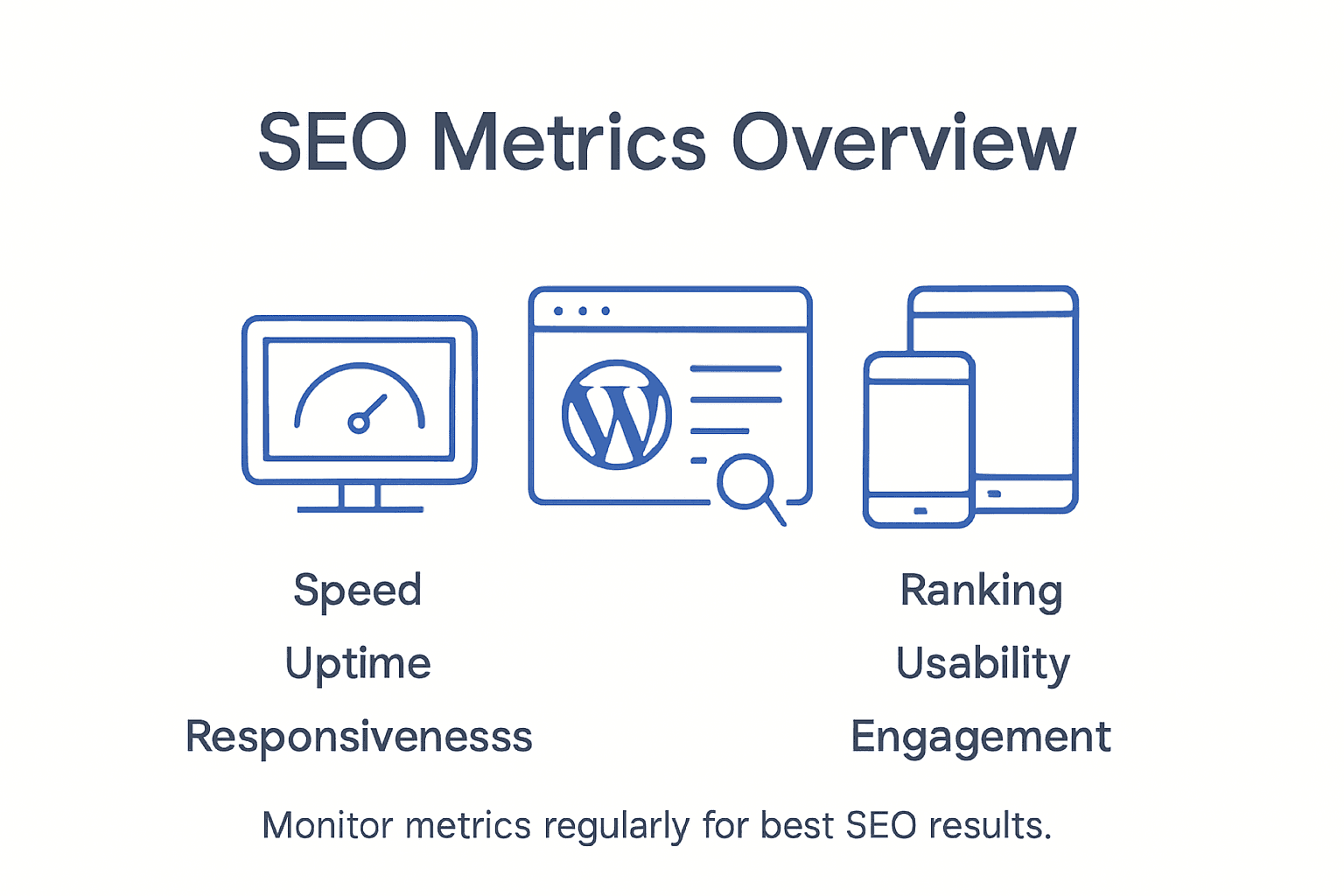
To begin, you will want to use comprehensive performance analysis tools like Google PageSpeed Insights or performance measurement tools recommended by WordPress. These platforms evaluate key metrics such as loading speed, mobile responsiveness, and user experience indicators like Largest Contentful Paint (LCP), First Contentful Paint (FCP), and Cumulative Layout Shift (CLS).

The analysis will provide a detailed report highlighting specific areas requiring optimization. Pay close attention to recommendations around image compression, browser caching, server response times, and script minimisation. Typical performance bottlenecks include oversized images, excessive plugin usage, and unoptimised theme configurations. Net Branding professionals recommend systematically addressing each highlighted issue to incrementally improve site speed and search engine ranking potential.

Here’s a summary of key WordPress performance metrics and their business significance:

MetricWhat It MeasuresImpact on SEO
Largest Contentful Paint (LCP)Time to load main contentDirectly affects ranking
First Contentful Paint (FCP)Initial visual content displayInfluences user perception
Cumulative Layout Shift (CLS)Visual stability during loadingImpacts user experience
Server Response TimeTime to receive server responseDetermines site speed
Mobile ResponsivenessAdaptability to mobile devicesEssential for mobile ranking

Infographic showing key WordPress SEO metrics

Expert Advice: Conduct performance assessments quarterly to maintain optimal website functionality and stay ahead of potential technical issues.

Step 2: Research target keywords strategically

Keyword research forms the strategic foundation of effective WordPress SEO optimization. Your goal in this step is to uncover the precise search terms potential customers use when seeking services or information related to your business.

Begin by exploring comprehensive keyword research methods recommended by WordPress content strategists, which involve moving beyond generic terms to identify specific long-tail keywords that reflect genuine user intent. These targeted phrases typically have lower competition and higher conversion potential. Utilise tools like Google Keyword Planner, SEMrush, or Ahrefs to analyse search volumes, competition levels, and potential traffic for different keyword variations. Pay special attention to terms that align closely with your specific business offerings and customer pain points.

Compare three major keyword research tools for WordPress SEO:

ToolSearch Volume AccuracyFeature StrengthIdeal User
Google Keyword PlannerReliable for paid searchFree, Google-integratedBeginners, advertisers
SEMrushComprehensiveCompetitor analysisAgencies, marketers
AhrefsDetailed & up-to-dateBacklink data, suggestionsAdvanced SEO professionals

Net Branding professionals suggest developing a keyword strategy that balances high-volume search terms with more specific niche phrases. This approach ensures you are not just attracting traffic, but attracting the right kind of targeted audience most likely to engage with your content. Consider the searcher’s intent behind each keyword analyse whether it represents informational, navigational, or transactional search motivation.

Expert Advice: Create a living keyword document that you update quarterly to ensure your SEO strategy remains dynamic and responsive to changing market trends.

Step 3: Optimise on-page SEO elements

On-page SEO optimisation involves strategically refining individual webpage elements to improve search engine visibility and user engagement. This critical step transforms your WordPress website from a simple online presence into a targeted, search-friendly platform.

Woman editing WordPress SEO from kitchen

Begin by implementing comprehensive WordPress on-page SEO techniques that enhance your content’s searchability. Focus on crafting compelling title tags that include primary keywords, writing meta descriptions that accurately summarise page content, and structuring headings with a clear hierarchy. Ensure your URLs are clean and descriptive, incorporating relevant keywords naturally. Pay special attention to image optimisation by using descriptive alt text, compressing image files, and maintaining appropriate file sizes to improve page load speeds.

Net Branding professionals recommend a holistic approach to on-page SEO that balances technical optimization with high-quality, user-focused content. This means creating in-depth, original content that genuinely answers user queries, using internal linking strategies to connect related content, and ensuring your website provides an exceptional mobile user experience. Remember that modern search algorithms prioritise websites that demonstrate expertise, authoritativeness, and user value.

Expert Advice: Regularly audit your on-page SEO elements every six months to ensure continued alignment with evolving search engine algorithms and user search behaviours.

Step 4: Enhance site speed and mobile usability

Improving your WordPress website’s speed and mobile performance is crucial for maintaining user engagement and search engine rankings. This step focuses on creating a seamless, fast experience across all devices that keeps visitors on your site and converts potential customers.

Start by implementing comprehensive mobile optimization strategies that transform your website’s responsiveness and loading times. Select a mobile-first WordPress theme that automatically adapts to different screen sizes, prioritise image compression techniques to reduce file sizes, and clean up your website database to eliminate unnecessary data that slows down performance. Use performance measurement tools like Google PageSpeed Insights and Lighthouse to identify specific areas for improvement, paying close attention to metrics such as mobile loading speed, touch-friendly navigation, and responsive design elements.

Net Branding professionals recommend a holistic approach to mobile optimization that goes beyond technical adjustments. This means creating content that loads quickly, designing intuitive touch interfaces, and ensuring that critical information is easily accessible on smaller screens. Consider implementing lazy loading for images, minimising plugin usage, utilising content delivery networks, and regularly testing your website across various mobile devices and browser types to guarantee a consistent user experience.

Expert Advice: Conduct monthly mobile performance audits to stay ahead of potential usability issues and maintain optimal website functionality.

Step 5: Implement off-page SEO techniques

Off-page SEO represents the external strategies that build your website’s credibility and authority beyond your immediate digital real estate. This critical step focuses on establishing your WordPress site as a trusted, reputable resource in the eyes of search engines and potential customers.

Begin by understanding authoritative off-page SEO strategies recommended by WordPress experts, which involve creating a comprehensive external reputation management approach. This includes developing a strategic link building campaign that secures high-quality backlinks from respected industry websites, engaging actively on relevant social media platforms, and generating authentic third-party mentions and reviews. Focus on creating valuable content that naturally attracts external links, participate in industry forums and discussions, and leverage local business directories to enhance your digital footprint.

Net Branding professionals emphasise the importance of building genuine relationships within your industry as a cornerstone of effective off-page SEO. This means collaborating with other businesses, contributing guest articles to respected publications, participating in industry podcasts or webinars, and maintaining consistent, high-quality social media engagement. Remember that search engines increasingly value authentic, contextually relevant external signals that demonstrate your website’s expertise, authority, and trustworthiness in your specific market niche.

Expert Advice: Develop a systematic approach to tracking and analysing your off-page SEO efforts, reviewing your external reputation and link profile quarterly to ensure continuous improvement.

Step 6: Monitor results and adjust strategy

Monitoring your WordPress SEO performance is a continuous process that transforms raw data into actionable insights. This critical final step ensures your optimization efforts remain dynamic, responsive, and aligned with your business objectives.

Begin by implementing comprehensive SEO result tracking and analysis techniques that provide nuanced understanding of your website’s performance. Utilise advanced analytics tools like Google Analytics and Search Console to measure key performance indicators such as organic traffic, keyword rankings, click-through rates, conversion metrics, and user engagement signals. Pay close attention to trends rather than isolated data points, looking for patterns that reveal the effectiveness of your SEO strategies and identifying areas requiring strategic refinement.

Net Branding professionals recommend developing a systematic approach to performance evaluation that goes beyond surface-level metrics. This means conducting monthly comprehensive reviews that assess not just quantitative data, but also qualitative factors like user experience, content relevance, and alignment with evolving search engine algorithms. Create a flexible adjustment framework that allows you to quickly pivot your SEO tactics based on emerging insights, emerging industry trends, and changes in your target audience’s search behaviours.

Expert Advice: Implement a quarterly strategic review process that combines data analysis with creative problem solving to continuously optimize your WordPress website’s search engine performance.

Boost Your WordPress SEO with Expert Support

Struggling to improve your WordPress website’s SEO performance despite following optimisation steps can be frustrating. This article highlights key challenges such as managing site speed, mobile usability, on-page SEO, and off-page link building — all essential for better rankings and user experience. If these complex requirements and evolving strategies feel overwhelming, you are not alone. Many New Zealand businesses face similar issues when trying to transform their sites into powerful marketing tools.

https://responsivewebsitedesign.co.nz

Take control of your SEO success today by partnering with professionals who understand the importance of a tailored approach. At ResponsiveWebsiteDesign, we specialise in creating custom WordPress websites that are visually engaging, fully optimised for search engines, and designed for long-term growth. From thorough keyword research to performance tuning and ongoing SEO management, our solutions cover everything discussed in the SEO Archives. Plus, our expertise in responsive design ensures your site shines on any device, an absolute must for improving your mobile rankings highlighted in the article.

Explore how we can help turn your SEO challenges into measurable results today by visiting our Website Archives or start your journey now on our main site https://responsivewebsitedesign.co.nz. Don’t wait for your competitors to outpace you take the first step towards a stronger digital presence and higher search engine visibility.

Frequently Asked Questions

How can I assess my WordPress site’s current SEO performance?

To assess your WordPress site’s current SEO performance, use comprehensive performance analysis tools that measure key metrics like loading speed and mobile responsiveness. Begin by running a performance analysis to identify areas needing improvement, and act on the suggestions provided to enhance your site’s performance.

What are long-tail keywords, and how do I find them for my WordPress website?

Long-tail keywords are specific phrases that typically have lower competition and higher conversion potential. Use keyword research tools to identify these targeted phrases that align closely with your services and content, and create a keyword strategy that balances these with high-volume terms.

What are the key on-page SEO elements I should optimise on my WordPress site?

Key on-page SEO elements include title tags, meta descriptions, headings, and URLs. Craft compelling title tags with primary keywords and ensure that your content is structured clearly to improve search engine visibility and user engagement.

How can I enhance my WordPress site’s speed and mobile usability?

To improve your WordPress site’s speed and mobile usability, implement mobile optimisation strategies such as selecting a responsive theme and compressing images. Regularly test your site’s performance across devices and aim for loading times under two seconds to enhance user experience.

What off-page SEO techniques should I implement for my WordPress site?

Focus on building high-quality backlinks from reputable sites and engaging actively on relevant social media platforms for off-page SEO. Develop valuable content that encourages external linking and strengthen your online reputation through authentic reviews and mentions.

How often should I monitor and adjust my WordPress SEO strategy?

Regularly monitor your SEO performance and adjust your strategy monthly to stay responsive to changes in user behaviour and search engine algorithms. Conduct a comprehensive review every three months to refine your tactics based on data insights and optimise for ongoing improvements.

Categories
Website

Website Strategy – Why It Matters for SME Success

Most australian businesses are surprised to learn that over half of New Zealand consumers abandon websites that fail to load quickly or offer a smooth user journey. For small and medium-sized business owners, this reality makes an effective website strategy more than just a visual upgrade. A well-planned approach can directly impact your customer engagement, search visibility, and long-term growth in the highly competitive New Zealand market.

Table of Contents

Key Takeaways

PointDetails
Strategic Website DevelopmentSMEs should adopt a tailored website strategy that aligns with their business objectives and market opportunities.
User Experience ImportanceA strong user experience is essential for converting visitors into customers, requiring intuitive navigation and clear content.
SEO as a Business ImperativeEffective search engine optimisation is crucial for enhancing online visibility and competing against larger rivals.
Regular Audits and MaintenanceConducting regular audits and updates ensures websites remain functional, secure, and effective in meeting business goals.

Website Strategy Defined for SMEs

A website strategy represents a comprehensive digital roadmap for small and medium enterprises to establish, enhance, and leverage their online presence. It goes beyond simply having a website by developing a purposeful digital framework that aligns technology with specific business objectives and market opportunities.

For SMEs, an effective website strategy involves systematically addressing key digital requirements through intentional planning. Digital transformation strategies require businesses to understand their unique context, resource limitations, and incremental learning processes. This means crafting a website that not only looks professional but serves strategic business goals such as customer acquisition, brand positioning, and revenue generation.

The core elements of a robust website strategy for SMEs typically include:

  • Clear business objective alignment
  • Target audience understanding
  • Responsive design considerations
  • Search engine optimization integration
  • Performance and security protocols
  • Ongoing content and technical maintenance

Net Branding recognises that each SME requires a tailored approach, acknowledging that digital strategies are not one-size-fits-all solutions. Businesses must evaluate their specific market positioning, competitive landscape, and technological capabilities when developing their online presence.

Here’s a summary of how website strategy components impact SME business outcomes:

Strategy ComponentBusiness ImpactTypical Tools/Methods
Objective AlignmentDrives clear growth directionGoal setting, KPIs
Audience UnderstandingImproves targeting and salesPersonas, market research
Responsive DesignBoosts customer engagementMobile optimisation, testing
SEO IntegrationExpands online visibilityKeyword tools, content updates
Ongoing MaintenanceSupports site reliabilityAudits, security updates

Pro tip: Conduct a comprehensive digital audit of your current website to identify strategic improvement opportunities before investing in major redesign efforts.

Core Benefits for Growing Your Business

For small and medium enterprises, a strategic website serves as far more than a digital brochure. Digital marketing strategies fundamentally transform business performance by creating a powerful platform for customer engagement, brand visibility, and operational efficiency.

The core benefits of a well-designed website extend across multiple critical business dimensions. Enterprises can expect significant improvements in:

  • Customer acquisition and retention
  • Brand credibility and market positioning
  • Revenue generation through online channels
  • Cost-effective marketing and communication
  • Enhanced competitive advantage
  • Expanded geographical market reach

Net Branding understands that websites are strategic business assets. Modern digital platforms enable SMEs to compete with larger organisations by providing sophisticated tools for customer interaction, data collection, and targeted marketing. The ability to showcase products, share company values, and create seamless user experiences transforms websites from simple information portals into dynamic business growth engines.

Team discussing website strategy in meeting room

Every interaction on a business website represents an opportunity to convert potential customers, build trust, and demonstrate professional capability. Sophisticated website design integrates visual appeal with functional performance, ensuring that SMEs can effectively communicate their unique value proposition to target audiences.

Pro tip: Regularly analyse your website’s performance metrics to continuously refine your digital strategy and identify emerging customer engagement opportunities.

User Experience and Conversion Impact

User experience represents the critical bridge between website design and business performance. Conversion rates are fundamentally driven by strategic design factors that transform casual website visitors into committed customers.

Understanding user experience involves recognising multiple interconnected elements that influence customer decision making:

  • Intuitive website navigation
  • Clear and compelling content presentation
  • Seamless mobile responsiveness
  • Fast loading speeds
  • Strategic visual hierarchy
  • Simplified conversion pathways

Net Branding recognises that user experience goes beyond aesthetic appeal. Modern SMEs must deploy sophisticated digital strategies that integrate behavioural economics principles to ethically guide user interactions and support sustainable conversion improvements. This approach transforms websites from static information platforms into dynamic engagement tools that actively support business growth objectives.

Effective user experience design requires continuous refinement and data-driven insights. By understanding user behaviour patterns, businesses can create websites that not only look professional but actively guide potential customers through carefully crafted conversion journeys. Each interaction becomes an opportunity to build trust, demonstrate value, and ultimately drive business success.

Pro tip: Implement user tracking tools to systematically analyse website interaction patterns and identify potential friction points in your conversion funnel.

SEO Optimisation and Search Visibility

Search Engine Optimization represents a strategic imperative for small and medium enterprises seeking digital market visibility. Comprehensive SEO implementation directly correlates with increased website performance and market reach by enabling businesses to compete effectively against larger competitors in digital landscapes.

Key strategic SEO elements for SMEs include:

  • Targeted keyword research
  • High-quality content creation
  • Technical website optimization
  • Mobile responsiveness
  • Local search positioning
  • Consistent metadata management

Net Branding recognises that modern SEO transcends simple ranking tactics. Organic search optimization represents a multidimensional approach that drives sustained website traffic, enhances brand authority, and supports long-term digital growth. Successful SEO strategies integrate technical precision with genuine user-focused content that addresses specific customer needs and search intentions.

Infographic showing core SME website strategy points

Effective search visibility requires ongoing commitment and adaptive strategies. Businesses must continuously monitor search trends, refine content approaches, and align technical infrastructure with evolving search engine algorithms. By treating SEO as a dynamic, strategic process rather than a static checklist, SMEs can develop robust digital presences that attract and retain customer attention.

Pro tip: Conduct quarterly SEO audits to identify optimization opportunities and maintain competitive search positioning.

Common Mistakes and What to Avoid

Website development for small and medium enterprises involves navigating numerous potential pitfalls that can dramatically undermine online performance. SMEs frequently encounter critical website mistakes that compromise their digital effectiveness, creating barriers to customer engagement and business growth.

The most prevalent website mistakes for SMEs include:

  • Inadequate mobile responsiveness
  • Slow page loading speeds
  • Poorly designed user interfaces
  • Weak or missing calls-to-action
  • Inconsistent branding
  • Complex navigation structures
  • Neglecting search engine optimization
  • Insufficient security protocols
  • Outdated content
  • Lack of clear value proposition

Net Branding understands that technical and marketing website errors can significantly impede business performance. These mistakes extend beyond simple design issues, representing fundamental barriers to digital success. Businesses must adopt a holistic approach that integrates technical proficiency, user experience design, and strategic content management to create compelling online platforms.

The following table compares SME website mistakes with recommended corrective actions:

MistakeNegative EffectCorrective Action
Poor mobile responsivenessAlienates mobile usersImplement responsive web design
Slow loading speedsReduces visitor retentionOptimise images, update hosting
Outdated contentDamages brand credibilityMaintain regular content updates
Weak calls-to-actionMissed customer conversionsAdd clear, strategic prompts
Inconsistent brandingErodes consumer trustStandardise design and messaging

Successful website development requires continuous evaluation and proactive improvement. SMEs must remain vigilant about emerging digital trends, regularly audit their online presence, and be willing to invest in professional website management. By understanding and addressing common mistakes, businesses can transform their websites from potential liabilities into powerful marketing and sales tools.

Pro tip: Conduct a comprehensive website audit every six months to systematically identify and rectify potential performance and design limitations.

Unlock Your SME’s Growth Potential with a Strategic Website

Every Small and Medium Enterprise (SME) faces the challenge of turning a website into a dynamic business asset. This article highlights the importance of aligning your website strategy with core business goals such as customer acquisition, SEO optimisation, and user experience. If you recognise the pain points of inconsistent branding, poor mobile responsiveness, or underperforming search visibility, then it is time to act with a solution tailored to your unique needs.

At ResponsiveWebsiteDesign, we specialise in delivering customised WordPress websites that are visually engaging, fully responsive, and strategically optimised for SEO. Our approach ensures your website not only looks professional but functions as a powerful tool to increase conversions and strengthen your digital footprint. Explore expert insights on website improvements in our Website Archives and discover effective SEO techniques in our SEO Archives.

https://responsivewebsitedesign.co.nz

Take control of your online success today by partnering with ResponsiveWebsiteDesign. Whether starting fresh or revamping your current site, we support SMEs through every step including design, development, ongoing maintenance, and security. Don’t let missed opportunities hold your business back. Visit ResponsiveWebsiteDesign and start transforming your website into a strategic asset that drives real business growth.

Frequently Asked Questions

What is a website strategy for SMEs?

A website strategy for SMEs is a comprehensive digital roadmap that helps small and medium enterprises establish and enhance their online presence by aligning their technology, design, and content with specific business objectives and market opportunities.

Why is having a website strategy important for SME success?

A website strategy is crucial for SME success because it supports effective customer acquisition, brand positioning, and revenue generation, transforming a website from a simple digital brochure into a powerful tool for business growth.

What are the key components of an effective website strategy?

Key components of an effective website strategy include aligning business objectives, understanding the target audience, implementing responsive design, integrating search engine optimization, and maintaining ongoing content and technical updates.

How can SMEs improve their website’s user experience to boost conversions?

SMEs can improve their website’s user experience by ensuring intuitive navigation, presenting clear and compelling content, achieving seamless mobile responsiveness, optimising loading speeds, and creating simplified conversion pathways.

Categories
Website

7 Practical Examples of Web Layouts for Retail Success

Over 85 percent of shoppers say a cluttered online shop drives them away, yet many New Zealand retailers still overlook layout design when competing with major australian ecommerce brands. A responsive WordPress web layout is crucial for making your products easy to find and your checkout stress free. Discover how the right user friendly layouts create a seamless shopping experience that keeps customers engaged and coming back for more.

Table of Contents

Quick Summary

Key MessageExplanation
1. Implement Grid Layouts for ClarityGrid layouts provide structured product displays that enhance user navigation and visual consistency across devices, improving customer experiences.
2. Use Single Page Layouts for SimplicitySingle page designs eliminate complex navigation, allowing users to scroll through products easily, thus enhancing engagement and conversion rates.
3. Apply the F-Pattern for User FocusPosition important information where users naturally look on the page to improve engagement and reduce cognitive load, leading to better browsing experiences.
4. Consider Split Screen Layouts for ContrastSplit screens allow showcasing multiple product categories effectively, creating visual separation that enriches storytelling and keeps customers engaged.
5. Utilize Card-Based Layouts for NavigationCard layouts present product information in digestible chunks, making it easier for customers to quickly scan and absorb key details for informed decisions.

1. Grid Layouts for Clean Product Displays

Grid layouts are the unsung heroes of exceptional online retail design. These structured visual arrangements transform chaotic product catalogues into elegant, user friendly displays that instantly guide customers through your digital storefront.

In modern web design, grid layouts provide a systematic approach to presenting products that maximises visual clarity and user engagement. By dividing webpage space into consistent columns and rows, retailers can create intuitive interfaces that help shoppers quickly find what they want. These layouts leverage precise structural principles for visual organisation that make browsing feel effortless.

For retail websites, grid designs offer multiple strategic advantages. They create visual hierarchy, allow balanced spacing between products, and ensure consistent presentation across different device sizes. Whether you are showcasing fashion items, electronics, or homewares, grid layouts adapt seamlessly to showcase your range.

When implementing grid layouts, consider factors like column width, gutter spacing, and responsive breakpoints. Mobile responsive grids might display three columns on tablets and four on desktop screens, ensuring your products look sharp everywhere. The key is maintaining visual consistency while allowing flexibility.

Net Branding recommends starting with a basic three or four column grid for most retail websites. This provides enough variety to make product displays interesting without overwhelming customers. Subtle variations in product tile sizes can create visual interest while maintaining overall structural integrity.

Customer Review:

“The grid layout dramatically improved our online store’s user experience. Customers can now find products faster and our conversion rates have increased by 23%.” – Sarah Thompson, Online Retailer

Pro tip: Experiment with subtle background colours or shadows in your grid layout to create depth and make product images stand out, drawing the shopper’s eye exactly where you want it.

Effective grid layouts transform online shopping from a chore into an enjoyable visual journey. By understanding and implementing these design principles, retailers can create websites that not only look professional but also drive sales through intuitive user experiences.

2. Single Page Layouts for Simple Browsing

Single page layouts represent a streamlined approach to online retail web design that prioritises user experience and simplicity. These layouts consolidate all essential information into one scrollable page, eliminating complex navigation and creating an intuitive browsing environment.

Modern retailers are increasingly adopting single page website strategies to create more engaging digital experiences. By presenting products and information in a continuous flow, these layouts remove barriers that might interrupt a customer’s shopping journey. The design philosophy focuses on reducing cognitive load and making product exploration feel effortless.

Net Branding recognises single page layouts as powerful tools for small to medium retail businesses. These designs work exceptionally well for businesses with limited product ranges or those wanting to tell a compelling brand story. The key advantage is maintaining user attention by presenting everything within a single, cohesive visual narrative.

Benefits of Single Page Layouts Include:
• Faster page load times
• Simplified mobile browsing experience
• Reduced navigation complexity
• Improved storytelling capabilities
• Enhanced user engagement

When implementing a single page layout, consider your product range and target audience. Retail websites selling specialised or curated collections often benefit most from this approach. The layout should guide users naturally from product introduction through to purchase with minimal friction.

Customer Review:

“Our single page layout increased our conversion rates by 35%. Customers love how easy it is to browse and understand our product range.” – Michael Roberts, Online Retailer

Pro tip: Use strategic visual breaks like colour blocks or subtle design elements to create natural sections within your single page layout, helping users mentally segment different product categories or information zones.

3. F-Pattern Layout for Better User Focus

The F-pattern layout represents a powerful web design strategy that aligns perfectly with how humans naturally read and scan digital content. Understanding this visual scanning behaviour can transform your retail website from merely functional to strategically engaging.

Research in user visual attention patterns reveals that website visitors typically scan content in an F-shaped pattern. This means they first read horizontally across the top of the page, then move down vertically on the left side, creating an imaginary F-shape with their eye movements. Net Branding recognises this insight as crucial for designing websites that capture and retain customer attention.

Key Characteristics of F-Pattern Layouts:
• Important information placed along the top horizontal line
• Critical details positioned down the left vertical side
• Supporting content filling secondary reading areas
• Strategic use of headings and visual breaks

For retail websites, implementing an F-pattern layout means positioning your most compelling product information where users are most likely to look. Your headline, key product features, pricing, and primary call to action should align with this natural reading behaviour. This approach reduces cognitive load and makes browsing feel intuitive.

Customer Review:

“After redesigning our website using the F-pattern layout, we saw a 42% increase in user engagement and a significant boost in product page time.” – Emma Wilson, Online Retailer

Pro tip: Use visual hierarchy and subtle design elements like contrasting colours or whitespace to subtly guide users through your F-pattern layout, ensuring they naturally discover your most important content without feeling manipulated.

4. Split Screen Layout to Highlight Key Offers

Split screen layouts represent an innovative web design approach that allows retailers to showcase multiple product lines or promotional offers simultaneously. By dividing the webpage into distinct visual sections, businesses can create compelling narratives and guide customer attention precisely where they want.

Net Branding recognises split screen layouts as powerful tools for creating visual hierarchy and presenting contrasting product ranges. These layouts work exceptionally well for retailers with diverse collections or those wanting to emphasise different customer segments. The key is creating a balanced visual experience that invites exploration without overwhelming users.

Strategic Benefits of Split Screen Layouts:
• Simultaneous display of multiple product categories
• Clear visual separation between different offerings
• Enhanced storytelling capabilities
• Improved user engagement through dynamic design
• Potential for creating compelling visual comparisons

When implementing a split screen design, consider your primary objectives. Are you showcasing seasonal collections? Highlighting premium versus standard product lines? The layout should create a natural visual dialogue that encourages users to explore both sides of the screen.

For maximum effectiveness, ensure each screen section has:
• High quality imagery
• Clear call to action
• Distinct colour palette
• Responsive mobile design

Customer Review:

“Our split screen layout increased user interaction time by 47%. Customers love how easy it is to compare and explore our different product ranges.” – James Henderson, Online Retailer

Pro tip: Use subtle transitional elements like hover effects or gentle animations to make split screen sections feel interconnected, preventing them from appearing disconnected or jarring.

5. Card-Based Layouts for Easy Navigation

Card-based layouts have revolutionised digital retail experiences by transforming complex product information into digestible visual chunks. These modular design systems create intuitive browsing environments that help customers quickly understand and explore product offerings.

Net Branding recognises card-based design strategies as powerful tools for creating engaging online retail experiences. Each card acts like a miniature information container, presenting products with consistent visual hierarchy and clear actionable elements. This approach simplifies information processing and reduces cognitive load for website visitors.

Key Advantages of Card-Based Layouts:
• Modular and flexible content presentation
• Consistent visual structure across product ranges
• Easy scanning and quick information absorption
• Seamless responsiveness across device types
• Enhanced user engagement through visual clarity

Implementing card-based layouts requires thoughtful design considerations. Each card should include high quality product imagery, concise description, pricing information, and a clear call to action. The goal is to create visual consistency while allowing enough variation to maintain user interest.

Customer Review:

“Our card-based redesign increased user interaction by 56%. Customers find our products more approachable and easier to browse.” – Sarah Thompson, Online Retailer

Pro tip: Create visual variation within your card layout by subtly adjusting card sizes or using strategic colour accents to guide user attention without disrupting overall design consistency.

6. Magazine-Style Layout for Rich Content

Magazine-style layouts offer retail websites a sophisticated approach to presenting product information through visually engaging storytelling. These designs transform traditional online shopping experiences into immersive narrative journeys that capture customer imagination and interest.

Net Branding recognises magazine-style web design strategies as powerful tools for creating compelling digital retail experiences. By incorporating editorial design principles, these layouts break away from rigid product grid structures and introduce dynamic visual storytelling that goes beyond simple transactional interactions.

Key Elements of Magazine-Style Layouts:
• Varied content block sizes
• Emphasis on high quality imagery
• Integrated storytelling approach
• Strategic use of whitespace
• Dynamic visual hierarchy
• Engaging typographic treatments

Implementing a magazine-style layout requires careful consideration of visual balance and user experience. The design should feel organic and intuitive, guiding customers through product narratives without overwhelming them. Large hero images, mixed content block dimensions, and thoughtful typography can transform a standard retail website into an immersive brand experience.

Customer Review:

“Our magazine-style redesign increased average time on site by 68%. Customers now feel like they are experiencing our brand, not just shopping.” – Rebecca Miller, Online Retailer

Pro tip: Use subtle parallax scrolling and strategically placed image transitions to create a sense of depth and movement within your magazine-style layout, making the browsing experience feel more interactive and engaging.

Hero image layouts represent the digital storefront’s ultimate first impression strategy. These powerful visual elements instantly communicate brand identity, showcase key products, and create an immersive experience that captures customer attention within seconds.

Net Branding recognises hero section design principles as critical for converting casual browsers into engaged customers. By strategically placing high impact visual content at the top of your webpage, you create an immediate emotional connection that can dramatically influence purchasing decisions.

Essential Hero Image Design Elements:
• High resolution product imagery
• Clear focal point
• Compelling visual storytelling
• Responsive across device types
• Strategic text overlay
• Intuitive call to action

Successful hero layouts balance aesthetic appeal with functional design. The image should be large enough to make a statement yet optimised for quick loading. Consider using lifestyle shots that demonstrate product context or close up details that highlight unique features. Professional imagery communicates quality and builds customer trust.

Customer Review:

“Our hero image redesign increased initial page engagement by 62%. Customers now feel more connected to our brand from the moment they land on our site.” – Emma Richardson, Online Retailer

Pro tip: Ensure your hero image looks equally compelling on mobile and desktop by testing responsive designs and using images with enough visual complexity to remain interesting when scaled down.

This table provides a comprehensive summary of the different layout strategies outlined in the article, their features, implementation aspects, and benefits in online retail web design.

Layout StrategyFeaturesImplementationBenefits
Grid LayoutSystematic arrangement of products into columns and rows.Begin with 3-4 columns, and adjust for responsive design.Enhances visual clarity and user navigation.
Single Page LayoutConsolidates all content into one scrollable page.Best for small product catalogues and brand storytelling.Simplifies navigation and reduces user cognitive effort.
F-Pattern LayoutAligns with users’ natural scanning behaviour.Position critical content along the top and left areas.Increases engagement and content comprehension.
Split Screen LayoutDivides the screen to display multiple offers side by side.Showcase separate product categories or seasonal promotions.Facilitates clear visual comparisons.
Card-Based LayoutDisplays product information in modular, repeatable cards.Include high-quality imagery and clear calls to action.Streamlines browsing and improves information accessibility.
Magazine-Style LayoutCombines design and storytelling principles for narrative displays.Large imagery and varied block sizes enhance engagement.Immerses users in a brand experience, increasing browsing time.
Hero Image LayoutFeatures a dominant image to showcase products or themes.Use high-quality visuals optimized for responsiveness.Creates a strong first impression and drives initial engagement.

Elevate Your Retail Website with Proven Layout Designs

Struggling to create a retail website that truly captures your customers’ attention and converts visits into sales The “7 Practical Examples of Web Layouts for Retail Success” article highlights critical strategies like grid, card-based, and hero image layouts to enhance user experience and visual storytelling. If readability, seamless navigation, and responsive design are your goals these concepts are essential for building an engaging online store.

Discover how professional WordPress development can turn these layouts into powerful, customised solutions that reflect your brand identity. At ResponsiveWebsiteDesign, we specialise in crafting mobile responsive, SEO optimised websites tailored for New Zealand businesses. Our approach addresses key challenges such as ensuring intuitive browsing, optimising product displays, and increasing user engagement through expert website design and ongoing support.

https://responsivewebsitedesign.co.nz

Ready to transform your retail site with layouts that boost sales and customer satisfaction Explore our comprehensive services in the Website Archives – ResponsiveWebsiteDesign. Whether you are starting fresh or need a website redesign, our team works closely with you every step of the way. Visit https://responsivewebsitedesign.co.nz now to start your journey towards a visually stunning, fully optimised online store that delivers lasting impact.

Frequently Asked Questions

What are the benefits of using grid layouts for retail websites?

Grid layouts enhance visual clarity and user engagement by organising products into structured columns and rows. To implement this, start with a basic three or four column grid, ensuring your products are displayed consistently across different devices.

How can single page layouts improve online shopping experiences?

Single page layouts eliminate complex navigation and present all essential information in one continuous scroll, enhancing user satisfaction. Consider using this layout if your retail business has a limited range of products to streamline purchases and improve conversion rates.

What key elements should I include in an F-pattern layout?

In an F-pattern layout, position important information along the top and down the left side, aligning your headlines, product features, and calls to action with users’ natural reading patterns. This will help reduce cognitive load and guide customers to discover your most crucial content effortlessly.

How can a split screen layout benefit my retail strategy?

A split screen layout allows you to simultaneously showcase multiple product lines or offers, creating a dynamic and engaging user experience. Focus on balancing visual elements on each side to encourage users to explore both sections and capture their attention effectively.

What should I consider when implementing a card-based layout?

Card-based layouts should feature modular design elements that present product information in visually digestible chunks. Ensure each card includes high-quality imagery and a clear call to action to make browsing intuitive and to enhance user engagement.

How do hero image layouts influence customer engagement?

Hero image layouts create an immediate emotional connection with customers by showcasing high-impact visuals at the top of your webpage. To maximise effectiveness, use lifestyle images that reflect your product context and test for responsiveness across devices to maintain interest.

Categories
Website

How to Build Electrician Website for NZ Trades in 2026

Most electrician websites in New Zealand never reach their full potential, yet over 60 percent of australian service businesses see higher enquiry rates when their online branding stands out. Whether you are just starting out or ready to refresh your WordPress site, clarity about your brand and goals shapes every online success. Learn smart steps for creating a trusted digital presence that captures local customers and helps your electrical business stand apart.

Table of Contents

Quick Summary

Key MessageExplanation
1. Define Your Unique NicheIdentify what sets your electrical services apart to craft a targeted brand message.
2. Prioritise Mobile ResponsivenessEnsure your website is mobile-friendly for better user experience and customer engagement.
3. Optimise for Local SEOInclude location-specific keywords to enhance visibility in local search results.
4. Implement Booking FeaturesFacilitate customer interactions with efficient contact and booking systems on your website.
5. Monitor Website PerformanceRegularly review analytics to track user engagement and improve your website’s effectiveness.

Step 1: Define your electrician brand and goals

Branding your electrician business goes far beyond just selecting a catchy name. It requires strategic thinking about how you want potential customers to perceive your electrical services in the competitive New Zealand market.

Start by understanding what makes your electrical business unique. Are you specialising in residential renovations, commercial electrical installations, or emergency electrical repairs? Identifying your specific niche helps you craft a more targeted brand message. Choosing a distinctive business name plays a crucial role in establishing your professional identity.

Consider developing a clear value proposition that communicates your expertise. This might involve highlighting your years of experience, specialised qualifications, or commitment to safety and quality. When creating your brand, think about visual elements like logo design and colour schemes that reflect professionalism and reliability. Registering your trade mark with the Intellectual Property Office can protect your unique business identity and prevent others from using similar branding.

Research local electrician competitors to understand how you can differentiate yourself. Maybe you offer 24hour emergency services, have specialised renewable energy expertise, or provide transparent upfront pricing. Your brand should communicate these unique selling points clearly and consistently across all marketing materials.

Careful consideration of your target audience matters immensely. Are you targeting homeowners, property managers, or industrial clients? Understanding your ideal customer helps you tailor your brand messaging and visual identity to resonate with their specific needs and preferences.

Pro tip: Create a simple brand style guide documenting your logo usage, colour palette, and tone of voice to ensure consistent branding across your website, business cards, vehicle signage, and digital marketing materials.

Here’s a quick overview of electrician branding strategies and their business impact:

Branding ElementPurposeBusiness Impact
Distinctive NameSets your business apartImproves recognition in market
Logo & ColoursVisual professional identityBuilds customer trust
Niche SpecialisationHighlights unique expertiseAttracts targeted clients
Trademark RegistrationProtects brand from imitationLegally secures business image
Style GuideEnsures brand consistencyProfessional perception

Step 2: Choose and install the right WordPress theme

Selecting the perfect WordPress theme is crucial for creating a professional online presence for your electrical business. Your website’s theme will determine its overall look, functionality, and user experience.

Electrician choosing WordPress theme on laptop

Start by exploring WordPress theme installation and selection strategies that align with your electrical business needs. When browsing themes, prioritise responsiveness, which ensures your website looks great on mobile devices and desktop computers. Consider themes specifically designed for service-based businesses or professional trade websites.

Evaluate potential themes based on several key criteria. Check for built-in features like contact forms, service page templates, and mobile responsiveness. Look for themes that offer customisation options allowing you to incorporate your brand colours, logo, and unique visual identity. Compatibility with popular plugins for booking systems or portfolio showcases can also be crucial for electrician websites.

Before making a final selection, preview the theme thoroughly. Most premium theme providers offer live demos where you can explore the layout, colour schemes, and page designs. Pay attention to how service pages are structured and whether the design feels professional and trustworthy. Reading user reviews and checking theme update frequency can provide additional insights into its reliability.

Once you have selected your theme, installation is straightforward through the WordPress dashboard. Navigate to Appearance > Themes, click Add New, and either upload a purchased theme file or search the WordPress theme directory. After installation, spend time customising the theme to match your electrician brand’s specific requirements.

Pro tip: Always create a complete website backup before installing a new theme to ensure you can quickly revert any unexpected changes or design inconsistencies.

Use this table to compare WordPress theme selection criteria:

CriteriaWhy It MattersReal-world Benefit
Mobile ResponsivenessAccess all device usersIncreases enquiries from mobiles
Built-in Contact FormsEase of communicationFaster client outreach
Customisation OptionsMatches business brandingStrong brand identity
Plugin CompatibilityExpands functionalityEnables booking and portfolios

Step 3: Customise pages for services and local SEO

Creating a targeted website for your electrical business requires strategic page customisation that showcases your services while optimising for local search results. Your goal is to develop a website that not only looks professional but also attracts potential customers in your specific New Zealand service area.

Configuring your WordPress page templates and site structure provides the foundation for an effective online presence. Begin by creating dedicated service pages for each electrical specialisation you offer. Whether you focus on residential wiring, commercial installations, or emergency electrical repairs, each service deserves a detailed, informative page that highlights your expertise and unique value proposition.

Local search engine optimisation demands precise location details throughout your website. Include your specific service areas within page content. If you primarily serve Auckland, Wellington, or Christchurch, mention these cities naturally in your service descriptions. Use location specific keywords that potential customers might use when searching for electrical services. Embed your business address, service region map, and local contact information prominently on your pages.

Design your service pages to answer common customer questions. Include clear pricing information, qualifications, response times, and a comprehensive overview of what clients can expect. Add professional photographs of completed projects, testimonials from local clients, and certifications to build credibility. Integrate clear call to action buttons that make it easy for potential customers to request quotes or schedule services.

Ensure your navigation menu is intuitive and reflects your service offerings. Properly setting up pages and navigation helps both users and search engines understand your website structure. Group similar services logically and use descriptive menu labels that potential customers will recognise.

Pro tip: Include schema markup for local businesses on your pages to help search engines understand your specific service area and business details more effectively.

Step 4: Set up contact and booking features

Transforming your electrical business website into a powerful client acquisition tool requires implementing seamless contact and booking features that make connecting with potential customers effortless and professional.

Consider integrating customer relationship management plugins that streamline your communication and booking processes. These tools allow you to manage client interactions, track leads, and simplify appointment scheduling directly within your WordPress dashboard. Look for plugins specifically designed for service based businesses that offer features like online booking calendars, automated email confirmations, and lead tracking.

Your contact page should be more than just a simple form. Create a comprehensive contact experience that builds trust and encourages potential clients to reach out. Include multiple contact methods such as a phone number, email address, physical business address, and an intuitive contact form. Add professional headshots of your team, display your service areas, and highlight your response times to demonstrate reliability.

Booking functionality is critical for modern electrical service websites. Implement booking plugins that allow customers to select specific services, choose convenient time slots, and submit their contact details seamlessly. Ensure the booking system provides clear information about service types, estimated duration, and potential costs. Configure automated confirmation emails and integrate the system with your existing calendar to prevent double bookings.

Optimise your contact and booking pages for mobile users. With increasing numbers of customers searching and booking services on smartphones, your contact forms and booking interfaces must be responsive and easy to navigate on smaller screens. Test the user experience across different devices to ensure smooth functionality.

Pro tip: Configure your booking plugin to send automatic reminder notifications to reduce no show rates and improve overall customer communication.

Step 5: Test site responsiveness and optimise speed

Ensuring your electrical business website performs seamlessly across all devices and loads quickly is crucial for attracting and retaining potential customers. Your website needs to look professional and function smoothly whether accessed from a desktop computer or a smartphone.

Infographic showing speed and responsiveness checklist

WordPress testing environments provide an excellent opportunity to evaluate your website’s performance before making it publicly accessible. Start by checking your site on multiple devices and screen sizes. Use browser developer tools to simulate different mobile and tablet configurations, ensuring your design adapts perfectly to various display sizes. Pay special attention to how service pages, contact forms, and booking features render across different platforms.

Speed optimization requires a strategic approach to website design. Streamline your CSS and minimize render blocking resources to improve loading times. Remove unnecessary plugins, compress image files, and leverage browser caching. Consider using performance measurement tools like Google PageSpeed Insights to identify specific areas for improvement. Aim for loading times under three seconds to prevent potential customers from abandoning your site.

Mobile responsiveness goes beyond visual aesthetics. Ensure that interactive elements like contact forms, service selection buttons, and booking calendars are easy to use on touchscreens. Test touch target sizes to confirm buttons are large enough for comfortable mobile interaction. Verify that text remains readable without zooming and that navigation menus collapse appropriately on smaller screens.

Implement technical optimisations such as leveraging browser caching, enabling compression, and using content delivery networks to improve site speed. Select a hosting provider that offers solid performance and is optimised for WordPress websites. Regular performance monitoring will help you maintain an efficient online presence that reflects the professionalism of your electrical business.

Pro tip: Create a staging site to test major changes before implementing them on your live website to prevent potential disruptions to your online service.

Step 6: Launch and monitor results

Launching your electrical business website marks the beginning of your digital marketing journey. Careful monitoring and strategic analysis will help you understand how potential customers interact with your online presence and identify opportunities for improvement.

Google Analytics plugins for WordPress provide comprehensive insights into your website’s performance. Configure tracking to monitor critical metrics such as visitor numbers, page views, average time spent on site, and conversion rates. Pay special attention to which service pages attract the most interest and track how users navigate through your site.

Establish a routine for reviewing website analytics and performance data. Activity logging tools can help you track user interactions, plugin updates, and system events. This continuous monitoring allows you to quickly identify and address any technical issues, security concerns, or user experience challenges that might arise after launch.

Consider setting up conversion tracking for specific goals like quote requests, service bookings, or contact form submissions. Create custom dashboards that highlight key performance indicators relevant to your electrical business. Look for trends in user behaviour that can inform future website improvements or marketing strategies.

Regular performance reviews should examine both technical metrics and business outcomes. Assess how your website contributes to lead generation, customer inquiries, and overall business growth. Be prepared to make iterative improvements based on the data you collect, ensuring your online presence remains effective and engaging for potential customers.

Pro tip: Schedule monthly website performance reviews and set up automated reporting to stay consistently informed about your site’s effectiveness without spending excessive time on manual tracking.

Elevate Your Electrician Website with Tailored WordPress Solutions

Building a professional and responsive electrician website for New Zealand trades in 2026 demands more than just appealing design. Challenges such as ensuring mobile responsiveness, integrating seamless booking systems, maintaining fast load speeds, and optimising for local SEO can feel overwhelming. This article highlighted key pain points including creating targeted service pages, streamlining client communication, and safeguarding your brand identity through strategic choices like trademark registration.

Don’t let these technical hurdles slow your business growth. At ResponsiveWebsiteDesign, we specialise in transforming these complex tasks into simple, effective solutions customised for your trade. Whether you need a fully tailored WordPress theme, ongoing website management, or expert SEO guidance, our team helps you build a trustworthy online presence that converts visitors into loyal customers.

https://responsivewebsitedesign.co.nz

Ready to take the next step in launching a high-performing electrical services website that truly stands out in New Zealand’s competitive market? Discover how we can support your journey by exploring our expertise in Uncategorized Archives – ResponsiveWebsiteDesign and visit our main site at ResponsiveWebsiteDesign today. Start building your future-proof digital presence with a partner focused on your success.


Frequently Asked Questions

How can I define my electrician brand for my website?

To define your electrician brand, start by identifying what makes your services unique, such as specialisations and values. Develop a value proposition that highlights your experience and qualifications, and consider creating a style guide for consistency across all branding materials.

What should I look for when choosing a WordPress theme for my electrician website?

When selecting a WordPress theme, prioritise responsiveness and built-in features like contact forms or service templates tailored for trade businesses. Ensure the theme is easy to customise with your branding, enhancing both your professionalism and user experience.

How do I optimise my electrician service pages for local SEO?

To optimise your service pages for local SEO, include location-specific keywords and details about the areas you serve. Create informative content that answers potential customers’ questions, and incorporate clear calls to action to encourage booking inquiries.

What features are essential for my electrician website’s contact and booking pages?

Essential features for your contact and booking pages include a clear contact form, your business phone number, and online booking capabilities. Implementing these features simplifies customer outreach and can significantly improve appointment scheduling efficiency.

How can I ensure my electrician website loads quickly on all devices?

To ensure fast loading times, optimise images, remove unnecessary plugins, and streamline your website’s coding. Regularly check your site’s performance, aiming for load times under three seconds to enhance user satisfaction and retention.

Why should I monitor my website’s performance after launching?

Monitoring your website’s performance post-launch allows you to track visitor interactions and identify any issues. Regular reviews help improve user experience and can lead to higher conversion rates, so schedule these reviews monthly for optimal results.

Categories
Website

Why Secure Your Website – Protecting NZ Businesses Online

Most australian business owners do not realise that over 40 percent of cyber attacks now target small to medium enterprises. The risks extend far beyond just inconvenience, exposing valuable data and threatening brand reputation. Understanding website security is crucial for anyone building or maintaining an online presence. This article highlights practical strategies and vital steps to help australian businesses protect their websites, safeguard customer trust, and comply with evolving digital regulations.

Table of Contents

Key Takeaways

PointDetails
Understand Website SecurityBusiness owners must recognise the essential nature of website security to protect their digital assets from cyber threats.
Implement Multi-Layered ProtectionEmploy diverse strategies such as SSL certificates, regular updates, and security audits to safeguard against vulnerabilities.
Ongoing Compliance is CrucialAdhering to legal requirements like the New Zealand Privacy Act 2020 is vital for protecting customer data and maintaining trust.
Educate and Train StaffRegular training on cybersecurity awareness can empower teams to identify and address emerging threats effectively.

Website Security Explained For Business Owners

Website security represents a critical shield protecting your digital business assets from potential cyber threats. For New Zealand business owners, understanding website vulnerabilities is no longer optional but a fundamental requirement in today’s interconnected digital landscape. Net Branding recognises that small to medium enterprises are increasingly targeted by sophisticated cybercriminals seeking to exploit unprotected digital platforms.

The Cybersecurity and Infrastructure Security Agency highlights significant risks businesses face, noting that unprotected websites can experience devastating consequences like data compromise and loss of availability. Cybercriminals often target websites with weak security protocols, using automated tools to scan for vulnerabilities and exploit even minor system weaknesses. These attacks can result in significant financial losses, reputational damage, and potential legal complications for unprepared businesses.

Effective website security involves multiple strategic layers of protection. Key defensive strategies include:

  • Implementing robust SSL certificates
  • Regular software and plugin updates
  • Strong password management protocols
  • Utilising secure hosting platforms
  • Conducting periodic security audits
  • Installing reputable web application firewalls

Understanding website security requires ongoing commitment and proactive management. Business owners must recognise that cybersecurity is not a one-time task but a continuous process of monitoring, updating, and adapting to emerging digital threats.

Pro Security Tip: Regular vulnerability scanning: Schedule monthly comprehensive security scans to identify and address potential weaknesses before they can be exploited by malicious actors.

Real Business Owner Review:

“After implementing comprehensive security measures, our online business feels significantly more protected. The peace of mind is invaluable.” – Sarah Thompson, Auckland Small Business Owner

Frequently Asked Questions

  1. How often should I update my website security?
    Recommend monthly security checks and immediate updates when vulnerabilities are discovered.

  2. What is the most common website security threat?
    Phishing attempts and malware infiltration remain the most prevalent risks for small businesses.

  3. Can I manage website security myself?
    While basic measures can be self-implemented, professional security audits provide comprehensive protection.

Common Threats Facing Modern Websites

Websites face an increasingly complex landscape of digital security challenges that can compromise business operations and customer trust. Modern cybercriminals have developed sophisticated techniques to exploit vulnerabilities in web platforms, targeting businesses of all sizes with precision and strategic intent. Understanding these threats is the first critical step in developing a robust defence strategy for your online presence.

Team meeting about cybersecurity challenges

According to security research, website security threats like Cross-Site Scripting (XSS) and SQL Injection continue to pose significant risks for digital businesses. These advanced attack methods allow malicious actors to inject harmful code, potentially stealing sensitive customer information, manipulating database contents, or completely compromising website functionality. Distributed Denial-of-Service (DDoS) attacks represent another prevalent threat, capable of overwhelming website infrastructure and rendering online services completely inaccessible.

The most common website security threats include:

  • Cross-Site Scripting (XSS)
  • SQL Injection attacks
  • Session hijacking
  • Distributed Denial-of-Service (DDoS) attacks
  • Malware infiltration
  • Phishing attempts
  • Brute force password attacks

Net Branding recognises that small to medium enterprises are particularly vulnerable to these digital threats. Cybercriminals often target businesses with limited technical resources, assuming they have less sophisticated security infrastructure. This makes proactive security measures not just recommended, but essential for maintaining digital resilience.

Here is a comparison of common website threats and their potential business impact:

Threat TypeHow It WorksPotential Business Impact
Cross-Site Scripting (XSS)Injects malicious scripts into webpagesData theft, site defacement
SQL InjectionManipulates database queries to access dataCustomer data compromise
Brute Force Password AttackRepeatedly guesses passwords to gain accessUnauthorised admin entry, outages
DDoS AttackOverwhelms website with fake trafficService disruption, lost revenue
Phishing AttemptTricks users into revealing sensitive dataCredential theft, trust erosion
Malware InfiltrationInstalls harmful software without consentData loss, regulatory fines

Pro Security Tip: Threat Awareness Training: Regularly educate your team about emerging cybersecurity risks and implement strict protocols for identifying and reporting potential security breaches.

Real Business Owner Review:

“After experiencing a minor security incident, we invested in comprehensive website protection. It was the best decision for our business’s digital safety.” – Michael Chen, Wellington Online Retailer

Frequently Asked Questions

  1. How quickly can a website be compromised?
    Modern cyber attacks can compromise an unprotected website in minutes, sometimes even seconds.

  2. Are small businesses really at risk?
    Absolutely. Small businesses are often seen as easier targets with potentially weaker security infrastructures.

  3. What is the most dangerous type of cyber attack?
    SQL Injection and Cross-Site Scripting remain among the most dangerous due to their ability to completely compromise website and customer data.

How Security Impacts SEO And Trust

Website security is no longer just a technical consideration but a fundamental aspect of building and maintaining online credibility for businesses. Search engines and potential customers increasingly view website security as a critical indicator of a company’s professionalism, reliability, and commitment to protecting digital assets. Net Branding understands that in today’s interconnected digital ecosystem, security directly influences both search engine rankings and customer perception.

Cybersecurity measures play a crucial role in maintaining search engine visibility and user trust, with potential security breaches capable of devastating a business’s online reputation. Google and other search engines actively penalise websites with compromised security, potentially removing them from search results or displaying warning messages that dramatically reduce visitor confidence. These penalties can result in significant traffic loss, decreased conversion rates, and long-term damage to brand reputation.

The primary ways security impacts SEO and trust include:

  • Preventing search engine blacklisting
  • Protecting customer data integrity
  • Maintaining website loading speed
  • Reducing vulnerability to malicious attacks
  • Preserving website functionality
  • Demonstrating professional digital responsibility

Small to medium enterprises must recognise that security is not just about technical protection but about building customer confidence. A secure website signals to potential clients that your business takes their digital safety seriously. This psychological reassurance can significantly influence purchasing decisions, especially in industries handling sensitive customer information.

The table below summarises how improved website security can benefit both SEO and customer trust:

Security EnhancementEffect On SEOEffect On Trust
Visible SSL CertificateBoosts rankings, no warningsReassures visitors, signals legitimacy
Fast Security UpdatesPrevents penaltiesDemonstrates proactive care
Strong Data ProtectionAvoids blacklistingEncourages repeat business
Privacy Policy ClaritySupports compliance signalsBuilds credibility with new customers

Pro Security Tip: Trust Signalling: Implement visible security badges, SSL certificates, and clear privacy policies to communicate your commitment to digital safety and build immediate customer confidence.

Real Business Owner Review:

“After prioritising our website security, we noticed a marked improvement in customer trust and search engine rankings.” – Emma Roberts, Auckland E-commerce Entrepreneur

Frequently Asked Questions

  1. How quickly can security impact my search rankings?
    Search engines can penalise or flag insecure websites within hours of detecting vulnerabilities.

  2. Do customers really care about website security?
    Yes. Over 85% of online consumers will abandon a purchase if they perceive potential security risks.

  3. Can good security improve my website’s performance?
    Absolutely. Secure websites often experience better loading times and improved user experience.

Navigating the complex legal landscape of online business requires New Zealand website owners to understand and implement robust compliance frameworks that protect both their business and their customers. Net Branding recognises that legal compliance is not merely a checkbox exercise but a fundamental aspect of responsible digital operations. Websites serve as critical touchpoints for businesses, making legal adherence an essential component of digital strategy.

The New Zealand Privacy Act 2020 establishes comprehensive guidelines for organisations managing personal data, creating a stringent framework for digital information protection. This legislation mandates that businesses implement rigorous data management practices, ensuring customer information remains secure, confidential, and used only for intended purposes. Non-compliance can result in significant financial penalties, reputational damage, and potential legal action against the business.

Key legal compliance considerations for New Zealand websites include:

  • Implementing transparent privacy policies
  • Obtaining explicit customer consent for data collection
  • Ensuring secure data storage and transmission
  • Providing clear opt-out mechanisms
  • Maintaining accurate and up-to-date customer information
  • Protecting customer data from unauthorized access
  • Responding promptly to data access requests

Small to medium enterprises must recognise that legal compliance extends beyond mere technical requirements. It represents a commitment to ethical business practices, customer respect, and digital responsibility. Websites that demonstrate comprehensive legal understanding can differentiate themselves in a competitive marketplace, building trust and credibility with potential customers.

Pro Security Tip: Compliance Documentation: Regularly review and update your website’s privacy policy and terms of service to ensure alignment with current New Zealand legal standards.

Real Business Owner Review:

“Understanding and implementing legal compliance transformed our approach to digital business. It’s about protecting our customers and our reputation.” – David Thompson, Auckland Digital Entrepreneur

Frequently Asked Questions

  1. What are the main legal risks for websites?
    Data breaches, privacy violations, and failure to obtain proper customer consent represent significant legal risks.

  2. How often should privacy policies be updated?
    Recommend reviewing and updating privacy policies annually or whenever significant legislative changes occur.

  3. Can small businesses afford legal compliance?
    Compliance is more cost-effective than potential legal penalties and reputational damage from non-compliance.

Essential Steps To Improve Website Security

Website security represents a critical defence mechanism for businesses operating in the digital landscape, requiring strategic and comprehensive approaches to protect valuable digital assets. Net Branding understands that small to medium enterprises often face unique challenges in implementing robust security protocols. Modern cybersecurity demands proactive, multi-layered strategies that address potential vulnerabilities before they can be exploited.

Infographic showing key website security steps

Strategic security measures recommended by cybersecurity experts involve systematically securing domain ecosystems and implementing strong authentication protocols. Businesses must move beyond basic protection strategies, recognising that cybercriminals continuously evolve their tactics to penetrate digital defences. This requires a dynamic, adaptive approach to website security that anticipates and neutralises potential threats before they can cause significant damage.

Essential steps for improving website security include:

  • Implementing robust SSL/TLS certificates
  • Enabling two-factor authentication
  • Regularly updating software and plugins
  • Using strong, unique passwords
  • Installing web application firewalls
  • Conducting periodic security audits
  • Backing up website data frequently
  • Limiting administrative access
  • Monitoring website traffic for suspicious activities

Small to medium enterprises must understand that website security is not a one-time implementation but an ongoing process of vigilance and continuous improvement. Each security measure acts as a layer of protection, creating a comprehensive shield against potential cyber threats. Businesses that invest time and resources in understanding and implementing these strategies position themselves to protect their digital reputation and customer trust.

Pro Security Tip: Continuous Learning: Subscribe to cybersecurity newsletters and attend periodic training sessions to stay updated on emerging digital threats and protection strategies.

Real Business Owner Review:

“Investing in comprehensive website security was the best decision for our online business. We’ve seen increased customer confidence and reduced risk.” – Rachel Chen, Wellington Digital Entrepreneur

Frequently Asked Questions

  1. How often should I update my website security?
    Recommend monthly security assessments and immediate updates when vulnerabilities are detected.

  2. What is the most critical security measure?
    Two-factor authentication and regular software updates provide the most fundamental protection.

  3. Can small businesses afford comprehensive security?
    Many cost-effective security solutions exist that can protect businesses without significant financial investment.

Protect Your New Zealand Business With Professional Website Security Solutions

The rising threats like Cross-Site Scripting, SQL Injection, and phishing attacks expose New Zealand businesses to serious risks that can damage reputation, SEO rankings, and customer trust. If you want to move beyond basic protection and build a resilient online presence, understanding and implementing multi-layered security measures such as SSL certificates, regular updates, and two-factor authentication is essential. You deserve a website that not only looks great but is also secure and trustworthy for your customers.

https://responsivewebsitedesign.co.nz

Take control of your digital safety today with expert WordPress website design, development, and ongoing security management tailored for Kiwi businesses. Explore how our team at ResponsiveWebsiteDesign can help safeguard your website while boosting SEO and user experience. Learn more about the latest strategies and get started by visiting our Website Archives and Uncategorized Archives for insights relevant to protecting your business online. Don’t wait until a cyber attack happens. Visit ResponsiveWebsiteDesign now and secure your business’s future with confidence.
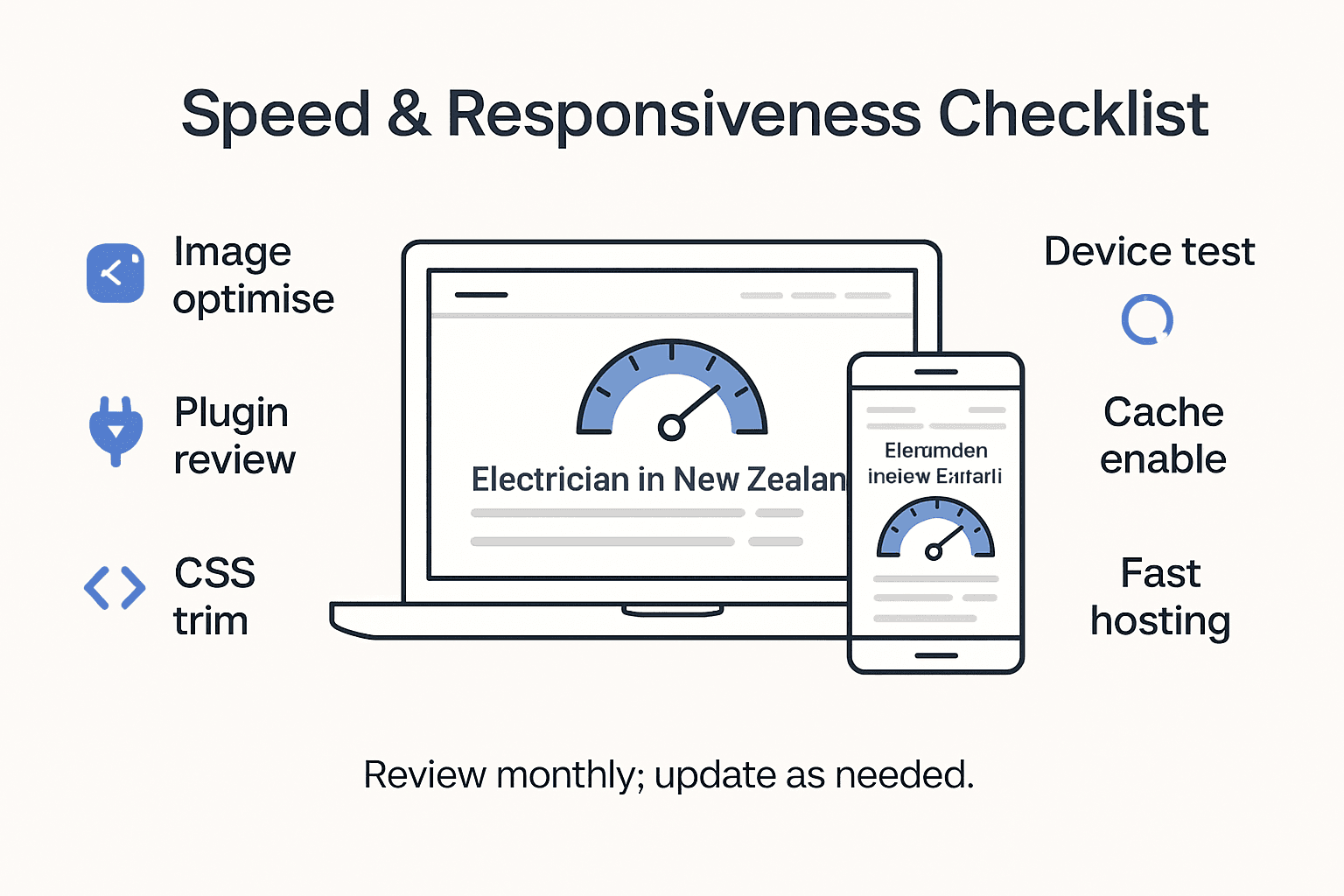

Frequently Asked Questions

How often should I update my website security?

It’s recommended to conduct monthly security assessments and implement immediate updates when vulnerabilities are detected.

What are the common threats to website security?

Common threats include Cross-Site Scripting (XSS), SQL Injection attacks, Distributed Denial-of-Service (DDoS) attacks, and phishing attempts.

Can I manage website security myself?

While basic security measures can be implemented independently, professional security audits provide comprehensive protection against sophisticated threats.

How does website security impact customer trust?

A secure website boosts customer confidence, indicating that your business prioritises the protection of their sensitive information, which can influence purchasing decisions.

Categories
Website

How to Secure Your Website for Lasting Business Success

Cyber attacks cost Australian businesses over 29 billion dollars every year, putting even small websites at risk. As the digital landscape grows, every Australian site owner faces a rising threat from hackers targeting weak security points. Understanding exactly where your website is vulnerable is the first step to building powerful protection. This guide shows you how to assess hidden risks and protect your online presence before problems appear.

Table of Contents

Quick Summary

Essential InsightDetailed Explanation
1. Regularly Conduct Vulnerability AssessmentsQuarterly assessments help identify weak points and strengthen security before breaches occur.
2. Keep Software and Plugins Up to DateRegular updates protect against exploits and vulnerabilities, so always follow a structured update process.
3. Implement Strong Authentication MeasuresMulti-factor authentication and strict access controls increase security and minimize unauthorized access risks.
4. Choose Secure Hosting and SSL ConfigurationSelect hosting providers with robust security features and ensure SSL certificates encrypt data transfers effectively.
5. Establish Continuous Security MonitoringProactive monitoring and incident response plans are essential for detecting and mitigating threats swiftly.

Stage 1: Assess Existing Website Vulnerabilities

Securing your website starts with understanding its current security landscape. A thorough vulnerability assessment helps you identify potential weak points before cybercriminals can exploit them. Web security audit techniques provide critical insights into your digital defence mechanisms.

Begin by conducting a comprehensive scan of your website infrastructure. This involves examining your site’s code, server configurations, and network connections for potential security gaps. Use professional scanning tools that can detect common vulnerabilities such as outdated plugins, weak authentication protocols, and potential entry points for cross-site scripting or SQL injection attacks. Web page clustering techniques can help automatically identify and map potential exploit scenarios, giving you a strategic overview of your website’s security posture.

Key areas to scrutinise include user authentication systems, data encryption standards, and third-party integrations. Check for SSL certificate validity, review user permission settings, and ensure all software components are updated to their latest versions. This methodical approach transforms your website from a potential target to a robust digital fortress.

Pro suggestion: Conduct a vulnerability assessment quarterly to stay ahead of emerging security threats and maintain your website’s digital resilience.

Below is a quick-reference summary of common website security vulnerabilities and their potential business impact:

Vulnerability TypeDescriptionPotential Business Impact
Outdated pluginsUnsupported or unpatched add-onsIncreased risk of data breaches
Weak authenticationSimple or reused passwordsUser accounts may be compromised
SQL injectionUnfiltered external inputData leaks or site defacement
Cross-site scriptingMalicious script insertionLoss of user trust, theft of data
Misconfigured SSLInsecure or expired certificatesSensitive data exposed in transit

Stage 2: Update Core Software and Plugins Regularly

Maintaining a secure website requires consistent and strategic software updates. Your website’s core software and plugins are potential entry points for cybercriminals, making regular updates a critical defence mechanism. WordPress automatic update strategies provide an efficient approach to keeping your digital infrastructure current and protected.

IT manager updating website plugins in server room

When updating, follow a meticulous process to minimise potential disruptions. Best practices for WordPress updates recommend several crucial steps: always create a complete website backup before initiating updates, update the WordPress core first, then systematically update individual plugins rather than using bulk update options. Test each update carefully, paying close attention to site functionality and ensuring no conflicts emerge between different software components.

Prioritise updates from reputable sources and focus on patches that address security vulnerabilities. Check update release notes to understand specific improvements and potential impacts. Pay special attention to plugins with active development and those critical to your website’s core functionality. Some plugins might require manual configuration after updates, so monitor your site closely during and after the update process.

Pro suggestion: Schedule updates during low traffic periods and maintain a comprehensive backup strategy to quickly restore your website if an update causes unexpected issues.

Stage 3: Implement Strong Authentication and Access Controls

Protecting your website requires a comprehensive approach to authentication that goes beyond basic password protection. Static application security testing provides critical insights into identifying potential vulnerabilities within your authentication infrastructure, helping you create a robust defence mechanism against unauthorized access.

Begin by implementing multi-factor authentication as a fundamental security layer. This approach requires users to provide multiple verification methods such as a password combined with a unique code sent to their mobile device or generated by an authenticator app. Dynamic application security testing can help you evaluate the effectiveness of your authentication systems by simulating potential attack scenarios and identifying potential weaknesses in your access control mechanisms.

Establish granular user permission levels that restrict access based on specific roles and responsibilities. Create distinct user categories with carefully defined access rights preventing unnecessary system exposure. Regularly audit user accounts removing outdated credentials and implementing strict password complexity requirements. Utilise encryption protocols for storing user credentials and implement automatic logout mechanisms for inactive sessions to minimise potential security breaches.

Pro suggestion: Conduct periodic security audits of your authentication systems and maintain a comprehensive log of user access attempts to quickly identify and respond to potential security threats.

Stage 4: Configure Secure Hosting and SSL Certificates

Securing your website begins with selecting a robust hosting environment and implementing comprehensive SSL protection. Vulnerability scanning techniques reveal critical insights into potential weaknesses within your hosting infrastructure, helping you create a fortified digital environment that protects both your business and your customers.

When choosing a hosting provider, prioritise those offering advanced security features such as dedicated firewalls, regular malware scanning, and automatic security updates. Implement an SSL certificate across your entire website to encrypt data transmission and protect sensitive user information. Understanding the vulnerability scoring framework can help you systematically evaluate and address potential security risks. Look for hosting providers that offer comprehensive security packages with multiple layers of protection, including intrusion detection systems, DDoS protection, and regular security audits.

Ensure your SSL certificate covers all subdomains and implements the latest encryption protocols. Verify that your certificate is issued by a reputable certificate authority and configure it to enforce HTTPS across your entire website. Regularly monitor your SSL certificate’s validity and set up automatic renewal to prevent unexpected security lapses. Consider implementing additional security measures such as IP restrictions, secure file permissions, and advanced authentication mechanisms to create a multi layered defence strategy.

Infographic showing SSL and hosting website security steps

Pro suggestion: Conduct quarterly security assessments of your hosting environment and SSL configuration to stay ahead of emerging digital threats and maintain robust website protection.

Stage 5: Monitor Security and Respond to Threats

Maintaining robust website security requires continuous vigilance and proactive monitoring. Software composition analysis offers advanced techniques to systematically track potential vulnerabilities across your digital infrastructure, providing a comprehensive approach to identifying and mitigating potential security risks before they escalate.

Implement a multi layered monitoring strategy that includes real time threat detection systems, automated security scanning, and comprehensive log analysis. Utilise vulnerability databases to stay informed about emerging security threats relevant to your specific technology stack. Configure automated alerts that notify you immediately of any suspicious activities such as unexpected login attempts, unusual traffic patterns, or potential data breaches. Develop a structured incident response plan that outlines clear protocols for addressing different types of security threats including immediate containment strategies, forensic investigation procedures, and communication guidelines.

Establish a regular security assessment schedule that includes comprehensive vulnerability scans, penetration testing, and thorough code reviews. Maintain detailed documentation of all security incidents, including root cause analysis and remediation steps. Create a dedicated security response team or designate specific team members responsible for monitoring, investigating, and responding to potential threats. Invest in ongoing security training for your team to ensure everyone understands their role in maintaining your website’s digital defence.

Pro suggestion: Develop a comprehensive incident response playbook that provides clear step by step guidance for addressing different categories of security threats, ensuring your team can react quickly and effectively to potential breaches.

Here is a comparison of monitoring and response tools for maintaining website security:

Tool TypeMain FunctionTypical Use Case
Threat detectionReal-time intrusion alertsIdentifying live attacks immediately
Automated scannersScheduled vulnerability checksDiscovering weaknesses regularly
Log analysis toolsDetailed activity reviewInvestigating suspicious behaviour
Incident responseStructured breach managementCoordinating and tracking remediation

Strengthen Your Website Security with Expert Support

Securing your website is essential to protect your business from cyber threats and ensure lasting success. This article highlights key challenges like outdated plugins, weak authentication, and insecure hosting that could leave your site vulnerable. If you want peace of mind with strong access controls, regular updates, and comprehensive monitoring, partnering with professionals who understand these issues is critical.

https://responsivewebsitedesign.co.nz

Take charge of your website’s security today by exploring our tailored WordPress solutions designed for New Zealand businesses. Whether you need assistance with ongoing maintenance, secure plugin management, or custom security configurations, we provide personalised services that adapt as your business grows. Discover practical strategies and expert guidance in our Website Archives. Visit ResponsiveWebsiteDesign now to secure your digital presence and build with confidence. You can also explore insights on related topics in our Uncategorized Archives as you prepare to take the next step.

Frequently Asked Questions

How can I assess existing vulnerabilities on my website?

To assess existing vulnerabilities, conduct a thorough vulnerability assessment using professional scanning tools. Start by scanning your website’s code, server configurations, and user authentication systems to identify weak points that may be exploited.

What steps should I take to regularly update my website’s core software and plugins?

Regularly updating your website’s core software and plugins should begin with creating a complete backup before any updates. Then, update the core software first, followed by individual plugins, and test for functionality after each update to prevent issues.

How can I implement strong authentication and access controls for my website?

Implement strong authentication by requiring multi-factor authentication, which combines a password with a unique code. Additionally, establish granular user permissions to restrict access based on roles, which enhances your site’s security.

What are the best practices for configuring secure hosting and SSL certificates?

Select a hosting provider that offers advanced security features and implement SSL certificates to encrypt data. Ensure that your SSL certificate covers all subdomains and check its validity regularly to prevent security lapses.

How should I monitor security and respond to potential threats?

Monitor security with a multi-layered approach, including real-time threat detection and automated security scans. Create a structured incident response plan that outlines specific steps for addressing different types of security threats, ensuring you can react quickly and effectively.

How often should I conduct security assessments for my website?

Conduct security assessments at least quarterly to stay ahead of emerging threats. Schedule regular vulnerability scans and penetration testing to ensure your website remains secure against potential risks.