
Over half of australian businesses see a direct link between thoughtful website design and improved customer satisfaction. Clear business goals and a genuine understanding of user needs shape every successful digital project. Taking the time to map user journeys and create audience-focused features will set your website apart and build lasting engagement from the very beginning.
Table of Contents
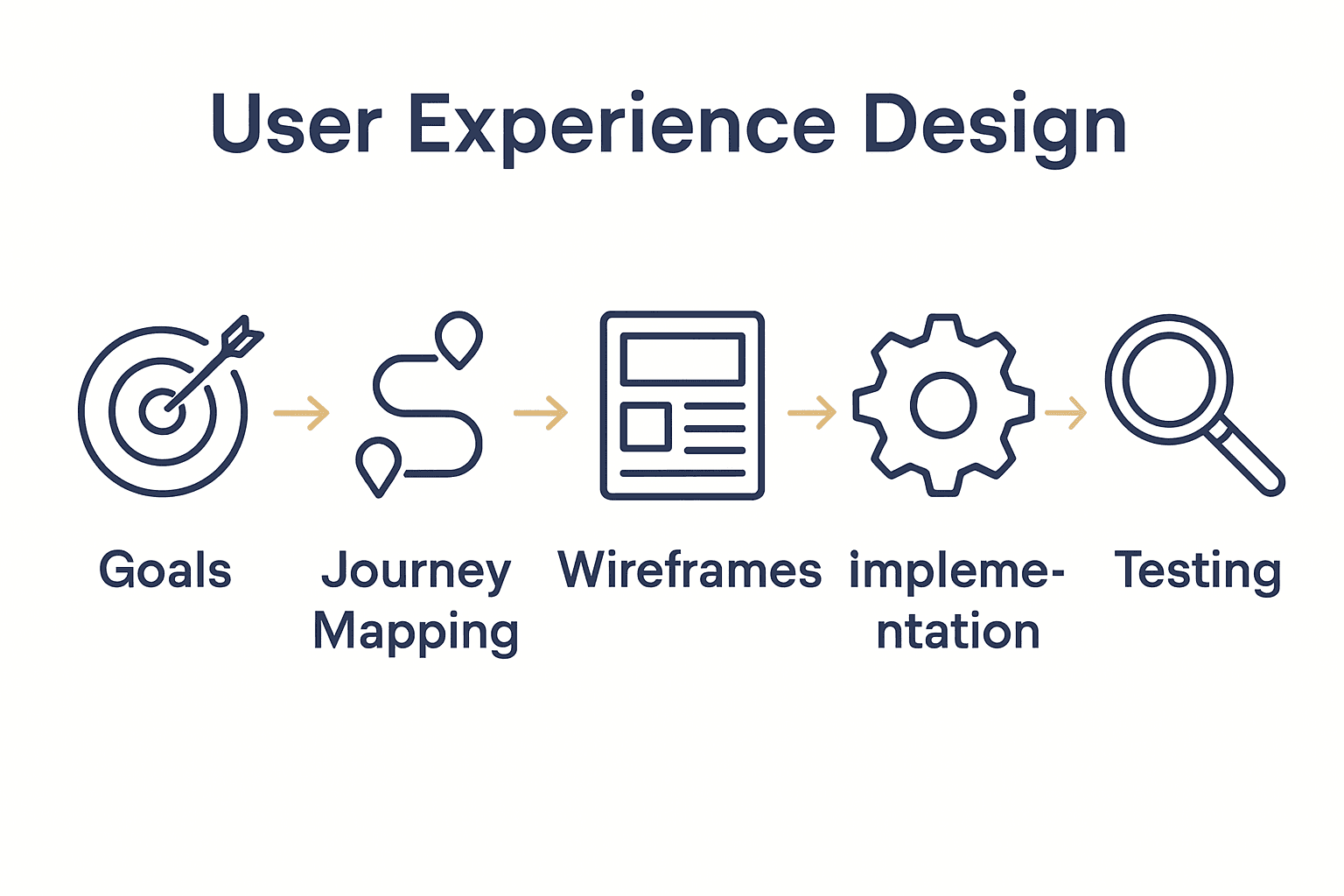
- Step 1: Define Business Goals And User Needs
- Step 2: Map User Journeys And Key Interactions
- Step 3: Create Wireframes And Design Prototypes
- Step 4: Develop And Implement User-Centred Features
- Step 5: Test And Refine The User Experience
Quick Summary
| Significant Insight | Detailed Explanation |
|---|---|
| 1. Define objectives before design | Establish clear business goals and user needs to set a strong foundation for website design. |
| 2. Map user journey stages | Document each step in the user journey to identify critical touchpoints and improve interactions. |
| 3. Create wireframes for structure | Develop wireframes to visualize the layout and interactions, ensuring user needs are prioritised. |
| 4. Develop user-centred features | Involve users in the feature development process to ensure their needs are fully addressed. |
| 5. Test and refine experiences continuously | Implement user testing and feedback loops to consistently enhance the website experience based on real user data. |
 |
|
Step 1: Define business goals and user needs
Defining business goals and user needs represents the critical foundation of any successful website design process. According to Wikipedia, user-centered design requires extensive attention to understanding user characteristics and environments at each design stage.
The initial step involves conducting comprehensive research that bridges your business objectives with user expectations. This means developing a strategic approach that goes beyond surface level design and digs deep into understanding who your target audience really is. An empathy map becomes an invaluable tool during this process, helping you visualize and capture what users say, think, do, and feel.
To effectively define your goals and user needs, consider the following strategic approach:
- Conduct stakeholder interviews to understand internal business objectives
- Perform user research through surveys, interviews, and analytics
- Create detailed user personas representing your target audience
- Map out user journeys to understand potential interactions with your website
- Align business KPIs with user experience expectations
Net Branding recommends documenting these goals clearly and revisiting them throughout the design process. By establishing a robust understanding of both business requirements and user needs, you create a solid framework for developing a website that truly resonates with your target audience and drives meaningful results.

The next phase will involve translating these insights into a comprehensive design strategy that addresses both functional and emotional user requirements.
Step 2: Map user journeys and key interactions
Mapping user journeys represents a strategic approach to understanding how potential customers interact with your business website. According to Harvard UX Group, the User Journey Method helps businesses map out the step-by-step process users take to reach their specific goals.
This mapping process involves identifying every potential touchpoint and interaction a user might experience when navigating your website. Stan Vision suggests dividing the user journey into critical stages: awareness, consideration, decision, and retention. By meticulously documenting each stage, you can uncover insights into user behaviors, emotional responses, and potential friction points.
To effectively map user journeys, consider these strategic steps:
- Create multiple user personas representing different audience segments
- Document each persona’s potential entry points to your website
- Identify specific goals for each user type
- Track the potential paths users might take to accomplish their objectives
- Note emotional states and potential pain points during each interaction
Net Branding recommends using visual mapping tools to help teams understand complex user interactions. Developing a comprehensive user journey map allows you to anticipate user needs, streamline website navigation, and create more intuitive design experiences.
The subsequent phase will involve translating these journey insights into actionable design recommendations that enhance overall user experience.
Step 3: Create wireframes and design prototypes
Creating wireframes and design prototypes transforms your user journey insights into tangible visual representations of your website. Drawing inspiration from Donald Norman’s Design of Everyday Things, our approach emphasizes user-centered design principles that make digital interfaces intuitive and efficient.
The wireframing process involves developing skeletal outlines of your website that illustrate key structural elements and user interaction pathways. These initial drafts serve as blueprints that help teams visualize page layouts, content placement, and navigation flows before investing significant resources into detailed design work.
To develop effective wireframes and prototypes, follow these strategic steps:
- Start with low-fidelity sketches that focus on core functional elements
- Prioritize user needs and expected interactions for each page section
- Use consistent grid systems and alignment to create visual harmony
- Incorporate responsive design principles for multiple device types
- Test initial wireframes with representative user groups for immediate feedback
Net Branding recommends using collaborative design tools that enable real-time iteration and team communication. By maintaining a user-centric approach during wireframing, you ensure that your website design remains focused on delivering optimal user experiences.
The next phase will involve refining these initial prototypes and preparing for comprehensive user testing and validation.
Step 4: Develop and implement user-centred features
Developing user-centred features requires a strategic approach that places your target audience at the core of the design process. User-Centered Design principles emphasize involving users throughout development to ensure the final product meets their specific needs and expectations.
Applying the PACT framework, which analyzes People, Activities, Contexts, and Technologies, helps designers create features that are deeply tailored to user requirements. This comprehensive approach goes beyond surface level interactions and delves into understanding the nuanced ways users engage with digital platforms.
To effectively develop and implement user-centred features, consider these strategic approaches:
- Conduct in-depth user research to understand specific audience needs
- Prototype features with direct input from representative user groups
- Implement interactive elements that solve real user problems
- Design intuitive navigation and interaction pathways
- Create adaptive interfaces that respond to different user contexts
Net Branding recommends continuous user feedback loops that allow for iterative feature refinement. By maintaining a laser focus on user experience, you transform your website from a simple digital presence into a dynamic, responsive platform that genuinely serves your audience.
The subsequent phase will involve comprehensive user testing to validate and further refine these carefully developed features.
Step 5: Test and refine the user experience
Testing and refining the user experience represents the critical final phase of ensuring your website meets audience expectations. Frontiers in Psychology research emphasizes the importance of analyzing trends and constructing theoretical frameworks to understand complex user behaviors during this evaluation stage.
Comprehensive testing involves multiple strategies that go beyond traditional assessment methods. MDPI Research suggests utilizing an enriched customer journey map that combines observational, self-reported, and physiological measures to provide a holistic understanding of user interactions and potential improvement areas.
To effectively test and refine your website experience, implement these strategic approaches:
- Conduct structured user testing with representative audience groups
- Analyze user interaction heat maps and click tracking data
- Gather both quantitative and qualitative user feedback
- Perform cross device and cross browser compatibility checks
- Implement A/B testing for critical user interface elements
Net Branding recommends creating a systematic feedback loop that allows continuous refinement based on real user experiences. By maintaining an iterative approach to testing, you transform your website into a dynamic platform that consistently meets and exceeds user expectations.
The final stage will involve implementing refinements and preparing for ongoing monitoring and optimization of your website experience.
Elevate Your Business Website with Expert User Experience Design
Struggling to turn user insights into a website that truly connects and converts Your business goals and your users needs must work in harmony to create a seamless experience that drives results. The user experience design process outlined in this article highlights key challenges like mapping user journeys and testing features that every successful website must address. Don’t let missed opportunities hold your brand back.
Discover how ResponsiveWebsiteDesign specialises in crafting custom WordPress websites that prioritise user-centred features and responsive design. Explore our proven strategies in the Website Archives for mastering UX principles that turn visitors into loyal customers. Ready to transform your digital presence with a website built for your audience and business objectives Take the next step now by visiting ResponsiveWebsiteDesign and start your journey to a powerful, engaging website tailored for your success.
Frequently Asked Questions
What are the first steps in the user experience design process for business websites?
Defining business goals and understanding user needs are the first essential steps in the user experience design process. Conduct stakeholder interviews and perform user research to identify both your business objectives and the expectations of your target audience.
How do I create user personas for my business website?
To create effective user personas, gather data through surveys and interviews with your audience. Develop detailed profiles that represent different segments of your audience, including their goals, motivations, and challenges, to tailor your design to their needs.
What is a user journey map, and how can it help my website design?
A user journey map visualises the steps users take when interacting with your website, highlighting their goals, pain points, and emotional states. Document each interaction to identify potential improvements and ensure your design addresses user needs at every stage.
How do I test and refine the user experience of my website?
Testing and refining the user experience involves structured user testing, analysing user feedback, and tracking interaction data. Conduct regular tests, such as surveys and A/B testing, to gather insights that help you make necessary adjustments to enhance user satisfaction and website engagement.
What methods can I use to incorporate user feedback into my design?
Utilise feedback loops by conducting regular usability tests and surveys to gather user insights. Incorporate this feedback iteratively into your design to ensure it evolves based on real user experiences and remains user-focused.
Why is user-centred design important for my business website?
User-centred design ensures that your website is tailored to meet the specific needs and expectations of your audience, enhancing their overall experience. By prioritising user interactions from the beginning, you can create a website that not only attracts visitors but also drives engagement and conversions.
Recommended
- How to Improve User Experience for Business Websites – ResponsiveWebsiteDesign
- What Is User Experience? Complete Business Guide – ResponsiveWebsiteDesign
- What Is E-Commerce UX? Complete Expert Overview – ResponsiveWebsiteDesign
- 7 Essential User Experience Tips for Business Websites – ResponsiveWebsiteDesign