
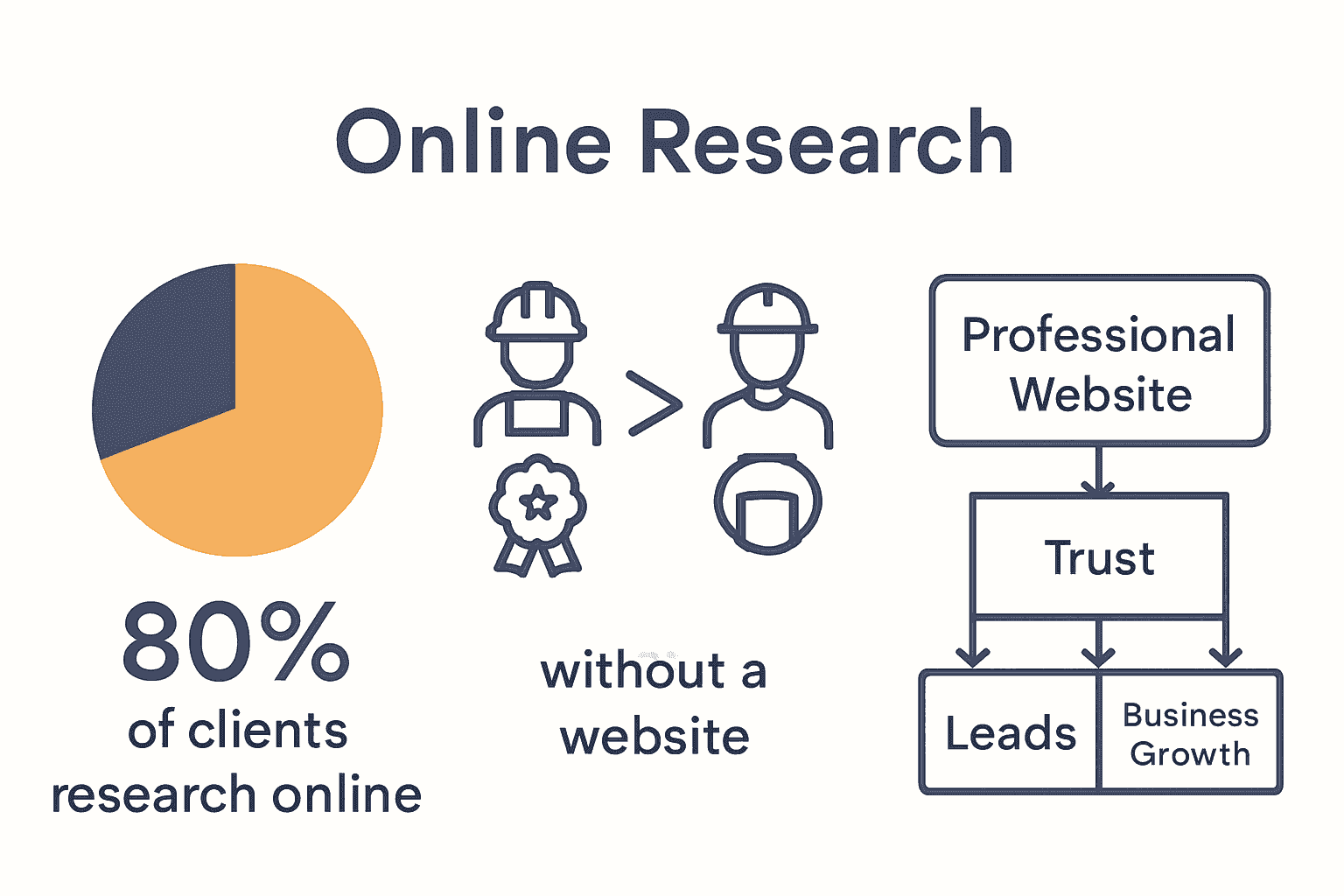
Over 80 percent of construction clients research builders online before making contact. For today’s professionals, a strong website is more than a digital calling card—it is a modern portfolio, a trust signal, and the first handshake with every new prospect. As competition grows fiercer, the builders who clearly present their skills and experience online are the ones winning attention and contracts. Discover what sets effective builder websites apart and how the right features turn visitors into loyal clients.
Table of Contents
- Defining Websites For Modern Builders
- Types Of Builder Websites And Their Purposes
- How Websites Attract And Convert Clients
- Essential Website Features For Builders
- Risks Of Lacking An Online Presence
Key Takeaways
| Point | Details |
|---|---|
| Essential for Success | Modern builder websites are critical business tools that enhance client engagement and showcase expertise. |
| Key Features | Successful websites integrate responsive design, project galleries, clear service descriptions, and prompt client communication channels. |
| Types of Websites | Builders should choose website types based on specific business objectives, such as portfolios, corporate sites, and e-commerce platforms. |
| Risks of Absence | Lacking an online presence can lead to lost opportunities, diminished credibility, and reduced visibility among potential clients. |
 |
|
Defining Websites For Modern Builders
In the rapidly evolving digital landscape, builder websites are no longer optional luxuries but essential business tools that transform how construction professionals connect with potential clients and showcase their expertise. According to GeekForGeeks, modern builder websites are strategically designed to be adaptive or responsive, ensuring optimal viewing experiences across multiple devices.
A professional website for builders serves multiple critical functions beyond simple online presence. It acts as a comprehensive digital portfolio, demonstrating past projects, highlighting technical capabilities, and establishing credibility within the construction industry. GeekForGeeks notes that advanced websites now incorporate sophisticated features like AI-powered design tools and enhanced e-commerce capabilities, reflecting a commitment to innovation and user-centric design.
Key elements that distinguish modern builder websites include:
- Responsive mobile design that adapts seamlessly across smartphones, tablets, and desktops
- High-quality project galleries showcasing completed work
- Clear service descriptions and transparent pricing information
- Client testimonials and case studies
- Easy-to-use contact forms and communication channels
Websites for builders are no longer static digital brochures but dynamic platforms that communicate professionalism, technical expertise, and reliability. They serve as powerful marketing tools that bridge the gap between traditional word-of-mouth referrals and modern digital engagement strategies.
Customer Review:
“Our website transformed our business visibility. Before working with Responsive Website Design, we struggled to attract quality leads. Now, we consistently receive inquiries from potential clients impressed by our online presentation.” – Michael Thompson, Builder
By investing in a professionally designed website, builders can differentiate themselves in a competitive market, demonstrate their unique value proposition, and create lasting digital impressions that convert website visitors into loyal customers.
Types Of Builder Websites And Their Purposes
In the digital age, builders have multiple website types designed to meet specific business objectives and showcase professional capabilities. Ke4rx highlights that these website categories range from simple online portfolios to comprehensive digital platforms tailored for different business scales and needs.
Professional Portfolio Websites serve as digital showcases that highlight a builder’s past projects, technical skills, and professional expertise. These sites typically include high-resolution project galleries, detailed case studies, and comprehensive service descriptions that help potential clients understand the builder’s unique value proposition. According to WebsitePlanet, these platforms provide pre-designed templates that simplify the process of establishing a professional online presence.
Key Types of Builder Websites:
- Corporate Websites: Comprehensive platforms representing entire construction companies
- Personal Portfolio Sites: Individual builder professional showcases
- Project-Specific Landing Pages: Dedicated sites for major construction developments
- Service-Based Websites: Detailed descriptions of specific building and construction services
- E-commerce Enabled Sites: Platforms allowing direct product or service purchases
Modern builder websites must do more than simply exist online. They need to communicate professionalism, demonstrate technical competence, and provide clear pathways for potential clients to engage.
 This means integrating responsive design, clear navigation, compelling visual content, and strategic calls-to-action that convert website visitors into genuine business opportunities.
For builders seeking to establish a powerful digital presence, website design guide for builders offers comprehensive strategies for creating websites that not only look professional but also effectively generate leads and showcase technical expertise.
Customer Review:
“Our new website completely transformed how we attract clients. What used to be word-of-mouth referrals is now a steady stream of quality leads directly through our online platform.” – David Richardson, Construction Manager
By understanding and implementing the right type of website, builders can significantly enhance their market visibility, credibility, and business growth potential in an increasingly digital marketplace.
How Websites Attract And Convert Clients
In the competitive construction industry, websites have become powerful tools for attracting and converting potential clients. WebDesign emphasizes that successful builder websites leverage responsive design, ensuring seamless functionality across all devices and optimizing page load speeds to keep visitors engaged.
Client Attraction Strategies involve creating compelling visual narratives that showcase a builder’s expertise and credibility. According to UMA Technology, the most effective websites integrate interactive content and multimedia approaches that dynamically engage potential clients. This means moving beyond static images to create immersive experiences that demonstrate a builder’s unique capabilities.
Key Elements for Attracting and Converting Clients:
- High-quality project portfolios with detailed case studies
- Professional client testimonials and success stories
- Clear and transparent service descriptions
- Easy-to-use contact forms and communication channels
- Responsive design that works perfectly on mobile devices
- Loading speeds under 3 seconds
- Compelling visual storytelling
Psychologically, potential clients are looking for more than just technical competence. They want to see evidence of reliability, quality, and understanding of their specific needs. This means your website must communicate trust through professional design, authentic content, and clear demonstrations of past successes.
For builders seeking to transform their online presence, our guide to creating a winning website provides comprehensive strategies for developing a website that not only attracts but consistently converts potential clients into actual projects.
Customer Review:
“Before our website redesign, we were struggling to get quality leads. Now, we receive multiple inquiries every week from clients who feel they already know and trust us through our online presence.” – Sarah Johnson, Construction Project Manager
By understanding and implementing strategic website design principles, builders can create digital platforms that do more than showcase work – they become powerful client conversion machines that generate consistent business opportunities.
Essential Website Features For Builders
Builders require sophisticated websites that go beyond simple online brochures. WebDesign emphasizes that essential website features include responsive design, ensuring optimal viewing across multiple devices, and maintaining efficient page load speeds to keep potential clients engaged.
Strategic Website Components play a crucial role in converting website visitors into potential clients. According to UMA Technology, the most successful builder websites integrate interactive content and multimedia approaches that dynamically showcase a company’s capabilities and expertise.
Critical Website Features for Builders:
- High-resolution project image galleries
- Comprehensive service descriptions
- Professional client testimonials
- Clear contact information and inquiry forms
- Mobile-responsive design
- Fast loading performance
- Search engine optimized content
- Security certificates
- Integration with professional social media profiles
Psychologically, potential clients seek more than technical specifications. They want evidence of reliability, quality craftsmanship, and understanding of their specific construction needs. Your website must communicate professionalism, transparency, and trustworthiness through carefully curated content and design.
For builders looking to develop a powerful online presence, our guide to essential business website features provides comprehensive strategies for creating websites that effectively communicate your brand’s unique value proposition.
Customer Review:
“Our new website transformed how potential clients perceive our business. The professional design and comprehensive project showcase have significantly increased our inquiry rates.” – Michael Thompson, Construction Business Owner
By implementing these essential features, builders can create digital platforms that not only display their work but also serve as powerful marketing tools that generate consistent business opportunities and build long-term client trust.
Risks Of Lacking An Online Presence
In today’s digital marketplace, builders without a robust online presence face significant competitive disadvantages. WebDesign emphasizes that lacking an online presence can result in missed opportunities, diminished credibility, and dramatically reduced visibility in search engine results, essentially rendering a business invisible to potential clients.
Digital Invisibility Consequences extend far beyond simple marketing limitations. UMA Technology highlights that builders without online platforms risk losing potential clients to more digitally savvy competitors who effectively showcase their projects, share compelling client testimonials, and provide interactive content that builds trust and engagement.
Primary Risks of No Online Presence:
- Complete loss of digital marketing opportunities
- Reduced professional credibility
- Zero visibility in online search results
- Limited client acquisition channels
- Inability to demonstrate past project expertise
- Missing opportunities for client testimonial sharing
- Perception of being outdated or unprofessional
- No means of establishing digital trust
Psychologically, potential clients interpret a lack of online presence as a sign of unprofessionalism or technological incompetence. In the construction industry, where trust and demonstrated expertise are paramount, an absent or poorly maintained website can catastrophically undermine a builder’s reputation and potential business opportunities.
For builders seeking to protect their business from these digital risks, our guide to essential business website features provides comprehensive strategies for establishing a powerful and effective online presence.
Customer Review:
“Before creating our website, we were losing countless potential clients who couldn’t find or verify our work online. Now, our digital presence brings us consistent, high-quality leads.” – Robert Williams, Construction Business Owner
Understanding and mitigating these digital risks is not just about having a website – it’s about creating a strategic online platform that communicates professionalism, expertise, and reliability in an increasingly digital business landscape.
Elevate Your Building Business with a Professional Website
Builders understand the challenge of standing out in a crowded market and attracting quality leads. This guide highlights how a strong online presence transforms your business by showcasing your projects, building trust, and converting visitors into clients through responsive design and clear communication. If you struggle with visibility or want to strengthen your credibility online, your website can become your most powerful marketing asset.
Discover tailored WordPress solutions that fit your unique needs at ResponsiveWebsiteDesign. With expertise in creating visually engaging, mobile-responsive, and SEO-optimised websites for New Zealand builders, we help you build lasting client relationships and generate steady inquiries. Explore strategies and insights in our Website Archives and enhance your reach further through smart SEO practices found in our SEO Archives. Don’t let your competitors outshine you online—take the next step and transform your digital presence today.
Frequently Asked Questions
Why is having a website important for builders?
A website acts as a digital portfolio, showcasing past projects and expertise, establishing credibility, and attracting potential clients.
What features should a builder’s website include?
Essential features include high-resolution project galleries, clear service descriptions, professional testimonials, responsive design, and easy contact forms.
How does a builder’s website help in client conversion?
A well-designed website engages visitors with compelling content, showcases reliability and professionalism, and provides clear pathways for inquiries, leading to higher client conversion rates.
What are the risks for builders who lack an online presence?
Builders without a website risk losing potential clients, diminished credibility, and complete invisibility in online search results, which can significantly hinder business growth.