
Most australian business owners do not realise that over 40 percent of cyber attacks now target small to medium enterprises. The risks extend far beyond just inconvenience, exposing valuable data and threatening brand reputation. Understanding website security is crucial for anyone building or maintaining an online presence. This article highlights practical strategies and vital steps to help australian businesses protect their websites, safeguard customer trust, and comply with evolving digital regulations.
Table of Contents
- Website Security Explained For Business Owners
- Common Threats Facing Modern Websites
- How Security Impacts SEO And Trust
- Legal And Compliance Issues For NZ Sites
- Essential Steps To Improve Website Security
Key Takeaways
| Point | Details |
|---|---|
| Understand Website Security | Business owners must recognise the essential nature of website security to protect their digital assets from cyber threats. |
| Implement Multi-Layered Protection | Employ diverse strategies such as SSL certificates, regular updates, and security audits to safeguard against vulnerabilities. |
| Ongoing Compliance is Crucial | Adhering to legal requirements like the New Zealand Privacy Act 2020 is vital for protecting customer data and maintaining trust. |
| Educate and Train Staff | Regular training on cybersecurity awareness can empower teams to identify and address emerging threats effectively. |
Website Security Explained For Business Owners
Website security represents a critical shield protecting your digital business assets from potential cyber threats. For New Zealand business owners, understanding website vulnerabilities is no longer optional but a fundamental requirement in today’s interconnected digital landscape. Net Branding recognises that small to medium enterprises are increasingly targeted by sophisticated cybercriminals seeking to exploit unprotected digital platforms.
The Cybersecurity and Infrastructure Security Agency highlights significant risks businesses face, noting that unprotected websites can experience devastating consequences like data compromise and loss of availability. Cybercriminals often target websites with weak security protocols, using automated tools to scan for vulnerabilities and exploit even minor system weaknesses. These attacks can result in significant financial losses, reputational damage, and potential legal complications for unprepared businesses.
Effective website security involves multiple strategic layers of protection. Key defensive strategies include:
- Implementing robust SSL certificates
- Regular software and plugin updates
- Strong password management protocols
- Utilising secure hosting platforms
- Conducting periodic security audits
- Installing reputable web application firewalls
Understanding website security requires ongoing commitment and proactive management. Business owners must recognise that cybersecurity is not a one-time task but a continuous process of monitoring, updating, and adapting to emerging digital threats.
Pro Security Tip: Regular vulnerability scanning: Schedule monthly comprehensive security scans to identify and address potential weaknesses before they can be exploited by malicious actors.
Real Business Owner Review:
“After implementing comprehensive security measures, our online business feels significantly more protected. The peace of mind is invaluable.” – Sarah Thompson, Auckland Small Business Owner
Frequently Asked Questions
How often should I update my website security?
Recommend monthly security checks and immediate updates when vulnerabilities are discovered.What is the most common website security threat?
Phishing attempts and malware infiltration remain the most prevalent risks for small businesses.Can I manage website security myself?
While basic measures can be self-implemented, professional security audits provide comprehensive protection.
Common Threats Facing Modern Websites
Websites face an increasingly complex landscape of digital security challenges that can compromise business operations and customer trust. Modern cybercriminals have developed sophisticated techniques to exploit vulnerabilities in web platforms, targeting businesses of all sizes with precision and strategic intent. Understanding these threats is the first critical step in developing a robust defence strategy for your online presence.

According to security research, website security threats like Cross-Site Scripting (XSS) and SQL Injection continue to pose significant risks for digital businesses. These advanced attack methods allow malicious actors to inject harmful code, potentially stealing sensitive customer information, manipulating database contents, or completely compromising website functionality. Distributed Denial-of-Service (DDoS) attacks represent another prevalent threat, capable of overwhelming website infrastructure and rendering online services completely inaccessible.
The most common website security threats include:
- Cross-Site Scripting (XSS)
- SQL Injection attacks
- Session hijacking
- Distributed Denial-of-Service (DDoS) attacks
- Malware infiltration
- Phishing attempts
- Brute force password attacks
Net Branding recognises that small to medium enterprises are particularly vulnerable to these digital threats. Cybercriminals often target businesses with limited technical resources, assuming they have less sophisticated security infrastructure. This makes proactive security measures not just recommended, but essential for maintaining digital resilience.
Here is a comparison of common website threats and their potential business impact:
| Threat Type | How It Works | Potential Business Impact |
|---|---|---|
| Cross-Site Scripting (XSS) | Injects malicious scripts into webpages | Data theft, site defacement |
| SQL Injection | Manipulates database queries to access data | Customer data compromise |
| Brute Force Password Attack | Repeatedly guesses passwords to gain access | Unauthorised admin entry, outages |
| DDoS Attack | Overwhelms website with fake traffic | Service disruption, lost revenue |
| Phishing Attempt | Tricks users into revealing sensitive data | Credential theft, trust erosion |
| Malware Infiltration | Installs harmful software without consent | Data loss, regulatory fines |
Pro Security Tip: Threat Awareness Training: Regularly educate your team about emerging cybersecurity risks and implement strict protocols for identifying and reporting potential security breaches.
Real Business Owner Review:
“After experiencing a minor security incident, we invested in comprehensive website protection. It was the best decision for our business’s digital safety.” – Michael Chen, Wellington Online Retailer
Frequently Asked Questions
How quickly can a website be compromised?
Modern cyber attacks can compromise an unprotected website in minutes, sometimes even seconds.Are small businesses really at risk?
Absolutely. Small businesses are often seen as easier targets with potentially weaker security infrastructures.What is the most dangerous type of cyber attack?
SQL Injection and Cross-Site Scripting remain among the most dangerous due to their ability to completely compromise website and customer data.
How Security Impacts SEO And Trust
Website security is no longer just a technical consideration but a fundamental aspect of building and maintaining online credibility for businesses. Search engines and potential customers increasingly view website security as a critical indicator of a company’s professionalism, reliability, and commitment to protecting digital assets. Net Branding understands that in today’s interconnected digital ecosystem, security directly influences both search engine rankings and customer perception.
Cybersecurity measures play a crucial role in maintaining search engine visibility and user trust, with potential security breaches capable of devastating a business’s online reputation. Google and other search engines actively penalise websites with compromised security, potentially removing them from search results or displaying warning messages that dramatically reduce visitor confidence. These penalties can result in significant traffic loss, decreased conversion rates, and long-term damage to brand reputation.
The primary ways security impacts SEO and trust include:
- Preventing search engine blacklisting
- Protecting customer data integrity
- Maintaining website loading speed
- Reducing vulnerability to malicious attacks
- Preserving website functionality
- Demonstrating professional digital responsibility
Small to medium enterprises must recognise that security is not just about technical protection but about building customer confidence. A secure website signals to potential clients that your business takes their digital safety seriously. This psychological reassurance can significantly influence purchasing decisions, especially in industries handling sensitive customer information.
The table below summarises how improved website security can benefit both SEO and customer trust:
| Security Enhancement | Effect On SEO | Effect On Trust |
|---|---|---|
| Visible SSL Certificate | Boosts rankings, no warnings | Reassures visitors, signals legitimacy |
| Fast Security Updates | Prevents penalties | Demonstrates proactive care |
| Strong Data Protection | Avoids blacklisting | Encourages repeat business |
| Privacy Policy Clarity | Supports compliance signals | Builds credibility with new customers |
Pro Security Tip: Trust Signalling: Implement visible security badges, SSL certificates, and clear privacy policies to communicate your commitment to digital safety and build immediate customer confidence.
Real Business Owner Review:
“After prioritising our website security, we noticed a marked improvement in customer trust and search engine rankings.” – Emma Roberts, Auckland E-commerce Entrepreneur
Frequently Asked Questions
How quickly can security impact my search rankings?
Search engines can penalise or flag insecure websites within hours of detecting vulnerabilities.Do customers really care about website security?
Yes. Over 85% of online consumers will abandon a purchase if they perceive potential security risks.Can good security improve my website’s performance?
Absolutely. Secure websites often experience better loading times and improved user experience.
Legal And Compliance Issues For NZ Sites
Navigating the complex legal landscape of online business requires New Zealand website owners to understand and implement robust compliance frameworks that protect both their business and their customers. Net Branding recognises that legal compliance is not merely a checkbox exercise but a fundamental aspect of responsible digital operations. Websites serve as critical touchpoints for businesses, making legal adherence an essential component of digital strategy.
The New Zealand Privacy Act 2020 establishes comprehensive guidelines for organisations managing personal data, creating a stringent framework for digital information protection. This legislation mandates that businesses implement rigorous data management practices, ensuring customer information remains secure, confidential, and used only for intended purposes. Non-compliance can result in significant financial penalties, reputational damage, and potential legal action against the business.
Key legal compliance considerations for New Zealand websites include:
- Implementing transparent privacy policies
- Obtaining explicit customer consent for data collection
- Ensuring secure data storage and transmission
- Providing clear opt-out mechanisms
- Maintaining accurate and up-to-date customer information
- Protecting customer data from unauthorized access
- Responding promptly to data access requests
Small to medium enterprises must recognise that legal compliance extends beyond mere technical requirements. It represents a commitment to ethical business practices, customer respect, and digital responsibility. Websites that demonstrate comprehensive legal understanding can differentiate themselves in a competitive marketplace, building trust and credibility with potential customers.
Pro Security Tip: Compliance Documentation: Regularly review and update your website’s privacy policy and terms of service to ensure alignment with current New Zealand legal standards.
Real Business Owner Review:
“Understanding and implementing legal compliance transformed our approach to digital business. It’s about protecting our customers and our reputation.” – David Thompson, Auckland Digital Entrepreneur
Frequently Asked Questions
What are the main legal risks for websites?
Data breaches, privacy violations, and failure to obtain proper customer consent represent significant legal risks.How often should privacy policies be updated?
Recommend reviewing and updating privacy policies annually or whenever significant legislative changes occur.Can small businesses afford legal compliance?
Compliance is more cost-effective than potential legal penalties and reputational damage from non-compliance.
Essential Steps To Improve Website Security
Website security represents a critical defence mechanism for businesses operating in the digital landscape, requiring strategic and comprehensive approaches to protect valuable digital assets. Net Branding understands that small to medium enterprises often face unique challenges in implementing robust security protocols. Modern cybersecurity demands proactive, multi-layered strategies that address potential vulnerabilities before they can be exploited.
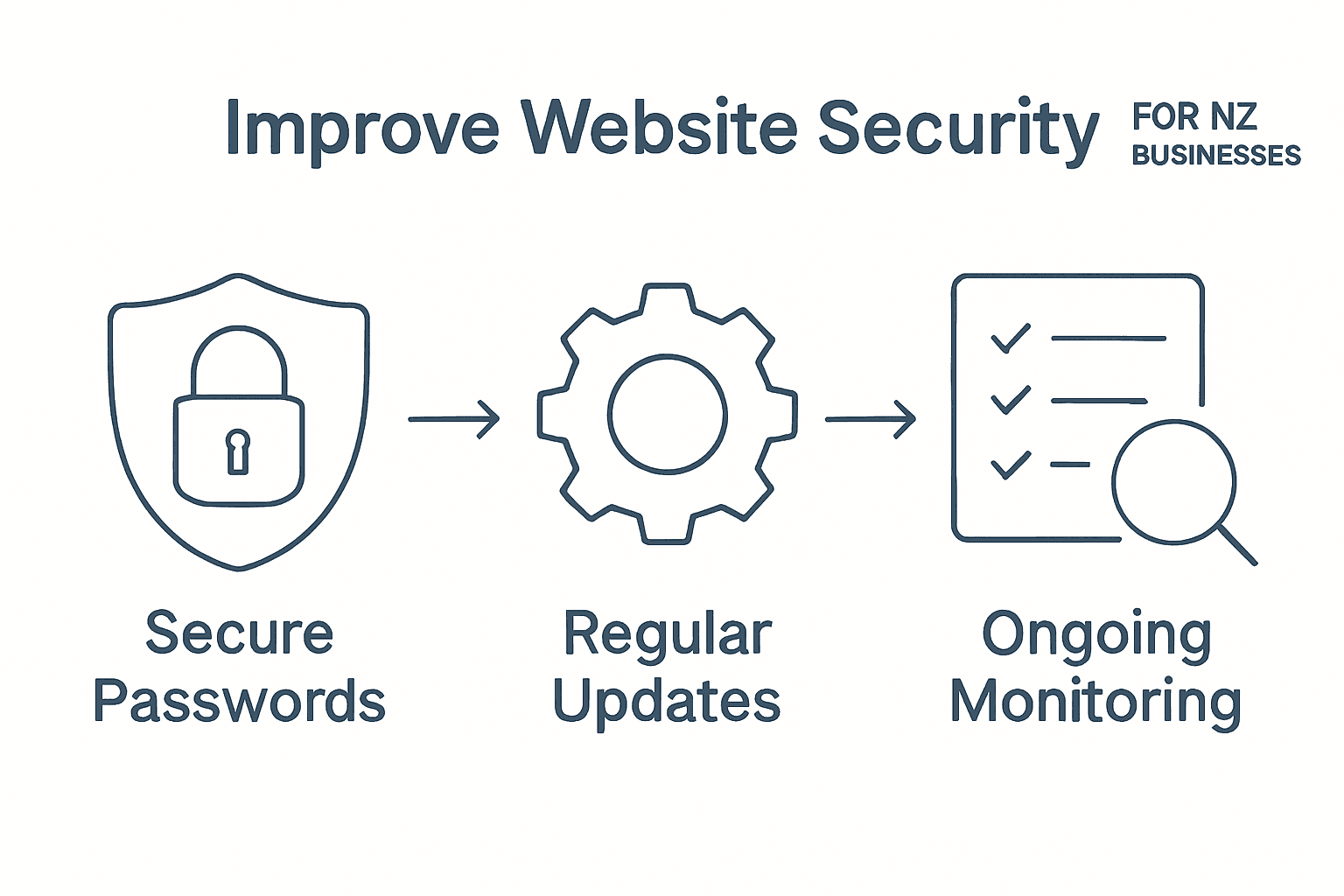
Strategic security measures recommended by cybersecurity experts involve systematically securing domain ecosystems and implementing strong authentication protocols. Businesses must move beyond basic protection strategies, recognising that cybercriminals continuously evolve their tactics to penetrate digital defences. This requires a dynamic, adaptive approach to website security that anticipates and neutralises potential threats before they can cause significant damage.
Essential steps for improving website security include:
- Implementing robust SSL/TLS certificates
- Enabling two-factor authentication
- Regularly updating software and plugins
- Using strong, unique passwords
- Installing web application firewalls
- Conducting periodic security audits
- Backing up website data frequently
- Limiting administrative access
- Monitoring website traffic for suspicious activities
Small to medium enterprises must understand that website security is not a one-time implementation but an ongoing process of vigilance and continuous improvement. Each security measure acts as a layer of protection, creating a comprehensive shield against potential cyber threats. Businesses that invest time and resources in understanding and implementing these strategies position themselves to protect their digital reputation and customer trust.
Pro Security Tip: Continuous Learning: Subscribe to cybersecurity newsletters and attend periodic training sessions to stay updated on emerging digital threats and protection strategies.
Real Business Owner Review:
“Investing in comprehensive website security was the best decision for our online business. We’ve seen increased customer confidence and reduced risk.” – Rachel Chen, Wellington Digital Entrepreneur
Frequently Asked Questions
How often should I update my website security?
Recommend monthly security assessments and immediate updates when vulnerabilities are detected.What is the most critical security measure?
Two-factor authentication and regular software updates provide the most fundamental protection.Can small businesses afford comprehensive security?
Many cost-effective security solutions exist that can protect businesses without significant financial investment.
Protect Your New Zealand Business With Professional Website Security Solutions
The rising threats like Cross-Site Scripting, SQL Injection, and phishing attacks expose New Zealand businesses to serious risks that can damage reputation, SEO rankings, and customer trust. If you want to move beyond basic protection and build a resilient online presence, understanding and implementing multi-layered security measures such as SSL certificates, regular updates, and two-factor authentication is essential. You deserve a website that not only looks great but is also secure and trustworthy for your customers.
Take control of your digital safety today with expert WordPress website design, development, and ongoing security management tailored for Kiwi businesses. Explore how our team at ResponsiveWebsiteDesign can help safeguard your website while boosting SEO and user experience. Learn more about the latest strategies and get started by visiting our Website Archives and Uncategorized Archives for insights relevant to protecting your business online. Don’t wait until a cyber attack happens. Visit ResponsiveWebsiteDesign now and secure your business’s future with confidence.
Frequently Asked Questions
How often should I update my website security?
It’s recommended to conduct monthly security assessments and implement immediate updates when vulnerabilities are detected.
What are the common threats to website security?
Common threats include Cross-Site Scripting (XSS), SQL Injection attacks, Distributed Denial-of-Service (DDoS) attacks, and phishing attempts.
Can I manage website security myself?
While basic security measures can be implemented independently, professional security audits provide comprehensive protection against sophisticated threats.
How does website security impact customer trust?
A secure website boosts customer confidence, indicating that your business prioritises the protection of their sensitive information, which can influence purchasing decisions.
Recommended
- Complete Guide to Website Security for Businesses – ResponsiveWebsiteDesign
- Top Small Business Website Solutions in New Zealand: Our Top Picks – ResponsiveWebsiteDesign
- Top Small Business Website Solutions in New Zealand: Our Top Picks – ResponsiveWebsiteDesign
- How to Start a Company Website: A Step-by-Step Guide – ResponsiveWebsiteDesign