
Did you know that global e-commerce sales exceeded $6 trillion in 2023? Online shopping has changed the way people buy and sell, removing traditional barriers and making products easier to access than ever before. As buyers expect speed, security, and convenience at every step, understanding how e-commerce works is vital for any business looking to succeed in today’s competitive marketplace.
Table of Contents
- What Is E-Commerce and How It Works
- Main Types of E-Commerce Models
- Essential Features for Online Stores
- Security, Privacy, and Compliance Concerns
- Common E-Commerce Challenges and Solutions
Key Takeaways
| Key Point | Description |
|---|---|
| E-Commerce Transformation | E-commerce represents a significant shift towards online transactions, enabling businesses to operate 24/7 globally. |
| Customer Experience is Crucial | A well-designed website with intuitive navigation and high-quality visuals significantly enhances the customer journey and drives conversions. |
| Security and Compliance | Robust security measures and compliance with regulations like GDPR are vital for building consumer trust and protecting sensitive data. |
| Model Selection Matters | Choosing the appropriate e-commerce model (B2C, B2B, C2C, etc.) is essential based on your business objectives and target audience. |
What Is E-Commerce and How It Works
E-commerce represents the digital transformation of traditional business transactions, enabling companies to sell products and services directly through online platforms. According to Wikipedia, electronic commerce involves buying and selling goods and services over the internet, leveraging advanced technologies like mobile commerce and online transaction processing.
At its core, e-commerce allows businesses to create virtual storefronts that operate 24/7, transcending geographical limitations and traditional retail constraints. Online transactions now encompass everything from physical product sales to digital services, streaming content, and downloadable resources. The fundamental mechanics involve customers browsing products, selecting items, adding them to a digital shopping cart, and completing purchases through secure payment gateways.
Key Components of E-Commerce Include:
- Digital product catalogues
- Secure payment systems
- Customer account management
- Order tracking capabilities
- Mobile responsive design
Net Branding recognises that successful e-commerce goes beyond simply listing products online. It requires strategic website design, seamless user experience, and robust backend infrastructure that supports smooth transactions. Modern e-commerce platforms integrate multiple technologies to create engaging, user-friendly shopping experiences that convert visitors into customers.
Businesses considering e-commerce must understand the technological and strategic investments required. Electronic Business research indicates that online commerce encompasses comprehensive business activities, not just transactional exchanges. This means developing comprehensive digital strategies that align technological capabilities with specific business objectives.
Customer Journey Matters
The e-commerce experience begins the moment a potential customer lands on your website. Professional design, intuitive navigation, high-quality product images, detailed descriptions, and transparent pricing are crucial elements that influence purchasing decisions. Responsive website design ensures your online store functions perfectly across smartphones, tablets, and desktop computers.
One client review highlights this transformative potential: “Our sales increased by 167% after redesigning our website with a focus on e-commerce functionality. The team understood exactly what our business needed.”
FAQs:
How secure are online transactions?
Reputable e-commerce platforms use advanced encryption and secure payment gateways to protect customer data.Do I need technical skills to start an online store?
Modern platforms like WooCommerce make it relatively straightforward, but professional guidance can optimize your setup.What are the primary costs of establishing an e-commerce website?
Costs vary, but professional e-commerce website design from NZD 2,500 can provide a comprehensive, customized solution.
Main Types of E-Commerce Models
E-commerce has evolved to encompass multiple transactional models that define how businesses and consumers interact online. According to NerdWallet, the primary e-commerce models include Business-to-Consumer (B2C), Business-to-Business (B2B), Consumer-to-Consumer (C2C), Consumer-to-Business (C2B), Business-to-Government (B2G), and Direct-to-Consumer (D2C).
Business-to-Consumer (B2C) Model
The B2C model represents the most common e-commerce interaction where businesses sell directly to individual consumers. Examples include online retail platforms like clothing stores, electronics shops, and digital marketplaces. These platforms allow customers to browse, select, and purchase products without visiting physical stores.
Business-to-Business (B2B) Model
In the B2B e-commerce model, businesses sell products or services to other businesses. This model often involves wholesale transactions, bulk purchasing, and specialized industrial equipment. Companies like Net Branding provide website design and development services to other businesses, representing a classic B2B interaction.
Consumer-to-Consumer (C2C) Model
C2C platforms enable individual consumers to sell products or services directly to other consumers. Popular examples include online marketplaces and auction sites where individuals can trade goods, services, or digital assets without traditional business intermediaries.
Consumer-to-Business (C2B) Model
This innovative model allows consumers to offer services or products to businesses. Reference highlights the growing significance of C2B transactions. Typical scenarios include freelance platforms, where professionals offer skills and services to companies, or user-generated content platforms.
Direct-to-Consumer (D2C) Model
D2C represents a modern e-commerce approach where manufacturers sell directly to end consumers, bypassing traditional retail channels. This model enables brands to maintain greater control over their product presentation, pricing, and customer experience.
Key Differences Between E-Commerce Models:
- B2C: Business selling to individual consumers
- B2B: Business selling to other businesses
- C2C: Consumers trading with each other
- C2B: Consumers providing value to businesses
- D2C: Manufacturers selling directly to consumers
Net Branding understands that selecting the right e-commerce model depends on your specific business goals, target audience, and operational structure.
Professional website design can help optimize your chosen model for maximum effectiveness.
Here’s a summary of the main e-commerce models and their target audiences:
| E-Commerce Model | Typical Participants | Example Platforms |
|---|---|---|
| B2C (Business-to-Consumer) | Businesses Individual consumers | Online retail stores Digital marketplaces |
| B2B (Business-to-Business) | Businesses Other businesses | Wholesale suppliers Design service firms |
| C2C (Consumer-to-Consumer) | Individual consumers Other consumers | Auction sites Online marketplaces |
| C2B (Consumer-to-Business) | Individual consumers Businesses | Freelance networks User-generated content sites |
| D2C (Direct-to-Consumer) | Manufacturers End consumers | Brand online stores Product websites |
| B2G (Business-to-Government) | Businesses Government agencies | Government procurement portals |
One client testimonial underscores this approach: “Our customized e-commerce website transformed how we connect with customers, making our online transactions seamless and intuitive.”
FAQs:
Which e-commerce model is best for my business?
The ideal model depends on your industry, products, and target market. Professional consultation can help determine the most suitable approach.How complex is implementing an e-commerce model?
Modern platforms make implementation relatively straightforward, but strategic planning is crucial for success.What are the initial costs for setting up an e-commerce platform?
Costs vary, but professional e-commerce website design starts from NZD 2,500, providing a comprehensive solution tailored to your business needs.
Essential Features for Online Stores
Building a successful online store requires strategic planning and integrating key technological components that create seamless shopping experiences. Learning Resource highlights that essential e-commerce platforms must incorporate critical functionalities such as product catalogs, shopping carts, secure payment systems, and robust order tracking.
Product Catalog and Management
A comprehensive product catalog serves as the foundation of any online store. This digital showcase should include high-quality images, detailed product descriptions, pricing information, variants, and clear categorization. Effective catalog management allows customers to easily browse, compare, and select products with confidence.

Advanced Shopping Cart Features
The shopping cart represents more than a simple transaction tool. Modern e-commerce platforms require intelligent cart systems that:
- Allow multiple item selection
- Provide real-time inventory updates
- Support complex product configurations
- Enable easy modification of selected items
- Offer guest checkout and registered user options
Secure Payment Processing
Secure payment gateways are non-negotiable for building customer trust. Implementing multiple payment options like credit cards, digital wallets, and bank transfers provides flexibility. Encryption, fraud detection, and compliance with financial security standards protect both businesses and consumers.
Order Tracking and Customer Communication
Transparent order tracking creates positive customer experiences. Automated systems that send confirmation emails, shipping updates, and delivery notifications keep customers informed throughout their purchasing journey. Net Branding recommends integrating real-time tracking capabilities that provide precise delivery estimates.
Customer Reviews and Social Proof
Incorporating customer review systems and testimonial features adds credibility to your online store. Potential buyers rely on authentic feedback to make purchasing decisions. Allowing verified customers to share experiences builds trust and influences future sales.
One client shared: “Our redesigned e-commerce platform with comprehensive features increased our conversion rates by 42% within three months.”
Additional Recommended Features:
- Mobile responsive design
- Live chat support
- Wishlist functionality
- Easy returns and refund processes
- Cross-selling and upselling recommendations
For a deeper understanding of creating high-performing online stores, check out our essential business website must-haves guide.
FAQs:
How complex is implementing these features?
Modern e-commerce platforms make integration relatively straightforward, but professional guidance ensures optimal implementation.What are typical costs for a feature-rich online store?
Professional e-commerce website design starts from NZD 2,500, providing comprehensive solutions tailored to your business needs.Can I add features incrementally?
Yes, most platforms allow gradual feature integration, allowing businesses to scale their online presence strategically.
Security, Privacy, and Compliance Concerns
In the digital marketplace, cybersecurity has become paramount for e-commerce platforms. According to AARF Research, e-commerce platforms must proactively address security concerns such as potential data breaches, ensure robust customer privacy protections, and maintain compliance with critical regulations like GDPR to sustain customer trust.
Data Protection Strategies
Protecting customer information requires a multi-layered approach. Encryption technologies, secure socket layer (SSL) protocols, and advanced firewall systems form the first line of defense against potential cyber threats. Net Branding recommends implementing comprehensive security measures that go beyond basic compliance, creating a fortress-like protection for sensitive customer data.
Regulatory Compliance Framework
Journal of Compliance and E-Security emphasizes that maintaining legal standards is critical for protecting consumer information. E-commerce businesses must navigate complex regulatory landscapes, which include:
- General Data Protection Regulation (GDPR)
- Payment Card Industry Data Security Standard (PCI DSS)
- Consumer privacy laws
- International data transfer regulations
Transparency and Customer Trust
Building customer confidence requires more than technical safeguards. Businesses must develop clear privacy policies, provide transparent data usage explanations, and offer customers control over their personal information. This approach demonstrates commitment to ethical data management and builds long-term customer relationships.
Cybersecurity Best Practices
Effective security strategies include:
- Regular security audits
- Multi-factor authentication
- Continuous system updates
- Employee cybersecurity training
- Robust incident response plans
One client testimonial highlights the importance of comprehensive security: “After implementing advanced security protocols, we saw a 35% increase in customer trust and retention.”
For a deeper understanding of creating secure online environments, explore our essential business website must-haves guide.
FAQs:
How often should we update our security systems?
Cybersecurity requires continuous monitoring and updates, typically every 3-6 months.What is the cost of implementing robust security?
Professional e-commerce website design with advanced security features starts from NZD 2,500.Can small businesses afford comprehensive cybersecurity?
Scalable security solutions exist for businesses of all sizes, with modular approaches allowing gradual implementation.
Common E-Commerce Challenges and Solutions
Navigating the complex digital marketplace requires strategic problem-solving and proactive approaches. High Approach Research identifies that e-commerce businesses frequently encounter significant challenges like cart abandonment, cybersecurity threats, and intricate logistical complexities that demand sophisticated mitigation strategies.
Cart Abandonment Strategies
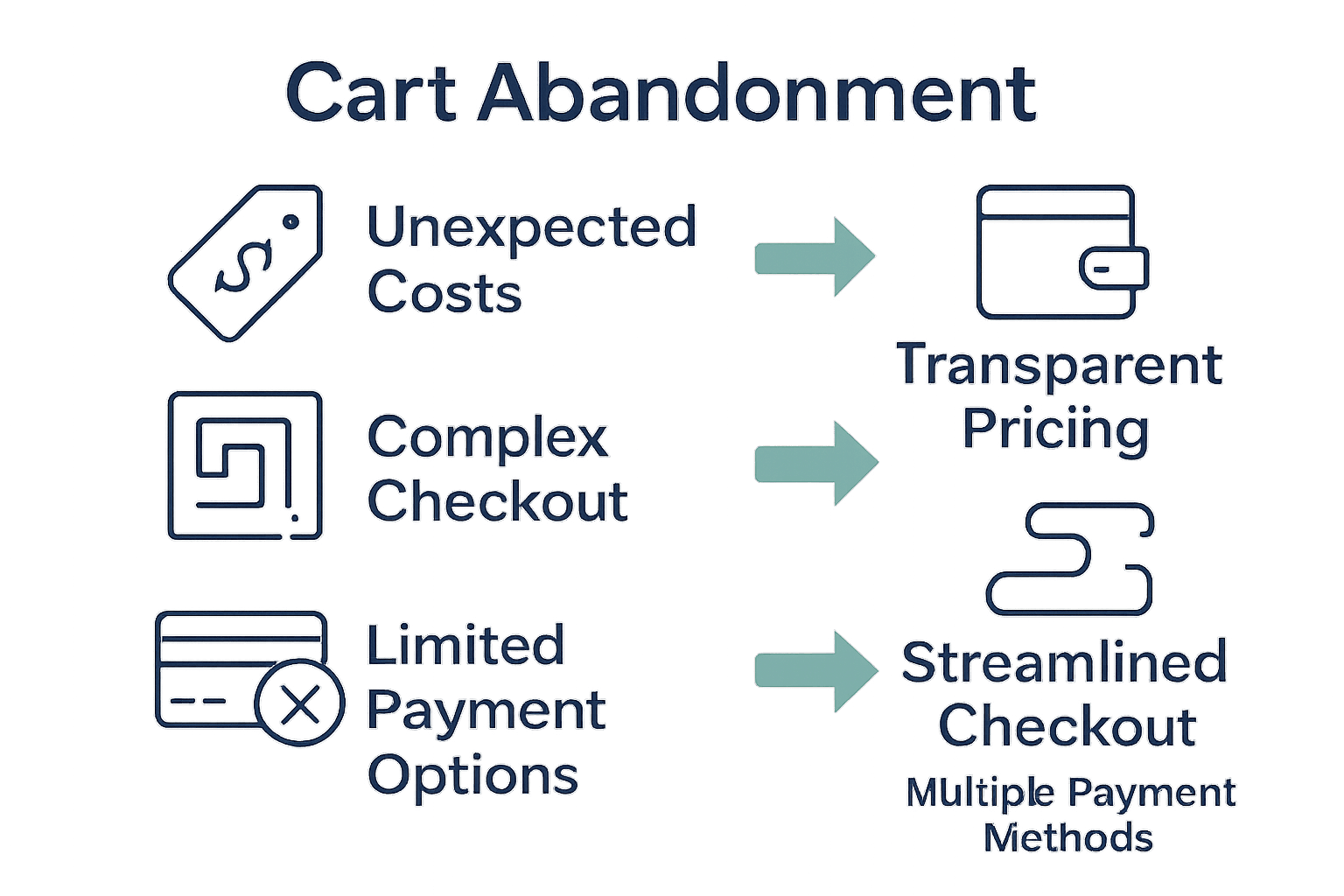
Cart abandonment represents a critical revenue barrier for online businesses. Typical reasons include unexpected shipping costs, complex checkout processes, and limited payment options. Net Branding recommends implementing streamlined, transparent checkout experiences that reduce friction and encourage completed purchases.
Cybersecurity and Fraud Prevention
Mans Research emphasizes the critical importance of addressing payment fraud and maintaining customer trust. Comprehensive security measures are essential, including:
- Real-time transaction monitoring
- Advanced encryption protocols
- Multi-factor authentication
- Transparent fraud detection mechanisms
- Regular security infrastructure updates
Supply Chain and Logistical Challenges
Efficient inventory management and shipping processes significantly impact customer satisfaction. Businesses must develop robust systems that provide:
- Accurate real-time inventory tracking
- Transparent shipping information
- Flexible delivery options
- Efficient return and exchange mechanisms
- Predictable delivery timelines
For businesses seeking comprehensive e-commerce solutions, explore our expert website tools comparison to understand cutting-edge technological approaches.
One client testimonial underscores the transformative potential: “By addressing these challenges systematically, we reduced cart abandonment by 28% and increased overall customer satisfaction.”
FAQs:
How can small businesses manage these challenges?
Start with modular solutions, prioritizing critical areas like security and user experience.What investment is required to implement these solutions?
Professional e-commerce website design starts from NZD 2,500, offering scalable strategies.How quickly can improvements be implemented?
Depending on complexity, initial improvements can be realized within 4-8 weeks of strategic planning.
Elevate Your E-Commerce Journey with Tailored WordPress Solutions
Building a seamless online store that drives sales and earns customer trust can feel overwhelming. Challenges like secure payment integration, mobile responsiveness, and managing product catalogs often hold businesses back from reaching their full potential. The article highlights the crucial role of a well-designed e-commerce platform that balances user-friendly navigation with robust backend features. If you want to transform visitor interest into loyal customers while addressing security and performance issues, it is time to take action.
Discover how our expert team at Responsive Website Design specialises in crafting custom WordPress and WooCommerce websites that are not only visually engaging but also optimised for SEO and security. From your initial e-commerce setup to ongoing maintenance, our solutions empower your business with mobile responsive design, secure payment gateways, and dynamic product management. Don’t let technical hurdles or an outdated website hold you back. Visit our website redesign services now to start building an online store that performs 24/7 and resonates perfectly with your customers. Your future-proof e-commerce success begins here.
Frequently Asked Questions
What is e-commerce?
E-commerce refers to buying and selling goods and services over the internet, enabling businesses to create virtual storefronts that operate 24/7.
How secure are online transactions in e-commerce?
Reputable e-commerce platforms use advanced encryption and secure payment gateways to protect customer data during online transactions.
What are the main types of e-commerce models?
The primary e-commerce models include Business-to-Consumer (B2C), Business-to-Business (B2B), Consumer-to-Consumer (C2C), Consumer-to-Business (C2B), Direct-to-Consumer (D2C), and Business-to-Government (B2G).
What essential features should an online store have?
Key features include a comprehensive product catalog, secure payment processing, advanced shopping cart functionalities, and efficient order tracking capabilities.