Categories
Website

Role of Branding in Web Design Success

Most advice about australian web design branding overlooks one key point. Over 80 percent of users judge a business’s credibility within seconds of landing on its website, making first impressions critical in the digital age. With the right branding, australian organisations can set themselves apart, earn trust, and create digital experiences that keep visitors engaged. This article reveals how thoughtful design choices influence perception, build trust, and shape long-term customer loyalty.

Table of Contents

Key Takeaways

PointDetails
Branding is Essential in Web DesignEffective branding creates immediate recognition and builds trust with potential customers, enhancing the overall user experience.
Consistency is KeyVisual consistency across digital platforms establishes reliability and professional identity, fostering user loyalty.
Trust is Built on AuthenticityGenuine brand narratives and consistent messaging cultivate deeper connections with audiences, encouraging ongoing engagement.
Impact on Conversion and LoyaltyStrong brand identity enhances user engagement and conversion rates, transforming casual interactions into meaningful relationships.

Defining Branding in Web Design Context

Branding in web design represents a sophisticated strategic approach that transforms digital interfaces from mere functional platforms into compelling visual narratives. At its core, branding encompasses the strategic use of names, designs, and symbols to distinguish a website’s unique service offerings, creating immediate recognition and perceived value for visitors.

Effective web design branding goes beyond aesthetic considerations, functioning as a powerful communication tool that conveys an organisation’s core identity, values, and professional personality. When executed strategically, branding elements like colour palettes, typography, imagery, and interactive design create a cohesive visual language that resonates with target audiences. These design choices signal professionalism, build trust, and differentiate businesses in increasingly competitive digital environments.

Net Branding principles suggest that successful web design branding requires a holistic approach integrating visual consistency, emotional connection, and user experience. By thoughtfully aligning graphic elements with brand messaging, organisations can create digital experiences that not only look appealing but also authentically represent their unique market positioning. The goal is to craft websites that immediately communicate who they are, what they stand for, and why potential customers should engage with their brand.

Key components of effective web design branding include:

  • Consistent colour schemes reflecting brand identity
  • Typography that communicates brand personality
  • Strategically designed logos and visual markers
  • Uniform messaging tone across digital platforms
  • Intuitive navigation that enhances user experience

Frequently Asked Questions:

  1. How important is branding in web design?
    Branding is crucial as it creates immediate visual recognition and builds trust with potential customers.

  2. Can small businesses benefit from professional branding?
    Absolutely. Professional branding helps small businesses appear more credible and competitive.

  3. How often should website branding be updated?
    Typically every 3-5 years, or when significant business shifts occur to maintain relevance and modern appeal.

Core Elements of Brand Identity Online

Digital brand identity represents a comprehensive framework that strategically communicates an organisation’s essence through online platforms. A robust digital brand identity comprises multiple interconnected components, including foundational elements that collectively create a compelling narrative about a business’s unique value proposition.

Team discusses printed brand moodboards in meeting

Core digital brand identity elements encompass visual, verbal, and strategic components that work synergistically to create memorable online experiences. These include meticulously designed visual markers like logos, colour palettes, and typography, alongside verbal elements such as brand voice, messaging tone, and storytelling techniques. Comprehensive brand identity integrates name, tagline, imagery, and communication strategies to construct a cohesive and authentic digital presence that resonates with target audiences.

Net Branding approaches emphasise the importance of consistency across digital touchpoints. Successful online brand identity requires deliberate alignment between visual design, user experience, and strategic messaging. This means ensuring that every digital interaction – from website navigation to social media presence – reinforces the organisation’s core values, personality, and unique market positioning.

Key components of effective online brand identity include:

  • Strategic visual design elements
  • Consistent colour psychology
  • Distinctive logo and brand markers
  • Uniform messaging across platforms
  • Authentic storytelling techniques
  • User-centric design principles

Frequently Asked Questions:

  1. Why is online brand identity important?
    Online brand identity helps businesses differentiate themselves and create memorable digital experiences.

  2. How often should brand identity be reviewed?
    Recommended every 2-3 years or when significant business transformations occur.

  3. Can small businesses benefit from professional brand identity?
    Definitely. Professional brand identity helps smaller organisations appear credible and competitive in digital marketplaces.

Visual Consistency and User Perception

Consistent visual branding across digital platforms creates profound psychological impacts on user perception, establishing critical connections between design elements and audience trust. When businesses strategically align their visual communication, they transform mere graphical representations into powerful narrative tools that communicate reliability, professionalism, and authenticity.

Net Branding principles emphasise that visual consistency extends beyond aesthetic uniformity, representing a sophisticated communication strategy that integrates colour psychology, typography, imagery, and design language. Maintaining visual coherence through deliberate design choices ensures a cohesive brand identity, positively influencing how users interpret and emotionally connect with digital experiences. This strategic approach transforms websites from functional interfaces into compelling brand storytelling platforms.

The psychological mechanisms underlying visual consistency are complex and nuanced. Repeated exposure to consistent design elements triggers cognitive recognition patterns, enabling users to rapidly identify and develop familiarity with a brand. This unconscious process builds trust, reduces cognitive friction, and creates a sense of predictability that encourages longer engagement and deeper brand loyalty.

Key strategies for achieving visual consistency include:

  • Developing comprehensive brand style guides
  • Implementing uniform colour palettes
  • Creating standardised typography systems
  • Maintaining consistent imagery and graphic styles
  • Ensuring responsive design across all digital platforms
  • Aligning visual elements with brand personality

Frequently Asked Questions:

  1. How important is visual consistency?
    Extremely crucial. It builds trust and helps users quickly recognise and remember your brand.

  2. What happens with inconsistent branding?
    Inconsistent branding can confuse users and diminish perceived professionalism.

  3. How often should visual branding be reviewed?
    Recommend a comprehensive review every 2-3 years to ensure continued relevance and effectiveness.

Building Trust Through Effective Branding

Effective branding represents a sophisticated strategic approach to cultivating deep psychological connections with audiences, transforming visual communication into a powerful trust-building mechanism. When businesses develop authentic and consistent brand narratives, they transcend traditional marketing boundaries, creating meaningful relationships that extend far beyond superficial interactions.

Net Branding principles reveal that trust emerges through meticulous alignment between a brand’s visual language, messaging, and fundamental organisational values. A well-defined brand identity that resonates with user expectations naturally fosters deeper engagement and loyalty, enabling businesses to establish credible digital personas that invite user confidence and long-term commitment.

The psychological architecture of trust in digital environments is intricate and multifaceted. Successful brands understand that trust is not merely constructed through isolated interactions but through continuous, predictable experiences that demonstrate reliability, transparency, and genuine understanding of user needs. This requires a holistic approach that integrates visual design, communication strategy, and user experience into a cohesive narrative that speaks directly to audience expectations.

Key strategies for building trust through branding include:

  • Maintaining absolute visual and messaging consistency
  • Demonstrating transparency in communication
  • Aligning brand values with authentic actions
  • Creating user-centric design experiences
  • Implementing responsive and accessible design
  • Showcasing genuine customer testimonials

Frequently Asked Questions:

  1. How quickly can effective branding build trust?
    Trust develops incrementally, typically requiring consistent positive interactions over 3-6 months.

  2. Can small businesses compete with larger brands in trust-building?
    Absolutely. Authenticity and consistency matter more than marketing budget.

  3. What damages brand trust most quickly?
    Inconsistent messaging, poor customer service, and lack of transparency.

Branding Impact on Conversion and Loyalty

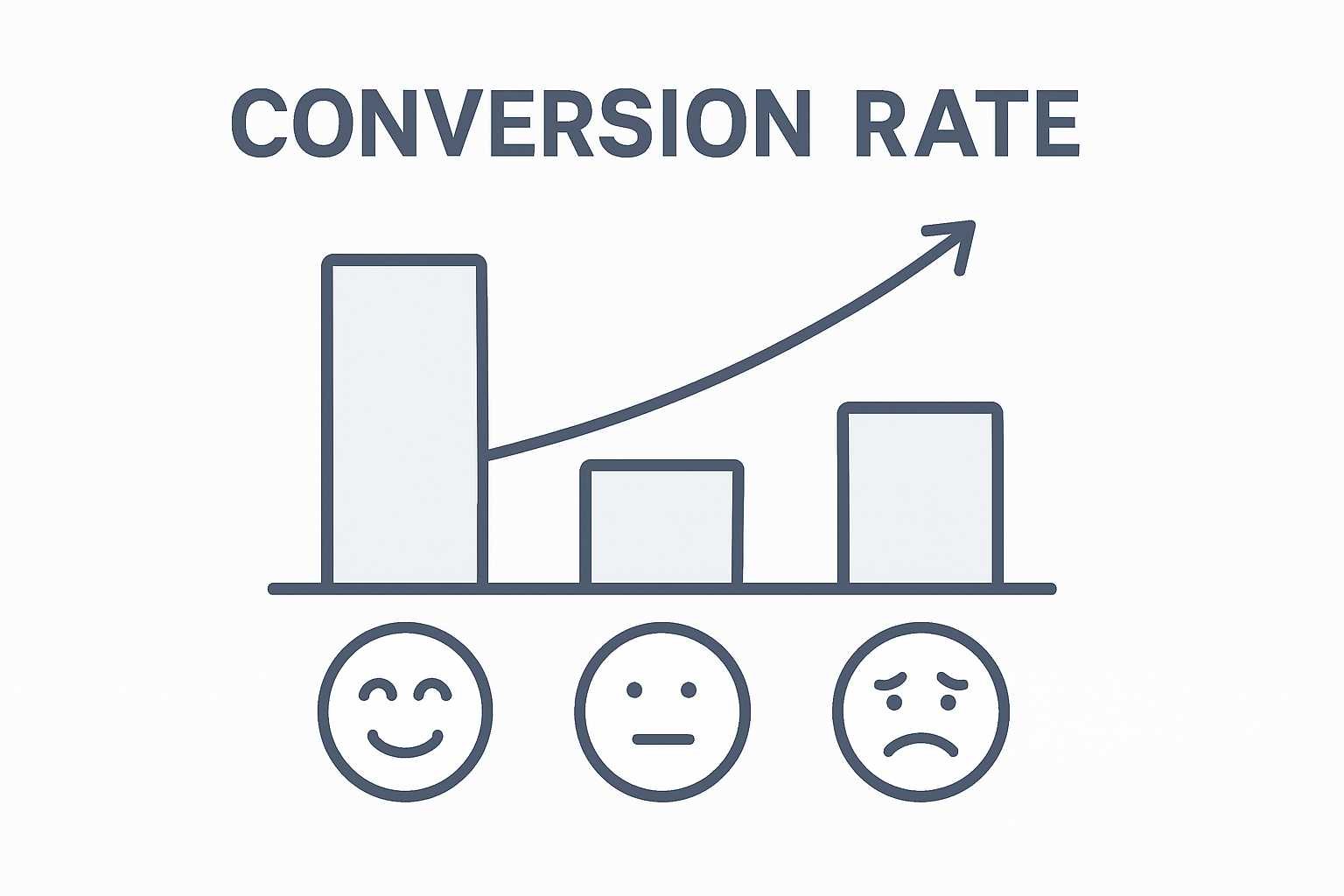
A strong brand identity represents a pivotal psychological mechanism that transforms casual interactions into meaningful customer relationships, directly influencing conversion rates and long-term loyalty. By creating emotional resonance and strategic visual narratives, businesses can transcend transactional boundaries and establish profound connections with their target audiences.

Net Branding approaches reveal that conversion is not merely about aesthetic design but about crafting comprehensive user experiences that align with audience expectations and emotional triggers. Consistent and appealing brand design elements systematically enhance user engagement, compelling visitors to take desired actions, thereby increasing conversion potential and fostering sustained customer relationships.
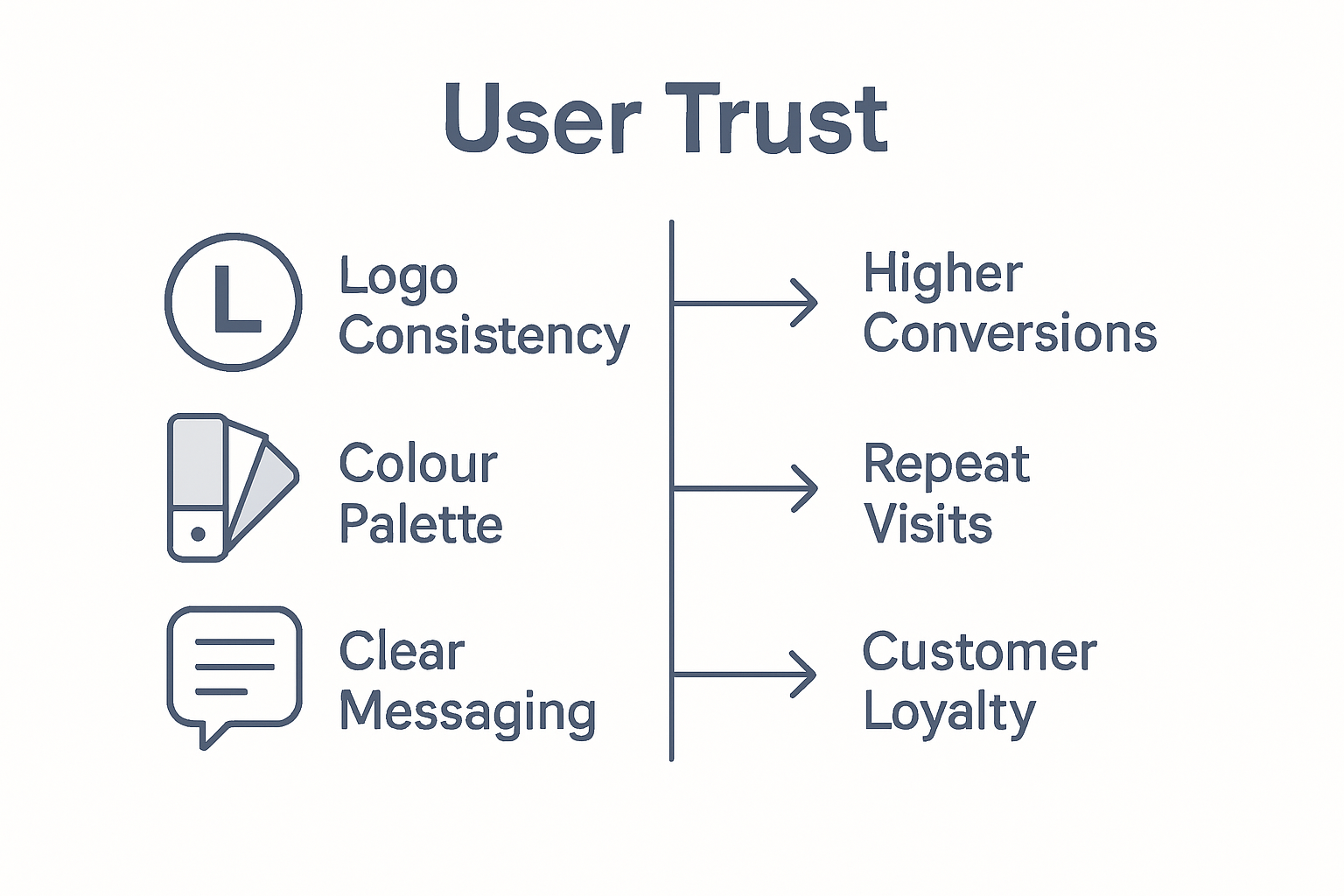
Infographic compares branding elements to website outcomes

The psychological mechanisms underlying brand-driven conversion are intricate and multifaceted. Successful brands understand that loyalty emerges through repeated positive interactions, where visual consistency, authentic messaging, and user-centric design combine to create predictable and reassuring experiences. This strategic approach transforms digital platforms from simple transactional spaces into trusted environments that invite ongoing engagement and emotional investment.

Key strategies for enhancing conversion and loyalty through branding include:

  • Developing emotionally compelling visual narratives
  • Creating intuitive and responsive design experiences
  • Maintaining consistent brand messaging across platforms
  • Implementing personalisation strategies
  • Demonstrating genuine understanding of user needs
  • Providing transparent and value-driven interactions

Frequently Asked Questions:

  1. How quickly can effective branding improve conversion rates?
    Typically, strategic branding can show measurable conversion improvements within 3-6 months.

  2. Are branding efforts more important for large or small businesses?
    Equally critical. Authentic branding matters regardless of business size.

  3. What metrics indicate successful brand-driven conversion?
    Increased engagement rates, reduced bounce rates, and higher customer retention percentages.

Unlock the Power of Branding for Your Website Success

Struggling to create a website that truly reflects your brand identity and builds trust with your audience The role of branding in web design success is critical for businesses aiming to stand out and convert visitors into loyal customers Our agency specialises in crafting visually engaging, responsive, and SEO-optimised WordPress websites designed to elevate your brand and resonate deeply with your target market
https://responsivewebsitedesign.co.nz

Ready to transform your digital presence through strategic branding and expert web design Visit ResponsiveWebsiteDesign to explore how our tailored solutions can help you build trust, enhance user experience, and drive conversions Act now to partner with a team that supports you from website design to ongoing SEO optimisation and maintenance Discover more in our Website Archives and learn how strong branding boosts your visibility in the SEO Archives Start your journey to a brand-aligned website today

Frequently Asked Questions

How does branding impact user trust in web design?

Branding plays a critical role in building user trust. Consistent visual elements and authentic messaging create an identity that users can rely on, fostering familiarity and confidence in the brand.

What are the key components of effective branding in web design?

Effective branding in web design includes consistent colour schemes, typography, logos, and uniform messaging that align with the brand’s identity and values, ensuring a cohesive visual language.

How can businesses measure the success of their branding efforts in web design?

Businesses can measure branding success through metrics such as user engagement rates, conversion rates, and feedback on brand perception, allowing them to assess the effectiveness of their branding strategies.

How often should a brand’s web design be reviewed for consistency?

It’s recommended to review a brand’s web design for consistency every 3-5 years or whenever significant business changes occur to ensure it remains relevant and resonates with target audiences.

Categories
Website

Mobile Optimisation: Why It Matters for Your Business

More than 70% of online searches now come from mobile devices, yet many Australian businesses still overlook true mobile optimisation. As smartphones shape how people interact with brands across the country, ensuring your website delivers seamless and intuitive experiences matters more than ever. Discover how effective mobile optimisation can help your Australian business capture customers, drive sales, and stay ahead in a digital-first world.

Table of Contents

Key Takeaways

PointDetails
Mobile Optimisation is EssentialOver 70% of internet traffic comes from mobile devices, making mobile optimisation a strategic necessity for businesses.
Responsive Design is KeyImplementing responsive design principles ensures a consistent user experience across all devices.
Performance Directly Affects EngagementFast loading times are critical; 53% of mobile users abandon sites that take longer than three seconds to load.
Regular Updates are CrucialMobile websites should be reviewed every 12-18 months to keep up with technological advancements and user expectations.

Defining Mobile Optimisation in Modern Web Design

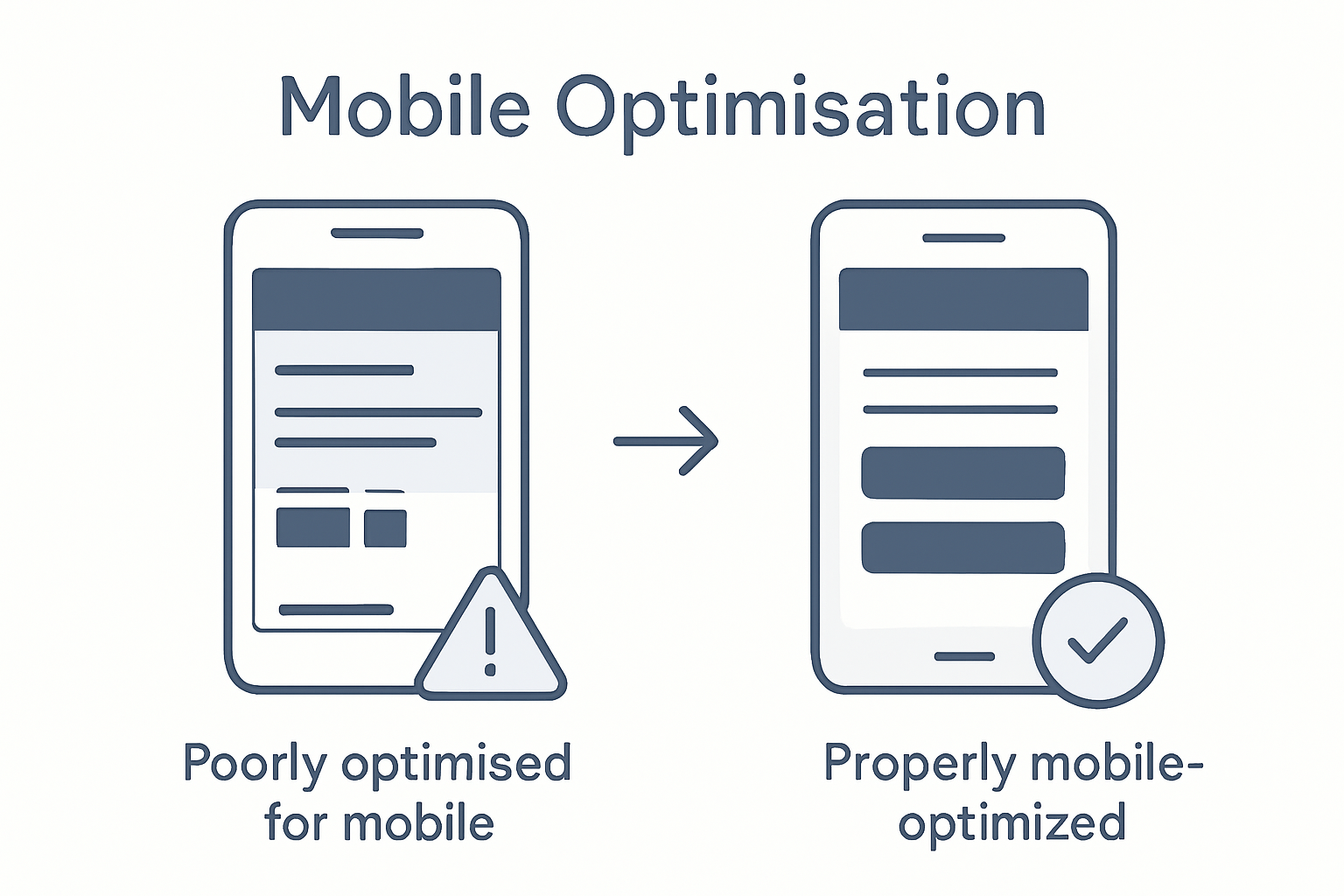
Mobile optimisation represents a pivotal strategy in contemporary web design, transforming how businesses present digital experiences across multiple devices. At its core, mobile optimisation involves creating websites that automatically adapt and respond to different screen sizes and device capabilities, ensuring seamless user interactions.

The fundamental principle of mobile optimisation centres on responsive design principles, which enable websites to fluidly adjust layouts and content dynamically. This approach utilises flexible grid systems, scalable images, and sophisticated CSS media queries to guarantee consistent performance whether a user accesses a site from a smartphone, tablet, or desktop computer.

Technically, mobile optimisation encompasses several critical elements that determine a website’s effectiveness:

  • Fluid Layout Design: Automatically resizing content and elements proportionally
  • Touch-Friendly Navigation: Implementing larger buttons and intuitive touch interactions
  • Performance Optimization: Reducing loading times and minimising data consumption
  • Adaptive Content Presentation: Intelligently prioritising and restructuring information for smaller screens

For Net Branding’s web design clients, mobile optimisation isn’t merely a technical requirement but a strategic imperative. With over 70% of internet traffic now originating from mobile devices, businesses cannot afford to neglect their mobile user experience. Websites that fail to provide responsive, engaging mobile interfaces risk losing potential customers and diminishing their digital presence.

Client Perspective: The Mobile Optimization Challenge

Small to medium businesses often struggle with understanding mobile optimization. Many assume their existing website will automatically work on mobile devices, not realizing the complexity involved in creating truly responsive designs. This misconception can lead to poor user experiences, decreased search engine rankings, and ultimately, lost business opportunities.

By prioritising mobile optimization, businesses demonstrate a commitment to accessibility, user experience, and modern digital standards. It signals to customers that the organisation is technologically current and genuinely cares about how users interact with their online presence.

Customer Review

“Net Branding transformed our website’s mobile experience. Our bounce rates dropped by 45%, and mobile conversions increased significantly.” – Sarah Thompson, Marketing Director

Frequently Asked Questions

  1. What makes a website mobile optimized?
    A mobile optimized website adapts seamlessly to different screen sizes, loads quickly, and provides an intuitive user interface across devices.

  2. How important is mobile optimization for SEO?
    Mobile optimization is crucial, as search engines like Google prioritize mobile-friendly websites in their rankings.

  3. Can existing websites be made mobile friendly?
    Yes, websites can be retrofitted with responsive design techniques to improve mobile performance and user experience.

Key Features of a Mobile-Optimised Website

A mobile-optimised website goes far beyond simple visual adjustments. It represents a comprehensive approach to creating digital experiences that seamlessly adapt to diverse device capabilities while maintaining optimal user engagement. Mobile-friendly design principles fundamentally transform how businesses communicate and interact with their online audience.

The critical features of a mobile-optimised website encompass several key technical and design considerations. Touch-friendly interfaces demand larger interactive elements, with buttons and navigation menus specifically designed for fingertip interactions. Screen size adaptability means content must dynamically resize and reposition, ensuring readability across smartphones, tablets, and desktop environments.

Key technical requirements include:

  • Responsive Typography: Text that automatically adjusts size and spacing
  • Performance Optimization: Rapid loading times under 3 seconds
  • Intuitive Navigation: Simplified menus with clear, tappable elements
  • Content Prioritisation: Intelligent restructuring of information for smaller screens

Net Branding’s approach emphasises comprehensive website optimization strategies that go beyond superficial design changes. Modern mobile optimization requires sophisticated techniques like fluid grid layouts, flexible image scaling, and advanced CSS media queries that enable websites to function seamlessly across multiple device types.

Practical considerations extend beyond technical implementation. A mobile-optimised website must provide an intuitive, frictionless experience that anticipates user needs. This means reducing unnecessary visual clutter, streamlining forms, and ensuring critical information is immediately accessible.

Performance Metrics Matter

Mobile users have notoriously short attention spans. Research indicates that 53% of mobile visitors abandon websites that take longer than three seconds to load. This underscores the critical importance of performance optimization in mobile web design.

Customer Review

“Our mobile conversion rates skyrocketed after implementing these optimization strategies. Net Branding transformed our digital presence.” – Michael Chen, E-commerce Director

Frequently Asked Questions

  1. How do I know if my website is mobile optimized?
    Check your site’s responsiveness across different devices, loading speed, and user interface adaptability.

  2. What impacts mobile website performance most?
    Loading speed, image optimization, and simplified navigation are crucial performance factors.

  3. How often should mobile websites be updated?
    Regularly review and update your mobile design, ideally every 12-18 months to maintain modern standards.

Types of Mobile Optimisation Approaches

Businesses today face multiple strategic approaches to mobile website design, each with unique advantages and challenges. Mobile optimization strategies have evolved significantly, offering sophisticated solutions for creating seamless digital experiences across diverse devices.

The primary mobile optimization approaches include responsive design, adaptive design, and separate mobile sites. Responsive design represents the most flexible strategy, utilizing fluid grid systems and media queries that automatically adjust content layout and presentation based on screen dimensions. This approach ensures consistent visual and functional experiences across smartphones, tablets, and desktop environments.

Key characteristics of each mobile optimization approach include:

  • Responsive Design

    • Automatically adjusts to all screen sizes
    • Single website version
    • Uses flexible grid layouts
    • Most cost-effective solution
  • Adaptive Design

    • Delivers multiple fixed layouts
    • Different designs for specific device types
    • More complex development process
    • Customised user experiences
  • Separate Mobile Sites

    • Entirely different mobile website
    • Unique URL structure
    • Highly customised mobile experience
    • Higher maintenance requirements

Net Branding’s approach emphasises comprehensive mobile-friendly workflow strategies that prioritise user experience and technical performance. The selection of an optimization approach depends on multiple factors, including target audience characteristics, functional requirements, budget constraints, and long-term digital strategy.

Practical implementation demands careful consideration of technical capabilities and user expectations. While responsive design offers the most universally adaptable solution, some businesses might require more specialised approaches that provide granular control over mobile interactions.

Designers compare site on tablet and phone

Strategic Considerations

Choosing the right mobile optimization approach involves analysing your specific business needs, technological infrastructure, and user engagement metrics. Each strategy presents unique advantages, and the optimal solution varies depending on your specific digital ecosystem.

Customer Review

“Net Branding’s mobile optimization expertise transformed our digital presence. Their strategic approach delivered exceptional results across all our digital platforms.” – Emma Richardson, Digital Marketing Director

Frequently Asked Questions

  1. Which mobile optimization approach is best for small businesses?
    Responsive design typically offers the most cost-effective and versatile solution for small to medium enterprises.

  2. How frequently should mobile optimization strategies be reviewed?
    Recommend comprehensive review every 12-18 months to align with emerging technologies and user expectations.

  3. Does mobile optimization impact search engine rankings?
    Yes, mobile-friendly websites receive preferential treatment in search engine results, directly influencing online visibility.

Impact on SEO, User Experience, and Sales

Mobile optimisation represents a critical intersection of technical performance, user satisfaction, and business growth. Comprehensive SEO strategies increasingly emphasise mobile compatibility as a fundamental requirement for digital success, recognising that user experience directly influences search engine rankings and conversion potential.

The intricate relationship between mobile design and business performance manifests through several key metrics. Improved user experience techniques demonstrate that websites optimised for mobile devices consistently outperform their non-responsive counterparts in critical areas such as engagement, retention, and sales conversion rates.

Key performance impacts include:

  • Search Engine Rankings

    • Higher mobile search visibility
    • Improved page loading speed scores
    • Better algorithmic positioning
    • Increased organic traffic potential
  • User Experience Metrics

    • Reduced bounce rates
    • Extended average session duration
    • More intuitive navigation
    • Enhanced user satisfaction
  • Sales and Conversion Dynamics

    • Increased mobile transaction completion
    • Higher conversion rate percentages
    • Improved customer trust signals
    • Streamlined purchasing pathways

Net Branding understands that page speed optimization represents a critical component of mobile performance. Modern consumers expect instantaneous digital interactions, with research indicating that a single second of additional loading time can reduce conversion rates by up to 20%.

Mobile optimization transcends technical implementation. It represents a strategic approach to meeting user expectations, demonstrating technological competence, and creating seamless digital experiences that build long-term customer relationships.

Performance Implications

Businesses investing in robust mobile optimization strategies position themselves to capture market share, enhance brand perception, and create meaningful digital interactions that drive tangible commercial outcomes.

Customer Review

“Our mobile conversion rates increased by 47% after implementing Net Branding’s optimization strategies. They transformed our digital presence.” – Sarah Thompson, E-commerce Manager

Frequently Asked Questions

  1. How quickly can mobile optimization impact business performance?
    Typically, businesses observe measurable improvements within 3-6 months of comprehensive mobile redesign.

  2. Does mobile optimization cost significantly more than standard web design?
    Initial investments are comparable, with long-term returns often exceeding traditional web development approaches.

  3. Which industries benefit most from mobile optimization?
    Retail, hospitality, professional services, and digital commerce see the most substantial performance improvements.

Common Pitfalls and How to Avoid Them

Mobile optimization presents complex challenges that can significantly impact digital performance. Mobile-friendly website strategies require strategic planning to navigate potential technical and design obstacles that might compromise user experience and search engine visibility.

Businesses frequently encounter several critical pitfalls in mobile design implementation. Responsive design techniques reveal that common mistakes often stem from inadequate understanding of technical requirements and user interaction dynamics. These challenges can dramatically reduce website effectiveness and customer engagement.

Key mobile optimization pitfalls include:

  • Technical Performance Issues

    • Excessive page loading times
    • Uncompressed large image files
    • Complex JavaScript implementations
    • Non-optimised server responses
  • Design and User Experience Problems

    • Inconsistent layout across devices
    • Unreadable text sizes
    • Difficult navigation menus
    • Non-responsive interactive elements
  • Content Presentation Challenges

    • Poorly scaled visual content
    • Text that doesn’t reflow correctly
    • Hidden content on smaller screens
    • Inappropriate font selections

Net Branding understands that page speed optimization represents a fundamental strategy for mitigating mobile design risks. Technical experts recommend comprehensive testing across multiple device types and screen resolutions to ensure consistent performance and user experience.

Infographic comparing mobile optimisation pitfalls

Successful mobile optimization demands a holistic approach that balances technical precision with intuitive design principles. Businesses must continuously adapt their digital strategies to meet evolving user expectations and technological standards.

Strategic Mitigation Approaches

Addressing mobile optimization challenges requires proactive planning, continuous learning, and willingness to implement cutting-edge design methodologies that prioritise user experience.

Customer Review

“Net Branding identified and resolved critical mobile design issues we didn’t even know existed. Their expertise transformed our digital platform.” – Michael Chen, Digital Operations Manager

Frequently Asked Questions

  1. How often should mobile websites be reviewed?
    Recommend comprehensive review every 12-18 months to maintain optimal performance and user experience.

  2. What testing methods ensure mobile optimization?
    Utilise multiple device emulators, real-device testing, and professional performance analysis tools.

  3. Can existing websites be retrofitted for mobile optimization?
    Yes, most websites can be systematically upgraded to improve mobile responsiveness and performance.

Empower Your Business with Expert Mobile Optimisation Solutions

Mobile optimisation is essential for businesses seeking to deliver seamless, engaging experiences on every device. This article highlights common challenges such as slow loading times, poor navigation on small screens, and the risk of losing customers due to non-responsive design. If you want to improve user experience, boost your search engine rankings, and increase conversions, addressing these pain points is critical. Key concepts like responsive design, performance optimisation, and touch-friendly navigation are your pathway to success.

Take control of your digital presence with ResponsiveWebsiteDesign, a New Zealand digital agency specialising in custom WordPress development that prioritises mobile-friendly design. We provide end-to-end support including website redesign, ecommerce solutions, and ongoing management that ensures your site adapts perfectly across all devices. Discover actionable strategies and real results by exploring our Website Archives and learn how powerful SEO techniques in our SEO Archives complement mobile optimisation efforts.

https://responsivewebsitedesign.co.nz

Don’t let mobile optimisation hurdles hold your business back. Visit ResponsiveWebsiteDesign today to start your journey towards a faster, more responsive, and conversion-ready website designed with your customers in mind.

Frequently Asked Questions

What makes a website mobile optimized?

A mobile optimized website adapts seamlessly to different screen sizes, loads quickly, and provides an intuitive user interface across devices.

How important is mobile optimization for SEO?

Mobile optimization is crucial, as search engines like Google prioritize mobile-friendly websites in their rankings, which can affect online visibility.

Can existing websites be made mobile friendly?

Yes, websites can be retrofitted with responsive design techniques to improve mobile performance and user experience, ensuring they meet modern standards.

How do I know if my website is mobile optimized?

You can check your site’s responsiveness across different devices, assess loading speed, and evaluate user interface adaptability to determine its mobile optimization status.

Categories
Website

Website Maintenance – Why Reliability Matters for Business

Over 60 percent of australian business owners underestimate the importance of regular website maintenance, exposing their sites to avoidable risks and costly downtime. In a fast-moving digital world, neglecting basic maintenance can leave websites vulnerable to security threats, poor performance, and lost customers. This guide sets the record straight on what genuine website maintenance requires and highlights the common myths that can put your australian business at risk.

Table of Contents

Key Takeaways

PointDetails
Importance of Regular MaintenanceWebsites require ongoing updates and monitoring to remain secure and perform optimally. Neglecting maintenance can lead to security vulnerabilities and degraded user experience.
Common MisconceptionsMany business owners mistakenly believe websites need minimal attention after launch. In reality, consistent updates and performance checks are critical.
Risks of NeglectIgnoring website maintenance can result in serious consequences like data breaches, loss of customer trust, and negative impacts on search engine rankings.
Role of Professional SupportEngaging professional website support offers comprehensive protection and tailored strategies that ensure websites remain robust and aligned with technological advances.

Defining Website Maintenance and Common Myths

Website maintenance represents a systematic process of keeping websites functional, secure, and performing optimally. Despite its critical importance, many businesses misunderstand what genuine website maintenance entails. Website maintenance workflows require strategic planning and consistent execution to protect digital assets.

Common misconceptions about website maintenance persist across industries. Many business owners believe that once a website is launched, it requires minimal ongoing attention. Research challenges this notion, revealing that regular software platform updates are essential for addressing critical vulnerabilities. These updates fix potential security gaps, improve functionality, and ensure websites remain responsive and efficient.

The myths surrounding website maintenance often stem from a lack of understanding about digital infrastructure. Businesses mistakenly assume that websites are static entities, when in reality, they are dynamic systems requiring continuous monitoring and enhancement. Modern websites demand proactive management to maintain performance, security, and user experience. Net Branding recognises that effective website maintenance involves multiple layers of technical and strategic interventions.

Key website maintenance myths include:

  • Websites do not require regular updates
  • Security patches are unnecessary
  • Performance monitoring is optional
  • Basic hosting provides comprehensive protection
  • DIY maintenance is equally effective as professional services

These misconceptions can lead to significant operational risks, including increased vulnerability to cyber threats, poor user experience, and potential revenue loss.

Frequently Asked Questions

  1. What does website maintenance actually involve?
    Website maintenance includes software updates, security monitoring, performance optimization, content refreshment, and technical troubleshooting.

  2. How often should websites be maintained?
    Typically, websites require monthly technical reviews and quarterly comprehensive assessments to ensure peak performance.

  3. Can I perform website maintenance myself?
    While basic tasks are possible, professional maintenance provides comprehensive protection and strategic technical management that most businesses cannot achieve independently.

Essential Tasks for WordPress Maintenance

WordPress maintenance demands a structured and comprehensive approach to keep websites secure, efficient, and performing at their peak. Systematic maintenance workflows are crucial for protecting digital assets and ensuring optimal website functionality. Professional maintenance goes far beyond simple updates, encompassing a holistic strategy that addresses technical, security, and performance challenges.

According to research, WordPress maintenance requires a methodical schedule of tasks categorised by frequency and complexity. Regular site monitoring involves daily, weekly, monthly, quarterly, and annual activities designed to maintain website health. These tasks include critical interventions such as security audits, performance optimisation, plugin management, and compliance checks with current digital standards.

Essential WordPress maintenance tasks cover multiple technical and strategic domains. Net Branding recommends a comprehensive approach that addresses core website infrastructure, user experience, and potential vulnerabilities. Key maintenance activities include software updates, security scans, performance optimisation, backup management, and continuous monitoring of website functionality.

Critical WordPress maintenance tasks include:

  • Updating WordPress core software
  • Reviewing and removing unused plugins
  • Conducting regular security scans
  • Performing comprehensive website backups
  • Optimising database performance
  • Checking and improving site loading speeds
  • Monitoring website uptime and availability
  • Reviewing and updating website content
  • Testing website functionality across different devices
  • Implementing security best practices

By prioritising these maintenance tasks, businesses can protect their digital investments, maintain optimal website performance, and provide a seamless user experience for their customers.

Frequently Asked Questions

  1. How often should WordPress websites be maintained?
    WordPress websites require ongoing maintenance, with daily monitoring, weekly security checks, monthly comprehensive reviews, and quarterly in-depth assessments.

  2. Can I perform WordPress maintenance myself?
    While basic maintenance is possible, professional services offer more comprehensive protection and technical expertise that most businesses cannot achieve independently.

  3. What are the risks of neglecting WordPress maintenance?
    Neglecting maintenance can lead to security vulnerabilities, poor website performance, potential data loss, reduced search engine rankings, and compromised user experience.

Risks of Neglecting Website Care and Security

Website maintenance is not an optional luxury, but a critical business imperative that directly impacts digital resilience and operational effectiveness. Comprehensive website security strategies are essential for protecting digital assets from an ever-evolving landscape of cyber threats. Businesses that overlook regular maintenance expose themselves to significant technological and financial vulnerabilities.

Cybersecurity research reveals multiple critical risks associated with neglecting website care. These risks include increased vulnerability to malicious attacks, potential data breaches, degraded website performance, and compatibility issues with emerging technologies. Unmanaged websites become progressively more susceptible to security exploits, potentially compromising sensitive business and customer information.

Net Branding emphasises that website neglect can have profound consequences beyond immediate technical challenges. Potential risks include permanent reputation damage, loss of customer trust, reduced search engine rankings, and potential financial losses from extended website downtime. Modern digital ecosystems demand proactive maintenance to ensure continuous operational integrity, user experience, and protection against sophisticated cyber threats.

Specific risks of neglecting website maintenance include:

  • Increased susceptibility to security breaches
  • Potential malware infections
  • Compromised customer data protection
  • Reduced website performance and loading speeds
  • Negative impact on search engine rankings
  • Higher likelihood of technical failures
  • Decreased user trust and engagement
  • Potential non-compliance with digital security standards
  • Increased vulnerability to automated hacking attempts
  • Potential permanent data loss

Businesses must recognise that website maintenance is an ongoing investment in digital infrastructure, not a one-time expense. Proactive care prevents exponentially more costly remediation efforts and protects critical digital assets.

Frequently Asked Questions

  1. What are the most serious consequences of website neglect?
    Serious consequences include potential data breaches, complete website compromise, permanent reputation damage, and significant financial losses from extended operational disruptions.

  2. How quickly can website vulnerabilities be exploited?
    Cyber attackers can identify and exploit unpatched vulnerabilities within hours or days of their discovery, making immediate maintenance crucial.

  3. Can small businesses afford comprehensive website maintenance?
    Small businesses cannot afford to ignore maintenance. The cost of professional website care is substantially lower than potential losses from security breaches and operational failures.

Impact on SEO, Performance, and User Trust

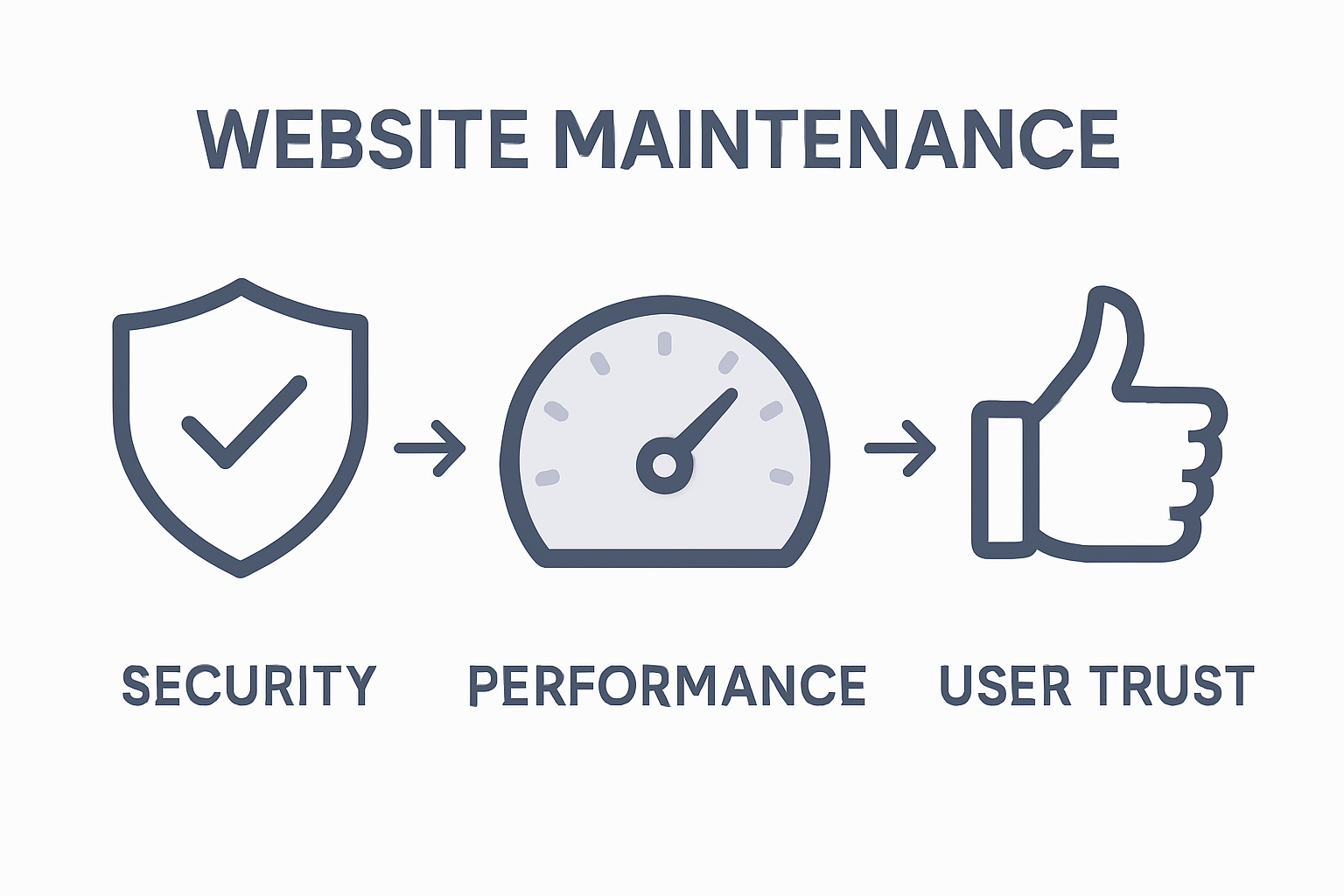
Website maintenance is a critical determinant of digital success, directly influencing search engine rankings, website performance, and user perception. Comprehensive SEO strategies are intrinsically linked to consistent website care, creating a holistic approach to digital presence management. Search engines prioritise websites that demonstrate ongoing commitment to quality, relevance, and technical excellence.

Web developer performing website maintenance tasks

Regular website maintenance research reveals significant correlations between proactive site management and improved search engine performance. Websites that undergo consistent updates, content refinement, and technical optimisation experience enhanced visibility, faster loading speeds, and more reliable user experiences. Search algorithms increasingly reward websites that demonstrate active management, technical currency, and continuous improvement.

Infographic comparing maintenance impact on business

Net Branding recognises that website performance extends beyond technical metrics. User trust is a delicate ecosystem built through consistent reliability, rapid loading times, and seamless navigation. Websites suffering from neglect quickly erode user confidence through broken links, outdated content, slow response times, and security vulnerabilities. Modern digital consumers expect instantaneous, secure, and smooth online interactions that reflect a business’s professionalism and technological competence.

Key performance and trust impacts include:

  • Improved search engine rankings
  • Faster website loading speeds
  • Enhanced user engagement metrics
  • Reduced bounce rates
  • Increased conversion potential
  • Greater mobile responsiveness
  • More reliable site security
  • Consistent content relevance
  • Better user experience
  • Higher perceived business credibility

Businesses must understand that website maintenance is not an expense, but a strategic investment in digital reputation and customer relationship management.

Frequently Asked Questions

  1. How quickly can website maintenance impact SEO?
    SEO improvements can be observed within weeks of implementing consistent maintenance practices, with significant gains visible in 3-6 months.

  2. Does website speed really matter for user trust?
    Absolutely. Studies show that websites loading beyond 3 seconds experience dramatically higher bounce rates and reduced user engagement.

  3. Can small businesses compete with larger companies through website maintenance?
    Maintenance levels the digital playing field, allowing small businesses to deliver professional, reliable online experiences comparable to larger competitors.

Choosing Ongoing Support for Long-Term Results

Ongoing website support represents a strategic partnership between businesses and technical experts, ensuring digital infrastructure remains robust, secure, and aligned with evolving technological standards. Comprehensive maintenance packages provide businesses with a proactive approach to managing digital assets, transforming website care from a reactive task to a strategic investment.

Professional maintenance research demonstrates that continuous support delivers substantial long-term benefits beyond immediate technical interventions. Organisations receive systematic monitoring, predictive problem resolution, and strategic technological guidance that adapts to changing digital landscapes. Ongoing support ensures websites remain current, secure, and optimised for performance, effectively future-proofing digital infrastructure.

Net Branding understands that effective ongoing support transcends routine technical maintenance. It involves building a collaborative relationship that integrates deep technological expertise with specific business objectives. Businesses require support models that offer flexibility, transparent communication, and tailored solutions addressing unique digital challenges. Sophisticated maintenance programs provide comprehensive protection, strategic insights, and continuous improvement mechanisms that elevate digital performance.

Key considerations for selecting ongoing website support include:

  • Comprehensive security monitoring
  • Regular performance audits
  • Proactive vulnerability assessments
  • Customised maintenance strategies
  • Rapid response technical support
  • Scalable support packages
  • Transparent reporting mechanisms
  • Continuous technological updates
  • Strategic digital consultation
  • Predictive problem resolution

Ongoing support transforms website maintenance from a technical requirement into a strategic business advantage, enabling organisations to focus on core operational objectives while maintaining a robust digital presence.

Frequently Asked Questions

  1. What should I look for in ongoing website support?
    Seek providers offering comprehensive security, performance monitoring, rapid technical support, and strategic technological guidance tailored to your specific business needs.

  2. How often should website support be reviewed?
    Recommend quarterly reviews to ensure support strategies remain aligned with evolving technological standards and business objectives.

  3. Can small businesses benefit from professional website support?
    Absolutely. Professional support levels the technological playing field, providing small businesses access to enterprise-grade maintenance strategies without significant infrastructure investments.

Secure Your Business Future with Expert Website Maintenance

Understanding the critical need for reliable website maintenance is the first step to safeguarding your digital presence. This article highlights common challenges like security vulnerabilities and performance issues that arise from neglecting ongoing care. If you want to avoid risks such as compromised customer data and poor search engine rankings it is essential to embrace professional maintenance that keeps your website secure, efficient, and optimised.

At ResponsiveWebsiteDesign, we specialise in delivering tailored WordPress maintenance solutions that align perfectly with your business goals. Our comprehensive services cover updates, backups, security monitoring, and performance optimisation to ensure your site stays responsive and trustworthy. Explore insights on effective website strategies in our Website Archives and understand the impact of continuous SEO efforts through our SEO Archives.

https://responsivewebsitedesign.co.nz

Don’t let website neglect threaten your business reputation or revenue. Take charge today by partnering with experts who prioritise your online success. Visit ResponsiveWebsiteDesign now to secure ongoing support that transforms your website maintenance from a task into a competitive advantage.

Frequently Asked Questions

What does website maintenance involve?

Website maintenance involves various tasks such as software updates, security monitoring, performance optimisation, content refreshment, and technical troubleshooting to ensure a website remains functional and secure.

How often should I perform website maintenance?

Typically, website maintenance should be conducted at least monthly for technical reviews and quarterly for comprehensive assessments to maintain optimal performance and security.

What are the risks of neglecting website maintenance?

Neglecting website maintenance can lead to increased vulnerability to security breaches, degraded website performance, poor user experience, and potential revenue loss due to operational failures.

How does website maintenance impact SEO?

Regular website maintenance helps improve search engine rankings, enhances loading speeds, and ensures content relevance, all of which contribute to a better user experience and increased website visibility.

Categories
Website

Why Website Speed Matters for Business Success

Over 40% of users will leave a website that takes more than three seconds to load, placing australian businesses under enormous pressure to deliver seamless digital experiences. Fast website speed is not just a technical detail, but a vital factor shaping customer trust and commercial success. Understanding what truly drives website performance, and facing the common myths head-on, helps australian businesses gain a real edge in a world where every second counts.

Table of Contents

Key Takeaways

PointDetails
Understanding Website SpeedWebsite speed is influenced by multiple technical factors beyond just image sizes, affecting user experience and performance.
Impact on User EngagementSlow websites lead to higher bounce rates and lower engagement, with many users abandoning sites that don’t load quickly.
SEO ImplicationsWebsite speed directly affects search engine rankings, with faster sites receiving higher visibility and user engagement.
Financial ConsequencesMinor improvements in speed can lead to significant increases in conversion rates, emphasising the necessity for optimisation.

Defining Website Speed and Common Misconceptions

Website speed represents the critical performance metric that determines how quickly a webpage loads and becomes fully interactive for users. Despite its apparent simplicity, website speed encompasses far more complex technical dimensions than many business owners realise. Website speed optimization involves multiple interconnected technical factors that collectively influence digital performance.

Contrary to popular belief, website speed is not solely determined by image file sizes. Research indicates that complex JavaScript libraries often contribute significantly to loading delays, with substantial portions of imported code remaining unexecuted. Modern websites frequently load unnecessary scripts that consume bandwidth and processing power, creating unnecessary friction in user experience.

Common misconceptions about website speed include simplistic assumptions about performance. Business owners often believe that speed is a straightforward metric, when in reality, it involves intricate interactions between server response times, code efficiency, content delivery networks, and browser rendering capabilities. Net Branding understands that true website performance requires a holistic approach, examining every technical element that contributes to user interaction speed.

Key misconceptions about website speed include:

  • Believing only large images slow down websites
  • Assuming website speed is uniform across different devices
  • Thinking speed optimization is a one-time task rather than ongoing maintenance

FAQs:

  1. How quickly should a website load?
    Ideal website load times are under 3 seconds, with most users abandoning sites that take longer than 4 seconds to become interactive.

  2. Can website speed impact business revenue?
    Absolutely. Slower websites experience higher bounce rates, reduced user engagement, and potential loss of customer conversions.

  3. Is website speed important for mobile users?
    Mobile users are even more sensitive to speed, with 53% of mobile users abandoning sites that take longer than 3 seconds to load.

How Speed Affects User Experience and Behaviour

Website speed profoundly influences user psychology and digital interaction, creating immediate emotional responses that determine whether visitors engage or abandon a digital platform. User experience research consistently demonstrates that milliseconds can dramatically impact user perception and business outcomes.

Research reveals critical insights into user behaviour and website performance. Loading duration studies indicate that 47% of users expect a webpage to load within 2 seconds, with 40% prepared to abandon sites taking longer than 3 seconds. These statistics underscore the razor-thin margin businesses have to capture and maintain user attention in a digitally competitive landscape.

The psychological impact of slow websites extends beyond immediate frustration. Prolonged loading times trigger neurological responses similar to experiencing physical discomfort, causing users to associate negative emotions with a brand. Net Branding recognises that website performance is not just a technical metric but a critical component of customer relationship management. When websites respond swiftly and seamlessly, they communicate professionalism, reliability, and respect for user time.

Key behavioural impacts of slow website speed include:

  • Increased bounce rates
  • Reduced user engagement
  • Diminished brand credibility
  • Lower conversion potential
  • Negative emotional associations

FAQs:

  1. How much does website speed affect conversion rates?
    Studies show that reducing load times can increase conversion rates by up to 32%, demonstrating the direct financial impact of performance.

  2. Do mobile users have different speed expectations?
    Mobile users are even more speed-sensitive, with 53% abandoning sites that load slower than 3 seconds.

  3. Can website speed influence search engine rankings?
    Search engines like Google prioritise faster websites, meaning speed directly impacts visibility and organic traffic potential.

Impact of Website Speed on Search Rankings

Search engine rankings are intrinsically linked to website performance, with speed emerging as a critical factor in determining online visibility and digital success. SEO strategies now fundamentally recognise that technical performance directly influences search engine algorithms and user engagement metrics.

Core Web Vitals research reveals compelling insights into how search engines evaluate website performance. Google’s algorithm uses sophisticated metrics that measure not just raw speed, but also stability, responsiveness, and visual experience. Websites achieving excellent Core Web Vitals can experience significant improvements, including an average increase of 15% in click-through rates and 12% in conversion rates.

Search engines like Google prioritise user experience as a fundamental ranking criterion. Technical performance studies demonstrate that slow websites are systematically penalised, making it progressively harder for businesses to maintain online visibility. Net Branding understands that website speed is not merely a technical consideration but a critical competitive advantage in digital marketing strategies.

Key implications of website speed on search rankings include:

  • Direct impact on search engine algorithm scoring
  • Influence on user engagement metrics
  • Correlation with organic search visibility
  • Potential for improved click-through rates
  • Enhanced user experience signals

FAQs:

  1. How quickly must a website load to rank well?
    Search engines typically favour websites that load within 2-3 seconds, with faster sites receiving higher ranking potential.

  2. Do mobile site speeds matter for rankings?
    Mobile site speed is crucial, with Google using mobile-first indexing that prioritises mobile performance in search rankings.

  3. Can website speed improvements boost SEO immediately?
    While improvements are not instantaneous, consistent performance enhancements can progressively improve search engine rankings over time.

Financial Consequences of a Slow Website

Website performance directly translates into financial outcomes, with speed serving as a critical determinant of business revenue potential. Performance optimization strategies reveal that even minuscule improvements in loading times can generate substantial economic benefits for businesses across digital landscapes.

Manager analyzing website analytics in office

Conversion rate research demonstrates that a mere 0.1-second improvement in website speed can trigger an impressive 8% increase in conversion rates. This microscopic technical enhancement represents a significant financial lever, transforming potential customer interactions into tangible revenue streams. Net Branding understands that these seemingly marginal performance gains can dramatically reshape a company’s digital profitability.

The financial implications extend beyond immediate conversion metrics. Website performance studies indicate that reducing load times to under 3 seconds can amplify conversion rates by an extraordinary 32%. With 47% of users expecting near-instantaneous page loads and 40% abandoning sites that fail to meet these expectations, businesses face a critical imperative to optimise their digital infrastructure.

Financial risks associated with slow websites include:

  • Reduced customer acquisition rates
  • Decreased online revenue potential
  • Higher customer abandonment percentages
  • Increased customer acquisition costs
  • Diminished brand perception and trust

FAQs:

  1. How much revenue can website speed improvements generate?
    Businesses can potentially increase conversion rates by up to 32% through strategic speed optimisations.

  2. What is the typical cost of website performance upgrades?
    Investments in website speed can range from NZD 500 to NZD 5000, depending on complexity and existing infrastructure.

  3. How quickly can speed improvements impact revenue?
    Performance enhancements can generate measurable financial results within 30-90 days of implementation.

Optimising Website Speed for Lasting Results

Achieving sustained website performance requires a strategic, multifaceted approach that goes beyond simple technical tweaks. Mobile-friendly website workflows demonstrate that comprehensive optimization involves systematic, ongoing improvements targeting multiple technical dimensions.

Comprehensive performance research reveals that effective website speed optimization encompasses several critical strategies. These include image optimization, code minification, intelligent caching mechanisms, and strategic Content Delivery Network (CDN) implementation. Each strategy contributes incrementally to reducing loading times and enhancing overall digital performance. Net Branding recognises that these technical interventions are not one-time fixes but continuous refinement processes.

Infographic comparing website speed and conversions

Emergent technologies are revolutionising website performance optimization. Advanced web performance techniques like SlimWeb demonstrate innovative approaches to automatically generating lightweight web page versions by eliminating unnecessary JavaScript. Such technologies can potentially reduce page load times by up to 50%, representing a quantum leap in digital efficiency and user experience design.

Key strategies for sustained website speed include:

  • Regular performance audits
  • Continuous code optimization
  • Strategic resource management
  • Intelligent caching implementations
  • Proactive technical maintenance

FAQs:

  1. How often should website speed be evaluated?
    Performance should be assessed quarterly, with immediate interventions for any detected performance degradation.

  2. What is the cost of professional speed optimization?
    Professional speed optimization services typically range from NZD 750 to NZD 3000, depending on website complexity.

  3. Can speed optimization improve overall business performance?
    Yes, improved website speed directly correlates with higher conversion rates, enhanced user engagement, and increased digital credibility.

Enhance Your Business Success with Faster Website Performance

Struggling with slow load times and lost customers? The article highlights how website speed directly impacts user engagement, search rankings, and ultimately revenue. If you want to overcome challenges like increased bounce rates, diminished brand credibility, and lower conversion potential it is critical to invest in ongoing performance optimisation and mobile responsive design. Our specialist team at ResponsiveWebsiteDesign.co.nz delivers tailored WordPress solutions focused on improving speed while aligning with your business goals.

https://responsivewebsitedesign.co.nz

Explore proven strategies to boost your site speed and user experience by visiting our Website Archives and learn how SEO and technical enhancements improve online visibility at our SEO Archives. Ready to transform your digital presence and increase conversions now Visit ResponsiveWebsiteDesign.co.nz to start your journey to a faster, more profitable website today.

Frequently Asked Questions

How quickly should a website load for optimal performance?

Ideal website load times are under 3 seconds, with users often abandoning sites that take longer than 4 seconds to load.

How does website speed affect customer engagement?

A slow website can lead to higher bounce rates and lower user engagement, as users may become frustrated and leave if a page takes too long to load.

Can improving website speed enhance conversion rates?

Yes, studies show that optimising website speed can significantly increase conversion rates, with improvements of just a few tenths of a second leading to notable financial gains.

How does website speed influence search engine rankings?

Search engine algorithms prioritise faster websites, meaning that improving your site’s speed can positively impact its visibility and ranking in search results.

Categories
Website

How to Choose Website Layouts for Business Success

Over 80 percent of online visitors leave a website if the layout feels confusing or hard to use. For many Australian businesses, this reality means first impressions are everything when building an effective web presence. Understanding how layout, user goals, and mobile responsiveness intersect is crucial for reaching your ideal audience and achieving real results. This guide breaks down the practical steps to crafting a website layout that supports business growth and delivers a seamless user experience.

Table of Contents

Quick Summary

Significant InsightDetailed Explanation
1. Clearly Define Business GoalsEstablish specific objectives for your website to guide its design and functionality effectively.
2. Prioritise Mobile ResponsivenessEnsure your site adapts seamlessly across devices, enhancing user experience and accessibility.
3. Create User-Centric LayoutsDevelop designs based on detailed user personas to meet their needs and expectations effectively.
4. Integrate User Journey with SEODesign layouts that naturally guide visitors towards desired actions while optimising for search engines.
5. Conduct Rigorous Usability TestingSystematically evaluate your design’s performance through various testing methods for continuous improvement.

Stage 1: Define your business goals and target users

Building a successful website starts with crystal clear understanding of your business objectives and the specific users you want to attract. Aligning website design with core business goals creates a strategic digital platform that drives real results.

The first step involves conducting a comprehensive assessment of your business vision. Ask yourself critical questions: What do you want visitors to do when they arrive at your site? Are you aiming to generate sales leads, showcase services, provide information, or establish brand credibility? Each goal requires a different layout strategy. For instance, an ecommerce site needs prominent product displays and easy purchasing pathways, while a service based business might prioritise clear service descriptions and contact mechanisms.

Understanding your target audience is equally crucial. Research demographic details like age, income level, professional background, and online behaviour. Create detailed user personas that represent your ideal customers. These profiles will guide design decisions about visual aesthetics, navigation structure, and content placement. By mapping user expectations and preferences, you can craft a website layout that speaks directly to their needs and motivates desired actions.

Warning: Avoid generic designs that attempt to please everyone. A targeted approach always outperforms a generic one. By precisely defining your business goals and user profile, you transform your website from a simple online brochure into a powerful business development tool.

Stage 2: Assess layout options for mobile responsiveness

Mobile responsiveness has become a critical factor in website design, with advanced automated repair approaches transforming how websites adapt across devices. Your goal in this stage is to evaluate layout strategies that ensure seamless user experience regardless of screen size or device type.

Designer comparing mobile website layouts

Start by understanding the core principles of responsive design. This means creating a flexible layout that automatically adjusts content, images, and navigation elements to fit different screen dimensions. Responsive design techniques typically involve using fluid grid systems, flexible images, and CSS media queries that trigger layout changes based on device characteristics. Consider implementing a mobile first approach where you design for smaller screens initially and then progressively enhance the layout for larger displays.

Key considerations for mobile responsiveness include simplifying navigation menus, ensuring touch friendly button sizes, optimising image loading speeds, and maintaining readable text sizes across devices. Prioritise content hierarchy by making critical information immediately visible and reducing visual clutter. Test your proposed layouts using multiple device emulators and actual mobile devices to verify consistent performance.

Warning: Avoid complex multi column layouts that become unreadable on smaller screens. Simple linear layouts that stack content vertically often provide the most intuitive mobile experience. Your ultimate goal is creating a website that feels native and comfortable regardless of how users access your digital platform.

Stage 3: Map content structure to layout frameworks

Designing an effective website layout requires strategic alignment between your content and its visual presentation. Understanding how to leverage advanced CSS grid layout techniques will transform your approach to structuring digital content across different devices and screen sizes.

Begin by breaking down your website content into logical sections and hierarchical components. Flexbox layout models provide exceptional flexibility for arranging elements with precision. Consider how different content types navigation menus, text blocks, images, and call to action buttons will interact within your chosen framework. Each section should have a clear purpose and visual priority that guides users intuitively through your site.

Pay close attention to content density and visual breathing room. Avoid overcrowding your layout with too many elements. Instead, create intentional white spaces that help users focus on critical information. Test your proposed layout by asking whether each section communicates its purpose clearly and supports your overall business objectives. Remember that a well structured layout is not just about aesthetics but about creating a seamless user experience that encourages engagement and conversions.

Warning: Do not sacrifice readability for design complexity. Your layout should always prioritise user comprehension and ease of navigation over trendy visual effects. The most successful websites balance visual appeal with functional clarity.

Stage 4: Match layouts to user journey and SEO needs

Creating a website layout that seamlessly integrates user experience and search engine optimisation requires strategic planning. Innovative click behaviour models reveal critical insights into how users navigate multi block mobile pages, highlighting the importance of intentional design that guides visitor interactions.

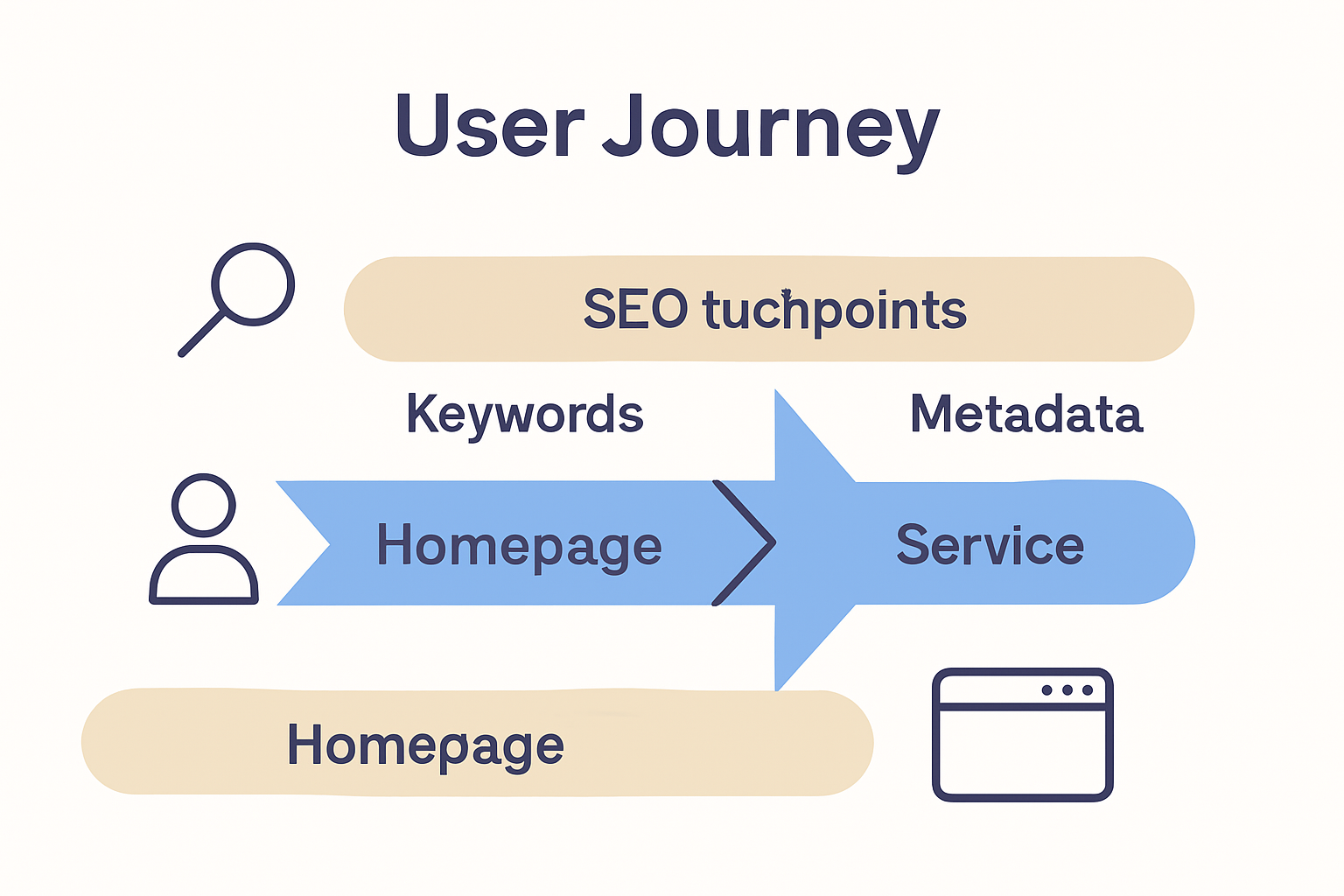
Your layout must strategically direct users through a logical progression that matches their expected journey. Adaptive web design principles suggest creating multiple layout versions that respond to different devices while maintaining a consistent narrative flow. Begin by mapping out your primary user personas and their potential pathways through your website. Consider how each layout element header placement, navigation structure, content hierarchy can nudge visitors towards desired actions like making enquiries or completing purchases.

User journey and SEO layout infographic

Pay particular attention to content placement and visual cues that support both user engagement and search engine visibility. Critical information should appear above the fold with clear hierarchical signals that help both human visitors and search engine crawlers understand your page structure. This means prioritising key messages, using descriptive headings, and ensuring that your most important content receives visual and structural prominence.

Warning: Avoid sacrificing readability for SEO complexity. Your layout must feel intuitive and natural while subtly guiding users towards their goals. The most effective designs appear effortless yet strategically engineered to support both user experience and search engine performance.

Stage 5: Test layout choices for usability and engagement

Automated web page repair approaches demonstrate the critical importance of systematically testing website layouts to ensure optimal user experience and engagement. Your goal in this stage is to rigorously evaluate how well your proposed design performs across different user interactions and device configurations.

Implement a comprehensive testing strategy that goes beyond visual assessment. Utilise specialised testing frameworks to objectively measure layout performance. This involves conducting multiple types of assessments click path analysis, heat mapping, user feedback sessions, and device responsiveness tests. Pay attention to key metrics like time spent on page, bounce rates, and user navigation patterns. These insights will reveal how intuitively users interact with your proposed layout and where potential friction points might exist.

Consider recruiting a diverse group of test participants who represent your target audience. Their feedback will provide nuanced insights into how different user segments perceive and interact with your website design. Create scenarios that simulate real world user journeys and observe how easily participants can accomplish key tasks like finding information, making purchases, or submitting enquiries.

Warning: Avoid confirmation bias during testing. Be prepared to critically evaluate your design choices and embrace constructive feedback that challenges your initial assumptions. The most successful website layouts emerge from iterative refinement based on genuine user experiences.

Transform Your Business Success with Expert Website Layouts

Choosing the right website layout is crucial to turning visitors into loyal customers. This article highlights key challenges like defining clear business goals, crafting mobile responsive designs, and aligning layouts with user journeys and SEO needs. These pain points often leave businesses struggling to create a website that truly drives engagement and conversions.

If you feel overwhelmed by the complexity of mapping content structure or worry about usability testing slowing your growth you are not alone. At ResponsiveWebsiteDesign, we specialise in transforming these challenges into opportunities through custom WordPress designs that focus on your unique business goals. Whether you need a flexible mobile-first layout or SEO-optimised content frameworks, our solutions help you build an online presence that is visually engaging and built to perform.

https://responsivewebsitedesign.co.nz

Ready to turn your website into a powerful tool that speaks directly to your customers and boosts your revenue Get expert support from our team today Explore more insights in our Website Archives and start your journey with ResponsiveWebsiteDesign. Don’t settle for generic layouts when you can have a tailored digital strategy designed for your business success.

Frequently Asked Questions

How can I define my business goals to choose the right website layout?

To define your business goals, identify what you want visitors to do when they arrive at your site, such as generating sales leads or providing information. Create a list of at least three clear objectives that will guide your layout decisions.

What key factors should I consider for mobile responsiveness in my website layout?

When designing for mobile responsiveness, consider simplifying navigation menus, optimising image loading speeds, and ensuring text readability. Start with a mobile-first design approach and test layouts on multiple devices to ensure usability across screen sizes.

How do I map content structure to my website layout effectively?

Break down your website content into clear sections and prioritise visual hierarchy to guide users intuitively through your site. Use layout techniques like Flexbox to arrange elements and create intentional white spaces that enhance readability and focus.

What steps can I take to align my website layout with user journeys and SEO needs?

Map out distinct user personas and their pathways through your site, ensuring that layout elements guide users toward desired actions like completing purchases. Prioritise important content above the fold and use descriptive headings to support both user engagement and search engine visibility.

How should I test my website layout for usability and user engagement?

Implement a comprehensive testing strategy that includes click path analysis, user feedback sessions, and device responsiveness tests. Conduct these assessments with a diverse group of participants to gather nuanced insights and improve your layout based on real user experiences.

Categories
Website

What Is a Website CMS? Complete 2025 Guide

Nearly 60 percent of australian businesses now rely on a website content management system to keep their online presence up to date and running smoothly. With so many options and features available, choosing the right CMS can quickly become confusing for any organisation. Understanding the key functions and differences between popular CMS platforms will save time, reduce frustration, and help you make smarter decisions about your australian business website.

Table of Contents

Key Takeaways

PointDetails
Understanding CMSA Content Management System (CMS) enables users to manage website content easily, eliminating the need for extensive technical skills.
Types of CMS PlatformsBusinesses can choose between open-source, proprietary, and SaaS CMS platforms, each with advantages tailored to different needs.
Essential FeaturesKey features of a powerful CMS include content creation tools, user management capabilities, and advanced customisation options.
Potential ChallengesCommon issues include security vulnerabilities, performance problems, and operational mistakes, necessitating proactive management strategies.

Website CMS Explained and Core Functions

A Content Management System (CMS) is a software platform that enables users to create, manage, and modify website content without requiring extensive technical knowledge. By simplifying digital content production, CMS platforms have revolutionised how businesses and individuals approach web development services.

The core functions of a CMS revolve around making website management accessible and efficient. According to research, these platforms provide critical capabilities such as content authoring, editing, publishing, and administration. Users can upload multimedia content, create web pages, manage site structures, and control user permissions without needing advanced coding skills. Core features typically include:

  • Content creation and editing interfaces
  • Media management tools
  • User role and permission controls
  • Template and design customisation options
  • Version control and content history tracking

Modern CMS platforms offer remarkable flexibility for businesses seeking to maintain dynamic online presences. Whether you’re a small local enterprise or a growing organisation, these systems provide the technological infrastructure to manage digital content effectively. Net Branding recognises that choosing the right CMS can significantly impact a website’s performance, user experience, and overall digital strategy.

When selecting a CMS, businesses should consider factors like scalability, ease of use, integration capabilities, and long-term support. The right platform transforms website management from a complex technical challenge into a straightforward, user-friendly process that empowers organisations to communicate their brand message effectively online.

FAQs:

  1. What is the primary purpose of a CMS?
    A CMS helps users create, manage, and modify website content without advanced technical skills.

  2. Are CMS platforms suitable for all business sizes?
    Yes, CMS platforms can be tailored to suit small startups and large enterprises alike.

  3. How difficult is it to learn a CMS?
    Most modern CMS platforms are designed with user-friendly interfaces that require minimal technical training.

Major Types of CMS Platforms Compared

Navigating the landscape of Content Management Systems (CMS) requires understanding the primary platform categories that power modern websites. Website development platforms offer diverse approaches to digital content management, each with unique characteristics and strategic advantages.

Team comparing CMS platform interfaces together

Research indicates three fundamental CMS types: open-source, proprietary, and Software as a Service (SaaS) platforms. Open-source CMS like WordPress provide maximum flexibility and customisation, allowing developers to modify core code and create bespoke solutions. Proprietary systems offer structured, pre-configured environments with dedicated support, while SaaS platforms deliver turnkey solutions with minimal technical overhead.

Key characteristics of these CMS platforms include:

  • Open-Source CMS

    • Free to use and modify
    • Community-driven development
    • Extensive plugin ecosystems
    • Requires technical expertise
  • Proprietary CMS

    • Vendor-controlled development
    • Comprehensive technical support
    • Standardised security protocols
    • Often subscription-based
  • SaaS CMS

    • Cloud-hosted solutions
    • Automatic updates and maintenance
    • Scalable infrastructure
    • Lower upfront investment

Net Branding recognises that selecting the right CMS platform depends on specific business requirements, technical capabilities, and long-term digital strategy. Factors like budget, customisation needs, scalability, and in-house technical expertise play crucial roles in determining the most suitable platform.

FAQs:

  1. Which CMS type is best for small businesses?
    SaaS platforms typically offer the most straightforward solution for small businesses with limited technical resources.

  2. Are open-source CMS platforms secure?
    Open-source platforms can be secure when properly maintained and updated regularly.

  3. How expensive are proprietary CMS platforms?
    Pricing varies widely, but expect investment ranges from NZD 50 to NZD 500 monthly depending on features and scale.

Essential Features and Customisation Options

A robust Content Management System (CMS) offers businesses extensive custom website design capabilities that transform digital content management from a complex task to a streamlined process. Modern CMS platforms provide sophisticated features that enable organisations to create dynamic, adaptable online experiences tailored to their specific requirements.

Research highlights several essential features that define a powerful CMS platform. Content authoring tools allow users to create, edit, and publish content seamlessly, while robust collaboration features enable multiple team members to work simultaneously. Administrative functions provide granular control over user permissions, ensuring secure and organised content management.

Key customisation options for CMS platforms include:

  • Content Creation Tools

    • Rich text editors
    • Drag-and-drop page builders
    • Multimedia integration
    • Template customisation
  • User Management

    • Role-based access controls
    • Multi-user collaboration
    • Permission hierarchies
    • User activity tracking
  • Advanced Customisation

    • Custom plugin development
    • Theme modification
    • API integrations
    • Workflow automation

Net Branding understands that selecting a CMS involves evaluating specific business needs and technical capabilities. Businesses must consider factors like scalability, integration potential, and long-term digital strategy when choosing a platform that can adapt and grow with their organisational requirements.

FAQs:

  1. How technical do you need to be to customise a CMS?
    Many modern CMS platforms offer user-friendly interfaces that require minimal technical expertise.

  2. Can I add custom features to my CMS?
    Most platforms support plugin and extension ecosystems for additional functionality.

  3. What are the most important customisation considerations?
    Prioritise user experience, content management flexibility, and seamless integration with existing business tools.

Benefits of Using a CMS for Businesses

Understanding the role of web development in business reveals how Content Management Systems (CMS) transform digital operations for modern organisations. These powerful platforms offer businesses unprecedented control and flexibility in managing their online presence, enabling teams to create, update, and optimise content with remarkable efficiency.

Infographic showing three CMS business benefits

Research demonstrates significant operational advantages of CMS platforms for businesses. By streamlining content management processes, these systems dramatically improve collaboration, accountability, and resource allocation. Companies can allocate technical resources more strategically, reducing time spent on manual content updates and focusing on core business objectives.

Key business benefits of implementing a CMS include:

  • Operational Efficiency

    • Rapid content publishing
    • Simplified workflow management
    • Reduced technical dependencies
    • Centralised content control
  • Cost Effectiveness

    • Lower website maintenance expenses
    • Minimal technical skills required
    • Reduced external development costs
    • Scalable infrastructure
  • Strategic Advantages

    • Enhanced user engagement
    • Consistent brand messaging
    • Faster marketing responsiveness
    • Improved search engine optimisation

Net Branding recognises that selecting the right CMS can fundamentally transform a business’s digital strategy. The ability to quickly adapt content, manage multiple users, and maintain a professional online presence represents a critical competitive advantage in today’s digital marketplace.

FAQs:

  1. How quickly can a business implement a CMS?
    Most modern CMS platforms offer rapid deployment, often within days or weeks.

  2. Do CMS platforms require technical expertise?
    Many contemporary CMS solutions are designed with user-friendly interfaces suitable for non-technical users.

  3. Can a CMS improve website performance?
    Yes, CMS platforms often include built-in performance optimization and SEO tools.

Common CMS Challenges and Mistakes to Avoid

Navigating the complexities of Content Management Systems requires a strategic approach, particularly when considering website security protocols that protect digital assets. Understanding potential pitfalls can help businesses mitigate risks and maintain robust online infrastructure.

Research into CMS vulnerabilities reveals critical challenges that organisations must address. Security analysis indicates that unpatched extensions and inconsistent update practices represent significant systemic risks. Businesses frequently encounter vulnerabilities through outdated plugins, inadequate security configurations, and neglected maintenance protocols.

Common CMS challenges organisations encounter include:

  • Security Vulnerabilities

    • Unpatched software extensions
    • Weak authentication mechanisms
    • Insufficient access controls
    • Outdated platform versions
  • Performance Issues

    • Slow page loading times
    • Inefficient database queries
    • Excessive plugin utilisation
    • Poor caching strategies
  • Operational Mistakes

    • Irregular content audits
    • Inconsistent backup procedures
    • Complex user permission structures
    • Neglected software updates

Net Branding understands that proactive management represents the most effective strategy for minimising CMS-related risks. Regular security assessments, comprehensive update protocols, and strategic plugin selection can significantly enhance digital platform reliability and performance.

FAQs:

  1. How often should CMS platforms be updated?
    Critical security updates should be implemented immediately, with comprehensive platform reviews conducted quarterly.

  2. What is the biggest security risk in CMS platforms?
    Outdated extensions and plugins consistently represent the most significant security vulnerability.

  3. Can small businesses effectively manage CMS security?
    Yes, with disciplined maintenance and strategic tool selection, businesses of all sizes can maintain robust digital security.

Take Control of Your Website CMS with Expert Support

Understanding the complexities of a Content Management System and how to avoid common pitfalls can truly empower your business to thrive online. If you are aiming to simplify your website management while maximising SEO, performance, and security, it is essential to partner with professionals who understand these challenges. This article highlights crucial aspects like security vulnerabilities, customisation options, and efficient content workflows that can make or break your digital success.

https://responsivewebsitedesign.co.nz

Discover how our tailored WordPress website design and development services at ResponsiveWebsiteDesign can help you unlock the full potential of your CMS. Whether you require expert advice on selecting the perfect platform, customised solutions to enhance user experience or ongoing website management and security, we are here to support you every step of the way. Explore our practical insights in the Website Archives and find out how to transform your online presence confidently today.

Frequently Asked Questions

What is the primary function of a CMS?

A CMS allows users to create, manage, and update website content without requiring advanced technical skills.

How user-friendly are modern CMS platforms?

Most modern CMS platforms feature user-friendly interfaces that require minimal technical training, making them accessible to a wide range of users.

What types of CMS platforms are available?

The three main types of CMS platforms are open-source, proprietary, and Software as a Service (SaaS), each offering unique benefits depending on the user’s needs.

What are the key features to look for in a CMS?

Essential features to consider include content creation tools, user management capabilities, media management, and options for template and design customisation.

Categories
Website

7 Inspiring Examples of Corporate Websites for Business Growth

Over 60% of australian consumers now research brands online before making a purchase, so a business website’s first impression is more crucial than ever. The homepage sets the tone and the right design can instantly boost trust while clear navigation and strong branding help users find what they need. This guide highlights proven strategies for building corporate websites that look sharp, work perfectly on any device, and put your australian business ahead of the curve.

Table of Contents

Quick Summary

Key InsightExplanation
1. Prioritise responsive designEnsure websites function well on all devices to enhance user experience and engagement.
2. Simplify navigation structuresUse clear labels and limited menu items to help users find information easily without confusion.
3. Focus on authentic brand storytellingShare genuine experiences and values to connect emotionally with audiences and build trust.
4. Implement robust security measuresRegular audits and proactive updates are essential for protecting user data and maintaining credibility.
5. Regularly optimise SEO contentCreate relevant, high-quality content that aligns with user search intent to improve visibility and traffic.

1. Showcase of Engaging Homepage Designs

Corporate websites serve as digital gateways for businesses, representing their brand identity and communicating core messaging within seconds of user engagement. An outstanding homepage design goes beyond aesthetic appeal by creating an immediate connection with potential customers through strategic visual storytelling and intuitive navigation.

Successful corporate websites understand that first impressions matter critically. Responsive web design principles play a significant role in crafting engaging homepage experiences that adapt seamlessly across different devices and screen sizes. The most effective homepages combine clean layouts, purposeful imagery, and clear pathways for user interaction.

Key Elements of Compelling Homepage Design:

  • Visual Hierarchy: Arrange content strategically to guide visitor attention
  • Clear Value Proposition: Communicate business purpose within three seconds
  • Minimalistic Design: Remove unnecessary clutter for improved user comprehension
  • High Quality Imagery: Use professional visuals that represent brand authenticity

Research from UX design experts highlights that websites like Volkswagen Group and Johnson & Johnson excel at creating structured layouts that immediately communicate organisational strengths. Their homepages demonstrate how strategic design can transform digital interfaces into powerful communication tools.

Businesses should focus on creating homepage experiences that feel welcoming, professional, and aligned with their brand personality. This means selecting colour palettes that reflect organisational values, using typography that enhances readability, and incorporating visual elements that tell a compelling brand story.

Practical Considerations for Homepage Design:

  1. Prioritise mobile responsiveness
  2. Use high contrast for critical call to action buttons
  3. Ensure fast loading speeds
  4. Integrate clear navigation paths

By investing time in thoughtful homepage design, businesses can transform their digital presence from mere online brochures to engaging platforms that actively support growth and customer connection.

2. User-Friendly Navigation for Better Experience

Effective website navigation is the digital equivalent of a well-designed roadmap, guiding visitors seamlessly through your online presence and connecting them with the information they seek. User experience design plays a critical role in creating intuitive navigation systems that reduce visitor frustration and increase engagement.

The primary goal of user-friendly navigation is to create a logical and predictable journey for website visitors. When users can easily find what they need without feeling overwhelmed or confused, they are more likely to stay longer, explore more content, and potentially convert into customers.

Key Principles of Effective Website Navigation:

  • Simplicity: Reduce complexity in menu structures
  • Clarity: Use descriptive and straightforward labels
  • Consistency: Maintain uniform navigation across all pages
  • Accessibility: Ensure navigation works for all user abilities

Research highlights that successful navigation depends on several critical factors. Clear language and consistent terminology are fundamental in helping users understand where they can find specific information. Websites should implement logical menu hierarchies that reflect user expectations and organisational structure.

Practical Navigation Design Strategies:

  1. Limit main menu items to 5 to 7 options
  2. Use dropdown menus for subcategories
  3. Include a search function for larger websites
  4. Implement breadcrumb trails for complex site structures

Businesses must recognise that navigation is more than just a technical requirement it is a crucial communication tool. By prioritising user needs and creating intuitive pathways, organisations can transform their websites from static information repositories to dynamic, engaging platforms that effectively support business growth.

3. Mobile Responsiveness That Drives Results

Mobile responsiveness has transformed from a competitive advantage to an absolute necessity for businesses seeking digital success. Responsive design principles ensure websites function seamlessly across smartphones, tablets, and desktop computers without compromising user experience.

In today’s digital ecosystem, more than 60% of global web traffic originates from mobile devices. This statistic underscores the critical importance of creating websites that adapt dynamically to various screen sizes and device capabilities.

Essential Mobile Responsiveness Strategies:

  • Fluid Grid Layouts: Design flexible content containers
  • Scalable Images: Ensure visual elements resize proportionally
  • Touch Friendly Interfaces: Create larger clickable areas
  • Fast Loading Performance: Optimise content for mobile networks

Corporate websites like Meta demonstrate exceptional mobile responsiveness by maintaining consistent design language and functionality across different devices. Their approach illustrates how intelligent design can create seamless user experiences that feel native to each platform.

Practical Implementation Steps:

  1. Use responsive CSS frameworks
  2. Implement mobile first design approach
  3. Test across multiple device types
  4. Minimise complex visual elements

Businesses must recognise mobile responsiveness as more than a technical requirement it represents a fundamental commitment to user accessibility and engagement. By prioritising adaptive design, organisations can create digital experiences that feel intuitive, professional, and welcoming across all user devices.

4. Effective Use of Brand Storytelling Online

Brand storytelling transforms corporate websites from mere information repositories into compelling narratives that connect emotionally with audiences. Digital marketing strategies play a crucial role in crafting authentic and engaging online brand experiences that resonate deeply with potential customers.

Successful brand storytelling goes beyond listing company achievements it creates a narrative that communicates core values, mission, and human impact. By sharing genuine stories, businesses can differentiate themselves in crowded digital marketplaces and build meaningful connections with their target audiences.

Key Elements of Powerful Brand Storytelling:

  • Authenticity: Share genuine organisational experiences
  • Emotional Resonance: Connect through human centred narratives
  • Visual Consistency: Use imagery that supports brand message
  • Clear Purpose: Demonstrate organisational values and mission

Companies like Johnson & Johnson exemplify exceptional brand storytelling through their ‘Our Credo’ section, which communicates their commitment to health and humanity. This approach transcends traditional corporate communication by presenting the organisation as a purpose driven entity with deep human connections.

Practical Brand Storytelling Strategies:

  1. Develop a clear narrative framework
  2. Showcase real customer and employee experiences
  3. Use multimedia content thoughtfully
  4. Align storytelling with organisational values

Businesses must recognise that effective brand storytelling is not about creating perfect marketing messages but about sharing genuine, relatable experiences that invite audience engagement and trust.

5. Seamless Ecommerce Integration Examples

Ecommerce integration transforms corporate websites from static information platforms into dynamic transactional spaces that directly support business growth. Ecommerce integration strategies enable businesses to create seamless online shopping experiences that feel intuitive and user friendly.

The primary goal of effective ecommerce integration is to remove friction from the customer purchasing journey. By simplifying navigation, providing clear product information, and streamlining checkout processes, businesses can significantly increase online conversion rates.

Key Components of Successful Ecommerce Integration:

  • Intuitive Product Categorisation: Easy navigation and search functions
  • Clear Pricing Information: Transparent cost details
  • Secure Payment Gateways: Multiple payment options
  • Responsive Design: Mobile friendly transaction interfaces

Walmart demonstrates exceptional ecommerce integration by designing a website that reflects the company’s commitment to affordability and convenience. Their platform provides a shopper friendly interface that makes online purchasing feel as straightforward as shopping in a physical store.

Practical Ecommerce Implementation Strategies:

  1. Simplify product discovery processes
  2. Implement user friendly shopping cart designs
  3. Provide comprehensive product descriptions
  4. Offer multiple secure payment methods

Businesses must view ecommerce integration not as a technical requirement but as a critical opportunity to create meaningful digital connections with potential customers. The most successful online platforms understand that smooth transactions build long term customer trust and loyalty.

6. Ongoing Support and Security Best Practices

Ongoing website support and robust security measures are critical for maintaining business credibility and protecting digital assets. Website security strategies form the foundation of a resilient online presence that safeguards both organisational and customer information.

Modern businesses must adopt proactive approaches to website maintenance and security that go beyond traditional reactive methods. This involves implementing comprehensive monitoring systems, regular software updates, and adaptive security protocols that evolve with emerging digital threats.

Essential Security and Support Practices:

  • Regular Security Audits: Identify and address potential vulnerabilities
  • Software Update Management: Maintain current platform versions
  • Automated Backup Systems: Protect against data loss
  • Multi Layer Authentication: Enhance access control mechanisms

Recent research highlights innovative approaches to web interface security, such as self adapting web menu frameworks that dynamically adjust based on user behaviour. These advanced techniques demonstrate how intelligent design can significantly improve both user experience and digital protection.

Practical Implementation Strategies:

  1. Develop comprehensive incident response plans
  2. Implement robust encryption protocols
  3. Conduct periodic penetration testing
  4. Train staff on cybersecurity awareness

Businesses must view ongoing support and security not as optional extras but as fundamental components of their digital infrastructure. By prioritising proactive protection and continuous improvement, organisations can build trust and resilience in an increasingly complex digital landscape.

7. SEO Optimised Content for Visibility

SEO optimised content represents the strategic intersection between compelling writing and digital discoverability, enabling businesses to attract and engage potential customers through intelligent online communication. SEO strategies in web design play a crucial role in transforming websites from static information platforms to dynamic customer acquisition channels.

Successful SEO optimisation goes beyond simple keyword placement it involves creating high quality, relevant content that genuinely addresses user needs while simultaneously signalling value to search engine algorithms. This approach requires a nuanced understanding of both human reader preferences and technical ranking criteria.

Key Elements of Effective SEO Content:

  • Relevance: Align content with user search intent

  • Readability: Create clear and engaging text

  • Structured Data: Use proper headings and formatting

  • Original Insights: Provide unique value propositions

Recent research demonstrates the importance of data mining techniques in measuring website performance, highlighting how sophisticated content analysis can significantly improve search engine rankings and user engagement. By understanding navigation patterns and user behaviour, businesses can develop more targeted and effective SEO strategies.

Practical SEO Content Development Strategies:

  1. Conduct thorough keyword research
  2. Create comprehensive, authoritative content
  3. Implement clear content hierarchies
  4. Regularly update and refresh existing materials

Businesses must view SEO optimisation as an ongoing process of understanding and responding to both technological algorithms and human information needs. By combining technical expertise with genuine user value, organisations can create digital content that truly connects and converts.

Below is a comprehensive table summarizing the strategies and considerations for effective corporate website design discussed in the article.

AspectKey ElementsPractical Strategies
Homepage DesignVisual Hierarchy, Clear Value Proposition, Minimalistic Design, High Quality ImageryPrioritise mobile responsiveness, use high contrast for CTAs, ensure fast loading speeds
NavigationSimplicity, Clarity, Consistency, AccessibilityLimit menu items, use dropdown menus, include search functions
Mobile ResponsivenessFluid Grid Layouts, Scalable Images, Touch Friendly InterfacesUse responsive CSS frameworks, implement mobile first design, test across device types
Brand StorytellingAuthenticity, Emotional Resonance, Visual ConsistencyDevelop narrative framework, showcase real experiences, align storytelling with values
Ecommerce IntegrationIntuitive Product Categorisation, Clear Pricing, Secure Payment GatewaysSimplify product discovery, design user friendly cart, offer multiple payment methods
Support & SecurityRegular Audits, Software Updates, Backup SystemsDevelop response plans, implement encryption, conduct penetration testing
SEO ContentRelevance, Readability, Structured DataConduct keyword research, create authoritative content, update materials regularly

Elevate Your Corporate Website to Drive Real Business Growth

Businesses today face the challenge of creating corporate websites that are not only visually engaging but also deliver seamless navigation, mobile responsiveness, effective brand storytelling and ecommerce functionality. This article shows the importance of transforming your website into a dynamic platform that attracts, connects and converts visitors into loyal customers by addressing critical factors like user experience, SEO optimisation and ongoing support.

If you are ready to overcome these challenges and build a professional WordPress website tailored for New Zealand businesses, explore how our team can help you achieve your goals with custom web design and development solutions. Visit our Website Archives – ResponsiveWebsiteDesign to see inspiring examples and learn more about elevating your online presence.

https://responsivewebsitedesign.co.nz

Don’t let your website hold back your business growth. Take the next step now at https://responsivewebsitedesign.co.nz where our experts deliver responsive, SEO-optimised and secure websites designed to support your long-term success. Contact us today to start creating a digital experience that truly reflects your brand and drives results.

Frequently Asked Questions

How can I create an engaging homepage design for my corporate website?

An engaging homepage design can be achieved by focusing on visual hierarchy, a clear value proposition, and minimalistic design. Prioritise clean layouts and high-quality imagery to enhance user experience, and aim to implement these changes within 30 days to see initial improvements.

What are the key principles for effective website navigation?

Effective website navigation should be simple, clear, and consistent. Limit main menu items to 5–7 options and ensure that all links are descriptive to improve user understanding and retention across your site.

How do I ensure my corporate website is mobile responsive?

To ensure mobile responsiveness, use fluid grid layouts, scalable images, and touch-friendly interfaces. Implement these strategies immediately to enhance user experience across all devices, recognising that over 60% of global web traffic comes from mobile.

What elements should I include for successful ecommerce integration on my website?

Successful ecommerce integration requires intuitive product categorisation, clear pricing information, and secure payment gateways. Design these systems with user experience in mind, aiming to simplify the purchasing process to boost conversion rates by up to 30%.

How can I effectively utilise brand storytelling on my corporate website?

To effectively utilise brand storytelling, focus on authenticity and emotional resonance in your narratives. Showcase real experiences from customers or employees, and align your stories with organisational values to create deeper connections with your audience.

What are essential security practices for maintaining my corporate website?

Essential security practices include regular security audits, robust encryption protocols, and automated backup systems. Implementing these measures can significantly reduce vulnerabilities and help maintain the integrity of your digital presence.

Categories
Website

Complete Guide to Website Security for Businesses

Cyber attacks strike every 39 seconds worldwide, making australian businesses prime targets in the digital age. Even a small website vulnerability can leave a company exposed to severe data loss and financial setbacks. Staying ahead of emerging threats means understanding website security is no longer optional. This guide breaks down what australian organisations must know right now to protect their online operations from growing cyber risks.

Table of Contents

Key Takeaways

PointDetails
Importance of Website SecurityWebsite security is vital for protecting digital assets from cyber threats, ensuring confidentiality, integrity, and availability.
Proactive Measures RequiredEffective security involves multi-layered strategies including regular updates, robust password management, and advanced firewalls.
Cost of Non-ComplianceFailure to implement website security can result in significant financial losses, reputational harm, and legal implications.
Continuous Monitoring and TrainingOngoing security management and staff training are essential for adapting to evolving cyber threats and maintaining a secure environment.

Defining Website Security and Its Importance

Website security represents a critical digital defence strategy for businesses protecting their online presence from sophisticated cyber threats. Exploring contemporary security practices reveals how organisations must proactively safeguard their digital infrastructure against increasingly complex vulnerabilities.

At its core, website security encompasses a comprehensive approach to protecting websites from potential digital risks, malicious attacks, and unauthorised access attempts. Comprehensive cybersecurity measures involve multiple layers of technical and strategic interventions designed to maintain the confidentiality, integrity, and accessibility of digital assets.

Businesses face significant challenges when neglecting website security. Potential consequences include data breaches, financial losses, reputational damage, and potential legal ramifications. Net Branding understands these risks intimately, recognising that a single security vulnerability can compromise an entire organisation’s digital ecosystem.

Key components of effective website security include:

  • Robust password management protocols
  • Regular software and plugin updates
  • Implementation of SSL certificates
  • Advanced firewall configurations
  • Continuous security monitoring systems

For businesses seeking professional website security solutions, partnering with experienced web design agencies like Net Branding can provide comprehensive protection strategies tailored to specific organisational needs.

FAQ

  1. What is the most critical aspect of website security?
    Implementing multi-layered security protocols that protect against various digital threats.

  2. How often should website security be reviewed?
    Minimum quarterly comprehensive security assessments are recommended.

  3. Can small businesses afford professional website security?
    Professional security solutions start from NZD 299 per month, making them accessible for businesses of all sizes.

Common Types of Website Security Threats

Websites today face an increasingly complex landscape of cyber threats that can compromise sensitive data and undermine digital infrastructure. Comprehensive cybersecurity research reveals multiple sophisticated attack vectors that businesses must understand and proactively defend against.

Among the most prevalent website security threats, cross-site scripting (XSS) and SQL injection represent particularly dangerous attack methods. Advanced threat analysis demonstrates how these techniques allow malicious actors to exploit vulnerabilities in web applications, potentially gaining unauthorised access to critical systems and sensitive information.

Cyber threats targeting digital website vaults

Net Branding recognises the critical importance of understanding these digital risks. Cyber criminals continuously evolve their strategies, targeting websites through multiple sophisticated approaches that can devastate unprepared businesses.

Key website security threats include:

  • Cross-site scripting (XSS)
  • SQL injection attacks
  • Distributed denial-of-service (DDoS) attacks
  • Malware infiltration
  • Phishing attempts
  • Ransomware deployment
  • Authentication bypass techniques

Businesses must adopt a proactive and comprehensive approach to website maintenance and security to effectively mitigate these potential risks.

FAQ

  1. How quickly can a cyber attack damage my business?
    Cyber attacks can cause immediate and long-lasting damage within minutes of successful infiltration.

  2. What is the most dangerous type of website attack?
    SQL injection and cross-site scripting pose significant risks due to their ability to compromise entire database systems.

  3. How much does professional website security cost?
    Professional security solutions start from NZD 499 per month, providing comprehensive protection for businesses of all sizes.

Essential Website Security Measures and Tools

Comprehensive website security requires a multi-layered approach that addresses vulnerabilities across technological, procedural, and human domains. Modern businesses must implement sophisticated strategies that protect digital assets from increasingly complex cyber threats.

Key security measures begin with robust authentication protocols and advanced encryption techniques. Preventive cybersecurity strategies emphasise the critical importance of implementing strong user verification mechanisms, including multi-factor authentication, complex password requirements, and continuous access monitoring.

Net Branding recognises that effective website security extends beyond technological solutions. Comprehensive protection requires a holistic approach that combines technical safeguards with ongoing staff education, regular system audits, and proactive threat monitoring.

Essential website security tools and measures include:

  • SSL/TLS encryption certificates
  • Web application firewalls (WAF)
  • Intrusion detection and prevention systems
  • Regular security patch management
  • Comprehensive backup solutions
  • Advanced threat detection software
  • Continuous vulnerability scanning

Businesses can enhance their digital defence by implementing structured website maintenance workflows that prioritise ongoing security management and proactive risk mitigation.

FAQ

  1. How often should website security be reviewed?
    Comprehensive security audits should be conducted quarterly, with continuous monitoring between formal assessments.

  2. What is the most critical security tool?
    Multi-factor authentication represents the most effective first line of defence against unauthorized access.

  3. How much does professional website security cost?
    Professional security solutions start from NZD 499 per month, providing comprehensive protection for businesses of all sizes.

Ongoing Security Management and Best Practices

Continuous security management represents a dynamic and proactive approach to protecting digital infrastructure. Businesses must develop adaptive strategies that anticipate and respond to evolving cyber threats, transforming website security from a static defence mechanism into an ongoing, intelligent protection ecosystem.

Net Branding understands that effective security management extends far beyond periodic checks. Advanced cybersecurity protocols demand a comprehensive framework that integrates technological tools, human expertise, and systematic monitoring to create a robust defensive strategy.

The most successful security approaches incorporate multiple layers of protection, recognising that no single tool or technique can provide complete defence. Organisations must cultivate a security-first mindset that permeates every level of digital operations, from technical infrastructure to employee training and awareness.

Key ongoing security management practices include:

  • Regular vulnerability assessments
  • Automated patch management
  • Continuous threat monitoring
  • Staff cybersecurity training programs
  • Incident response planning
  • Performance and security log analysis
  • Regular penetration testing

Businesses can strengthen their digital resilience by implementing structured website maintenance workflows that integrate security management into routine operational processes.

FAQ

  1. How frequently should security assessments occur?
    Comprehensive security assessments should be conducted quarterly, with continuous monitoring between formal reviews.

  2. What is the most critical aspect of ongoing security?
    Continuous employee education and awareness represent the most crucial element of sustained cybersecurity protection.

  3. How much does professional security management cost?
    Professional security management solutions start from NZD 599 per month, providing comprehensive protection tailored to business needs.

Risks, Liabilities, and Compliance for Businesses

Website security risks represent a complex landscape of potential legal, financial, and reputational challenges that businesses must navigate with strategic precision. Beyond technological vulnerabilities, organisations face significant consequences when failing to implement robust protective measures for their digital infrastructure.

Infographic showing legal, financial, reputational risks

Net Branding recognises that compliance frameworks are not merely bureaucratic checklists but critical defence mechanisms. Digital security compliance demands comprehensive approaches that protect sensitive data, maintain customer trust, and mitigate potential legal ramifications arising from security breaches.

The financial implications of non-compliance can be devastating. A single security incident could result in substantial monetary penalties, legal action, and irreparable damage to brand reputation. Businesses must understand that cybersecurity is not an optional investment but a fundamental requirement for operational sustainability.

Key risks and compliance considerations include:

  • Data protection regulatory requirements
  • Privacy law adherence
  • Financial transaction security standards
  • Mandatory breach notification protocols
  • Industry-specific security certifications
  • Cybersecurity insurance requirements
  • International data transfer regulations

Businesses can proactively manage their digital risk by implementing structured website maintenance workflows that integrate compliance monitoring and risk assessment.

FAQ

  1. What are the potential financial risks of non-compliance?
    Security breaches can lead to fines up to NZD 100,000 and significant legal expenses.

  2. How often should compliance be reviewed?
    Comprehensive compliance assessments should occur at least annually, with quarterly interim reviews.

  3. What is the cost of professional compliance support?
    Professional compliance and risk management solutions start from NZD 799 per month, providing comprehensive protection and strategic guidance.

Protect Your Business with Expert Website Security Solutions

Ensuring your website is secure from threats such as cross-site scripting, SQL injection, and ransomware is critical for maintaining your business’s reputation and customer trust. This guide highlights the challenges of managing ongoing security, implementing robust authentication, and maintaining compliance. If these complexities worry you or you want to safeguard your online presence, there is a clearer path forward.

https://responsivewebsitedesign.co.nz

Explore comprehensive security and maintenance services tailored specifically for New Zealand businesses at Website Archives – ResponsiveWebsiteDesign. Our team at ResponsiveWebsiteDesign specialises in creating secure, responsive WordPress websites designed to protect your data and optimise performance. Don’t leave your website vulnerable – get in touch today to start your tailored security strategy and ensure your site is safe now and in the future.

Frequently Asked Questions

What is website security and why is it important?

Website security is a critical strategy that protects online businesses from cyber threats, data breaches, and unauthorised access, ensuring the confidentiality, integrity, and availability of digital assets.

How often should I assess my website’s security?

It is recommended to conduct comprehensive security assessments at least quarterly, with continuous monitoring in between these formal evaluations to ensure ongoing protection.

What are common types of website security threats I should be aware of?

Common threats include cross-site scripting (XSS), SQL injection attacks, distributed denial-of-service (DDoS) attacks, malware infiltration, phishing attempts, ransomware, and authentication bypass techniques.

What key measures should I implement for effective website security?

Key measures include utilizing SSL/TLS encryption, employing web application firewalls (WAF), conducting regular security patch management, implementing intrusion detection systems, and ensuring continuous vulnerability scanning.

Categories
Website

How to Improve Site Speed for Better User Experience

Over 50 percent of australian websites see visitors leaving after just a few seconds due to slow load times or clunky design. A website’s performance can make or break its ability to attract and keep users in today’s competitive digital market. Understanding the simple steps to evaluate and improve your australian site not only increases user satisfaction but also leads to better search rankings and higher engagement.

Table of Contents

Quick Summary

Key InsightExplanation
1. Evaluate site performance thoroughlyUse tools like Google PageSpeed Insights to assess loading speed and user experience, ensuring comprehensive site performance evaluation.
2. Optimise images and media files effectivelyCrop, compress, and choose appropriate formats for images to enhance page loading speeds and maintain visual quality.
3. Minimise plugins and scripts usageRegularly audit and reduce unnecessary plugins to improve site performance and limit loading times.
4. Implement caching solutionsUse browser and server-side caching to speed up data retrieval and enhance overall user experience.
5. Test improvements across various devicesEnsure consistent user experiences by testing website performance on multiple devices and screen sizes.

Step 1: Evaluate current site performance

Evaluating your website’s current performance forms the critical foundation for identifying areas requiring improvement. According to Newcastle University, a comprehensive website audit helps assess site performance, user experience, and compliance with best practices.

To begin your site performance evaluation, leverage specialised tools like Google PageSpeed Insights, GTmetrix, and Lighthouse. These platforms offer detailed insights into your website’s loading speed, mobile responsiveness, and overall user experience metrics. You will want to analyse critical parameters such as:

  • Total page load time
  • Time to first meaningful paint
  • Mobile and desktop performance scores
  • Potential performance bottlenecks
  • Server response times

Net Branding recommends conducting performance tests across multiple devices and network conditions to gain a holistic understanding of your site’s capabilities. A guide on website speed optimisation can provide additional strategies for comprehensive performance assessment.

Warning: Do not rely on a single testing tool. Cross reference multiple performance measurement platforms to ensure accuracy and identify consistent areas for potential improvement.

Step 2: Optimise images and media files

Optimising images and media files is crucial for improving website performance and reducing page load times. University of Leicester emphasises the importance of cropping and compressing images before uploading to enhance page load speeds and search engine optimisation.

To effectively optimise your website’s media files, follow these strategic steps:

  • Select the appropriate file format (JPEG for photographs, PNG for graphics with transparency)
  • Resize images to match their display dimensions
  • Compress images without significantly compromising visual quality
  • Use modern image formats like WebP for better compression
  • Remove unnecessary metadata from media files

As Duke University’s Drupal Training recommends, choosing the right image format and applying proper compression techniques can dramatically improve website performance. Tools like TinyPNG, ImageOptim, and Squoosh can help automate this process.

image optimisation for websites

For businesses seeking comprehensive website optimisation strategies, Net Branding suggests consulting a guide on page speed improvement to understand the broader context of media file optimisation.

Warning: Avoid over-compressing images, which can result in significant quality loss. Always preview your images after compression to ensure they maintain acceptable visual standards.

Step 3: Minimise plugins and scripts

Reducing the number of plugins and scripts is essential for maintaining optimal website performance and user experience. Newcastle University’s Digital Design Services recommend minimising plugin usage to enhance website efficiency and loading speeds.

When approaching plugin and script management, consider these strategic approaches:

  • Audit existing plugins and identify redundant or unnecessary additions
  • Prioritise multi functional plugins that combine several features
  • Select lightweight plugins with minimal code complexity
  • Remove inactive or outdated plugins
  • Use plugin performance monitoring tools

University of Queensland advises that reducing script and plugin volume directly correlates with improved site performance. WordPress users should particularly focus on eliminating plugins that load excessive external resources or create unnecessary database queries.

Net Branding recommends regularly reviewing your website performance guide to understand the ongoing impact of plugins on site speed.

Warning: Always create a complete website backup before removing plugins to prevent potential functionality disruptions.

Step 4: Leverage caching solutions

Newcastle University’s Digital Design Services suggest implementing caching solutions as a critical strategy for enhancing website performance and reducing load times. Caching allows your website to store frequently accessed data temporarily, enabling faster retrieval and significantly improving user experience.

To effectively implement caching solutions, consider these comprehensive approaches:

  • Utilise browser caching to store static resources locally
  • Implement server side caching mechanisms
  • Use content delivery networks (CDNs) for global performance
  • Configure caching plugins specifically designed for your platform
  • Establish appropriate cache expiration periods

University of Queensland recommends leveraging caching mechanisms to create seamless and rapid website interactions. WordPress users can explore plugins like WP Super Cache or W3 Total Cache to streamline their caching strategies.

Net Branding suggests consulting a comprehensive website performance guide to understand the nuanced implementation of caching technologies.

Warning: Overly aggressive caching can potentially serve outdated content, so regularly verify and adjust your caching configurations to maintain content accuracy.

Infographic showing steps to improve website speed.

Step 5: Test improvements across devices

Newcastle University’s Digital Design Services emphasise the critical importance of testing website improvements across multiple devices to ensure a consistent and high quality user experience. Comprehensive device testing helps identify potential performance variations and usability challenges that might impact different user segments.

To effectively test your website improvements, implement these strategic approaches:

  • Use responsive design testing tools like BrowserStack
  • Test on multiple screen sizes smartphone, tablet, desktop
  • Check performance across different operating systems
  • Validate touch interactions and mobile specific functionalities
  • Compare loading speeds on various network conditions

University of Queensland recommends verifying website enhancements through systematic device testing to guarantee optimal user experience across diverse digital platforms.

Net Branding suggests referencing a comprehensive website performance guide to understand nuanced testing methodologies.

Warning: Do not rely exclusively on emulators or simulators. Always conduct real world testing on physical devices to capture authentic user experiences.

Boost Your Website Speed and User Experience Today

Struggling with slow page loads and heavy plugins can frustrate your visitors and harm your search rankings. The article highlights critical steps like optimiser images and leveraging caching solutions that every business must implement for faster performance and seamless user experience. At ResponsiveWebsiteDesign, we specialise in crafting custom WordPress websites finely tuned to deliver swift load times and responsive designs tailored to your business needs.

https://responsivewebsitedesign.co.nz

Explore our expertise in website performance optimisation by visiting our Website Archives and learn how efficient plugin use and speed improvements can elevate your online presence. Ready to make your website faster and more engaging now Contact us at ResponsiveWebsiteDesign to start transforming your digital footprint with expert WordPress development and ongoing support.

Frequently Asked Questions

How can I evaluate my current site performance?

To evaluate your current site performance, start by conducting a comprehensive website audit. Utilise tools designed for performance assessment to measure loading speed, mobile responsiveness, and user experience metrics.

What steps should I follow to optimise images and media files?

To optimise images and media files, choose the right file format, resize them to match display dimensions, and compress them effectively. Consider using modern image formats for better compression, while ensuring the visual quality remains intact.

How do I minimise plugins and scripts on my website?

Minimise plugins and scripts by auditing existing ones to identify unnecessary additions and focusing on lightweight, multifunctional options. Regularly remove inactive or outdated plugins to improve site performance and reduce loading times.

What are the best practices for implementing caching solutions?

To successfully implement caching solutions, enable browser caching for static resources and consider server-side caching mechanisms. Additionally, configure content delivery networks (CDNs) to enhance global performance and establish appropriate cache expiration periods.

Why is testing improvements across devices important?

Testing improvements across multiple devices is crucial to ensure a consistent user experience and to identify performance variations. Conduct real-world testing on different screen sizes and operating systems to capture authentic user interactions.

Categories
Website

Top Web Hosting Services for Companies – Expert Comparison 2025

Choosing the right partner for your website or hosting can feel overwhelming with so many promises about speed, security, and support. Some providers focus on clever designs that draw attention while others highlight local expertise, hands-on management, or all-in-one convenience for businesses wanting more than just the basics. It might come down to who offers the smartest features for your needs or who makes growing your online presence feel simple and reliable. Curious which service lives up to its claims and fits your goals best? The answers might surprise you.

Table of Contents

Responsive Web Site Design

Product Screenshot

At a Glance

Responsive Web Site Design is a New Zealand-based digital agency specialising in WordPress design, development and re-design for small to medium-sized businesses. They prioritise traffic-generating, SEO-optimised and mobile-responsive sites that focus on user engagement and visual design. Their service offering spans custom development, WooCommerce e-commerce solutions, ongoing site management and security — all delivered with an emphasis on long-term client relationships.

Core Features

Responsive Web Site Design provides end-to-end WordPress solutions: custom WordPress development for everything from large and directory sites to upgraded bespoke builds, WooCommerce and custom e-commerce platform development for online selling, and visually engaging responsive designs that centre on user experience. The agency also offers website management services including security updates, performance audits and ongoing optimisations, plus specialised support for recovering hacked websites to restore reliability and trust.

Pros

  • Tailored solutions for businesses of all sizes: the team builds bespoke WordPress projects that match specific business objectives rather than shoehorning clients into rigid templates.
  • Comprehensive services covering design, development, management and optimisation: you get a single partner for the full lifecycle of a website, reducing handoffs and miscommunication.
  • Focus on SEO and speed to improve online visibility and performance: optimisation is treated as a core deliverable, not an optional add-on.
  • Experienced team with a record of website recovery after breaches: they offer practical remediation and hardening to reduce future risk.
  • Long-term partnership approach: ongoing maintenance and iterative improvements are part of the offering, which supports sustainable growth.

Who It’s For

Responsive Web Site Design is ideal for small to medium-sized businesses and local organisations that need more than a one-off build. If you require a site that converts—whether that means lead generation, bookings or online sales via WooCommerce—or you need ongoing technical stewardship and security, this agency fits the brief. Choose them if you value a local, relationship-driven partner who will manage performance, SEO and updates on your behalf.

Unique Value Proposition

What sets Responsive Web Site Design apart is a blend of local New Zealand focus, WordPress technical depth and a client-first maintenance model. They don’t just hand over a site; they build traffic-oriented, SEO-aware platforms and then actively manage security, performance and iterative optimisation. Their WooCommerce experience means e-commerce stores are treated as revenue engines, not static catalogues. Recovering hacked sites is a practical capability that demonstrates operational resilience. In short: you get a single, accountable partner that combines design sensibility, technical rigour and ongoing stewardship — a superior model compared with providers that separate design, hosting and maintenance into disconnected silos.

Real World Use Case

A local NZ business wants to revamp its online presence to increase enquiries and online sales. Responsive Web Site Design delivers a responsive, SEO-optimised WordPress site, integrates WooCommerce for sales, implements performance and security improvements, then provides ongoing management so the site keeps converting and remains secure.

Pricing

Not specified; contact for a free quote.

Website: https://responsivewebsitedesign.co.nz

Sitehost

Product Screenshot

At a Glance

Sitehost is a fast, reliable hosting platform tailored for businesses and developers, offering container images, virtual servers and private cloud options. Its performance-focused infrastructure — advertised as nearly 5× faster for developers — pairs with proactive monitoring and responsive support to reduce downtime and operational headaches. For teams that prioritise control, security and predictable performance, Sitehost delivers a robust foundation; for absolute beginners, the breadth of options may require a short learning curve.

Core Features

Sitehost provides a wide selection of more than 59 container images with customisable containers, a cloud containers platform that includes server health monitoring and automatic alerts, and the ability to clone containers for safe testing and updates. It supports flexible hosting models from Linux and Windows virtual servers to high-performance virtual servers, dedicated virtual servers and private cloud deployments, all managed via a user-friendly control panel and API with domain management and reseller features.

Pros

  • High performance: Sitehost advertises cloud containers that are nearly 5× faster for developers, which supports quicker deployments and snappier application response times.
  • Reliable support and monitoring: The platform provides proactive server health monitoring and automatic alerts alongside quick response times from support staff.
  • Flexible hosting options: Businesses can choose between cloud containers, virtual servers, dedicated resources and private cloud setups to match workload demands.
  • Developer-friendly tooling: A wide range of container images, cloneable environments and an API make it straightforward for development teams to build, test and roll out changes.
  • Proven trust: Sitehost is described as being trusted by thousands of satisfied customers, which suggests established operational maturity.

Cons

  • Pricing detail gaps: The publicly provided information lacks detailed pricing tiers for all services, which means you may need to contact sales for exact costs on some configurations.
  • Can be complex for beginners: The extensive feature set and variety of hosting options could overwhelm users without infrastructure experience or dedicated devops support.
  • No mention of trial offers: There is no evidence of free trials or introductory offers in the supplied information, so testing the platform risk-free may not be available.

Who It’s For

Sitehost suits developers, small to medium businesses and enterprises that need reliable, high-performance hosting with granular control over containers and server resources. It is especially relevant for teams that run CMS sites, custom applications or high-traffic endpoints and who can benefit from cloneable environments and API-driven management.

Unique Value Proposition

Sitehost’s unique proposition is a performance-focused hosting stack that combines fast cloud containers, extensive container image choices and flexible deployment models with proactive monitoring and strong support. That mix is aimed at teams who want to offload infrastructure headaches while retaining control and scale options.

Real World Use Case

A web agency hosting Craft CMS sites can use Sitehost’s container platform to run each site in isolated, cloneable containers with managed backups and monitoring. This simplifies updates, improves reliability during traffic spikes and lets the agency focus on development and content rather than infrastructure maintenance.

Pricing

Pricing examples provided: from $30 per month for Linux virtual servers, $35 per month for cloud containers, $40 per month for Linux high-performance virtual servers, $75 per month for Windows high-performance virtual servers, and $170 per month for virtual dedicated servers.

Website: https://sitehost.nz

Myhost New Zealand

Product Screenshot

At a Glance

Myhost New Zealand delivers fast, reliable and affordable hosting tailored to businesses that need straightforward, NZ-based infrastructure and solid support. Plans scale from small sites to dedicated servers and co-location, with free daily backups and automatic SSL included as standard. If you value hands-on migration help and a local support team, Myhost is a pragmatic choice — though you may want to confirm long-term pricing and advanced configuration needs before committing.

Core Features

Myhost offers a clear range of plans billed monthly or yearly with three primary tiers: Small, Medium and Large. Each plan advertises unlimited storage, bandwidth, databases, FTP and email accounts, plus free daily backups and automatic SSL to reduce maintenance overhead. Domain search and registration cover NZ, AU and .com TLDs, and higher-tier customers can access VPS, dedicated server and co-location options. The provider emphasises ease of migration and customer support, which is useful when moving established sites.

Short and practical.

Pros

  • Affordable, predictable entry pricing: The Small, Medium and Large plans provide clear yearly options that suit bootstrapped businesses and growing companies.
  • Strong support and migration focus: Customer reviews highlight helpful migration assistance and responsive support, easing the pain of switching providers.
  • Comprehensive security basics included: Free daily backups and automatic SSL reduce risk and administrative load for busy business owners.
  • Range of hosting types: Offering shared, VPS, dedicated and co-location means you can scale within the same provider as traffic or compliance needs grow.
  • Generous resource claims: Unlimited storage, bandwidth and email accounts simplify capacity planning for many small to medium sites.

Cons

  • Limited infrastructure transparency: The public content lacks specific technical details about server hardware, data centre locations and redundancy, which makes capacity planning and compliance checks harder.
  • Potential renewal cost increases: Prices may rise after promotional periods, so long-term budgeting requires careful attention to renewal terms.
  • Sparse detail on advanced customisation: Information on specialised configurations, managed services levels or performance tuning is limited in the available material.

Who It’s For

Myhost suits business owners, developers and agencies seeking a New Zealand-based host with solid support and straightforward scaling options. It is a good fit for small ecommerce stores, corporate brochure sites, and organisations that prefer local support and domain management in NZ and AU.

Unique Value Proposition

Myhost’s key value is the combination of localised service and simplicity: NZ-focused domain and hosting options backed by daily backups, automatic SSL and a support-led migration approach. For teams that want to avoid cloud complexity and retain a single local supplier for hosting and domains, Myhost simplifies operations.

Real World Use Case

A small retail business migrated from an overseas provider to Myhost, using the migration support to transfer domains and content with minimal downtime. They relied on the Large plan’s resource allowances as traffic grew during seasonal campaigns and appreciated daily backups when restoring a product catalogue after an accidental deletion.

Pricing

Small plan: NZ$96/year (approximately NZ$8.66 per month); Medium plan: NZ$161/year (approximately NZ$14.46 per month); Large plan: NZ$301/year (approximately NZ$27.86 per month). Domain registration: NZ$29.95/year (NZ), AU$25.95/year (AU), .com NZ$29.95/year.

Website: https://webslice.co.nz

Umbrellar

Product Screenshot

At a Glance

Umbrellar is a New Zealand cloud services provider with over 20 years’ experience designing, building, managing and securing cloud environments. Their pitch centres on reducing cloud costs, improving security and lifting operational efficiency while working alongside — not replacing — existing IT teams. The company emphasises local, proactive 24/7 support, which is a clear advantage for organisations that value immediate, local expertise. Bottom line: strong regional support and cost‑optimisation focus, but limited public detail on pricing and bespoke enterprise offerings.

Core Features

Umbrellar specialises in full‑life‑cycle cloud services: cloud architecture and build, ongoing cloud management and optimisation, security and compliance services, cost‑saving consultations and audits, plus proactive 24/7 support and management. These capabilities are geared towards helping organisations migrate to the cloud, tighten security posture, and continuously identify opportunities to reduce expenditure and increase performance.

Pros

  • Local New Zealand‑based team with 24/7 support: Having a round‑the‑clock local team reduces response times and simplifies communication for NZ businesses.
  • Over 20 years’ experience in cloud services: A long track record suggests mature practices and institutional knowledge that benefit complex migrations and managed operations.
  • Proven track record in cost savings and efficiency: Umbrellar highlights cost‑saving consultations and audits that target wasted spend and performance inefficiencies.
  • Supports existing IT teams rather than replacing them: The approach focuses on complementing in‑house capability, which preserves institutional knowledge and eases change management.
  • Strong customer testimonials: Positive client feedback indicates credibility and practical results delivered in real customer environments.

Cons

  • Specific details on pricing are not provided on the website: The lack of published pricing means you must request a consultation to understand total cost, which can slow initial vendor comparisons.
  • No information on geographic service limitations beyond New Zealand: Public materials do not clarify whether full support and services extend beyond NZ, creating uncertainty for organisations with international operations.
  • Potentially limited information on customised enterprise solutions: The website gives only a high‑level view of offerings, so large enterprises may need detailed conversations to verify suitability for bespoke, highly regulated or unusually large deployments.

Who It’s For

Umbrellar is ideal for medium to large enterprises in New Zealand that need comprehensive cloud management, cost optimisation and stronger security assurance, especially those preferring local support and a partner that integrates with existing IT teams. If you want a local adviser to shorten response times and guide continual optimisation, Umbrellar fits well.

Unique Value Proposition

Umbrellar’s unique value lies in combining deep cloud technical capability with local, 24/7 support and a consultative approach to cost reduction and security. In short: experienced cloud practitioners who stay close to your team and your budget.

Real World Use Case

A New Zealand technology company engaged Umbrellar to manage and optimise its cloud infrastructure; Umbrellar implemented efficiency measures that lowered monthly cloud spend while hardening security and providing continuous support to maintain high availability — all coordinated with the client’s internal IT staff.

Pricing

Not specified on the website; Umbrellar encourages prospective clients to request a consultation to receive tailored pricing and recommendations.

Website: https://umbrellar.com

Crazy Domains New Zealand

Product Screenshot

At a Glance

Crazy Domains New Zealand is a budget-conscious, all-in-one provider that bundles domain registration, web hosting, an AI-powered website builder and email solutions aimed at small to medium businesses. Its clear strength is affordability and promotional value, particularly during events like Black Friday, combined with 24/7 support aligned to New Zealand time. That makes it a straightforward option if you want to get online quickly without complex procurement decisions.

Core Features

Crazy Domains provides domain registration with competitive pricing and specialised .co.nz plans suited to New Zealand businesses. Hosting is presented as optimised for speed and uptime, while an AI-powered website builder promises rapid site launches. The platform also offers Google Workspace plans with discounts and multiple website security measures, including encryption and protection tools. Together these features position Crazy Domains as a single vendor for registering, hosting, building and securing a business website.

Pros

  • Affordable pricing and promotions: The provider emphasises budget-friendly plans and notable savings during promotional periods such as Black Friday, which helps lower initial costs.
  • Comprehensive toolset in one place: You can register domains, host a website, build with AI assistance and add email and business productivity tools from a single dashboard.
  • 24/7 customer support in NZ time zones: Round-the-clock support tailored to New Zealand hours reduces friction for local business owners needing help outside standard business hours.
  • Local focus on .co.nz and business needs: Specialised plans for New Zealand domains and local requirements simplify setup for Kiwi companies.
  • Bundling for extra savings: The ability to bundle domains, hosting and Google Workspace typically increases overall value and streamlines billing.

Cons

  • Limited technical detail in available information: The provided data lacks deep technical specifications such as server locations, backup frequency, resource limits or SLA figures, making rigorous comparison difficult.
  • Promotional focus may obscure standard pricing: Heavy emphasis on time-limited offers means the post-promotion pricing picture may be less attractive for long-term budgeting.
  • Unclear service-level transparency: Without explicit metrics on uptime guarantees or support response times, it’s harder to assess suitability for mission-critical sites.

Who It’s For

Crazy Domains is tailored to small to medium business owners in New Zealand who prioritise a simple, cost-effective path to an online presence. If you want to register a .co.nz domain, get hosting and launch a basic website quickly—especially during a sale—this provider fits. It’s ideal for startups, tradespeople and local retailers seeking straightforward solutions without a long procurement process.

Unique Value Proposition

The core value is convenience and cost: a locally focused service that combines domain registration, hosting, AI-assisted site building and discounted productivity tools under one roof, backed by New Zealand-aligned support hours.

Real World Use Case

A startup founder secures a .co.nz domain, purchases a hosting bundle, and uses the AI builder to launch a lean marketing site within days—maximising savings with a Black Friday bundle while keeping support local and accessible.

Pricing

Pricing highlights include domain registrations starting at NZ$29.99 for a .co.nz domain in the first year, with discounted hosting and Google Workspace plans available during promotional periods. Exact ongoing rates and renewal fees should be confirmed before purchase.

Website: https://crazydomains.co.nz

Web Hosting and Design Service Comparison

This table compares a range of web hosting and design service providers based on their features, pros, cons, pricing, and target users.

ProviderFeaturesProsConsPricing Information
Responsive Web Site DesignCustom WordPress, WooCommerce, site management, securityTailored solutions, comprehensive services, SEO focusPricing not specifiedContact for a free quote
SitehostContainer images, virtual servers, private cloudHigh performance, reliable support, flexible hosting optionsComplex for beginners, no trial offersLinux VMs from $30/month; Containers from $35/month
Myhost New ZealandUnlimited storage, daily backups, VPS and dedicated optionsAffordable pricing, strong migration support, comprehensive security basicsLimited infrastructure details, potential renewal cost increasesSmall Plan $96/year; Medium Plan $161/year; Large Plan $301/year
UmbrellarCloud services, security, cost-saving consultations, 24/7 local supportLocal support, cost savings, integration with existing IT teamsPricing not specified, limited geographic service informationRequest a consultation for pricing
Crazy Domains New ZealandDomain registration, AI website builder, web hosting, email solutionsAffordable pricing, comprehensive toolset, 24/7 local supportLimited technical details, promotional focus may obscure pricing.co.nz domains from $29.99/year, promotional hosting plans

Elevate Your Business with Expert WordPress Solutions Tailored for NZ Companies

Choosing the right web hosting service is crucial but only one part of building a successful online presence. The article highlights challenges such as ensuring fast load times, robust security, mobile responsiveness and search engine optimisation. These goals can be hard to achieve without the right technical partner who understands New Zealand businesses and WordPress inside out.

At Responsive Web Site Design, we address these pain points by delivering custom WordPress websites built for performance and growth. Our solutions include mobile-responsive design, WooCommerce e-commerce integration and ongoing site management to maintain security and SEO optimisation. This means your website not only loads quickly and stays secure but also attracts and converts your ideal customers effectively—helping you avoid common pitfalls highlighted in the hosting comparison.

https://responsivewebsitedesign.co.nz

Ready to move beyond generic hosting and empower your business with a WordPress site that truly performs in New Zealand? Explore our comprehensive custom development services and ongoing website management to secure your digital advantage today. Don’t wait for technical issues to slow you down contact us now at Responsive Web Site Design and build a website that works as hard as you do.

Frequently Asked Questions

What factors should I consider when choosing a web hosting service for my company?

Consider factors like performance, support, pricing, security, and scalability. Evaluate how these factors align with your company’s specific needs, such as uptime guarantees and customer service availability.

How can I evaluate the speed and performance of a web hosting service?

Use website speed testing tools to measure page load times and server response rates. Aim for a hosting solution that provides speeds under 2 seconds to enhance user experience.

What security features are essential for business web hosting?

Look for features such as SSL certificates, daily backups, malware scanning, and DDoS protection. Ensure that the hosting provider offers at least basic security postures to protect your data.

How do I migrate my existing website to a new hosting service?

Typically, you will need to back up your current site, set up your new hosting account, and then upload the backup files. Some providers offer migration assistance, so take advantage of those services if available.

What types of customer support should I expect from a web hosting service?

Expect multiple support channels such as live chat, phone support, and email. Ensure that support is 24/7 and aligned with your operational hours.

How can I determine the overall cost of a web hosting service for my business?

Calculate costs by considering both monthly subscription fees and any additional charges for features like backups and SSL certificates. A clear estimation should detail both base costs and potential extra fees.