
Over 80 percent of australian businesses say that website visuals drive their strongest online engagement. In a digital world crowded with choices, your website’s visual impact can determine whether visitors stay or move on within seconds. Understanding the power behind images, graphics, and colour is more than design—it’s about building brand trust, guiding user interactions, and influencing real business outcomes.
Table of Contents
- Defining Website Visuals And Their Functions
- Types Of Visual Elements In Modern Websites
- Visuals And User Experience: What Works
- Brand Perception Shaped By Website Imagery
- Visuals, SEO, And Mobile Responsiveness
- Pitfalls To Avoid With Website Visuals
Key Takeaways
| Point | Details |
|---|---|
| Importance of Website Visuals | Website visuals are essential for creating an engaging user experience and conveying brand identity effectively. |
| Effective Visual Elements | High-quality images, coherent colour schemes, and intuitive layout are critical in retaining user attention and improving overall engagement. |
| Optimisation and Performance | Proper image optimisation and responsive design are necessary for enhancing both user experience and search engine performance. |
| Continuous Improvement | Regular reviews and updates of website visuals are important to ensure they remain relevant and aligned with evolving brand narratives and user preferences. |
Defining Website Visuals and Their Functions
Website visuals represent the strategic visual communication tools businesses use to engage, inform, and persuade online visitors. Unlike traditional design elements, modern website visuals go far beyond simple aesthetics, serving as critical components that directly impact user experience, brand perception, and ultimately business success.
At their core, website visuals encompass multiple design elements including images, graphics, colour schemes, layout structures, and interactive components. Website wireframes provide the fundamental skeletal framework that determines how these visual elements will be strategically positioned to guide user interaction and content consumption. Effective website visuals communicate brand identity, guide user navigation, and create emotional connections that transform casual browsers into engaged customers.
The primary functions of website visuals extend across several critical business objectives:
- Brand Communication: Representing organisational personality and values through consistent visual language
- User Experience Enhancement: Creating intuitive navigation and information hierarchy
- Emotional Engagement: Generating immediate psychological responses that influence user behaviour
- Information Delivery: Simplifying complex concepts through visual storytelling
Net Branding understands that visual design is not merely decorative but a strategic business tool. Professional website visuals can increase user engagement, reduce bounce rates, and create memorable digital experiences that differentiate businesses in competitive markets.
Businesses often struggle with understanding how to translate their unique brand essence into compelling website visuals. The challenge lies in creating designs that are not just aesthetically pleasing but strategically aligned with business goals and target audience expectations. This requires deep understanding of visual communication principles, user psychology, and technological design capabilities.
FAQs:
How important are website visuals for small businesses?
Website visuals are crucial for small businesses as they provide the first impression and can significantly impact customer perceptions and engagement.What makes a website visual effective?
Effective website visuals are clear, aligned with brand identity, communicate purpose quickly, and create an emotional connection with the target audience.Can website visuals improve conversion rates?
Yes, strategically designed website visuals can guide user attention, build trust, and ultimately improve conversion rates by creating a more compelling user experience.
Types of Visual Elements in Modern Websites
Modern websites leverage a sophisticated array of visual elements that go beyond traditional design principles, transforming digital interfaces into powerful communication platforms. Website design aesthetics play a critical role in capturing user attention and conveying brand messaging through strategic visual composition.
The primary visual elements in contemporary web design include:
- Images and Photography: High-quality, authentic visual representations that communicate brand story
- Typography: Strategic font selection and text styling that enhances readability and emotional engagement
- Colour Schemes: Carefully curated colour palettes that evoke specific psychological responses
- Icons and Graphics: Simplified visual symbols that communicate complex ideas instantly
- Video and Multimedia Content: Dynamic visual storytelling elements
Web content visual characteristics reveal that the composition and distribution of these elements significantly influence user browsing behaviour. Net Branding recognises that each visual component serves a strategic purpose beyond aesthetic appeal, functioning as a critical communication tool that guides user interaction and drives engagement.

Interactive visual elements have become particularly sophisticated, with responsive design principles enabling dynamic visual experiences that adapt seamlessly across different devices. These elements include animated transitions, hover effects, scrolling interactions, and contextual visual feedback that create intuitive and engaging user journeys.
Businesses frequently encounter challenges in selecting and implementing visual elements that effectively represent their brand while maintaining functional clarity. The key lies in understanding how visual hierarchy, colour psychology, and user experience principles intersect to create compelling digital interfaces that communicate effectively and inspire action.
FAQs:
How do visual elements impact website performance?
Visual elements directly influence user engagement, time spent on site, and conversion rates by creating intuitive and emotionally resonant digital experiences.What makes a visual element effective?
Effective visual elements are contextually relevant, aligned with brand identity, communicate purpose clearly, and enhance overall user experience.How often should website visuals be updated?
Website visuals should be reviewed and potentially refreshed every 12-18 months to maintain modern design standards and reflect evolving brand narratives.
Visuals and User Experience: What Works
The intersection of visual design and user experience represents a critical strategic landscape where aesthetic appeal meets functional effectiveness. User experience optimization requires a delicate balance between visual intensity and practical usability, challenging businesses to create digital interfaces that are both visually compelling and intuitively navigable.
The psychological underpinnings of visual design reveal fascinating insights into how users perceive and interact with digital interfaces. The aesthetic-usability effect demonstrates that users inherently perceive more aesthetically pleasing designs as more intuitive and user-friendly, creating a profound connection between visual appeal and perceived functionality.
Key principles for creating effective visual user experiences include:
- Visual Hierarchy: Strategically guiding user attention through size, colour, and positioning
- Emotional Resonance: Designing visual elements that create immediate psychological connection
- Cognitive Simplicity: Reducing visual complexity to enhance understanding
- Contextual Relevance: Ensuring visual elements align with user expectations and brand identity
Net Branding recognises that successful user experience design goes beyond mere aesthetic considerations. Effective visual experiences require deep understanding of user psychology, technological capabilities, and strategic communication objectives.
Businesses frequently struggle to translate complex brand narratives into intuitive visual experiences. The challenge lies in creating designs that are not just visually attractive but functionally superior, communicating brand essence while providing seamless user interaction. This demands a multidisciplinary approach combining design psychology, technological innovation, and strategic communication.
FAQs:
How do visuals impact user engagement?
Visuals directly influence user emotional responses, attention retention, and overall interaction quality with digital platforms.What makes a visual experience effective?
An effective visual experience balances aesthetic appeal, functional clarity, emotional resonance, and intuitive navigation.How frequently should visual experiences be refined?
Visual experiences should be continuously evaluated and refined, with comprehensive reviews conducted every 12-18 months to maintain relevance and effectiveness.
Brand Perception Shaped by Website Imagery
Website imagery serves as a powerful conduit for communicating brand identity, transforming digital platforms into sophisticated visual narratives that resonate deeply with target audiences. Visual identity elements play a crucial role in shaping how businesses are perceived, with every visual component contributing to a comprehensive brand story.
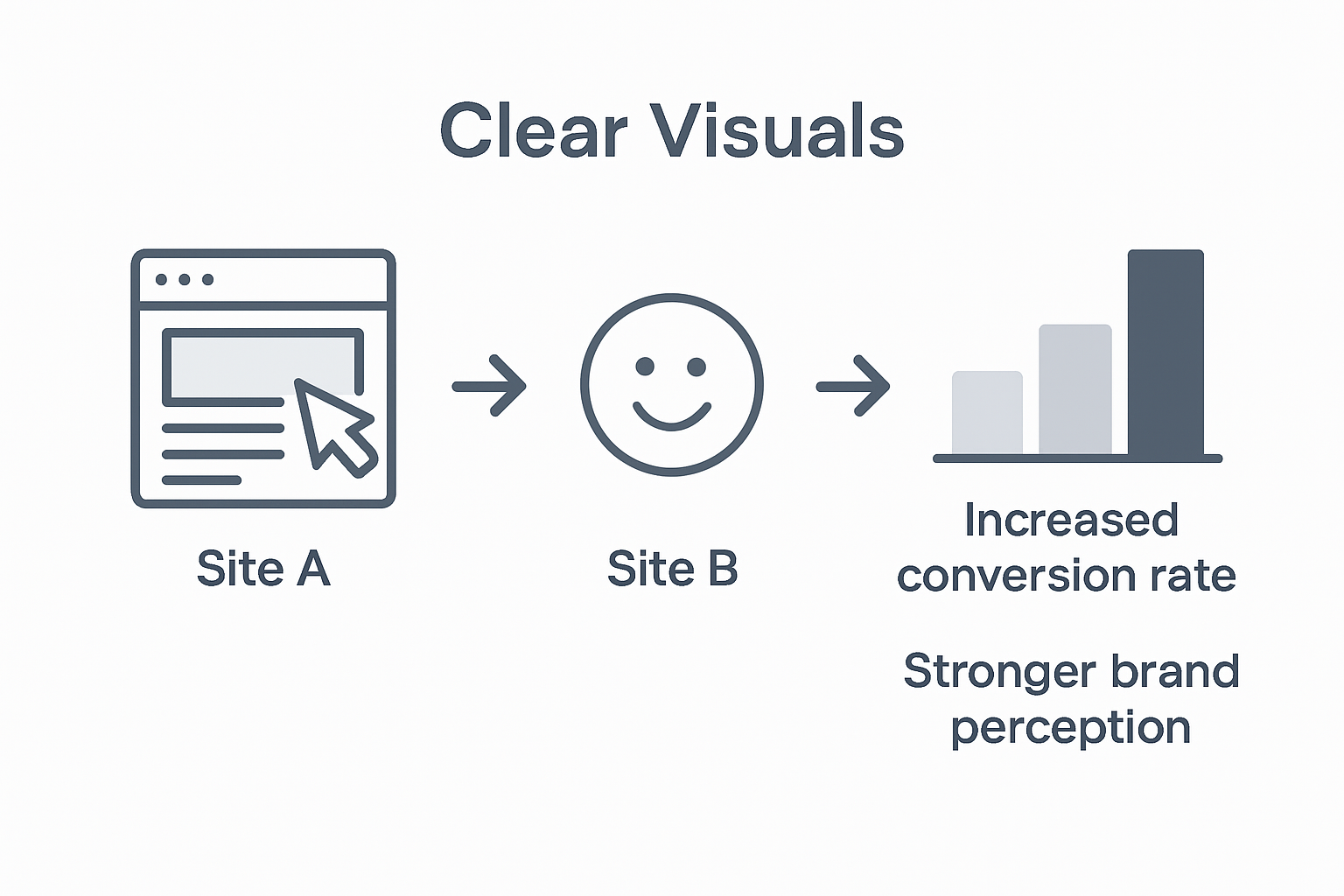
Strategic Visual Communication encompasses more than aesthetic appeal, functioning as a nuanced language that communicates organisational values, personality, and professional ethos. Visual communication research demonstrates that imagery transcends mere decoration, acting as a critical mechanism for emotional and psychological engagement with potential customers.
Key elements that shape brand perception through website imagery include:
- Color Psychology: Utilising colour palettes that evoke specific emotional responses
- Imagery Consistency: Maintaining visual coherence across all digital touchpoints
- Authenticity: Using genuine, high-quality images that reflect real organisational experiences
- Emotional Resonance: Creating visual narratives that connect with audience aspirations
Net Branding understands that corporate website design represents a sophisticated dialogue between visual storytelling and strategic communication. Businesses must craft visual experiences that are not just visually compelling but strategically aligned with their core brand messaging.
The complex challenge for organisations lies in translating intricate brand narratives into visually coherent digital experiences. This demands a multifaceted approach that combines design psychology, technological innovation, and deep understanding of audience expectations. Successful visual branding requires continuous refinement, ensuring that website imagery remains dynamic, relevant, and emotionally engaging.
FAQs:
How quickly do users form perceptions from website imagery?
Users form initial brand impressions within 50 milliseconds, highlighting the critical importance of strategic visual communication.What visual elements most impact brand perception?
Color schemes, imagery quality, design consistency, and emotional authenticity are primary drivers of brand perception.How often should website imagery be updated?
Website imagery should be comprehensively reviewed and potentially refreshed every 12-18 months to maintain contemporary relevance and brand vitality.
Visuals, SEO, and Mobile Responsiveness
The intricate relationship between website visuals, search engine optimisation, and mobile responsiveness represents a critical strategic frontier for digital business success. Multivariate landing page optimization demonstrates how strategic visual elements can simultaneously enhance user engagement and search engine performance, creating a sophisticated digital ecosystem.
Digital Visual Strategies go beyond traditional design approaches, integrating technical performance with aesthetic sophistication. Information visualization techniques reveal that graphic representations can significantly impact how search engines and users perceive and interact with digital content, transforming visual elements into powerful communication tools.
Key interconnected considerations for visuals, SEO, and mobile responsiveness include:
- Image Optimization: Compressing images while maintaining quality
- Responsive Design: Ensuring visual consistency across devices
- Loading Speed: Balancing visual complexity with performance
- Structured Visual Hierarchy: Guiding user and search engine comprehension
Net Branding recognises that SEO web design principles require a holistic approach that integrates visual storytelling with technical performance. Modern websites must function as dynamic, adaptive platforms that communicate effectively across diverse digital environments.
Businesses frequently encounter challenges in creating visual experiences that are simultaneously aesthetically compelling, technologically robust, and search engine friendly. This demands a sophisticated understanding of design psychology, technical infrastructure, and evolving digital communication strategies. Successful implementation requires continuous adaptation, blending creative vision with analytical precision.
FAQs:
How do visuals impact SEO performance?
Visuals directly influence user engagement metrics, page loading speeds, and search engine ranking algorithms.What visual elements most affect mobile responsiveness?
Image resolution, layout flexibility, and adaptive design elements are critical for mobile user experience.How often should visual strategies be reviewed?
Visual strategies should undergo comprehensive review every 12-18 months to maintain technological and design relevance.
Pitfalls to Avoid With Website Visuals
Visual design intensity represents a critical balancing act where excessive visual elements can dramatically undermine website effectiveness. Businesses must navigate a nuanced landscape where aesthetic appeal must be carefully calibrated to maintain user engagement and communication clarity.
The aesthetic-usability effect reveals complex psychological dynamics where visual design can profoundly influence user perception. Understanding these subtleties becomes paramount in avoiding common visual design mistakes that can compromise website performance and brand credibility.
Critical visual design pitfalls businesses must avoid include:
- Visual Overload: Cramming too many design elements that confuse users
- Inconsistent Branding: Misaligned visual styles across website sections
- Poor Image Quality: Using low-resolution or irrelevant imagery
- Unoptimised Graphic Elements: Graphics that compromise website loading speed
- Colour Scheme Conflicts: Colour combinations that create visual tension
Net Branding recognises that strategic homepage design requires meticulous attention to visual communication principles. Successful digital experiences emerge from understanding the delicate interplay between aesthetic appeal and functional clarity.
Businesses frequently struggle with translating complex brand narratives into visually compelling digital experiences. The challenge lies in creating designs that are not merely aesthetically pleasing but strategically engineered to guide user interaction, communicate brand essence, and inspire meaningful engagement. This demands a sophisticated approach combining design psychology, technological understanding, and strategic communication.
FAQs:
How do visual design mistakes impact user experience?
Poor visual design can reduce user trust, increase bounce rates, and diminish overall brand perception.What is the most common visual design mistake?
Overcrowding web pages with too many design elements that distract from core messaging.How frequently should visual design be reassessed?
Visual design strategies should be comprehensively reviewed every 12-18 months to maintain contemporary relevance and effectiveness.
Elevate Your Business Success with Strategic Website Visuals
Struggling to translate your unique brand essence into compelling website visuals that truly engage your audience This article highlights key challenges including the need for authentic imagery, visual hierarchy, and seamless user experience that together drive meaningful business results. At ResponsiveWebsiteDesign, we understand these pain points and specialise in creating WordPress websites that are visually engaging, mobile responsive, and SEO optimised to help New Zealand businesses stand out.
Explore our tailored solutions designed to enhance your brand communication and user interaction through strategic visual storytelling Visit our Website Archives and discover how professional design paired with robust SEO practices from our SEO Archives can transform your online presence. Take action now by partnering with us at https://responsivewebsitedesign.co.nz to build a digital experience that captivates visitors and drives long-term business growth.
Frequently Asked Questions
How important are website visuals for business success?
Website visuals are vital for business success as they make powerful first impressions, enhance user engagement, and influence customer perceptions.
What role do visuals play in enhancing user experience?
Visuals improve user experience by creating intuitive navigation, simplifying content consumption, and fostering emotional connections with the audience.
Can effective website visuals increase conversion rates?
Yes, effective website visuals can guide user attention, build trust, and create a compelling user experience that ultimately leads to higher conversion rates.
How often should a business review and update its website visuals?
A business should review and potentially refresh its website visuals every 12-18 months to maintain modern design standards and align with evolving brand narratives.
Recommended
- 7 Essential Homepage Design Tips for Business Websites – ResponsiveWebsiteDesign
- Why Invest in Web Design: Complete Guide for Business – ResponsiveWebsiteDesign
- Why Invest in Web Design: Complete Guide for Business – ResponsiveWebsiteDesign
- How to Choose Website Layouts for Business Success – ResponsiveWebsiteDesign
- 7 Key Custom Yacht Design Essentials for Owners
- Visual Communication Skills: Complete Expert Guide – Projector Display