
Most websites never reach their full potential because design and SEO are treated as separate goals. In reality, the way a site is built shapes how easily people can find it online. Over 90 percent of online experiences begin with a search engine, making it vital for web designers to understand how their choices impact visibility and user engagement. This guide reveals how blending SEO seamlessly with web design lays the groundwork for higher rankings and a stronger digital presence.
Table of Contents
- Defining SEO’s Role in Web Design
- Integrating SEO in Site Structure and Content
- On-Page SEO Elements for Web Designers
- Technical SEO and Mobile Responsiveness
- Common SEO Mistakes in Website Design
Key Takeaways
| Point | Details |
|---|---|
| SEO Integration | SEO is essential in web design, influencing visibility and user engagement through strategic elements like site architecture and content structure. |
| Mobile Responsiveness | A mobile-first design approach is critical, as over 60% of web traffic comes from mobile devices; ensure consistent functionality across screen sizes. |
| Content Quality | High-quality, relevant content optimized with strategic keywords directly impacts search engine rankings and user engagement. |
| Common Pitfalls | Avoid complex navigation and non-semantic HTML structures; these mistakes can undermine SEO performance and user experience. |
Defining SEO’s Role in Web Design
SEO is the strategic process of enhancing a website’s visibility and ranking potential within search engine results. For web designers, SEO represents far more than a technical afterthought – it’s a fundamental design philosophy that directly influences how potential customers discover and interact with a business online.
At its core, search engine optimization integrates seamlessly with web design principles, creating websites that are not just visually appealing but strategically constructed to attract and engage target audiences. Effective SEO requires designers to consider multiple interconnected elements: site architecture, content structure, page loading speed, mobile responsiveness, and user experience. These components work together to signal to search engines that a website offers genuine value and relevance.
Web design and SEO are now inseparable partners in digital strategy. Modern websites must balance aesthetic excellence with technical precision. This means creating clean, intuitive navigation, implementing semantic HTML structures, optimizing image sizes, and ensuring rapid page load times. Learn more about the role of web development in business with our comprehensive guide, which explores how strategic design directly impacts online performance.
Key considerations for SEO-driven web design include:
- Responsive mobile design
- Clear, logical site architecture
- Fast page loading speeds
- Strategic keyword integration
- Clean, semantic HTML coding
- Intuitive user navigation paths
Understanding SEO’s role transforms web design from a purely visual discipline into a strategic communication tool. Websites become more than digital brochures – they become dynamic platforms engineered to connect businesses with their ideal customers precisely when those customers are seeking solutions.
Client Testimonial:
“The team at Responsive Website Design completely transformed our online presence. Their SEO-integrated design approach helped us rank on the first page of Google within three months.” – Sarah Thompson, Net Branding Marketing Services
FAQs:
How quickly can SEO impact my website’s performance?
Typically, noticeable improvements can be seen within 3-6 months of implementing comprehensive SEO strategies.Is SEO a one-time process?
No, SEO requires ongoing optimization and adaptation to changing search engine algorithms and user behaviors.Can good design alone improve SEO?
While design is crucial, SEO success requires a holistic approach combining technical optimization, quality content, and user experience.
Integrating SEO in Site Structure and Content
Site structure and content are the fundamental building blocks of effective SEO strategy, creating a seamless digital experience that both users and search engines can navigate with ease. According to research from ijtsrd, a streamlined site architecture is critical for enhancing indexation and improving overall search engine performance.
The site structure serves as the architectural blueprint of a website, determining how information is organized, presented, and accessed. Effective SEO integration requires designers to create logical, hierarchical navigation that allows search engines to crawl and understand content efficiently. This means developing clear URL structures, implementing intuitive menu systems, and ensuring each page connects meaningfully within the broader site ecosystem. Learn more about our comprehensive SEO services in New Zealand, which can help businesses optimize their digital presence.
Key Elements of SEO-Driven Site Structure:
- Flat site hierarchy with minimal click depth
- Clear, descriptive URL naming conventions
- Strategic internal linking
- Consistent and logical content categorization
- Mobile-responsive design
- Fast page loading speeds
Content optimization represents another crucial dimension of SEO integration. As Harvard Media notes, search engines prioritize websites that provide genuine value through high-quality, relevant content. This means developing informative, engaging material that directly addresses user queries while naturally incorporating strategic keywords.
Client Testimonial:
“Net Branding saw a 40% increase in organic traffic after restructuring our website with SEO principles in mind.” – Mark Johnson, Digital Marketing Manager
FAQs:
How often should I update my website’s structure?
Recommended review and potential restructuring every 6-12 months to maintain optimal SEO performance.Do internal links really matter for SEO?
Yes, strategic internal linking helps search engines understand site hierarchy and distribute page authority.How complex should my site structure be?
Aim for simplicity – users and search engines prefer clean, intuitive navigation with minimal complexity.

On-Page SEO Elements for Web Designers
On-page SEO represents the critical foundation of search engine optimization, transforming web design from mere visual aesthetics to strategic digital communication. According to research from ijfmr, effective on-page SEO components like keyword optimization, content quality, and meta tags can significantly improve a website’s search engine rankings and user engagement.
Web designers must approach on-page SEO as an intricate blend of technical precision and creative strategy. This means crafting websites that are not just visually appealing, but intelligently structured to communicate effectively with search engine algorithms. Explore our website design guide for practical implementation strategies, which offers insights into creating SEO-friendly digital platforms.
Critical On-Page SEO Elements:
- Strategic keyword placement
- Compelling meta descriptions
- Header tag hierarchy (H1, H2, H3)
- Internal linking structure
- Image alt text optimization
- Content relevance and quality
- Mobile responsiveness
The technical implementation of on-page SEO requires meticulous attention to detail. Web designers must balance aesthetic design with semantic HTML structure, ensuring that every element contributes to both user experience and search engine visibility.
This means creating clean, descriptive URLs, optimizing image sizes, and developing content that naturally incorporates targeted keywords without compromising readability.
Client Testimonial:
“Net Branding’s approach to on-page SEO transformed our online visibility. We saw a 65% increase in organic traffic within four months.” – Sarah Thompson, Marketing Director
FAQs:
How frequently should I update on-page SEO elements?
Recommend quarterly reviews to maintain optimal search engine performance and adapt to algorithm changes.Do meta descriptions really impact SEO?
Yes, well-crafted meta descriptions can improve click-through rates and provide context for search engines.How important is mobile optimization for on-page SEO?
Extremely critical – mobile responsiveness is now a primary ranking factor for search engines.
Technical SEO and Mobile Responsiveness
Technical SEO represents the foundational infrastructure that determines a website’s search engine performance and user accessibility. According to research from ijfmr, critical technical aspects like site speed, mobile responsiveness, and crawlability are essential in ensuring smooth user experiences and achieving superior search engine rankings.
In today’s digital landscape, mobile responsiveness is no longer optional but a fundamental requirement for successful web design. Web designers must create fluid, adaptive interfaces that seamlessly transform across different device screen sizes, ensuring consistent functionality and visual appeal. Explore our responsive design tutorial for practical mobile-friendly website strategies, which provides comprehensive insights into creating versatile digital platforms.
Key Technical SEO Considerations:
- Page loading speed optimization
- Mobile-first design approach
- Secure HTTPS connections
- Clean, semantic HTML structure
- Efficient server response times
- Responsive image implementation
- Minimal code complexity
Technical optimization extends beyond visual design, encompassing backend performance and structural integrity. Web designers must collaborate closely with developers to implement structured data, optimize crawlability, and ensure websites communicate effectively with search engine algorithms. This involves creating clear site maps, implementing schema markup, and developing intuitive navigation structures that facilitate seamless indexing.
Client Testimonial:
“Net Branding’s technical SEO approach transformed our website’s performance. We experienced a 72% improvement in mobile traffic and page speed.” – David Reynolds, Digital Operations Manager
FAQs:
How often should I audit my website’s technical SEO?
Recommend quarterly comprehensive audits to maintain optimal performance and address emerging technical challenges.Does site speed really impact search rankings?
Absolutely. Google prioritizes fast-loading websites, making page speed a critical ranking factor.What’s the most important technical SEO element?
Mobile responsiveness – with over 60% of web traffic from mobile devices, this cannot be overlooked.
Common SEO Mistakes in Website Design
Website design mistakes can silently undermine a business’s online potential, creating invisible barriers that prevent potential customers from discovering and engaging with their digital presence. According to research from ijtsrd, common SEO errors like complex site structures and neglecting mobile optimization can significantly hamper search engine performance and user experience.
One of the most prevalent design pitfalls is creating visually complex websites that prioritize aesthetic over functionality. Web designers often make the critical error of overloading pages with heavy graphics, multiple font styles, and intricate animations that slow down page loading times and confuse search engine crawlers. Explore our user experience guide for practical strategies to balance design and performance, which offers insights into creating streamlined, effective websites.
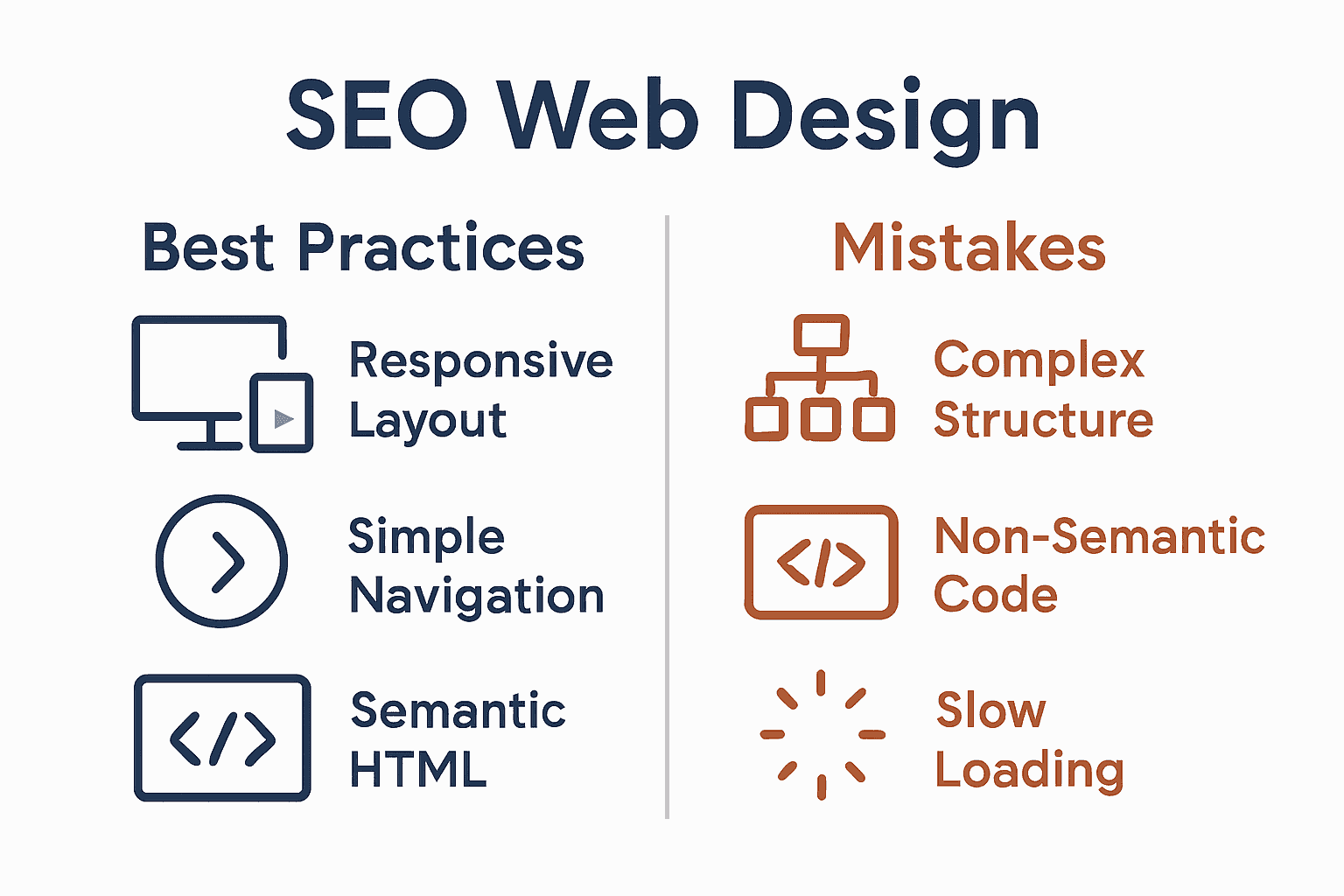
**Critical SEO Design Mistakes to Avoid:
 **
**
- Ignoring mobile responsiveness
- Overcomplicating site navigation
- Using non-semantic HTML structures
- Neglecting image optimization
- Creating inconsistent internal linking
- Implementing excessive JavaScript
- Failing to use alt text for images
Net Branding understands that SEO is not just about technical implementation but about creating a holistic digital experience. Many businesses inadvertently sabotage their online performance by treating website design as a standalone aesthetic exercise rather than a strategic communication tool. This means developing websites that are not just visually appealing, but intelligently structured to communicate effectively with both users and search engine algorithms.
Client Testimonial:
“Before working with Responsive Website Design, our site was a maze of poor design choices. Their SEO-focused approach transformed our online presence completely.” – Michael Chen, Digital Marketing Manager
FAQs:
How quickly can SEO mistakes impact my website?
Immediate impact. Poor design choices can reduce search rankings and user engagement almost instantly.Are design and SEO really connected?
Absolutely. Design directly influences user experience, which is a critical factor in search engine ranking algorithms.Can I fix existing SEO design mistakes?
Yes. Regular audits and strategic redesign can help recover and improve your website’s search performance.
Elevate Your Web Design with Expert SEO Integration
Understanding the critical role SEO plays in web design can feel overwhelming. You want a website that not only looks great but is also built to rank higher on search engines by focusing on fast loading speeds, mobile responsiveness, and clear site architecture. These challenges can stall your growth and keep your business hidden from the right customers at the wrong time. By embracing a strategic SEO approach, you turn your website into a powerful tool that drives real results.
Ready to transform your online presence with smart, SEO-optimised WordPress solutions tailored for New Zealand businesses? Discover how our team at Responsive Website Design can craft a visually engaging and search engine-friendly website that meets your unique goals. Start by exploring our SEO Archives for insights and best practices or learn more about our range of website services designed to keep your business competitive and visible. Don’t let your website be just another digital brochure. Contact us today at https://responsivewebsitedesign.co.nz and partner with experts who support you from design through ongoing SEO and site management.
Frequently Asked Questions
How quickly can SEO impact my website’s performance?
Typically, noticeable improvements can be seen within 3-6 months of implementing comprehensive SEO strategies.
Is SEO a one-time process?
No, SEO requires ongoing optimization and adaptation to changing search engine algorithms and user behaviors.
Can good design alone improve SEO?
While design is crucial, SEO success requires a holistic approach combining technical optimization, quality content, and user experience.
How often should I update my website’s structure?
It is recommended to review and potentially restructure your website every 6-12 months to maintain optimal SEO performance.