Categories
Website

7 Key Advantages of Mobile Websites for Your Business

Australians are shopping on mobile more than ever, with over 60 percent of transactions now occurring through smartphones and tablets. For New Zealand e-commerce owners, a seamless mobile website is key to capturing these active buyers and outperforming competitors. Improving your site’s speed, usability, and visual appeal across all devices helps reduce frustration while encouraging more sales. This guide highlights practical upgrades that make your mobile experience smoother and more productive for customers on the go.

Table of Contents

Quick Summary

Key InsightDetailed Explanation
1. Prioritise Responsive DesignAdopting a responsive design ensures your website adapts seamlessly to all devices, enhancing user satisfaction and engagement.
2. Accelerate Mobile Load TimesImprove website speed to under three seconds to prevent user abandonment and retain potential customers.
3. Optimise for Mobile SEOFocus on mobile-friendly website elements to boost search engine rankings and attract more organic traffic.
4. Enhance User EngagementStreamlining navigation and user experience can significantly increase conversion rates and customer loyalty.
5. Invest in Future-ProofingImplement adaptable digital solutions to remain relevant and responsive to emerging technological trends and user expectations.

1. Enhanced User Experience on All Devices

Mobile websites represent the gateway to seamless digital interactions for businesses seeking to connect with customers across multiple screen sizes. Mobile user experience design prioritises creating intuitive, responsive interfaces that adapt effortlessly to smartphones, tablets, and desktop computers.

The core principle behind enhanced mobile website experiences revolves around understanding how users interact with digital content on different devices. Responsive design ensures that your website looks stunning and functions perfectly whether someone is browsing on a compact mobile screen or a large desktop monitor. This approach eliminates frustrating zooming, excessive scrolling, and awkward layout shifts that can drive potential customers away.

By implementing a mobile-first design strategy, businesses can create websites that automatically adjust content, resize images, and restructure navigation menus based on screen dimensions. This means your website becomes a flexible, user-friendly platform that provides consistent quality across all devices.

Key benefits of mobile-optimised websites include faster loading times, easier navigation, and improved readability. Users can quickly find information, make purchases, or contact your business without wrestling with unresponsive or poorly designed interfaces. The goal is to make digital interactions smooth, intuitive, and enjoyable.

Professional Recommendation: Regularly test your website on multiple devices and screen sizes to ensure a truly responsive user experience that keeps potential customers engaged and satisfied.

2. Faster Load Times for Mobile Users

In the fast-paced digital world, website speed can make or break user engagement particularly for mobile users who expect instant access to information. Accelerated Mobile Pages (AMP) technology represents a game changing approach to delivering lightning-fast mobile web experiences that keep potential customers interested and connected.

Mobile users are notoriously impatient with slow loading websites. Research indicates that users will abandon a mobile site if it takes more than three seconds to load, which translates directly into lost business opportunities. Optimising website performance becomes crucial for maintaining user interest and reducing bounce rates.

By implementing strategic performance improvements, businesses can significantly enhance their mobile website speed. This involves techniques such as compressing images, minimising CSS complexity, and leveraging browser caching. Optimising CSS code can dramatically reduce page load times by streamlining HTML and reducing unnecessary script loading.

Key strategies for improving mobile website speed include using lightweight design frameworks, leveraging content delivery networks, and implementing efficient coding practices. These approaches ensure that your website provides a smooth, responsive experience across all mobile devices, from smartphones to tablets.

Professional Recommendation: Conduct regular mobile performance audits using tools like Google PageSpeed Insights to identify and resolve potential speed bottlenecks in your website design.

3. Improved Search Engine Rankings

In the competitive digital marketplace, achieving higher search engine visibility can transform your business’s online presence. Mobile SEO techniques have become essential for businesses seeking to capture the growing mobile user market and boost their search engine rankings.

Search engines prioritise mobile friendly websites, meaning that a responsive mobile design is no longer optional but a critical ranking factor. Google and other major search platforms now use mobile performance as a key metric when determining where websites appear in search results. This shift reflects the increasing number of users accessing the internet through mobile devices.

Optimising your website for mobile involves more than just making it look good on smaller screens. It requires creating a seamless user experience that loads quickly, displays content clearly, and provides easy navigation. Websites that excel in these areas are rewarded with higher search rankings, increased organic traffic, and better user engagement.

Search Engine Optimization (SEO) now demands a mobile first approach. This means designing your website with mobile users as the primary consideration, ensuring that all content is accessible, readable, and interactive on smartphones and tablets. By implementing responsive design, optimising page speed, and creating mobile friendly content, businesses can significantly improve their search engine visibility.

Professional Recommendation: Regularly audit your mobile website performance using tools like Google PageSpeed Insights and Mobile Friendly Test to identify and resolve potential ranking barriers.

4. Higher Engagement and Conversion Rates

Engaging mobile users effectively can transform casual website visitors into loyal customers. Conversion marketing has become a sophisticated science for businesses seeking to maximise their online potential through strategic mobile website design.

Mobile websites that prioritise user experience see dramatically improved engagement metrics. Streamlined navigation and intuitive design create frictionless journeys that encourage users to complete desired actions such as purchasing products or signing up for services. The key is understanding how mobile users interact with digital content and removing potential barriers to conversion.

Conversion rate optimisation involves carefully crafting every element of your mobile website to guide users smoothly towards taking action. This means implementing clear call to action buttons, simplifying form fields, ensuring fast loading times, and presenting information in easily digestible formats that work perfectly on smaller screens.

Statistics reveal that mobile optimised websites can increase conversion rates by up to 60 percent compared to non optimised platforms. Businesses that invest in creating responsive, user friendly mobile experiences position themselves to capture more leads and generate higher revenue through their digital channels.

Professional Recommendation: Conduct regular user testing on your mobile website to identify and eliminate potential friction points that might prevent visitors from completing their desired actions.

5. Easy Access for On-the-Go Customers

In today’s fast paced digital world, customers expect instant access to information and services regardless of their location. Mobile web design has revolutionised how businesses connect with customers who are constantly moving and seeking quick solutions.

Seamless digital accessibility means your website must work perfectly across all devices and scenarios. Whether a potential customer is waiting for a coffee, commuting to work, or quickly researching a product during a break, your mobile website should provide a smooth and efficient experience.

Mobile UX design focuses on creating interfaces that are intuitive and lightning fast. This involves designing navigation that works with minimal clicks, presenting critical information prominently, and ensuring that essential actions can be completed quickly and effortlessly on smaller screens.

Businesses that prioritise mobile accessibility demonstrate their commitment to customer convenience. By offering a responsive website that loads quickly and functions seamlessly across smartphones, tablets, and other mobile devices, you show that you understand and value your customers’ time and need for instant information.

Professional Recommendation: Regularly test your mobile website on multiple devices and network conditions to ensure consistent performance and user experience.

6. Cost-Effective Compared to Mobile Apps

For businesses seeking an efficient digital presence, mobile websites offer a significantly more economical alternative to developing native mobile applications. Mobile web technologies provide a strategic approach that minimises development and maintenance expenses while maximising customer reach.

Cost efficiency is the primary advantage of mobile websites over traditional mobile apps. Unlike native applications that require separate development for iOS and Android platforms, mobile websites function universally across all devices and operating systems. This approach eliminates the need for multiple complex codebases and reduces ongoing maintenance costs.

Mobile website development dramatically cuts investment requirements compared to app development. Businesses can create a single responsive website that adapts seamlessly to smartphones, tablets, and desktop computers without spending significant resources on platform specific applications.

The financial benefits extend beyond initial development. Mobile websites do not require users to download updates manually, reducing technical support needs. They are instantly accessible through web browsers, eliminating app store approval processes and associated fees. Small to medium enterprises can establish a professional online presence without substantial upfront investment.

Professional Recommendation: Prioritise responsive web design that provides a comprehensive mobile experience while keeping development and maintenance costs substantially lower than native mobile applications.

In an era of rapid technological transformation, businesses must adopt digital strategies that anticipate and adapt to emerging trends. Future-proof digital solutions represent a critical approach for maintaining competitive advantage in an increasingly dynamic digital landscape.

Digital resilience requires more than simply having an online presence. Modern mobile websites must incorporate flexible architectures that can seamlessly integrate emerging technologies such as artificial intelligence, machine learning, and advanced cybersecurity protocols. This approach ensures your digital platform remains relevant and responsive to changing user expectations.

Digital progress trends demonstrate that businesses investing in adaptable digital infrastructures are more likely to survive and thrive. By designing mobile websites with modular architectures, companies can quickly implement updates, incorporate new features, and respond rapidly to technological innovations without requiring complete platform redesigns.

Key strategies for future proofing include embracing responsive design principles, implementing robust security frameworks, and maintaining a mindset of continuous learning and adaptation. This means regularly assessing your digital platform, understanding emerging user behaviours, and being prepared to evolve your online presence dynamically.

Professional Recommendation: Conduct biannual digital audits to assess your mobile website’s adaptability and identify potential technological enhancements that could improve user experience and business performance.

Below is a comprehensive table summarising the main topics and strategies discussed throughout the article regarding optimising mobile websites for enhanced usability and business performance.

Area of FocusDescriptionBenefits
Enhanced User ExperienceDesigning responsive interfaces adapting to different devices.Improved navigation and accessibility across platforms.
Faster Load TimesOptimising content and employing tools to reduce page loading durations.Lower user bounce rates and heightened satisfaction.
Search Engine RankingsImplementing mobile SEO strategies and design standards.Visibility in search engine results, increasing organic traffic.
Higher Engagement and ConversionsCrafting interfaces that encourage user interaction and actions.Increased conversion rates and user retention.
Easy Customer AccessEnsuring availability and functionality during rapid, on-the-go usage.Enhanced user convenience and satisfaction.
Cost-Effective SolutionsDeveloping platforms that operate seamlessly without requiring separate apps.Financially efficient development and maintenance strategy.
Future-Proofing Mobile PresenceInnovating with flexible architectures adaptable to new trends.Sustained competitiveness and resilience against technological evolution.

Unlock the Full Potential of Your Mobile Website Today

Businesses face the challenge of keeping up with evolving mobile user expectations while ensuring fast load times, seamless navigation, and strong search engine rankings. If you are looking to overcome these obstacles and deliver a mobile-first experience that drives higher engagement and conversions, our tailored WordPress solutions are here to help. From responsive design to performance optimisation and ongoing site management, we focus on creating websites that thrive in today’s dynamic digital landscape.
https://responsivewebsitedesign.co.nz

Discover how our expertise in mobile-friendly website development can transform your online presence. Explore our Website Archives – ResponsiveWebsiteDesign to see how we tackle common issues like slow loading speeds and poor user experience. Take the next step now by visiting ResponsiveWebsiteDesign to start building a website designed to engage your customers anytime and anywhere with confidence.

Frequently Asked Questions

What are the main advantages of mobile websites for my business?

Mobile websites offer several key advantages, including enhanced user experience, faster load times, and improved search engine rankings. To capitalise on these benefits, focus on optimising your website for mobile users within a few months to see a significant boost in engagement.

How can a mobile website improve user engagement and conversion rates?

A mobile website can significantly increase user engagement and conversion rates through streamlined navigation and intuitive design, making it easier for users to take actions like purchasing products. Implement clear calls to action and simplify forms to boost your conversion rates by up to 60% within a specific period.

What steps should I take to ensure my mobile website loads quickly?

To ensure your mobile website loads quickly, optimise your images, minimise CSS complexity, and leverage browser caching. Regularly test your website’s performance, aiming to reduce load times to under three seconds for enhanced user retention.

How does mobile-first design impact my search engine rankings?

Mobile-first design directly impacts search engine rankings since search engines prioritise mobile-friendly websites. To improve your ranking, adopt a mobile-first strategy that ensures all content is accessible and visually appealing on smaller screens within the next few months.

Why are mobile websites more cost-effective than mobile apps?

Mobile websites are more cost-effective because they provide a universal solution that works across all devices, preventing the need for separate app development for different platforms. Focus on developing a responsive mobile website to minimise long-term maintenance costs and provide a better return on investment.

To future-proof your mobile website, adopt flexible architectures that can integrate emerging technologies and ensure responsive design principles. Conduct biannual audits to assess your website’s adaptability and implement necessary updates to keep up with user expectations.

Categories
Website

Role of AI in Web Design – Boosting ROI for SME Websites

Most australian businesses have already tapped into Artificial Intelligence to make their websites smarter and more efficient. For Small and Medium Enterprises in New Zealand, ignoring this trend can mean losing ground in both user experience and search results. By adopting AI-driven design solutions, you can access powerful features often reserved for larger companies, boost engagement, and build a website that grows with your business demands.

Table of Contents

Key Takeaways

PointDetails
Impact of AI on Web DesignAI is transforming web design for SMEs, enabling personalised and adaptive user experiences that enhance engagement and conversion.
AI Tool CategoriesKey AI tools like automated website builders and UX/UI design systems streamline development processes and improve design efficiency.
Personalisation through AIAI technologies create dynamically tailored digital experiences by analysing user behaviour and preferences in real-time.
Cost Efficiency with CautionWhile AI can significantly reduce web design costs, businesses should avoid overreliance on automation and maintain human oversight to ensure unique branding.

Defining AI’s Impact on Modern Web Design

Artificial Intelligence is fundamentally transforming web design practices for Small and Medium Enterprises (SMEs), creating unprecedented opportunities for digital innovation and user engagement. By integrating advanced machine learning technologies, web designers can now develop more intelligent, responsive, and personalised digital experiences that dramatically improve user interaction and business performance.

The emergence of AI in web design represents a significant paradigm shift. Machine learning algorithms can now analyse user behaviour patterns, automatically generate design recommendations, and create adaptive interfaces that respond dynamically to individual user preferences. Web designers can leverage these technologies to create websites that are not just visually appealing, but strategically optimised for conversion and user satisfaction.

According to the W3C report on AI’s systemic web impact, artificial intelligence is reshaping web standards and interaction models. Modern AI tools enable SMEs to implement sophisticated design features previously accessible only to large corporations with extensive design budgets. These innovations include intelligent chatbots, personalised content recommendations, predictive user experience design, and automated design testing frameworks.

Net Branding recognises that AI-driven web design goes beyond aesthetic improvements. By utilising machine learning and predictive analytics, businesses can create websites that continuously learn and adapt to user needs, providing a more intuitive and engaging digital experience. This approach transforms websites from static digital brochures into dynamic, intelligent platforms that actively support business growth.

Pro tip: Start by integrating one AI-powered design tool into your web development process to experience incremental improvements in user engagement and design efficiency.

Types of AI Tools Used in Website Creation

The landscape of AI tools for website creation is rapidly evolving, offering Small and Medium Enterprises (SMEs) powerful technologies that dramatically simplify digital design processes. Comprehensive research reveals multiple categories of AI-powered website development tools that enable businesses to create sophisticated online platforms without extensive technical expertise.

These AI tools can be broadly categorised into several key functional groups. Automated Website Builders like Wix ADI use machine learning algorithms to generate complete website layouts, automatically selecting design elements, colour schemes, and content placements based on user inputs. Graphic Design AI tools such as Adobe Sensei help designers generate visual assets, create responsive design elements, and suggest creative improvements that enhance overall website aesthetics.

Moreover, advanced UX/UI design AI tools are transforming how websites are conceptualised and developed. These sophisticated platforms offer predictive user behaviour models, automated content generation capabilities, and intelligent design quality assessment mechanisms. Such tools enable businesses to create more intuitive, personalised digital experiences that adapt in real-time to user interactions.

Developer working with AI UX UI design

Net Branding recognises that AI tools are not replacing human creativity but augmenting design capabilities. By integrating these intelligent technologies, SMEs can streamline website development processes, reduce design iterations, and create more engaging online experiences that effectively communicate their brand narrative and drive business objectives.

Here is a summary of common AI tool categories and their main benefits for SME web development:

AI Tool CategoryKey FunctionExample PlatformBusiness Impact
Automated Website BuilderGenerates site structureWix ADIRapid launch, less manual effort
Graphic Design AIVisual asset creationAdobe SenseiEnhanced visuals, faster iterations
UX/UI Design AIPredicts user interactionsUizard, FigmaImproved engagement, better user flow
Content Generation AIDrafts SEO-optimised articlesJasper, Copy.aiHigher rankings, streamlined content

Pro tip: Experiment with AI design tools progressively, starting with simple features to understand their potential before fully integrating them into your web development workflow.

AI-Driven User Experience and Personalisation

Artificial Intelligence is revolutionising user experience design by enabling unprecedented levels of personalisation and adaptive interactions for Small and Medium Enterprises (SMEs). Advanced research reveals AI’s transformative potential in creating dynamic user journey mappings that fundamentally change how websites engage and retain visitors.

Personalisation Engines powered by machine learning algorithms can now analyse user behaviour in real-time, creating highly tailored digital experiences. These intelligent systems track multiple data points including browsing history, interaction patterns, demographic information, and past purchase behaviours to dynamically adjust website content, layout, and recommendations. By understanding individual user preferences, AI enables websites to present the most relevant information, products, and services precisely when users are most likely to engage.

Net Branding recognises that AI-driven personalisation extends beyond simple content recommendations. Advanced AI technologies can now predict user intent, anticipate potential friction points in the user journey, and proactively adjust website elements to improve overall user satisfaction. This might include dynamically changing navigation menus, suggesting contextually relevant content, or even adapting visual design elements to match individual user preferences.

The future of web design lies in creating intelligent, responsive digital experiences that feel uniquely crafted for each visitor. By leveraging AI technologies, SMEs can develop websites that not only look professional but also provide a deeply personalised interaction that increases engagement, reduces bounce rates, and ultimately drives conversions.

Pro tip: Start by implementing basic AI personalisation features like dynamic content recommendations to understand how these technologies can enhance your website’s user experience.

SEO Optimisation and Automated Content Creation

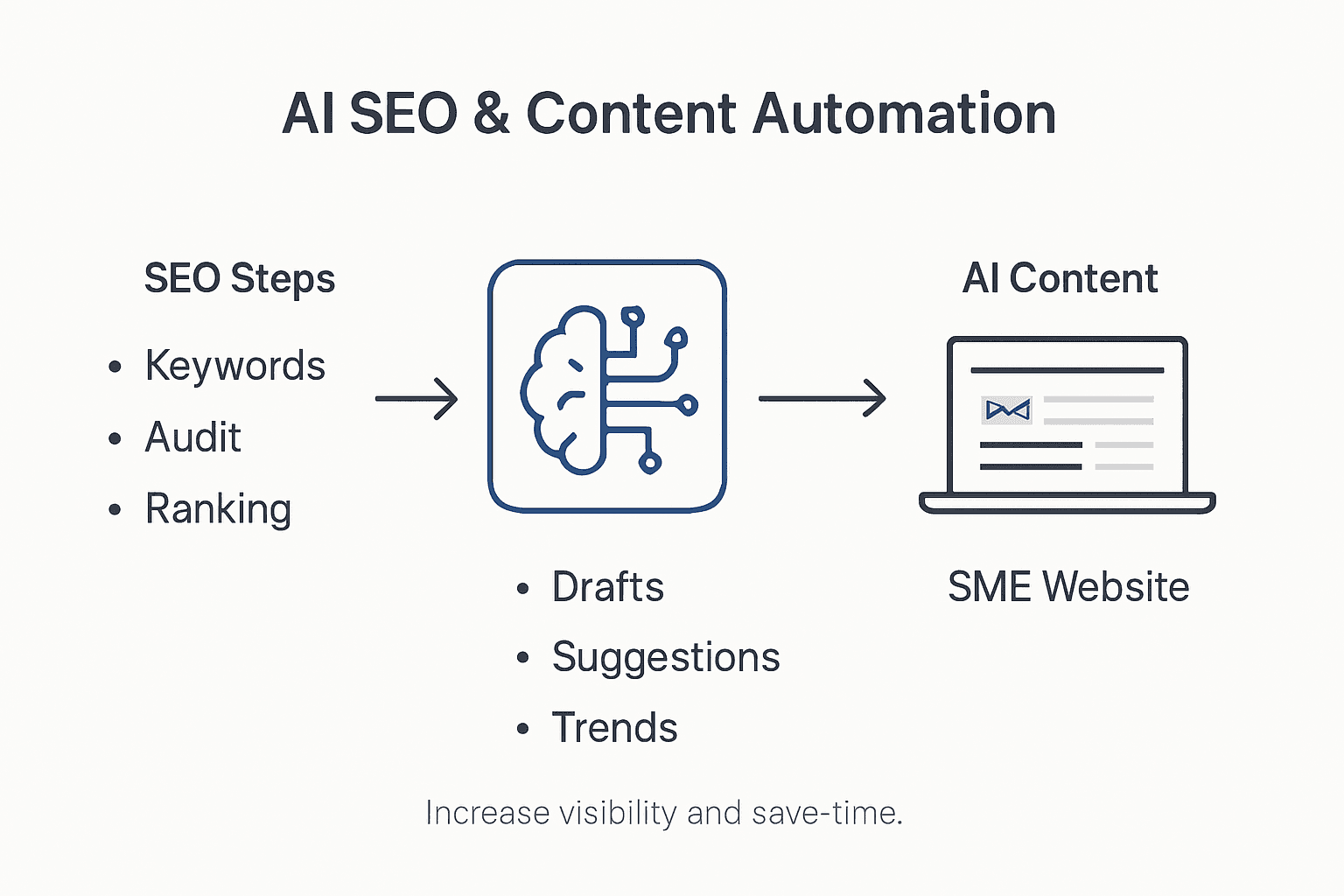
Artificial Intelligence is transforming search engine optimisation and content creation strategies for Small and Medium Enterprises (SMEs), offering powerful tools that streamline digital marketing efforts. Advanced AI technologies are revolutionising how websites generate SEO-friendly content, enabling businesses to achieve higher search rankings with significantly reduced manual intervention.

Infographic showing AI SEO and content automation

Automated Content Generation systems powered by machine learning can now analyse complex keyword strategies, produce contextually relevant articles, and optimise meta descriptions with remarkable precision. These intelligent platforms understand search engine algorithms, enabling them to create content that not only reads naturally but also meets technical SEO requirements. By tracking user engagement metrics, AI can dynamically adjust content strategies to improve overall search performance and website visibility.

The W3C report highlights critical considerations for responsible AI-powered content creation, emphasising the importance of maintaining content transparency and quality. Advanced AI tools can now generate sophisticated content that balances technical SEO requirements with genuine user value, ensuring that automated content remains authentic and engaging. These systems can analyse competitor content, identify content gaps, and produce targeted articles that improve a website’s search engine positioning.

Net Branding understands that AI is not about replacing human creativity but augmenting it. By leveraging these intelligent technologies, SMEs can develop more sophisticated content strategies that adapt quickly to changing search engine algorithms, reduce content production time, and maintain high-quality standards that drive organic traffic and improve overall digital marketing effectiveness.

Pro tip: Start by using AI content tools for initial drafts and keyword research, then refine the output with human expertise to maintain authenticity and brand voice.

Artificial Intelligence introduces complex legal and ethical challenges for Small and Medium Enterprises (SMEs) navigating digital design and web development. Comprehensive global research highlights critical considerations surrounding AI’s privacy and regulatory landscape, emphasising the need for transparent, accountable AI implementation that protects user rights and maintains legal compliance.

Data Protection Frameworks demand rigorous scrutiny of AI technologies, particularly regarding user information collection, storage, and processing. These systems must adhere to stringent regulations like New Zealand’s Privacy Act, which requires explicit user consent, transparent data handling practices, and robust security measures. AI-powered websites must implement mechanisms that allow users to understand how their personal information is being collected, used, and potentially shared by intelligent design systems.

Ethical considerations in AI deployment extend beyond technical compliance, addressing potential algorithmic biases and discriminatory outcomes. SMEs must critically evaluate AI tools to ensure they do not perpetuate unfair practices or inadvertently create exclusionary digital experiences. This involves regular audits of AI systems, maintaining diverse training datasets, and implementing checks that prevent unintended discriminatory decisions.

Net Branding understands that responsible AI integration requires a proactive approach to managing potential risks. By establishing clear governance frameworks, conducting regular privacy impact assessments, and maintaining transparency with users, businesses can harness AI’s transformative potential while mitigating legal and ethical challenges. This balanced approach ensures that technological innovation does not compromise user trust or legal standards.

Pro tip: Develop a comprehensive AI ethics policy that outlines your approach to data protection, user consent, and algorithmic fairness before implementing any AI technologies.

Cost Savings and Common Mistakes to Avoid

Artificial Intelligence offers Small and Medium Enterprises (SMEs) significant opportunities for reducing web design and development costs, but requires strategic implementation to maximise financial benefits. Comprehensive design trend research highlights both the potential savings and potential pitfalls of AI integration, emphasising the importance of balanced technological adoption.

Cost Reduction Strategies in AI-driven web design can dramatically lower operational expenses. Automated design tools reduce human labour hours, streamline prototyping processes, and enable faster content generation. SMEs can potentially reduce design and development costs by up to 40% by leveraging intelligent technologies that automate repetitive tasks, generate initial design concepts, and provide sophisticated design recommendations without extensive manual intervention.

However, businesses must be acutely aware of common mistakes that can negate potential financial advantages. Overreliance on AI without human oversight can lead to generic, impersonalised design outcomes that fail to capture brand uniqueness. Critical errors include accepting AI-generated content without thorough review, neglecting to validate design recommendations, and assuming AI tools can completely replace human creativity and strategic thinking.

Net Branding recognises that successful AI integration requires a nuanced approach. By viewing AI as a collaborative tool rather than a complete replacement for human expertise, SMEs can achieve optimal results. This means using AI to augment designer capabilities, generate initial concepts, and handle routine tasks while maintaining human creativity, strategic oversight, and brand-specific insights.

The following table highlights cost savings strategies and mistakes to avoid with AI-powered web design:

Strategy or MistakeBusiness OutcomeRecommended Action
Automate repetitive tasksReduced labour costsUse AI for basic design workflows
Neglect human reviewRisk of generic designsAlways apply creative oversight
Overreliance on AI toolsLoss of brand uniquenessBalance AI input with strategy
Use 70/30 AI/Human blendOptimal creativity and efficiencyRefine AI output with expert touch

Pro tip: Implement a 70/30 rule for AI integration where 70% of the work involves human refinement and strategic guidance, and 30% relies on automated AI tools.

Elevate Your SME Website with AI-Powered WordPress Solutions

Struggling to fully harness AI’s benefits for your SME’s web design and boost ROI? This article highlights key challenges like integrating AI-driven personalisation, optimising SEO with automated content, and avoiding common pitfalls that can dilute your brand identity. If you want to transform your website into a responsive, intelligent platform that engages visitors and drives conversions, the right digital partner is essential.

At ResponsiveWebsiteDesign, we specialise in custom WordPress development tailored to New Zealand SMEs keen to leverage AI-enhanced design and SEO strategies. From creating mobile responsive interfaces to delivering ongoing SEO archive support and sophisticated website redesigns found in our Website archive, our expert team ensures your site not only looks impressive but continuously adapts and performs at its best.

https://responsivewebsitedesign.co.nz

Take control of your digital growth by partnering with specialists who understand how to apply AI technologies thoughtfully and effectively. Dive into intelligent web design with us today at ResponsiveWebsiteDesign and start transforming your online presence. Contact our team now to begin elevating your SME website’s ROI with smart, SEO-optimised WordPress solutions.

Frequently Asked Questions

How does AI improve web design for SMEs?

AI enhances web design for SMEs by using machine learning to analyse user behaviour, generate design recommendations, and create adaptive interfaces. This leads to more personalised and engaging digital experiences that boost user interaction and conversions.

What types of AI tools can SMEs use for website creation?

SMEs can use various AI tools, including automated website builders (like Wix ADI), graphic design AI (such as Adobe Sensei), UX/UI design AI platforms (like Uizard), and content generation AI tools (like Jasper). These tools simplify web development and enhance the overall user experience.

How can AI-driven personalisation impact website engagement?

AI-driven personalisation improves website engagement by dynamically adjusting content, layout, and recommendations based on real-time user behaviour. This tailored approach ensures visitors receive the most relevant information, increasing their satisfaction and likelihood of conversion.

What are the potential cost savings from using AI in web design?

Utilising AI in web design can lead to significant cost savings, with estimates suggesting reductions of up to 40% in design and development costs. Automated tools help streamline workflows and decrease the time spent on repetitive tasks, allowing teams to focus on more strategic aspects of design.

Categories
Website

Role of Web Design for Electricians’ Success

Most Australian electrician websites struggle to keep visitors engaged for longer than thirty seconds, highlighting a critical gap in effective web design for New Zealand businesses. With more clients searching for local electrical services online, having a professional digital storefront is no longer optional. This guide breaks down how targeted web design not only improves credibility but also helps electricians convert site visitors into loyal customers.

Table of Contents

Key Takeaways

PointDetails
Strategic Web PresenceA well-designed website serves as a digital storefront, enhancing professionalism and credibility for electricians.
Focus on User ExperienceIncorporating intuitive navigation and responsive design improves accessibility and engagement for potential clients.
Importance of VisualsHigh-quality images and clear service descriptions help to showcase expertise and build trust with potential customers.
Lead Generation IntegrationEffective branding and conversion strategies are essential for transforming website visitors into clients and growing the business.

Defining web design for electricians’ businesses

Web design for electricians represents more than just an online brochure. It is a strategic digital platform that transforms how trade professionals communicate their services, expertise, and value proposition to potential customers. A well-crafted website serves as the digital storefront for electrical businesses, creating powerful first impressions and establishing professional credibility.

At its core, web design for electricians involves creating an interface that visually communicates technical expertise and reliability. This means developing a site that goes beyond aesthetic appeal, incorporating user-friendly navigation, clear service descriptions, and compelling visual elements that showcase the electrician’s capabilities. The design must balance technical information with approachability, ensuring potential clients feel confident in the electrician’s skills.

Modern web design for electrical businesses prioritises several critical components. These include responsive mobile design that works seamlessly across devices, fast loading times, intuitive contact forms, service category pages, customer testimonial sections, and clear calls-to-action. The website should communicate professionalism through high-quality images of completed projects, detailed service descriptions, and transparent pricing information. By creating an interface that offers easy navigation and engagement, electricians can effectively transform their online presence into a powerful marketing tool.

Net Branding plays a significant role in this process, helping electricians establish a cohesive digital identity that reflects their unique business personality. The website becomes more than a digital brochure it becomes a strategic asset that can generate leads, build trust, and differentiate the business from competitors.

Here’s a concise summary of critical web design features for electricians and their business impacts:

Website FeatureFunctionBusiness Impact
Intuitive contact formsSimplifies customer enquiriesIncreases lead generation efficiency
High-quality project imagesShowcases workmanship and expertiseBuilds immediate credibility
Responsive mobile designEnsures access across all devicesReaches more potential clients
Clear service descriptionsDetails areas of specialised expertiseAttracts specific job requests
Customer testimonialsProvides authentic social proofEnhances trust and reputation
Transparent pricing infoClearly outlines costs and service optionsReduces uncertainty, speeds up conversion

Pro tip: Invest in professional photography of your actual work sites and team to create authentic visual storytelling that builds immediate client trust.

Key elements of effective electrician websites

Building an effective website for electricians requires a strategic approach that goes beyond simple online presence. The website must serve as a comprehensive representation of the electrical business, communicating professionalism, expertise, and reliability to potential clients. Presenting clear service details and professional credentials becomes crucial in establishing trust and attracting new customers.

The core elements of a successful electrician website should include multiple strategic components. These encompass detailed service descriptions, highlighting specific electrical work capabilities such as residential, commercial, and industrial installations. Professional qualifications and certifications must be prominently displayed, demonstrating the electrician’s technical competence and adherence to industry standards. Showcasing specialised skills like renewable technology installations can significantly differentiate an electrician’s offerings in a competitive market.

Visual elements play a critical role in website effectiveness. High-quality images of completed projects, before-and-after documentation, and professional team photographs help potential clients visualise the electrician’s capabilities. An intuitive contact form, clear service area information, emergency contact details, and transparent pricing structures further enhance the website’s utility. Incorporating customer testimonials and case studies provides social proof and builds credibility, showing potential clients the real-world impact of the electrician’s expertise.

Electrician photographing finished electrical work

Net Branding becomes essential in creating a cohesive digital identity that communicates professionalism and reliability. The website should reflect the electrical business’s unique value proposition, using consistent colour schemes, professional typography, and imagery that resonates with the target clientele.

Pro tip: Implement a responsive design that ensures your website looks professional and functions perfectly across smartphones, tablets, and desktop computers.

Mobile responsiveness and local SEO advantages

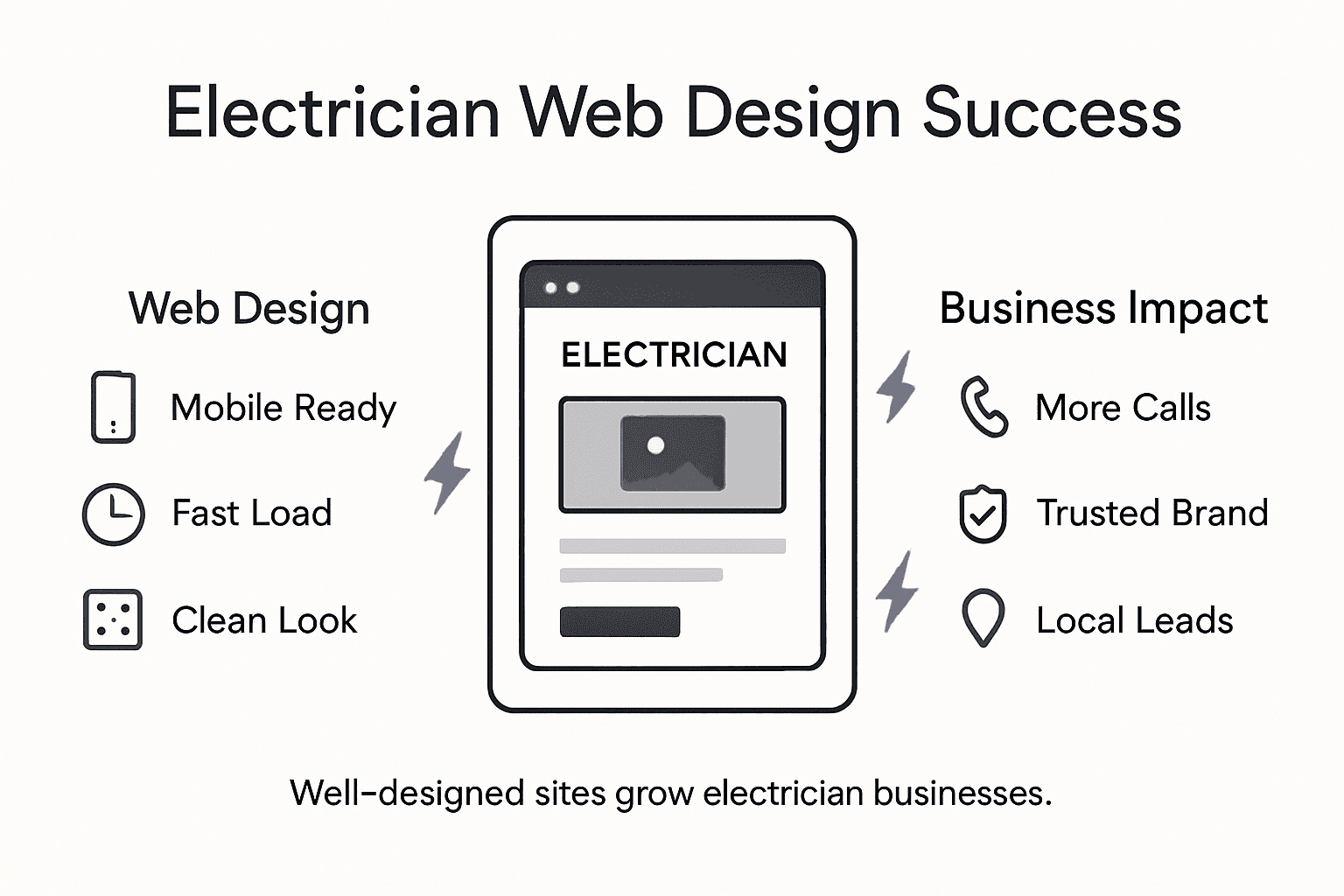
For electricians in today’s digital marketplace, mobile responsiveness and local search engine optimisation represent critical strategies for business growth. Responsive web design ensures websites adapt seamlessly across different device screens, allowing potential clients to access electrical services information effortlessly whether they’re using smartphones, tablets, or desktop computers.

The technical implementation of mobile responsiveness involves creating flexible website layouts that automatically adjust content, images, and navigation elements to provide optimal viewing experiences. This approach eliminates the need for separate mobile and desktop websites, streamlining maintenance and ensuring consistent brand presentation. Local SEO strategies enhance online visibility by targeting region-specific search queries, enabling electricians to attract clients within their immediate service areas more effectively.

Key advantages of mobile-responsive local SEO include improved search engine rankings, increased website traffic, and higher conversion rates. Google prioritises mobile-friendly websites in search results, meaning electricians with responsive designs gain significant competitive advantages. Local SEO techniques such as embedding Google Maps, including precise service area information, and maintaining consistent business contact details across online directories further boost digital discoverability.

Infographic on effective electrician web design

Net Branding plays a crucial role in integrating mobile responsiveness with local SEO strategies. By creating a cohesive digital presence that communicates professionalism and accessibility, electricians can build trust and credibility with potential clients seeking reliable electrical services in their local community.

Pro tip: Regularly update your website’s local keywords and ensure your Google Business Profile contains accurate, comprehensive information about your electrical services.

Building trust through accreditation and testimonials

In the competitive electrical services market, building trust is paramount for business success. Professional accreditation demonstrates rigorous quality standards that significantly enhance consumer confidence, providing potential clients with concrete assurance of an electrician’s technical competence and professional integrity.

Establishing trust involves transparent communication of qualifications and service practices, which goes beyond mere technical skills. Potential clients seek electricians who not only possess technical expertise but also demonstrate reliability, professionalism, and consistent performance. Strategic presentation of industry certifications, specialised training credentials, and professional memberships helps create a comprehensive narrative of competence and trustworthiness.

Testimonials serve as powerful trust-building tools, offering potential clients genuine insights into an electrician’s real-world performance. Incorporating detailed client reviews that highlight specific problem-solving abilities, punctuality, communication skills, and quality of work can significantly influence potential customers’ perceptions. These authentic narratives provide social proof, transforming abstract credentials into tangible evidence of professional excellence.

Net Branding plays a crucial role in synthesising accreditations and testimonials into a cohesive professional narrative. By carefully curating and presenting credentials and client experiences, electricians can craft a compelling digital presence that communicates reliability, expertise, and commitment to exceptional service.

The following table contrasts key digital branding strategies for electricians and highlights their individual benefits:

Branding StrategyApproachUnique Benefit
Professional photographyImages of actual work and teamDifferentiates from generic competitors
Accreditation displayProminent certifications and membershipsSignals verified technical expertise
Consistent colour schemeUniform colours across site and mediaCreates memorable business identity
Regular testimonial updatesFresh customer feedback added frequentlyBuilds ongoing trust with new visitors

Pro tip: Create a dedicated testimonials section on your website and regularly update it with recent, specific client feedback that highlights your unique service strengths.

Lead generation, branding, and conversion strategies

For electricians seeking business growth, strategic digital marketing approaches are essential. Lead generation involves attracting and converting potential clients through targeted marketing strategies that efficiently expand service opportunities and build a robust customer pipeline.

Branding creates a unique identity that establishes emotional connections with potential customers, differentiating electrical businesses in a competitive marketplace. Effective branding transcends simple logo design, encompassing a comprehensive approach that communicates professional values, reliability, and technical expertise through consistent visual and messaging strategies. This approach helps electricians communicate their unique value proposition, building recognition and trust among potential clients.

Conversion strategies transform website visitors into actual customers by implementing strategic design elements that encourage action. These include strategically placed contact forms, clear service descriptions, prominent call-to-action buttons, transparent pricing information, and compelling service testimonials. The goal is to reduce friction in the customer journey, making it simple and intuitive for potential clients to engage with the electrical business.

Net Branding plays a pivotal role in integrating lead generation, branding, and conversion strategies into a cohesive digital marketing approach. By developing a unified online presence that communicates professionalism, expertise, and approachability, electricians can create a powerful digital platform that attracts, engages, and converts potential clients.

Pro tip: Implement a clear, user-friendly contact process with multiple engagement options to reduce barriers and increase potential customer interactions.

Elevate Your Electrical Business with Expert Web Design Solutions

The article highlights the crucial role of web design in establishing credibility, boosting lead generation, and enhancing customer trust for electricians. Common challenges include creating a website that balances technical expertise with accessibility, incorporates mobile responsiveness and local SEO, and integrates professional branding and conversion strategies. These concerns reveal the pressing need for a tailored digital platform that goes beyond aesthetics to truly connect with clients and drive business growth.

At ResponsiveWebsiteDesign, we understand these challenges and specialise in crafting custom WordPress websites designed specifically for New Zealand businesses like yours. Our services prioritise responsive mobile design, SEO optimisation, and enhanced user experience, ensuring your electrical services are easy to discover and engage with online. Whether you are starting fresh or aiming to revamp your current site, our team supports you throughout from custom development to ongoing security and performance management.

Explore our expertise in Website Archives – ResponsiveWebsiteDesign to see how we help local businesses succeed digitally.

https://responsivewebsitedesign.co.nz

Ready to transform your electrical business with a professional website that drives leads and builds trust? Visit ResponsiveWebsiteDesign today and take the first step towards a stronger online presence tailored to your unique business goals.

Frequently Asked Questions

What are the essential features of a website for electricians?

A successful electrician website should include intuitive contact forms, high-quality project images, responsive mobile design, clear service descriptions, customer testimonials, and transparent pricing information. These elements together enhance user experience and establish professional credibility.

How does mobile responsiveness benefit electricians’ websites?

Mobile responsiveness ensures that websites function effectively across various devices, such as smartphones, tablets, and desktops. This increases accessibility for potential clients and improves search engine rankings, ultimately leading to higher conversion rates.

Why are customer testimonials important for electricians’ websites?

Customer testimonials serve as authentic social proof, helping to build trust and credibility with potential clients. Detailed reviews highlight an electrician’s problem-solving abilities and quality of work, influencing prospective customers’ perceptions positively.

How can branding enhance an electrician’s online presence?

Effective branding creates a unique identity that connects emotionally with potential customers. It communicates professionalism and expertise while differentiating the business in a competitive market, ultimately fostering trust and recognition among clients.