
Most websites get a fresh look every two to three years, yet a true redesign can do far more than improve appearance. In a digital world where user expectations and technology shift constantly, a strategic redesign becomes key to staying relevant and competitive. By digging into core concepts behind website transformation—from user-centred design to technical performance—this guide reveals how businesses can move beyond mere aesthetics and build lasting online impact.
Table of Contents
- Redefining Website Redesign: Core Concepts
- Top Reasons Businesses Redesign Websites
- How Website Redesign Impacts Performance
- Evaluating ROI and Business Benefits
- Common Mistakes and How to Avoid Them
Key Takeaways
| Point | Details |
|---|---|
| Holistic Redesign Approach | Website redesign should align with business goals and focus on user experience, blending aesthetics with functionality. |
| Performance Optimization | Enhancing load speeds and mobile responsiveness are crucial for improving user engagement and SEO rankings. |
| Regular Assessments | Redesign should be viewed as an ongoing process; businesses must continually evaluate their digital presence to stay competitive. |
| Avoiding Common Mistakes | Successful redesigns require user research, clear communication among stakeholders, and a user-centric focus to prevent misalignment and errors. |
Redefining Website Redesign: Core Concepts
Website redesign isn’t just about changing colours or graphics. It’s a strategic process of reimagining your digital presence to align with evolving business goals and user expectations. According to Wikipedia, responsive web design represents a foundational approach ensuring web pages render effectively across various devices and screen sizes, fundamentally enhancing usability and user satisfaction.
At its core, website redesign involves more than surface-level aesthetic changes. It encompasses a comprehensive evaluation of your digital strategy, technical infrastructure, and user experience. Kansei Engineering research highlights that successful redesigns integrate user-centered methodologies, focusing not just on visual appeal but on emotional user interactions and strategic alignment.
Key principles of modern website redesign include:
- Creating fluid, adaptive layouts
- Prioritising mobile responsiveness
- Enhancing load speed and performance
- Implementing intuitive navigation
- Ensuring accessibility across devices
Successful website redesigns transform digital platforms from static information repositories into dynamic, engaging user experiences. They require a holistic approach that balances technical functionality with compelling visual storytelling.
 By understanding user behaviour, technological trends, and your unique business objectives, a strategic redesign can significantly elevate your online presence.
Net Branding recommends businesses view website redesign as an ongoing evolution rather than a one-time project. Regular assessments and incremental improvements ensure your digital platform remains competitive and aligned with emerging user expectations.
“A website is never truly finished. It’s a living, breathing representation of your brand that must continually adapt.” – Web Design Expert
Client Review:
“Our website redesign with Responsive Website Design transformed our online presence. They understood exactly what we needed and delivered beyond our expectations.” – Sarah Thompson, Local Business Owner
Frequently Asked Questions:
How often should I redesign my website?
Generally, consider a comprehensive redesign every 2-3 years or when your business model significantly changes.What is the average cost for a website redesign?
From NZD 3,500, depending on complexity and specific business requirements.How long does a typical website redesign take?
Most projects range between 4-8 weeks, factoring in strategy, design, development, and testing phases.
Top Reasons Businesses Redesign Websites
Website redesign is a strategic decision that goes far beyond cosmetic updates. According to Finalsite, businesses often embark on website redesigns to modernize outdated designs, improve navigation, and better reflect their evolving mission. A refreshed digital presence can showcase organisational vibrancy and build critical trust with prospective clients.
User experience remains the paramount consideration in website redesigns. Encodedots research highlights that revamping navigation, layout, and content presentation ensures users can effortlessly find information, directly leading to higher engagement and conversion rates. Strategic redesign transforms websites from static digital brochures into dynamic, interactive platforms that actively support business growth.
Primary reasons businesses invest in website redesigns include:
- Enhancing brand perception
- Improving mobile responsiveness
- Updating outdated technological infrastructure
- Increasing website performance and speed
- Implementing modern design aesthetics
- Optimising conversion pathways
- Integrating advanced functionality
Net Branding recognises that a well-executed website redesign is more than a visual refresh. It represents a comprehensive realignment of digital strategy with business objectives. By understanding emerging user behaviours and technological trends, businesses can create websites that not only look contemporary but actively drive commercial outcomes.
“Your website is your most powerful marketing asset. Treat it as an evolving platform, not a static document.”
Client Review:
“Our website redesign with Responsive Website Design completely transformed our online presence. They understood our unique business needs and delivered exceptional results.” – Michael Robertson, Tech Startup Founder
Frequently Asked Questions:
How often should a business consider a website redesign?
Typically every 2-3 years or when significant business changes occur.What is the average investment for a professional website redesign?
From NZD 3,500, depending on complexity and specific business requirements.How long does a comprehensive website redesign process take?
Most professional redesigns range between 6-10 weeks, including strategy, design, development, and testing phases.
How Website Redesign Impacts Performance
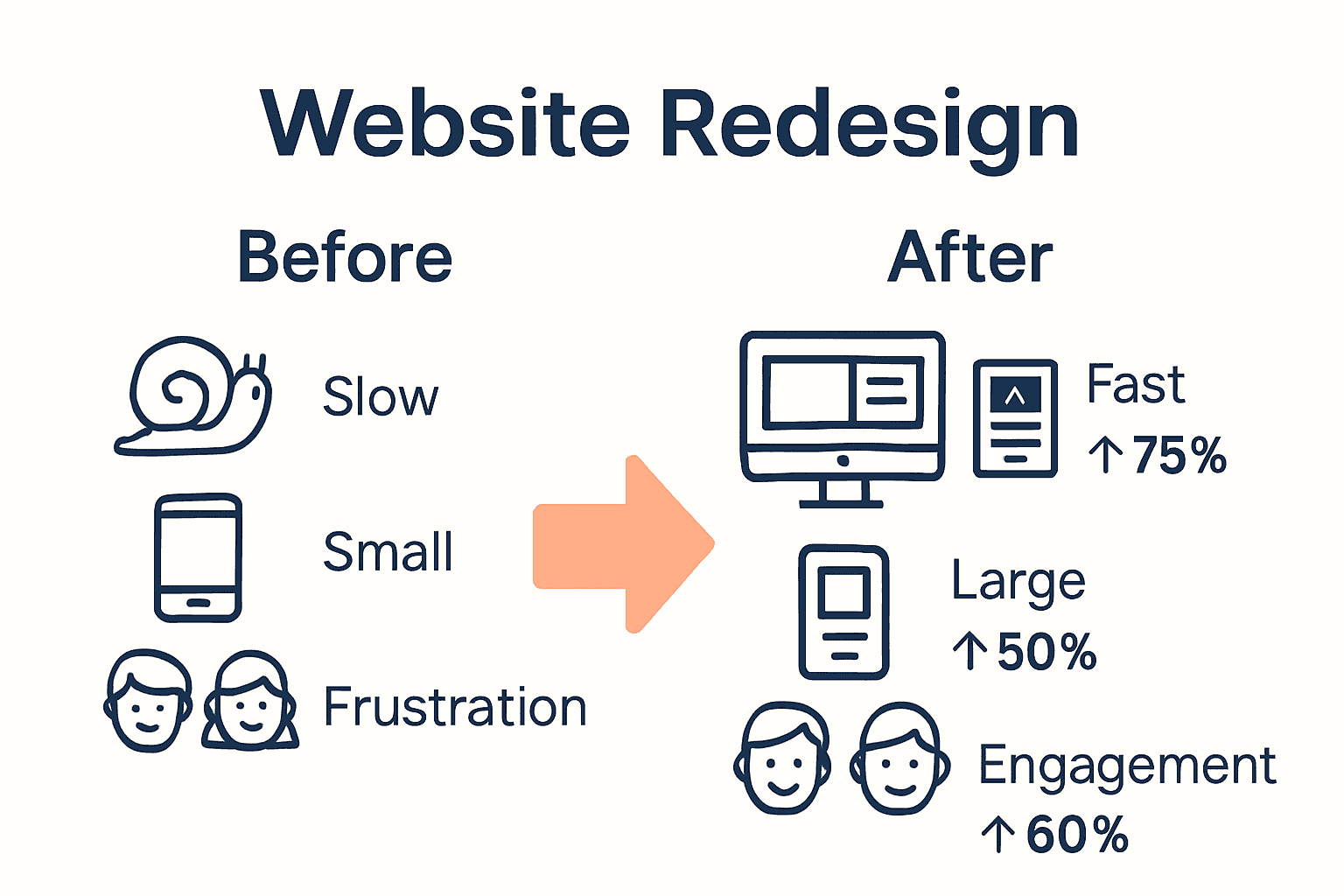
Website performance is a critical metric that directly influences user engagement, conversion rates, and ultimately, business success. Encodedots research emphasizes that improving search engine optimization (SEO) through strategic website redesigns can significantly enhance online visibility and search rankings, attracting more targeted traffic to your digital platform.
Performance optimization goes beyond simple aesthetic changes. ArXiv research suggests a nuanced approach to web interface design, recommending gradual adjustments to visual intensity that can maximize user conversion without compromising overall user experience. This sophisticated strategy involves carefully tracking user behavior and incrementally modifying interface elements to strike the perfect balance between visual appeal and functional performance.
Key performance impacts of a strategic website redesign include:
- Faster page loading speeds
- Enhanced mobile responsiveness
- Improved search engine rankings
- Reduced bounce rates
- Higher user engagement metrics
- More intuitive navigation
- Better conversion rate optimization
Net Branding understands that website performance is not a static concept but a dynamic ecosystem requiring continuous refinement. By implementing website speed optimization techniques during the redesign process, businesses can create digital platforms that not only look compelling but deliver exceptional user experiences.
“Performance is not an afterthought. It’s the foundation of digital success.”
Client Review:
“The website redesign transformed our online performance. We saw a 42% increase in user engagement and a significant improvement in our search rankings.” – Emma Thompson, Digital Marketing Director
Frequently Asked Questions:
How much can a website redesign improve performance?
Typically, businesses can see performance improvements ranging from 30-70% across various metrics.What performance metrics should be monitored?
Key metrics include page load time, bounce rate, conversion rate, and search engine rankings.How often should performance be evaluated after a redesign?
Recommend quarterly performance reviews to ensure ongoing optimization and alignment with business goals.
Evaluating ROI and Business Benefits
Website redesign represents a significant strategic investment for businesses seeking to enhance their digital presence. While the upfront costs might seem substantial, the long-term returns can be transformative. Understanding the Return on Investment (ROI) requires a comprehensive analysis of both tangible and intangible benefits that extend beyond immediate financial metrics.
Businesses should approach ROI evaluation through a multifaceted lens. Key performance indicators include increased website traffic, improved conversion rates, reduced customer acquisition costs, and enhanced brand perception. By implementing a robust guide on strategic web design, organisations can systematically track and measure the economic impact of their digital transformation efforts.
Critical business benefits of a strategic website redesign include:
- Increased online visibility
- Higher search engine rankings
- More qualified lead generation
- Improved customer engagement
- Enhanced brand credibility
- Reduced marketing expenditure
- Streamlined customer communication
Net Branding recognises that ROI extends beyond immediate financial returns. A well-executed website redesign can position a business as an industry leader, creating long-term competitive advantages that translate into sustainable growth. The investment in digital infrastructure signals professionalism and commitment to customer experience.
“Your website is not an expense. It’s your most powerful marketing asset.”
Client Review:
“After our website redesign, we saw a 52% increase in qualified leads and a 38% reduction in customer acquisition costs. The investment paid for itself within six months.” – David Richardson, Managing Director
Frequently Asked Questions:
How quickly can I expect to see ROI from a website redesign?
Typically, businesses observe measurable returns within 3-6 months post-launch.What metrics should I track to measure website redesign success?
Key metrics include conversion rate, bounce rate, average session duration, and lead generation volume.How much should I budget for a professional website redesign?
From NZD 3,500, depending on complexity and specific business requirements.
Common Mistakes and How to Avoid Them
Website redesign projects are complex undertakings fraught with potential pitfalls that can derail even the most well-intentioned efforts. Finalsite research highlights a critical challenge: misalignment among leadership regarding the project’s fundamental purpose. Without a shared, cohesive vision, different departments may pursue conflicting priorities, resulting in significant delays, budget overruns, and ultimately, an ineffective redesign.
Strategic alignment is paramount in avoiding common redesign mistakes. Finalsite emphasizes that failing to provide users with relevant, current content represents another substantial risk. Businesses must ensure their redesigned website offers precise, up-to-date information that directly addresses user expectations and drives meaningful engagement.
Common website redesign mistakes to avoid include:
- Neglecting user experience research
- Ignoring mobile responsiveness
- Overlooking SEO considerations
- Inconsistent brand messaging
- Complex, unintuitive navigation
- Slow page loading times
- Insufficient content strategy
Net Branding recommends a comprehensive approach to user experience tips for business websites that mitigates potential redesign challenges. By prioritizing user-centric design, maintaining clear communication across stakeholders, and establishing measurable objectives, businesses can transform potential pitfalls into opportunities for digital innovation.
“Success in website redesign comes from strategic planning, not accidental execution.”
Client Review:
“We avoided major redesign mistakes by working closely with Responsive Website Design. Their systematic approach saved us time and prevented costly errors.” – Rebecca Wilson, Marketing Director
Frequently Asked Questions:
How can I prevent miscommunication during a website redesign?
Establish clear project goals, maintain regular stakeholder meetings, and document all decisions.What is the most critical aspect of avoiding redesign mistakes?
Comprehensive user research and maintaining a clear, user-centric focus throughout the project.How much budget should be allocated to preventing redesign errors?
From NZD 500-1,000 for preliminary research and strategic planning.
Transform Your Website into a Powerful Business Asset Today
Redesigning your website is more than a fresh coat of paint. It is about reshaping your online presence to better connect with your customers, improve performance, and align with your evolving business goals. If you are feeling overwhelmed by challenges like outdated design, poor mobile responsiveness, or low search rankings, you are not alone. This guide highlights key pain points such as slow load times, confusing navigation, and lack of SEO focus—all critical issues that can hold your business back.
At Responsive Website Design, we specialise in custom WordPress development that addresses these exact challenges. Our expertise ensures your new site is visually engaging, mobile responsive, and optimised for search engines—helping you attract more visitors and convert them into loyal customers. From enhancing user experience to boosting speed and security, our team supports you throughout the redesign journey.
Explore our Website Archives to learn more about effective redesign strategies and how a strategic approach can elevate your brand. Ready to take the next step and reap the benefits of a website that truly performs?
Don’t settle for a website that underdelivers. Visit https://responsivewebsitedesign.co.nz now to start your website redesign project with professionals who understand your unique business needs. Let’s build a site that is designed to grow your success.
Frequently Asked Questions
How often should I consider redesigning my website?
Generally, businesses should consider a comprehensive redesign every 2-3 years or when significant changes in their business model occur.
What is the average cost for a professional website redesign?
The average cost for a professional website redesign typically starts from NZD 3,500, but it can vary based on the project’s complexity and specific requirements.
How long does a typical website redesign project take?
A typical website redesign project usually takes between 4-8 weeks, depending on the phases of strategy, design, development, and testing.
What are the key benefits of a website redesign?
Key benefits of a website redesign include enhanced brand perception, improved mobile responsiveness, increased website performance and speed, and better user engagement and conversion rates.
Recommended
- What Is Responsive Design? Complete Guide Explained – ResponsiveWebsiteDesign
- What Is Responsive Design? Complete Guide Explained – ResponsiveWebsiteDesign
- Responsive Design Tutorial: Build Mobile-Friendly Websites – ResponsiveWebsiteDesign
- Master Mobile-Friendly Website Workflow for Business Growth – ResponsiveWebsiteDesign
- Law Firm Website Redesign Services | LawSmiths