
Most New Zealand small business owners believe portfolio websites are only relevant for australian designers or artists, but this idea overlooks their powerful impact across every industry. In reality, a responsive WordPress portfolio website can transform your professional image, improve credibility, and foster authentic customer engagement. With over 80 percent of customer inquiries now starting online, presenting your business clearly and confidently—without unnecessary clutter—gives you a strong foundation for growth in a crowded local market.
Table of Contents
- Portfolio Websites Defined And Common Myths
- Types Of Portfolio Sites For Smes
- Core Features That Build Credibility
- Customer Engagement And Conversion Impact
- Risks, Pitfalls, And What To Avoid
Key Takeaways
| Point | Details |
|---|---|
| Portfolio Websites Are Essential for All Professionals | Portfolio websites are not just for creatives; various professionals can benefit from showcasing their skills and achievements. |
| Content Should Be Curated and Strategic | An effective portfolio focuses on quality over quantity, highlighting significant accomplishments without overwhelming visitors. |
| Regular Updates are Crucial | Maintain a dynamic portfolio by updating content regularly to reflect recent projects and ensuring relevance. |
| Simplify for Impact | A clean, user-friendly design with intuitive navigation enhances the visitor experience and promotes engagement. |
Portfolio websites defined and common myths
A portfolio website represents a strategic digital platform for professionals to showcase their skills, achievements, and professional narrative. More than a simple online resume, these websites serve as dynamic, personalised showcases that communicate an individual’s expertise and professional identity.
Traditionally misunderstood, portfolio websites are not static collections of past work but evolving digital representations of professional capabilities. They have transformed from basic document repositories to interactive, multimedia-rich platforms that enable comprehensive self-presentation. Contrary to common myths, an effective portfolio website is not about overwhelming visitors with information, but strategically curating content that highlights professional strengths.
Common misconceptions about portfolio websites include believing they are only necessary for creative professionals like designers or artists. In reality, professionals across industries – from builders and technicians to academics and consultants – can benefit from a well-constructed online portfolio. Another prevalent myth suggests that portfolio websites must be complex or expensive, when simplicity and clarity are actually more impactful.
Pro tip: Focus on creating a clean, user-friendly portfolio that tells a compelling professional story rather than attempting to include every single project or achievement.
Key elements of an effective portfolio website typically include:
- A professional biography
- Curated work samples
- Skills and expertise highlights
- Contact information
- Testimonials or recommendations
Net Branding recognises that each portfolio website should be uniquely tailored to reflect an individual’s professional journey and aspirations. The goal is not just to display past work, but to create a narrative that demonstrates professional growth, expertise, and potential.
FAQ:
Who needs a portfolio website?
Professionals across all industries can benefit from a portfolio website, not just creatives.How often should I update my portfolio?
Aim to refresh your portfolio at least twice a year or whenever you complete significant projects.What if I’m just starting my career?
Focus on academic projects, internships, volunteer work, or personal projects that demonstrate your skills and potential.
Types of portfolio sites for SMEs
Small and medium enterprises (SMEs) have multiple portfolio website options that can effectively showcase their professional capabilities. Portfolio website types vary significantly depending on the specific goals and industry of the business, ranging from personal branding platforms to comprehensive professional showcases.
Three primary portfolio website categories emerge for SMEs: online portfolio builders, hosted portfolio solutions, and social media platforms. Each type offers unique advantages for digital representation. Online portfolio builders provide robust customization options, allowing businesses to create detailed digital showcases that highlight their specific services and expertise. Hosted portfolio solutions offer integrated platforms where businesses can display their work alongside other professionals, creating opportunities for networking and visibility.
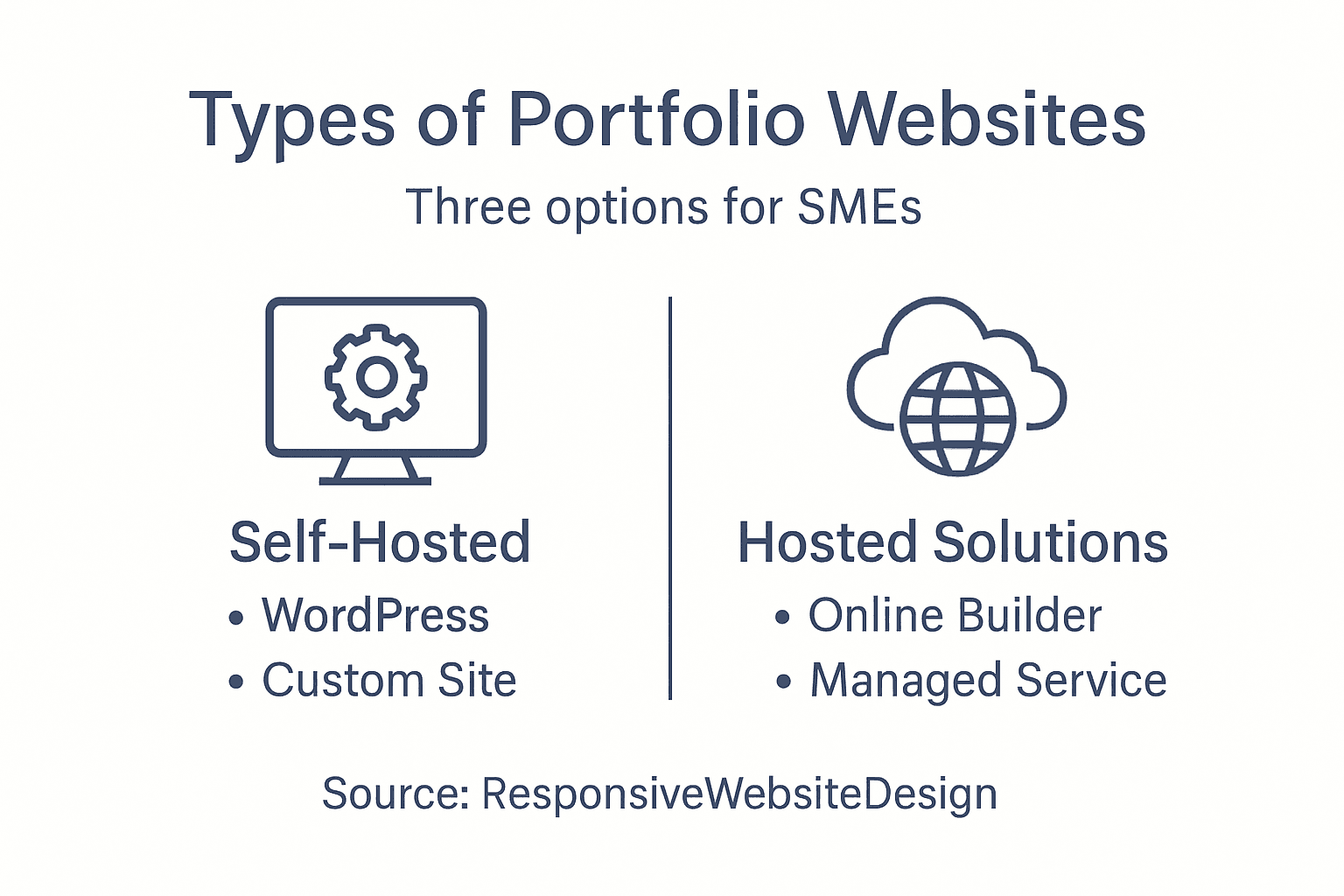
For SMEs, the choice of portfolio website type depends on several critical factors. Professional service providers like consultants, designers, and trades professionals might prefer comprehensive personal branding sites that tell a complete career narrative. Builders, technicians, and creative professionals often benefit from platforms that allow multimedia presentations of past projects, demonstrating tangible skills and achievements.
Here’s a comparison of the main types of portfolio sites available to SMEs:
| Portfolio Type | Customisability Level | Maintenance Effort | Ideal For |
|---|---|---|---|
| Online Builder | High—design flexibility and branding | Moderate—requires regular updates | SMEs needing tailored showcases |
| Hosted Solution | Moderate—standard layouts and features | Low—platform handles most upkeep | Tradies and service providers |
| Social Media Platform | Low—limited to platform structure | Minimal—simple updates | Early-stage businesses or freelancers |
Pro tip: Select a portfolio website type that aligns with your industry’s communication standards and allows easy updates to reflect your most recent professional accomplishments.
Key considerations when selecting a portfolio website include:
- Level of customization required
- Budget constraints
- Technical skill needed for maintenance
- Target audience preferences
- Integration with existing digital marketing strategies
Net Branding understands that each SME requires a unique digital approach. The ultimate goal of a portfolio website is not just displaying work, but creating a compelling professional narrative that attracts potential clients and demonstrates expertise.
FAQ:
Which portfolio website type works best for tradespeople?
Hosted solutions with project galleries often work best for trades professionals.How frequently should I update my portfolio website?
Aim to refresh content quarterly or after completing significant projects.Can I use multiple portfolio platforms?
Yes, a strategic approach might involve a primary website supplemented by social media professional profiles.
Core features that build credibility
Building credibility through a portfolio website requires strategic design and thoughtful content presentation. Effective portfolio websites prioritise user experience by presenting professional achievements in a clear, engaging manner that immediately establishes trust and expertise.
The core features that construct a credible online presence encompass several critical elements. High-quality work samples serve as the foundation, showcasing professional capabilities through detailed project descriptions and contextual insights. An exceptional About section becomes pivotal, offering potential clients a genuine glimpse into professional background, personality, and unique value proposition. Mobile responsiveness ensures accessibility across devices, while intuitive navigation allows visitors to explore professional achievements effortlessly.

Specific credibility-building components include comprehensive case studies that demonstrate problem-solving skills, testimonials from previous clients, and a transparent display of professional qualifications. Professional headshots, clear contact information, and a consistent design aesthetic further reinforce the perception of reliability. Businesses should focus on curating content that highlights their strengths without overwhelming visitors, maintaining a balance between comprehensive information and visual simplicity.
Pro tip: Regularly update your portfolio with recent projects and remove outdated work to maintain a current and dynamic professional representation.
Key credibility-enhancing features include:
- Professional, high-resolution project imagery
- Detailed project narratives explaining challenges and solutions
- Client testimonials with specific outcomes
- Clear demonstration of technical or creative skills
- Professional biography highlighting unique expertise
Net Branding recognises that a portfolio website is more than a digital resume – it is a strategic communication tool designed to convert potential interest into genuine business opportunities.
FAQ:
How often should I update my portfolio website?
Update your portfolio at least quarterly, removing older projects and adding recent achievements.What makes a portfolio website credible?
Clear project details, professional design, client testimonials, and demonstrable expertise build credibility.Can I showcase personal projects on a professional portfolio?
Yes, personal projects that demonstrate skills and creativity can enhance your professional portfolio.
Customer engagement and conversion impact
Customer engagement transforms portfolio websites from static displays into dynamic interaction platforms that drive business growth. Digital interactions significantly impact conversion rates by creating meaningful connections between businesses and potential clients through strategic online experiences.
Effective portfolio websites leverage multiple engagement strategies to convert visitor interest into tangible business opportunities. Interactive elements such as detailed case studies, client testimonials, and transparent project narratives help potential customers understand a business’s unique value proposition. By reducing cognitive friction and providing clear pathways to communication, these websites bridge the gap between initial curiosity and committed interest.
Measurable engagement metrics reveal the profound impact of thoughtfully designed digital experiences. Time spent on site, number of pages viewed, and interaction depth become critical indicators of potential conversion likelihood. Businesses can enhance these metrics by implementing user-friendly navigation, providing comprehensive project descriptions, and offering multiple contact channels that facilitate seamless communication.
Pro tip: Design your portfolio website with clear calls-to-action and simplified contact processes to transform visitor interest into direct business inquiries.
Key engagement and conversion strategies include:
- Comprehensive project descriptions
- High-quality visual content
- Client success stories
- Clear professional credentials
- Multiple communication channels
Net Branding recognises that modern portfolio websites are sophisticated communication tools designed to build trust, demonstrate expertise, and create genuine business connections.
FAQ:
How do portfolio websites improve conversion rates?
By providing transparent, detailed information and easy communication pathways.What metrics indicate successful portfolio websites?
Visitor engagement time, pages viewed, and direct inquiry rates.How often should portfolio content be updated?
Regularly update content to reflect current capabilities and recent achievements.
Risks, pitfalls, and what to avoid
Portfolio websites present several potential risks that can undermine their effectiveness and professional credibility. Common portfolio implementation challenges include technological complexity, privacy concerns, and potential misrepresentation of professional capabilities.
One significant risk involves creating an overly complicated or cluttered website that overwhelms potential clients. Many professionals make the mistake of including excessive information, multiple font styles, and complicated navigation structures that distract from core messaging. Overloading a portfolio with unnecessary graphics, irrelevant projects, or outdated work can create confusion and reduce the site’s professional impact. Businesses must carefully curate content, ensuring each element strategically supports their professional narrative and demonstrates genuine expertise.
Technical pitfalls can also significantly compromise a portfolio website’s effectiveness. Poorly optimised websites with slow loading times, non-responsive design, or inconsistent mobile performance can immediately deter potential clients. Security vulnerabilities, inadequate privacy protections, and inconsistent content formatting further erode professional credibility. Businesses must invest in robust website infrastructure, maintain regular updates, and ensure seamless user experiences across all digital platforms.
This table outlines common portfolio website risks and their possible business impacts:
| Risk | Example Issue | Business Impact |
|---|---|---|
| Over-complex design | Cluttered navigation | Visitor frustration, lost enquiries |
| Outdated content | Old projects remain | Reduced credibility, lost trust |
| Poor mobile response | Unreadable on phone | Mobile users bounce away |
| Technical flaws | Slow loading | Negative brand perception |
| Inconsistent messaging | Mixed tone or claims | Brand confusion in market |
Pro tip: Conduct regular portfolio website audits to identify and eliminate outdated content, broken links, and potential technical vulnerabilities.
Key risks to avoid include:
- Overcrowded page designs
- Inconsistent professional messaging
- Outdated project samples
- Poor mobile responsiveness
- Complicated navigation structures
Net Branding recognises that a portfolio website is a dynamic representation of professional capabilities, requiring continuous refinement and strategic management.
FAQ:
How often should I review my portfolio website?
Conduct comprehensive reviews at least twice annually.What are the most common portfolio website mistakes?
Overcomplicated designs, outdated content, and poor mobile performance.How can I identify potential website risks?
Regularly test website functionality, seek user feedback, and monitor website analytics.
Elevate Your Professional Story With a Custom Portfolio Website
Building trust and fostering growth through your portfolio website requires more than just showing past work. It is about creating a clear, engaging narrative that connects with your audience and highlights your unique expertise. If you find yourself struggling with cluttered designs, outdated content, or poor mobile responsiveness as discussed in the article, you are not alone. These common pitfalls can limit your ability to convert visitors into loyal clients.
At ResponsiveWebsiteDesign, we specialise in designing and developing responsive WordPress portfolio websites tailored to New Zealand SMEs. Our focus is on crafting visually appealing sites with seamless navigation and SEO optimisation that tell your professional story powerfully. From professional biographies to curated project showcases, every element is designed to build credibility and sustain ongoing customer engagement.
Start transforming your digital presence today by exploring our Website Archives – ResponsiveWebsiteDesign to see how we bring portfolio websites to life. Ready to avoid the common pitfalls and capitalise on every opportunity your portfolio can create Visit ResponsiveWebsiteDesign now to begin your long-term journey towards trust, growth, and success.
Frequently Asked Questions
How can a portfolio website build trust with potential clients?
A well-designed portfolio website showcases your skills and achievements, providing transparent, detailed information that helps establish credibility and trustworthiness.
What are the essential elements to include in a portfolio website?
Key elements include a professional biography, curated work samples, skills highlights, client testimonials, and clear contact information.
Why is it important to regularly update my portfolio website?
Regular updates ensure that potential clients see your most recent work and capabilities, maintaining credibility while also reflecting your ongoing professional growth.
How does customer engagement on a portfolio website impact business growth?
Engaging features, such as interactive content and clear calls-to-action, help convert visitor interest into business opportunities, driving growth and establishing meaningful client connections.
Recommended
- Why Builders Need Websites: Complete Business Guide – ResponsiveWebsiteDesign
- Role of Websites in Construction – Driving Growth Online – ResponsiveWebsiteDesign
- Role of Branding in Web Design Success – ResponsiveWebsiteDesign
- Website Design Guide for Builders: Create a Winning Website – ResponsiveWebsiteDesign
- Portfolio Diversification Step by Step for Smarter Investing – Future Family Office
- Capire il trust: significato e importanza nella società • Gio Talente