
Most australian businesses are surprised to learn that over half of New Zealand consumers abandon websites that fail to load quickly or offer a smooth user journey. For small and medium-sized business owners, this reality makes an effective website strategy more than just a visual upgrade. A well-planned approach can directly impact your customer engagement, search visibility, and long-term growth in the highly competitive New Zealand market.
Table of Contents
- Website Strategy Defined for SMEs
- Core Benefits for Growing Your Business
- User Experience and Conversion Impact
- SEO Optimisation and Search Visibility
- Common Mistakes and What to Avoid
Key Takeaways
| Point | Details |
|---|---|
| Strategic Website Development | SMEs should adopt a tailored website strategy that aligns with their business objectives and market opportunities. |
| User Experience Importance | A strong user experience is essential for converting visitors into customers, requiring intuitive navigation and clear content. |
| SEO as a Business Imperative | Effective search engine optimisation is crucial for enhancing online visibility and competing against larger rivals. |
| Regular Audits and Maintenance | Conducting regular audits and updates ensures websites remain functional, secure, and effective in meeting business goals. |
Website Strategy Defined for SMEs
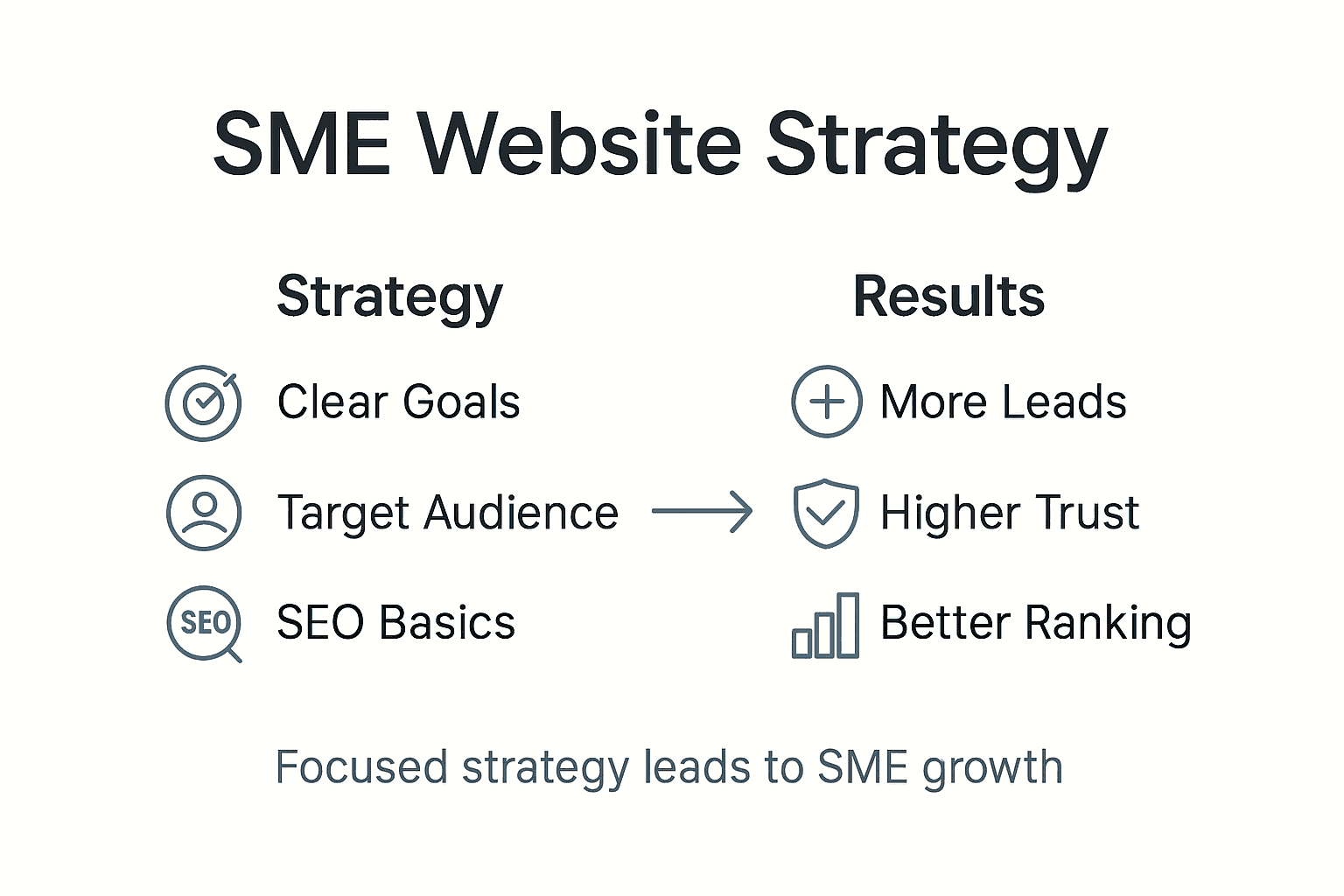
A website strategy represents a comprehensive digital roadmap for small and medium enterprises to establish, enhance, and leverage their online presence. It goes beyond simply having a website by developing a purposeful digital framework that aligns technology with specific business objectives and market opportunities.
For SMEs, an effective website strategy involves systematically addressing key digital requirements through intentional planning. Digital transformation strategies require businesses to understand their unique context, resource limitations, and incremental learning processes. This means crafting a website that not only looks professional but serves strategic business goals such as customer acquisition, brand positioning, and revenue generation.
The core elements of a robust website strategy for SMEs typically include:
- Clear business objective alignment
- Target audience understanding
- Responsive design considerations
- Search engine optimization integration
- Performance and security protocols
- Ongoing content and technical maintenance
Net Branding recognises that each SME requires a tailored approach, acknowledging that digital strategies are not one-size-fits-all solutions. Businesses must evaluate their specific market positioning, competitive landscape, and technological capabilities when developing their online presence.
Here’s a summary of how website strategy components impact SME business outcomes:
| Strategy Component | Business Impact | Typical Tools/Methods |
|---|---|---|
| Objective Alignment | Drives clear growth direction | Goal setting, KPIs |
| Audience Understanding | Improves targeting and sales | Personas, market research |
| Responsive Design | Boosts customer engagement | Mobile optimisation, testing |
| SEO Integration | Expands online visibility | Keyword tools, content updates |
| Ongoing Maintenance | Supports site reliability | Audits, security updates |
Pro tip: Conduct a comprehensive digital audit of your current website to identify strategic improvement opportunities before investing in major redesign efforts.
Core Benefits for Growing Your Business
For small and medium enterprises, a strategic website serves as far more than a digital brochure. Digital marketing strategies fundamentally transform business performance by creating a powerful platform for customer engagement, brand visibility, and operational efficiency.
The core benefits of a well-designed website extend across multiple critical business dimensions. Enterprises can expect significant improvements in:
- Customer acquisition and retention
- Brand credibility and market positioning
- Revenue generation through online channels
- Cost-effective marketing and communication
- Enhanced competitive advantage
- Expanded geographical market reach
Net Branding understands that websites are strategic business assets. Modern digital platforms enable SMEs to compete with larger organisations by providing sophisticated tools for customer interaction, data collection, and targeted marketing. The ability to showcase products, share company values, and create seamless user experiences transforms websites from simple information portals into dynamic business growth engines.

Every interaction on a business website represents an opportunity to convert potential customers, build trust, and demonstrate professional capability. Sophisticated website design integrates visual appeal with functional performance, ensuring that SMEs can effectively communicate their unique value proposition to target audiences.
Pro tip: Regularly analyse your website’s performance metrics to continuously refine your digital strategy and identify emerging customer engagement opportunities.
User Experience and Conversion Impact
User experience represents the critical bridge between website design and business performance. Conversion rates are fundamentally driven by strategic design factors that transform casual website visitors into committed customers.
Understanding user experience involves recognising multiple interconnected elements that influence customer decision making:
- Intuitive website navigation
- Clear and compelling content presentation
- Seamless mobile responsiveness
- Fast loading speeds
- Strategic visual hierarchy
- Simplified conversion pathways
Net Branding recognises that user experience goes beyond aesthetic appeal. Modern SMEs must deploy sophisticated digital strategies that integrate behavioural economics principles to ethically guide user interactions and support sustainable conversion improvements. This approach transforms websites from static information platforms into dynamic engagement tools that actively support business growth objectives.
Effective user experience design requires continuous refinement and data-driven insights. By understanding user behaviour patterns, businesses can create websites that not only look professional but actively guide potential customers through carefully crafted conversion journeys. Each interaction becomes an opportunity to build trust, demonstrate value, and ultimately drive business success.
Pro tip: Implement user tracking tools to systematically analyse website interaction patterns and identify potential friction points in your conversion funnel.
SEO Optimisation and Search Visibility
Search Engine Optimization represents a strategic imperative for small and medium enterprises seeking digital market visibility. Comprehensive SEO implementation directly correlates with increased website performance and market reach by enabling businesses to compete effectively against larger competitors in digital landscapes.
Key strategic SEO elements for SMEs include:
- Targeted keyword research
- High-quality content creation
- Technical website optimization
- Mobile responsiveness
- Local search positioning
- Consistent metadata management
Net Branding recognises that modern SEO transcends simple ranking tactics. Organic search optimization represents a multidimensional approach that drives sustained website traffic, enhances brand authority, and supports long-term digital growth. Successful SEO strategies integrate technical precision with genuine user-focused content that addresses specific customer needs and search intentions.
Effective search visibility requires ongoing commitment and adaptive strategies. Businesses must continuously monitor search trends, refine content approaches, and align technical infrastructure with evolving search engine algorithms. By treating SEO as a dynamic, strategic process rather than a static checklist, SMEs can develop robust digital presences that attract and retain customer attention.
Pro tip: Conduct quarterly SEO audits to identify optimization opportunities and maintain competitive search positioning.
Common Mistakes and What to Avoid
Website development for small and medium enterprises involves navigating numerous potential pitfalls that can dramatically undermine online performance. SMEs frequently encounter critical website mistakes that compromise their digital effectiveness, creating barriers to customer engagement and business growth.
The most prevalent website mistakes for SMEs include:
- Inadequate mobile responsiveness
- Slow page loading speeds
- Poorly designed user interfaces
- Weak or missing calls-to-action
- Inconsistent branding
- Complex navigation structures
- Neglecting search engine optimization
- Insufficient security protocols
- Outdated content
- Lack of clear value proposition
Net Branding understands that technical and marketing website errors can significantly impede business performance. These mistakes extend beyond simple design issues, representing fundamental barriers to digital success. Businesses must adopt a holistic approach that integrates technical proficiency, user experience design, and strategic content management to create compelling online platforms.
The following table compares SME website mistakes with recommended corrective actions:
| Mistake | Negative Effect | Corrective Action |
|---|---|---|
| Poor mobile responsiveness | Alienates mobile users | Implement responsive web design |
| Slow loading speeds | Reduces visitor retention | Optimise images, update hosting |
| Outdated content | Damages brand credibility | Maintain regular content updates |
| Weak calls-to-action | Missed customer conversions | Add clear, strategic prompts |
| Inconsistent branding | Erodes consumer trust | Standardise design and messaging |
Successful website development requires continuous evaluation and proactive improvement. SMEs must remain vigilant about emerging digital trends, regularly audit their online presence, and be willing to invest in professional website management. By understanding and addressing common mistakes, businesses can transform their websites from potential liabilities into powerful marketing and sales tools.
Pro tip: Conduct a comprehensive website audit every six months to systematically identify and rectify potential performance and design limitations.
Unlock Your SME’s Growth Potential with a Strategic Website
Every Small and Medium Enterprise (SME) faces the challenge of turning a website into a dynamic business asset. This article highlights the importance of aligning your website strategy with core business goals such as customer acquisition, SEO optimisation, and user experience. If you recognise the pain points of inconsistent branding, poor mobile responsiveness, or underperforming search visibility, then it is time to act with a solution tailored to your unique needs.
At ResponsiveWebsiteDesign, we specialise in delivering customised WordPress websites that are visually engaging, fully responsive, and strategically optimised for SEO. Our approach ensures your website not only looks professional but functions as a powerful tool to increase conversions and strengthen your digital footprint. Explore expert insights on website improvements in our Website Archives and discover effective SEO techniques in our SEO Archives.
Take control of your online success today by partnering with ResponsiveWebsiteDesign. Whether starting fresh or revamping your current site, we support SMEs through every step including design, development, ongoing maintenance, and security. Don’t let missed opportunities hold your business back. Visit ResponsiveWebsiteDesign and start transforming your website into a strategic asset that drives real business growth.
Frequently Asked Questions
What is a website strategy for SMEs?
A website strategy for SMEs is a comprehensive digital roadmap that helps small and medium enterprises establish and enhance their online presence by aligning their technology, design, and content with specific business objectives and market opportunities.
Why is having a website strategy important for SME success?
A website strategy is crucial for SME success because it supports effective customer acquisition, brand positioning, and revenue generation, transforming a website from a simple digital brochure into a powerful tool for business growth.
What are the key components of an effective website strategy?
Key components of an effective website strategy include aligning business objectives, understanding the target audience, implementing responsive design, integrating search engine optimization, and maintaining ongoing content and technical updates.
How can SMEs improve their website’s user experience to boost conversions?
SMEs can improve their website’s user experience by ensuring intuitive navigation, presenting clear and compelling content, achieving seamless mobile responsiveness, optimising loading speeds, and creating simplified conversion pathways.
Recommended
- Why Website Structure Matters for Business Growth – ResponsiveWebsiteDesign
- Mobile Optimisation: Why It Matters for Your Business – ResponsiveWebsiteDesign
- How to Choose Website Layouts for Business Success – ResponsiveWebsiteDesign
- 7 Essential Homepage Design Tips for Business Websites – ResponsiveWebsiteDesign
- Mobile SEO: Complete Guide for eCommerce Owners