
Nearly 70 percent of shoppers abandon their carts because the online experience feels confusing or frustrating. In a world where every click can make or break a sale, the way customers interact with an e-commerce site matters more than ever. When platforms offer smooth navigation and clear information, shoppers are far more likely to move from browsing to buying with confidence.
Table of Contents
- Defining E-Commerce UX And Its Importance
- Key Elements Of Effective E-Commerce UX
- Types Of E-Commerce UX Experiences
- Best Practices For Optimizing User Journeys
- Common E-Commerce UX Mistakes To Avoid
Key Takeaways
| Point | Details |
|---|---|
| User-Centric Design is Essential | E-commerce UX should prioritize user needs and behaviors for effective engagement and conversion. |
| Key Elements Drive Success | Intuitive navigation, fast loading, and secure payment options are critical to enhancing user experience. |
| Optimize User Journeys | Streamline interactions by simplifying navigation and personalizing experiences to reduce abandonment rates. |
| Avoid Common Pitfalls | Navigate potential UX mistakes like complex menus and slow performance to prevent user frustration and lost sales. |
Defining E-Commerce UX and Its Importance
E-commerce user experience (UX) represents the comprehensive interaction customers have with an online shopping platform. It encompasses every touchpoint and emotional response a user experiences while navigating a digital marketplace. According to research from ijisae.org, effective e-commerce UX goes far beyond aesthetic design—it critically involves building user trust through seamless search, intuitive navigation, and streamlined payment processes.
The fundamental goal of e-commerce UX design is transforming digital interactions into smooth, enjoyable shopping journeys. As insights from cdo.business.rice.edu reveal, successful design requires deep understanding of user behaviors and expectations. This means creating interfaces that anticipate customer needs, reduce friction, and provide clear pathways toward purchase completion.
Key elements that define exceptional e-commerce UX include:
- Intuitive website navigation
- Fast page loading speeds
- Mobile responsiveness
- Clear product information
- Simplified checkout processes
- Transparent pricing and shipping details
- Secure payment gateways
For businesses like Net Branding, understanding these UX principles is crucial. A well-designed e-commerce experience doesn’t just look good—it actively converts browsers into buyers by creating trust, reducing complexity, and making online shopping feel effortless.
Real-world success hinges on recognizing that users seek more than transactions. They want experiences that feel personal, efficient, and enjoyable. By prioritizing user-centric design, businesses can transform their digital platforms from mere online stores into engaging, customer-focused marketplaces.
Key Elements of Effective E-Commerce UX
Effective e-commerce user experience hinges on creating digital environments that are intuitive, engaging, and seamlessly functional. According to silktest.org, successful e-commerce platforms must focus on multiple critical components that transform online shopping from a transaction into an experience. These components include intuitive design, streamlined navigation, personalization capabilities, and robust mobile optimization.
Research from geeksforgeeks.org highlights that user interface design plays a pivotal role in conversion rates. The most effective e-commerce websites understand that users seek more than just products—they want comprehensive, user-friendly journeys that feel effortless and trustworthy.
Key strategic elements of superior e-commerce UX include:
- Clear and compelling product presentations
- Intuitive site architecture
- Rapid page load times
- Seamless mobile responsiveness
- Transparent pricing displays
- Multiple secure payment options
- Detailed product information
- Easy-to-use search and filter functions
- Comprehensive customer support access
For businesses like Net Branding, implementing these elements isn’t optional—it’s essential. A meticulously designed e-commerce experience can dramatically improve customer engagement, reduce cart abandonment rates, and ultimately drive higher conversion rates. By prioritizing user needs and expectations, businesses transform their digital platforms from mere transactional spaces into compelling, customer-centric marketplaces.
Understanding that each interaction represents an opportunity to build trust, successful e-commerce platforms invest heavily in creating smooth, predictable, and enjoyable user experiences. This approach goes beyond aesthetic design, focusing instead on creating digital environments that feel intuitive, responsive, and genuinely user-focused.

Types of E-Commerce UX Experiences
E-commerce user experience encompasses a diverse range of digital interaction models that cater to different user needs and preferences. According to emeritus.org, successful UX design requires understanding the nuanced approaches that create meaningful digital interactions. These experiences are not one-size-fits-all but rather tailored strategic frameworks designed to meet specific user expectations and business objectives.
Research from diva-portal.org highlights that e-commerce UX experiences can be categorized into several distinctive interaction models. Each type represents a unique approach to digital engagement, focusing on different aspects of user interaction, information presentation, and transactional processes.
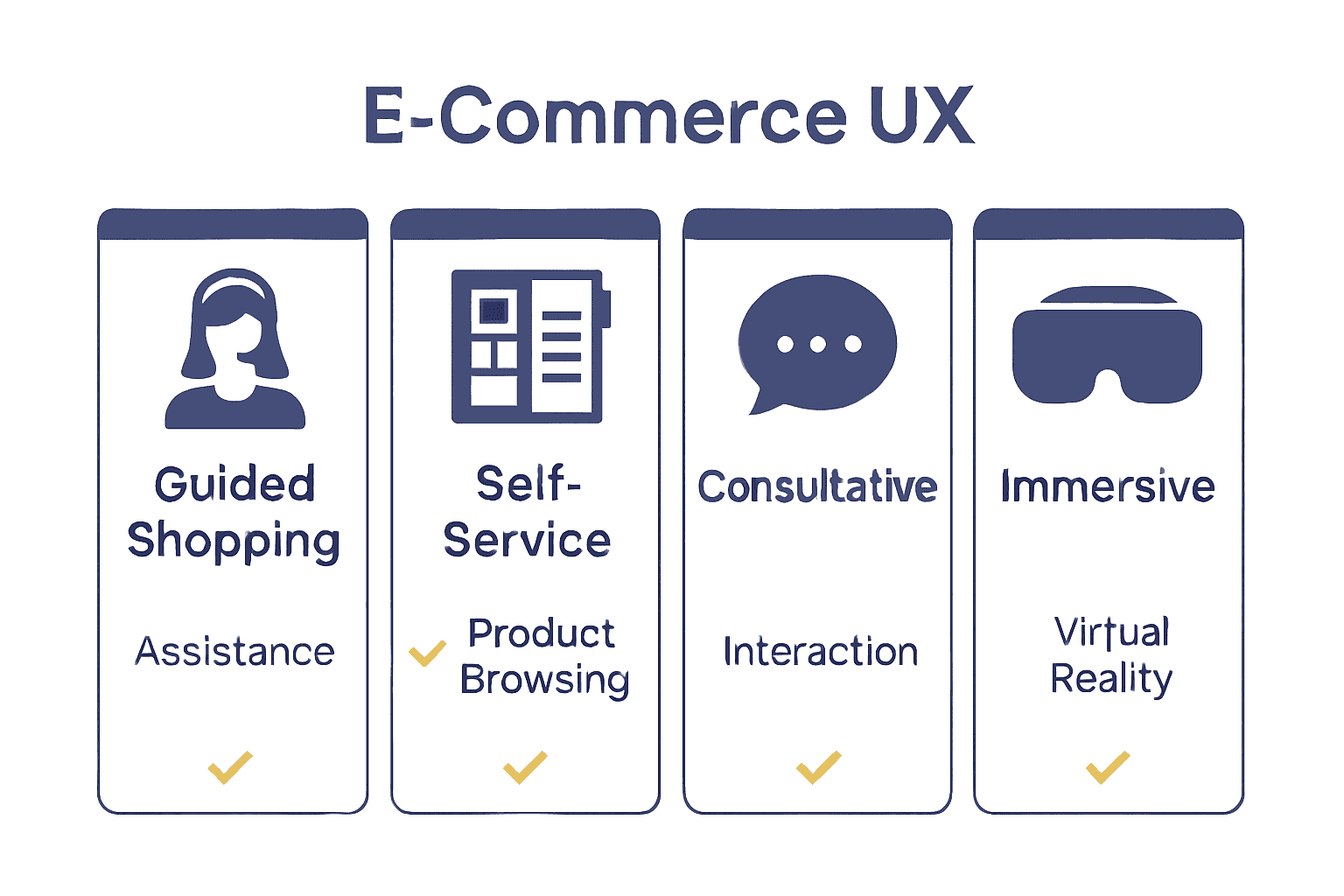
Primary types of e-commerce UX experiences include:
Here’s a comparison of the primary types of e-commerce UX experiences:
| UX Experience Type | Key Features | Typical Benefits |
|---|---|---|
| Guided Shopping | Personalised recommendations Style quizzes Expert consultation | Higher relevance Greater trust |
| Self-Service | Product catalogues Advanced filtering Comparison tools | User control Efficiency |
| Consultative | Live chat Product advisors Customisation options | Personal touch Faster decisions |
| Immersive | 360° product views AR try-ons Interactive demos | Engagement Reduced uncertainty |
Guided Shopping Experiences
- Personalized product recommendations
- Interactive style quizzes
- Expert consultation interfaces
Self-Service Experiences
- Comprehensive product catalogs
- Advanced search and filtering
- Detailed comparison tools
Consultative Experiences
- Live chat support
- Real-time product advisors
- Customization options
Immersive Experiences
- 360-degree product views
- Augmented reality try-ons
- Interactive product demonstrations
For businesses like Net Branding, understanding these experience types is crucial. Each model offers unique advantages in engaging customers, reducing purchase friction, and creating memorable digital interactions. The key lies in selecting and implementing the right experience type that aligns with your specific product offering and target audience preferences.
Successful e-commerce platforms recognize that user experience is not about technology—it’s about human connection. By thoughtfully designing experiences that feel intuitive, supportive, and genuinely helpful, businesses can transform digital transactions into meaningful customer journeys that drive loyalty and satisfaction.
Best Practices for Optimizing User Journeys
Optimizing user journeys is a strategic process that transforms digital interactions from transactional experiences into seamless, intuitive pathways. According to ijisae.org, successful e-commerce platforms focus intensively on critical UX elements like search functionality, navigation design, and payment process efficiency to build user trust and enhance overall platform performance.
Research from silktest.org reveals that user journey optimization requires a holistic approach addressing multiple interconnected aspects of digital interaction. For businesses like Net Branding, this means creating digital experiences that anticipate user needs, reduce friction, and provide clear, predictable paths towards purchase completion.
Key best practices for optimizing user journeys include:
Simplified Navigation
- Clear menu structures
- Intuitive category organization
- Minimal clicks to desired content
Performance Optimization
- Lightning-fast page load times
- Responsive design across devices
- Smooth transitions between pages
Personalization Strategies
- Tailored product recommendations
- User preference tracking
- Adaptive content displays
Transparent Information Architecture
- Clear pricing details
- Comprehensive product descriptions
- Easy-to-access customer support
For businesses seeking to enhance their digital platforms, understanding these optimization strategies is crucial. Each element contributes to creating a frictionless experience that guides users effortlessly from initial interest to final purchase. By implementing these practices, companies can significantly improve user engagement, reduce abandonment rates, and ultimately drive conversions.
Successful user journey optimization is an ongoing process of understanding, adapting, and anticipating user needs. It requires continuous refinement, deep empathy for user experiences, and a commitment to creating digital environments that feel intuitive, supportive, and genuinely helpful.
Common E-Commerce UX Mistakes to Avoid
E-commerce platforms frequently undermine their success by overlooking critical user experience design principles. According to geeksforgeeks.org, the most common UX mistakes can dramatically reduce user engagement and conversion rates. These errors often stem from a fundamental misunderstanding of user expectations and digital interaction dynamics.
Research from silktest.org reveals that e-commerce UX mistakes typically fall into predictable patterns that can be systematically addressed. For businesses like Net Branding, recognizing and proactively mitigating these issues is crucial to maintaining a competitive digital presence.
Critical e-commerce UX mistakes to avoid include:
Navigation Nightmares
- Overly complex menu structures
- Hidden search functionality
- Inconsistent site mapping
Performance Problems
- Slow page loading times
- Unresponsive design across devices
- Broken links and error pages
User Engagement Errors
- Lack of personalization
- Overwhelming product choices
- Unclear call-to-action buttons
Trust and Transparency Issues
- Complicated checkout processes
- Limited payment options
- Insufficient product information
- Hidden shipping costs
Businesses must understand that each UX mistake represents a potential lost sale. A single moment of user frustration can trigger immediate abandonment, sending potential customers directly to competitors. Thoughtful, user-centric design is not a luxury—it’s a fundamental requirement for digital survival.
Successful e-commerce platforms treat user experience as an ongoing conversation. They continuously test, refine, and adapt their digital interfaces, recognizing that user expectations evolve rapidly in our increasingly digital marketplace. The goal is not perfection, but consistent, incremental improvement that makes every interaction smoother and more intuitive.
Elevate Your E-Commerce UX with Expert WordPress Solutions
Creating a seamless and engaging e-commerce user experience is critical to turning visitors into loyal customers. This article highlights common challenges such as complex navigation, slow loading times, and unclear checkout processes that can frustrate users and reduce sales. Your goal is to build trust through intuitive design, fast performance, and secure, transparent transactions.
Let us help you overcome these obstacles with customised WordPress and WooCommerce solutions tailored for New Zealand businesses. From responsive mobile designs to streamlined shopping journeys, our team focuses on enhancing every user touchpoint to boost engagement and conversion rates. Discover how our expertise in UX-driven website development aligns perfectly with your business objectives by exploring our Website Archives – ResponsiveWebsiteDesign.
Ready to transform your e-commerce platform into an effortless customer experience that drives sales now Instead of waiting for problems to cost you sales, partner with us at ResponsiveWebsiteDesign to create a site that performs on every device while prioritising user-friendly functionality. Start your journey today with our full range of WordPress development and ongoing management services designed to keep your site fast, secure, and easy to use. Learn more about our capabilities and take the next step towards digital success by visiting our Uncategorized Archives – ResponsiveWebsiteDesign.
Frequently Asked Questions
What is e-commerce UX?
E-commerce UX refers to the overall experience a customer has while interacting with an online shopping platform. It includes every touchpoint, from navigation and product searches to checkout processes, emphasizing user trust and seamless interactions.
Why is e-commerce UX important for online businesses?
E-commerce UX is crucial because it enhances user satisfaction, builds trust, and encourages conversions. A well-designed e-commerce experience transforms visitors into buyers by streamlining their journey and making online shopping enjoyable.
What are the key elements of effective e-commerce UX?
Key elements of effective e-commerce UX include intuitive navigation, fast loading times, mobile responsiveness, clear product information, simplified checkout, transparent pricing, and secure payment options. These features contribute to a smooth and engaging shopping experience.
What are common mistakes in e-commerce UX design that businesses should avoid?
Common mistakes include complex navigation structures, slow page loads, lack of personalization, overwhelming product choices, and unclear calls to action. These issues can frustrate users and lead to higher abandonment rates.