
A slow website can turn potential customers away before they even see your products. For small and medium business owners in New Zealand, website performance is much more than just speed. Research confirms that web performance impacts user experience, trust, and business competitiveness, all of which directly affect your sales online. This article unpacks the real meaning of web performance and reveals how targeted improvements for WordPress sites drive measurable business results.
Table of Contents
- Defining Web Performance for Business Websites
- Key Metrics That Influence User Experience
- How Performance Impacts SEO and Conversions
- Common Causes of Slow WordPress Sites
- Best Practices to Optimise Site Speed
Key Takeaways
| Point | Details |
|---|---|
| Web Performance is Crucial for Business | Understanding and optimising web performance is essential for New Zealand businesses to enhance user experience and maintain competitive advantage. |
| Key Metrics Influence User Engagement | Metrics such as Load Time and Mobile Responsiveness are vital in determining user satisfaction and conversion rates. |
| Performance Challenges are Common | Businesses often face issues like complex site architectures and limited technical knowledge, which hinder performance optimisation. |
| Regular Audits and Optimisation Strategies are Necessary | Conducting regular performance assessments and implementing best practices can significantly enhance website speed and user trust. |
Defining Web Performance for Business Websites
Web performance represents the overall speed, responsiveness, and efficiency of a business website in delivering content and providing seamless user interactions. For New Zealand businesses competing in the digital marketplace, understanding web performance is crucial to maintaining a competitive online presence.
According to research, web performance directly impacts multiple critical business metrics. Core performance metrics reveal significant insights into how website functionality influences user engagement and operational success. These metrics go far beyond simple loading times and encompass a comprehensive view of digital user experience.
Key components defining web performance include:
- Load Time: Total duration required to display all content on a webpage
- Response Time: Speed at which server processes user requests
- Throughput: Volume of data transmitted successfully within a specific timeframe
- User Experience Metrics: Interactive elements’ smoothness and accessibility
Net Branding recognises that modern businesses require sophisticated approaches to measuring website effectiveness. Optimization strategies emphasise minimising digital latency while ensuring code efficiency and user satisfaction.
Professional Performance Assessment Tools businesses can leverage include:
- Google PageSpeed Insights
- Lighthouse Performance Analytics
- WebPageTest
- GTmetrix Performance Monitoring
Performance challenges for New Zealand businesses often stem from:
- Complex website architectures
- Large multimedia content
- Inefficient server configurations
- Limited understanding of technical optimisation strategies
Effective web performance is not just about speed – it’s about creating a seamless, responsive digital experience that converts visitors into customers.
Pro tip: Regularly audit your website performance using multiple tools to gain comprehensive insights into potential improvement areas.
Key Metrics That Influence User Experience
User experience (UX) represents a complex ecosystem of interconnected performance metrics that directly impact how visitors perceive and interact with business websites. Core performance metrics provide predictive insights into website effectiveness and user satisfaction across digital platforms.

The most critical metrics for New Zealand businesses include:
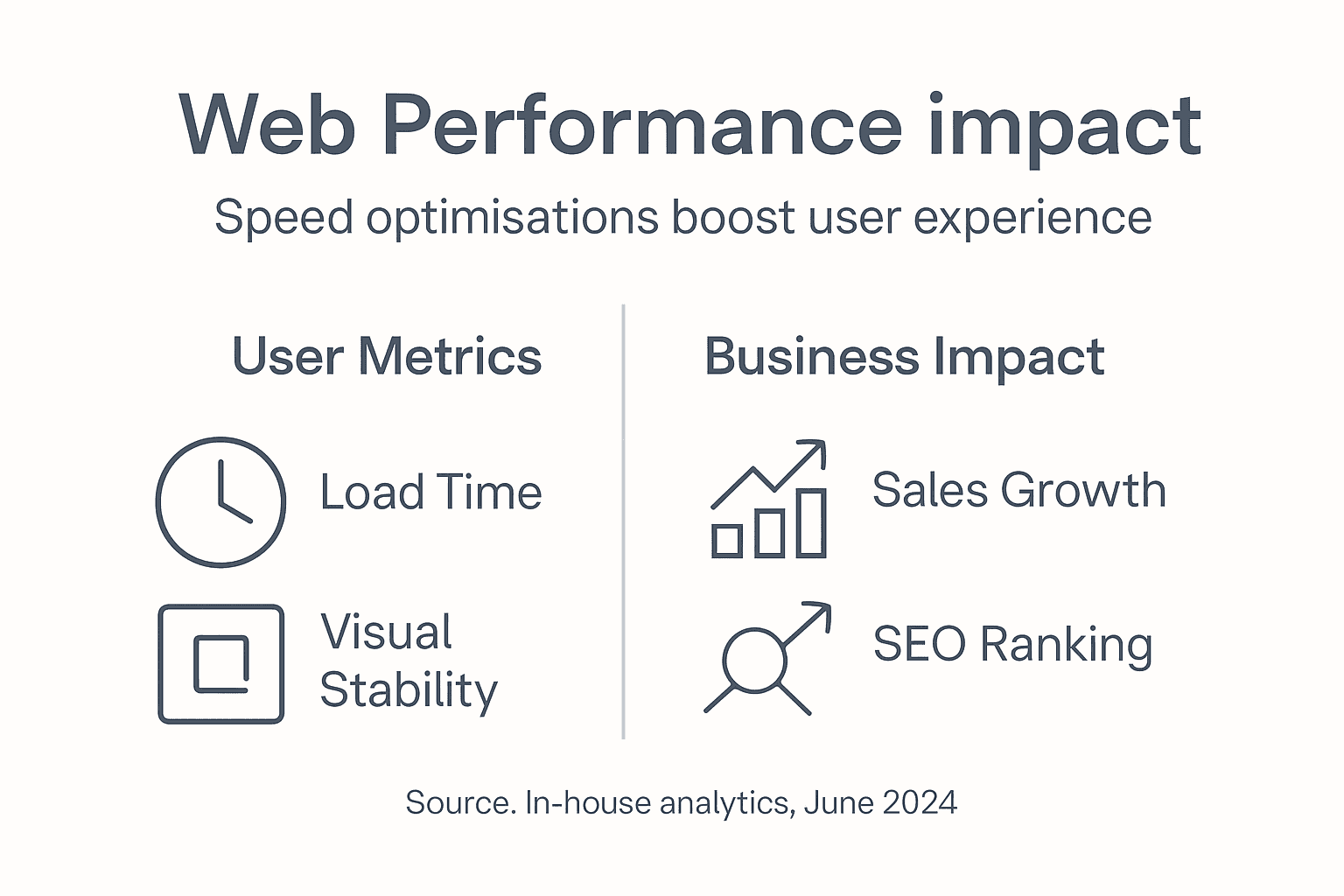
Here’s a quick reference comparing key web performance metrics and their business impacts:
| Metric | What It Measures | Business Impact |
|---|---|---|
| Load Time | Time to display all content | Affects user satisfaction |
| Time to Interactive | Delay before user interaction | Influences engagement |
| Visual Stability | Consistency during rendering | Builds customer trust |
| Server Response Time | Server speed for requests | Impacts SEO and conversions |
| Mobile Responsiveness | Adapts across devices | Broadens user reach |
- Page Load Time: Total seconds required to fully render webpage content
- Time to Interactive: Duration before users can actively engage with page elements
- Visual Stability: Consistency of visual components during page rendering
- Server Response Time: Speed of initial server acknowledgement
- Mobile Responsiveness: Adaptability across different device screen sizes
Quantitative User Experience Measurements involve tracking specific performance indicators that reveal deeper insights into website functionality. Page load optimization techniques demonstrate how strategic technical improvements can significantly enhance user engagement.
Net Branding understands that these metrics are not isolated factors but interconnected components of a holistic digital experience. Businesses must develop comprehensive strategies that address multiple performance dimensions simultaneously.
Performance Impact Hierarchy:
- Technical Infrastructure
- Content Delivery Speed
- Interactive Element Responsiveness
- Visual Design Consistency
- Cross-Device Compatibility
User experience metrics are more than numbers – they represent real human interactions and potential business opportunities.
Challenges businesses frequently encounter include:
- Complex website architectures limiting performance
- Inefficient code preventing rapid content delivery
- Excessive multimedia elements slowing page rendering
- Limited understanding of technical optimization strategies
Pro tip: Implement regular performance audits using multiple analytical tools to gain comprehensive insights into your website’s user experience metrics.
How Performance Impacts SEO and Conversions
Web performance is a critical determinant of online business success, directly influencing both search engine rankings and user conversion rates. Web application performance significantly impacts business metrics by creating a seamless digital experience that attracts and retains potential customers.
Key performance factors affecting SEO and conversions include:
- Page Load Speed: Directly influences search engine ranking algorithms
- Mobile Responsiveness: Critical for Google’s ranking considerations
- User Engagement Metrics: Bounce rates and time-on-site signal content relevance
- Technical Site Health: Infrastructure impacts search engine crawlability
- Content Accessibility: Faster websites improve user interaction
Net Branding recognises that performance optimizations enhance website traffic through multiple interconnected mechanisms. Businesses must understand that technical performance is not just about speed, but about creating a comprehensive user experience that search engines reward.
Conversion Impact Hierarchy:
- Initial Page Load Experience
- Interactive Element Responsiveness
- Visual Stability
- Seamless Navigation
- Trust Signal Generation
Performance is the silent ambassador of your brand’s digital credibility.
Common Performance Challenges for New Zealand Businesses:
- Slow server response times
- Unoptimised image and multimedia content
- Complex website architectures
- Limited technical optimization knowledge
Pro tip: Conduct monthly performance audits using multiple analytical tools to systematically identify and address potential conversion barriers.
Common Causes of Slow WordPress Sites
WordPress websites often suffer from performance challenges that can significantly impact user experience and business outcomes. Unoptimized code and inefficient configurations create bottlenecks that slow down website functionality and reduce user engagement.
Key performance impediments for WordPress sites include:
- Excessive Plugin Usage: Multiple plugins consuming server resources
- Uncompressed Media Files: Large images and videos slowing page load
- Complex Database Queries: Inefficient database management
- Lack of Caching Mechanisms: Repeated content regeneration
- Outdated WordPress Core: Missing performance optimization updates
Net Branding understands that performance interventions can substantially improve site speed through strategic technical modifications. WordPress site owners must adopt a proactive approach to identifying and resolving potential performance bottlenecks.
Performance Degradation Impact Levels:
- Minor Performance Reduction
- Moderate User Experience Disruption
- Significant Conversion Rate Decline
- Critical Website Functionality Impairment
- Total User Abandonment
Slow websites are not just technical problems – they are direct threats to business success.
Common Performance Challenges for New Zealand Businesses:
The following table outlines practical solutions for common New Zealand website performance challenges:
| Challenge | Recommended Solution | Expected Result |
|---|---|---|
| Complex site architecture | Streamline code and structure | Faster user experiences |
| Large multimedia files | Compress images and videos | Reduced page load times |
| Inefficient servers | Upgrade hosting or configurations | Improved site speed |
| Technical knowledge gaps | Invest in staff training or experts | Sustained optimisation |
- Limited technical WordPress expertise
- Budget constraints for professional optimization
- Inadequate hosting infrastructure
- Lack of systematic performance monitoring
Pro tip: Implement a quarterly performance audit to systematically identify and address potential WordPress site slowdown factors.
Best Practices to Optimise Site Speed
Site speed optimisation requires a comprehensive, strategic approach to improve website performance and user experience. Best practices focus on minimising resource consumption through targeted technical interventions that enhance overall digital infrastructure.
Key optimisation strategies include:
- Code Minification: Removing unnecessary characters from source code
- Image Compression: Reducing file sizes without compromising visual quality
- Caching Mechanisms: Storing frequently accessed content for rapid retrieval
- Lazy Loading: Deferring non-critical resource loading
- Content Delivery Network (CDN): Distributing website content across multiple global servers
Net Branding recognises that comprehensive performance improvement requires continuous refinement through systematic analysis and targeted interventions. Businesses must adopt a proactive approach to site speed management.
Performance Optimisation Hierarchy:
- Initial Performance Assessment
- Resource Reduction Strategies
- Caching Implementation
- Advanced Content Delivery
- Continuous Monitoring
Speed is not just a technical metric – it’s a critical component of user trust and business credibility.
Common Optimisation Challenges for New Zealand Businesses:
- Limited technical expertise
- Complex website architectures
- Budget constraints for professional optimization
- Lack of systematic performance monitoring
Pro tip: Implement monthly performance audits using multiple analytical tools to systematically identify and address potential site speed limitations.
Elevate Your Business with Expert Web Performance Solutions
Struggling with slow page loads or poor SEO rankings as highlighted in the article? You are not alone. Many New Zealand businesses face challenges like inefficient server response, complex website structures, and limited optimisation knowledge that impact sales and search engine results. The article emphasises key concepts such as page load speed, mobile responsiveness, and user experience metrics that directly affect customer engagement and conversions.
Now is the time to transform your digital presence. At Responsive Website Design, we specialise in creating fast, responsive, and SEO-optimised WordPress sites designed specifically for New Zealand businesses. Our services include custom development, ongoing maintenance, and strategic performance optimisation. Explore practical insights in our Website Archives and deepen your understanding of search engine success with resources from our SEO Archives. Take control of your online performance today and partner with experts committed to boosting your sales and search presence. Visit us now at https://responsivewebsitedesign.co.nz to start your journey towards a high-performing website.
Frequently Asked Questions
What is web performance and why is it important for businesses?
Web performance refers to the overall speed, responsiveness, and efficiency of a website. It’s crucial for businesses because it affects user experience, search engine ranking, and conversion rates, ultimately impacting sales success.
How do key performance metrics influence user experience?
Key performance metrics such as load time, time to interactive, and visual stability significantly influence user experience by determining how quickly and smoothly users can interact with a website, leading to higher engagement and satisfaction.
What tools can I use to assess my website’s performance?
Tools like Google PageSpeed Insights, Lighthouse Performance Analytics, WebPageTest, and GTmetrix are effective for assessing website performance, helping identify areas for improvement to enhance user experience and SEO.
How does web performance impact SEO?
Web performance directly impacts SEO as search engines consider load speed, mobile responsiveness, and server response time as important ranking factors. Faster, well-optimised websites are more likely to rank higher in search results, leading to increased visibility and traffic.
Recommended
- Why Optimise Page Speed: Complete Guide for Businesses – ResponsiveWebsiteDesign
- Why Website Speed Matters for Business Success – ResponsiveWebsiteDesign
- SEO Optimisation Step by Step for WordPress Results – ResponsiveWebsiteDesign
- How to Improve Site Speed for Better User Experience – ResponsiveWebsiteDesign
- Understanding Cross Sell: Boosting Revenue with Ease | Gammatica