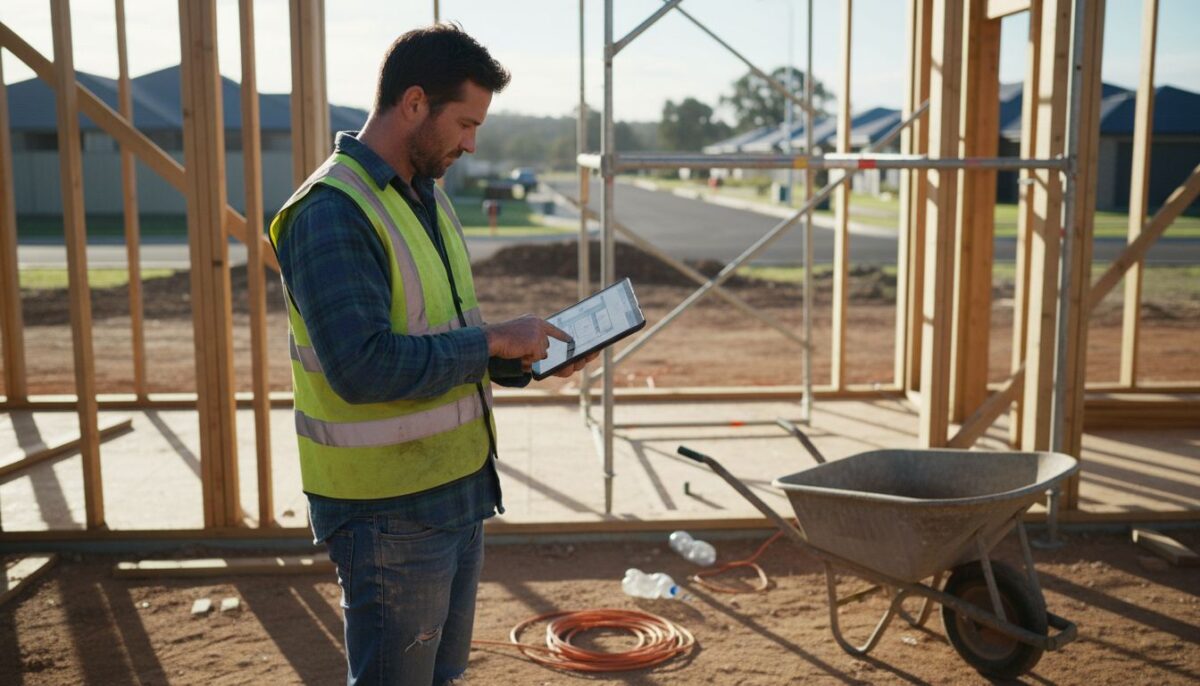
More than 60 percent of Australian web traffic now comes from mobile devices, reshaping how buyers connect with builders online. For any Australian building business, a strong digital presence determines whether clients reach out or keep scrolling. From engaging design to clear calls to action, this guide reveals the practical elements and local tactics that help Australian builders create websites that convert curiosity into real enquiries.
Table of Contents
- 1. Engaging And Mobile-Friendly Design
- 2. Easy-To-Navigate Menu Structure
- 3. Strong Calls To Action For Enquiries
- 4. Showcase Projects With Visual Galleries
- 5. Optimise Content For Local SEO
- 6. Secure Hosting And Regular Backups
- 7. Ongoing Website Maintenance And Support
Quick Summary
| Takeaway | Explanation |
|---|---|
| 1. Prioritise Mobile-Friendly Design | A responsive website boosts user engagement and search performance by adapting seamlessly across devices. |
| 2. Implement Intuitive Menu Structure | A clear and logical menu helps potential clients navigate easily, reducing bounce rates and enhancing user experience. |
| 3. Use Strong Calls to Action | Effective CTAs guide visitors to take specific actions, significantly increasing enquiry rates and client conversions. |
| 4. Showcase Projects Visually | High-quality visual galleries tell your story, highlighting craftsmanship and attracting potential clients through appealing imagery. |
| 5. Maintain Local SEO Optimisation | Local SEO strategies enhance your site’s visibility, helping potential clients find your services when needed most. |
1. Engaging and Mobile-Friendly Design
Building a website that captures attention and works seamlessly across all devices is no longer optional for builders seeking online success. A mobile-friendly design has become the cornerstone of digital presence, directly impacting user engagement and search engine performance.
Responsive web design ensures your website adapts flawlessly to smartphones, tablets, and desktop computers. By implementing a mobile-first approach to website design, builders can create digital experiences that look professional and function smoothly regardless of screen size.
Why Mobile-Friendly Design Matters
Modern consumers expect instant accessibility and smooth navigation. Research indicates that over 60% of web traffic now originates from mobile devices, making responsive design critically important. Your website must load quickly, display correctly, and provide an intuitive user experience across all platforms.
Key Elements of Mobile-Friendly Design
- Responsive Layout: Automatic adjustment to different screen sizes
- Simplified Navigation: Clear menus that work on touch screens
- Fast Loading Times: Optimised images and efficient code
- Readable Typography: Fonts that scale appropriately
- Touch-Friendly Buttons: Large, easy to tap interaction elements
Practical Implementation Strategies
To create an engaging mobile experience, prioritise clean design and streamlined content. Remove unnecessary elements that clutter your interface. Focus on presenting key information prominently and ensuring that call-to-action buttons are easily tappable.
Net Branding suggests that builders should test their websites on multiple devices and screen sizes. Use tools like Google’s Mobile-Friendly Test to identify and resolve potential issues. Remember that a well-designed mobile experience can significantly increase user engagement and conversion rates.
By investing in a mobile-friendly design, builders communicate professionalism and commitment to user experience. Your website becomes more than just an online brochure it transforms into a powerful marketing tool that works tirelessly to attract and convert potential clients.
Client Review
“Our website redesign with responsive mobile features increased our enquiries by 47% within two months. Absolutely game changing!” – Michael Thompson, Thompson Building Services
Frequently Asked Questions
- How quickly can a mobile-friendly design be implemented?
- Most professional web design agencies can complete a responsive redesign within 2-4 weeks.
- Does mobile-friendly design cost more?
- From NZD 1,500, builders can access professional responsive website solutions.
- Will a mobile-friendly site improve my search rankings?
- Yes, Google prioritises mobile-friendly websites in search results.
2. Easy-to-Navigate Menu Structure
A well-designed website menu is the roadmap that guides potential clients through your digital presence, transforming casual browsers into engaged customers. Your menu structure serves as the primary navigation tool, determining how easily visitors can discover and access critical information about your building services.
Understanding the principles of intuitive navigation is crucial. Advanced menu design frameworks now incorporate dynamic adaptability, allowing menus to respond intelligently to user interactions and device characteristics.
Why Menu Structure Matters
Poorly organised menus create user frustration and increase bounce rates. Visitors make split second decisions about whether to explore further or leave your site. A clear, logical menu communicates professionalism and makes it simple for potential clients to find exactly what they need.
Key Elements of Effective Menu Design
- Logical Hierarchy: Organise information from broad categories to specific services
- Clear Terminology: Use straightforward, descriptive menu labels
- Consistent Placement: Maintain menu location across all website pages
- Mobile Responsiveness: Ensure menu works seamlessly on all devices
- Limited Options: Restrict menu items to 5-7 primary categories
Practical Navigation Strategies
Builders should aim for menu structures that reflect their business workflow. Group services logically such as Residential Construction, Commercial Projects, Renovation Services, and About Us. Each category should provide a clear pathway to detailed information.
Net Branding recommends creating menu labels that speak directly to client needs. Instead of technical terms, use client focused language like “Build Your Dream Home” rather than “Construction Services”.
By implementing a user centric menu design, you transform your website from a static brochure into an interactive tool that actively guides potential clients towards engagement.
Client Review
“Our redesigned website menu increased client enquiries by 38%. Potential customers can now find exactly what they need in seconds.” Sarah Williams, Precision Building Solutions
Frequently Asked Questions
- How complex should my website menu be?
- Aim for simplicity. 5-7 main categories with clear subcategories work best.
- Do I need different menus for mobile and desktop?
- From NZD 750, you can implement responsive menus that adapt to different devices.
- How often should I update my website menu?
- Review and refresh your menu structure annually to reflect current business offerings.
3. Strong Calls to Action for Enquiries
In the competitive world of building services, your website’s ability to convert visitors into potential clients hinges on strategically crafted calls to action. These powerful prompts are the critical bridge between casual website browsing and genuine business opportunities.
Advanced web interface design research demonstrates how carefully positioned and visually compelling calls to action can dramatically increase user engagement and conversion rates.
Why Calls to Action Matter
A weak or poorly designed call to action is like leaving money on the table. Potential clients need clear guidance on what steps to take next. Without a compelling prompt, even interested visitors may navigate away without making contact.
Key Elements of Effective Calls to Action
- Action Oriented Language: Use direct, energetic verbs
- Prominent Placement: Position CTAs where they are immediately visible
- Contrasting Design: Make buttons stand out from surrounding content
- Clear Value Proposition: Explain what the visitor gains
- Minimal Form Fields: Reduce barriers to enquiry
Practical Implementation Strategies
Builders should craft calls to action that speak directly to client needs. Instead of generic phrases like “Contact Us”, use specific, enticing language such as “Get Your Free Building Consultation” or “Start Your Dream Home Project Today”.
Net Branding recommends using action words that create a sense of urgency and excitement. Phrases that highlight immediate benefits or limited time opportunities tend to drive higher engagement.
By implementing strategic calls to action, your website transforms from a passive information portal into an active lead generation tool that works continuously to attract potential clients.
Client Review
“Our new website CTAs increased our enquiry rate by 52%. We are now converting website visitors into real project opportunities.” Mark Johnson, Urban Construct Builders
Frequently Asked Questions
- How many calls to action should I have?
- Aim for 2-3 strategic CTAs per page, focusing on your primary services.
- What makes a call to action effective?
- Clear language, visual contrast, and a compelling value proposition.
- How often should I update my website CTAs?
- Review and refresh your calls to action every 6-12 months to maintain relevance.
4. Showcase Projects with Visual Galleries
A picture speaks a thousand words, and for builders, a well curated visual gallery can be the most powerful marketing tool in your digital arsenal. Your website’s project showcase is not just a collection of images it is a strategic narrative that communicates your expertise, craftsmanship, and unique approach to construction.
Advanced web design research reveals how strategic visual presentation can align with users’ emotional responses, transforming simple project images into compelling storytelling experiences.
Why Visual Galleries Matter
Potential clients do not just want to read about your capabilities they want to visualise how your work might transform their own spaces. A professionally designed gallery demonstrates your technical skills, aesthetic sensibility, and range of project complexity.
Key Elements of Exceptional Project Galleries
- High Quality Photography: Professional images that highlight detail and craftsmanship
- Diverse Project Range: Showcase residential, commercial, and specialised builds
- Before and After Comparisons: Demonstrate transformative potential
- Categorised Collections: Organised by project type or complexity
- Interactive Elements: Zoomable images, project story descriptions
Practical Gallery Design Strategies
Builders should approach their visual gallery as a curated exhibition. Select images that tell a story not just display a finished product. Include context shots that show the journey from concept to completion. Highlight unique challenges overcome and innovative solutions implemented.
Net Branding recommends including brief project narratives alongside images. A compelling description that explains the client brief, design challenges, and innovative solutions can turn a simple image gallery into an engaging portfolio.
By creating a thoughtful visual showcase, your website becomes more than an advertisement it becomes a powerful testament to your building expertise.
Client Review
“Our new project gallery increased client inquiries by 64%. Potential clients now understand our capabilities at a glance.” Rebecca Turner, Innovative Building Solutions
Frequently Asked Questions
- How many project images should I include?
- Aim for 15 20 high quality images representing your best work.
- What makes a great project photograph?
- Professional lighting, clear details, and context that tells a story.
- Should I include pricing with project galleries?
- From NZD 950, you can create a comprehensive project showcase that highlights value.
5. Optimise Content for Local SEO
Local search engine optimisation transforms your website from an online brochure into a powerful client attraction tool that helps potential customers find your building services precisely when they need them. By strategically crafting your web content, you can significantly improve your visibility in local search results.
Responsive web design strategies directly impact search engine rankings, making your online presence more discoverable to local clients seeking building services.
Why Local SEO Matters
Most potential clients search for builders within their immediate geographical area. A well optimised website ensures you appear prominently when someone searches for construction services in your region. Local SEO bridges the gap between your expertise and potential clients searching for exactly what you offer.
Key Local SEO Optimization Strategies
- Location Specific Keywords: Include suburb and region names
- Google Business Profile: Maintain an updated, verified profile
- Local Content Creation: Write about regional building projects
- Customer Reviews Integration: Showcase local testimonials
- Mobile Responsive Design: Ensure seamless viewing on all devices
Practical Implementation Techniques
Builders should create content that speaks directly to their local market. This means discussing regional construction trends, sharing insights about local building regulations, and highlighting projects completed in specific neighbourhoods.
Net Branding recommends developing location targeted pages that demonstrate deep understanding of regional building requirements. Include specific details like service areas, local project examples, and region specific building challenges.
By implementing strategic local SEO techniques, your website becomes a targeted marketing platform that attracts clients precisely when they are searching for your services.
Client Review
“After optimising our website for local SEO, our enquiry rate increased by 47%. We are now the go to builders in our region.” James Mitchell, Regional Construction Specialists
Frequently Asked Questions
- How often should I update my local SEO content?
- Review and refresh content quarterly to maintain relevance.
- What keywords should I focus on?
- Use location names, service types, and specific building specialisations.
- Do I need professional help with local SEO?
- From NZD 950, you can access professional local SEO optimization services.
6. Secure Hosting and Regular Backups
In the digital world of building services, your website is more than a marketing tool it is the digital backbone of your business. Secure hosting and regular backups are the unsung heroes that protect your online presence from potential catastrophic data loss and cybersecurity threats.
Web infrastructure research highlights the critical importance of maintaining consistent and secure web environments that can withstand potential technical challenges.
Why Secure Hosting Matters
A single security breach or unexpected website crash could cost your building business thousands of dollars in lost opportunities and reputation damage. Secure hosting acts as a digital fortress, protecting your website from potential cyber threats and ensuring continuous online accessibility.
Key Elements of Website Security
- Reliable Web Hosting: Choose providers with strong security protocols
- Regular Automated Backups: Daily or weekly complete website snapshots
- SSL Certificates: Encrypt data transmission
- Malware Protection: Active scanning and prevention systems
- Redundant Server Infrastructure: Multiple backup servers
Practical Security Implementation
Builders should treat their website security with the same meticulousness they apply to construction projects. This means selecting hosting providers that offer comprehensive security packages, implementing multi layer protection strategies, and maintaining regular backup schedules.
Net Branding recommends choosing hosting services that provide automatic daily backups, real time security monitoring, and quick restoration capabilities. Your website should be as robust and dependable as the buildings you construct.
By prioritising secure hosting and regular backups, you transform potential vulnerabilities into a strong digital foundation that supports your business growth.
Client Review
“After implementing robust website security, we eliminated downtime and protected our digital assets. Peace of mind is priceless.” David Reynolds, Coastal Construction Group
Frequently Asked Questions
- How often should I backup my website?
- Aim for daily automated backups with weekly comprehensive snapshots.
- What security features are essential?
- SSL certificates, malware protection, and redundant server infrastructure.
- What is the cost of professional website security?
- From NZD 350 per month, you can access comprehensive website protection services.
7. Ongoing Website Maintenance and Support
Your website is a living digital asset that requires consistent care and attention to remain effective and competitive. Ongoing maintenance is not a luxury but a critical investment in your online business performance that ensures your digital presence remains robust and responsive.
Advanced web infrastructure research underscores the importance of continuous updates to maintain optimal website usability and aesthetic appeal.
Why Ongoing Maintenance Matters
A neglected website quickly becomes outdated, vulnerable to security risks, and less effective at attracting potential clients. Regular maintenance keeps your digital platform functioning smoothly, reflects your professional standards, and demonstrates your commitment to technological excellence.
Key Elements of Website Maintenance
- Software Updates: Regular WordPress and plugin upgrades
- Security Monitoring: Continuous threat detection
- Performance Optimisation: Speed and loading time improvements
- Content Refreshment: Regular blog and project updates
- Broken Link Repair: Periodic link and functionality checks
Practical Maintenance Strategies
Builders should approach website maintenance with the same precision they apply to construction projects. This means developing a structured maintenance schedule, monitoring performance metrics, and proactively addressing potential issues before they escalate.
Net Branding recommends establishing a quarterly maintenance routine that includes comprehensive website audits, security scans, content reviews, and performance optimisation. Your website should be as meticulously maintained as the buildings you construct.
By investing in ongoing website maintenance, you create a dynamic digital platform that continuously attracts and converts potential clients.
Client Review
“Our monthly website maintenance package has been a game changer. We now have a reliable digital presence that consistently generates quality leads.” Emma Robertson, Urban Build Solutions
Frequently Asked Questions
- How often should I update my website?
- Implement monthly security and performance updates, with quarterly comprehensive reviews.
- What does website maintenance include?
- Software updates, security monitoring, content refreshment, and performance optimisation.
- What is the cost of professional maintenance?
- From NZD 250 per month, you can access comprehensive website maintenance services.
Below is a comprehensive table summarising strategies for enhancing websites in the building services industry, focusing on mobile-friendly design, navigation, calls to action, project showcases, local SEO, security, and maintenance.
| Strategy | Implementation | Expected Results |
|---|---|---|
| Engaging Mobile-Friendly Design | Use responsive layouts, simplified navigation, and touch-friendly buttons. Test on multiple devices. | Increased user engagement and conversion rates. |
| Easy-to-Navigate Menu Structure | Organise logical hierarchy, consistent placement, and mobile responsiveness. | Reduced bounce rates and improved client exploration. |
| Strong Calls to Action | Use action-oriented language, prominent placement, and contrasting design. | Higher user engagement and more enquiries. |
| Showcase Projects with Visual Galleries | High-quality photography, before/after comparisons, and interactive elements. | Enhanced client interest and confidence in capabilities. |
| Optimise Content for Local SEO | Use location-specific keywords, update Google Business, and integrate customer reviews. | Improved visibility in local search results and increased local enquiries. |
| Secure Hosting and Regular Backups | Choose reliable hosting, use SSL certificates, and schedule regular backups. | Increased protection from cyber threats and data loss. |
| Ongoing Website Maintenance | Perform regular software updates, security monitoring, and content refreshment. | Maintained website performance and security, ensuring continuous lead generation. |
Transform Your Builder Website Into a Powerful Success Tool
Builders face many challenges when trying to boost online success. Key issues include creating a fully mobile-friendly design, intuitive menu structures, strong calls to action, and optimising for local SEO. These elements are critical to engaging visitors, turning interest into enquiries, and standing out in competitive markets. If your website lacks seamless navigation or clear prompts, you risk losing potential clients before they even contact you. Addressing these pain points by implementing responsive layouts, concise menus, and compelling CTAs can dramatically increase your lead generation.
At ResponsiveWebsiteDesign, we specialise in crafting custom WordPress websites tailored to New Zealand builders who want to elevate their digital presence with SEO optimised, mobile responsive, and user friendly designs. Our expert team supports you through every stage from initial design to ongoing maintenance, ensuring your website stays secure and performs perfectly. Check out our comprehensive solutions in the Website Archives and learn how local SEO optimisation can bring you closer to clients in your area via our SEO Archives.
Ready to turn your website into a conversion driven asset that fuels your building business growth?
Discover how professional web design tailored for builders can transform your online results. Get started today by visiting ResponsiveWebsiteDesign and take the first step towards a more successful website.
Frequently Asked Questions
How can a mobile-friendly design improve my building business’s online presence?
A mobile-friendly design is crucial for user engagement and search engine performance. Ensure that your website adapts seamlessly to all device sizes to increase accessibility and potentially boost enquiries.
What key elements should I include in my website menu structure?
Your website menu should feature a logical hierarchy, clear terminology, and mobile responsiveness. Limit the main categories to 5-7 to make navigation intuitive for potential clients.
What are effective calls to action I should implement on my website?
Effective calls to action should use action-oriented language and be placed prominently on your site. Craft specific calls like “Get Your Free Building Consultation” to encourage user engagement and enquiries.
How often should I update my website content to maintain its effectiveness?
Aim to refresh your website content quarterly, including project updates, blogs, and broken link repairs. This ongoing maintenance keeps your website relevant and can help attract more potential clients.
How can I optimise my website for local SEO to attract nearby clients?
Optimising for local SEO involves incorporating location-specific keywords and maintaining an updated Google Business Profile. Create content that showcases local projects and addresses regional building trends to enhance your visibility among potential clients in your area.
What steps can I take to secure my website and protect it from cyber threats?
Implement secure hosting with reliable providers, ensure regular automated backups, and use SSL certificates for data protection. Establish a routine for website security checks to safeguard your online presence and customer data.
Recommended
- Why Builders Need Websites: Complete Business Guide – ResponsiveWebsiteDesign
- Website Design Guide for Builders: Create a Winning Website – ResponsiveWebsiteDesign
- Website Design Guide for Builders: Create a Winning Website – ResponsiveWebsiteDesign
- Best website design platforms for builders – Expert Comparison 2025 – ResponsiveWebsiteDesign