
Cyber attacks strike every 39 seconds worldwide, making australian businesses prime targets in the digital age. Even a small website vulnerability can leave a company exposed to severe data loss and financial setbacks. Staying ahead of emerging threats means understanding website security is no longer optional. This guide breaks down what australian organisations must know right now to protect their online operations from growing cyber risks.
Table of Contents
- Defining Website Security and Its Importance
- Common Types of Website Security Threats
- Essential Website Security Measures and Tools
- Ongoing Security Management and Best Practices
- Risks, Liabilities, and Compliance for Businesses
Key Takeaways
| Point | Details |
|---|---|
| Importance of Website Security | Website security is vital for protecting digital assets from cyber threats, ensuring confidentiality, integrity, and availability. |
| Proactive Measures Required | Effective security involves multi-layered strategies including regular updates, robust password management, and advanced firewalls. |
| Cost of Non-Compliance | Failure to implement website security can result in significant financial losses, reputational harm, and legal implications. |
| Continuous Monitoring and Training | Ongoing security management and staff training are essential for adapting to evolving cyber threats and maintaining a secure environment. |
Defining Website Security and Its Importance
Website security represents a critical digital defence strategy for businesses protecting their online presence from sophisticated cyber threats. Exploring contemporary security practices reveals how organisations must proactively safeguard their digital infrastructure against increasingly complex vulnerabilities.
At its core, website security encompasses a comprehensive approach to protecting websites from potential digital risks, malicious attacks, and unauthorised access attempts. Comprehensive cybersecurity measures involve multiple layers of technical and strategic interventions designed to maintain the confidentiality, integrity, and accessibility of digital assets.
Businesses face significant challenges when neglecting website security. Potential consequences include data breaches, financial losses, reputational damage, and potential legal ramifications. Net Branding understands these risks intimately, recognising that a single security vulnerability can compromise an entire organisation’s digital ecosystem.
Key components of effective website security include:
- Robust password management protocols
- Regular software and plugin updates
- Implementation of SSL certificates
- Advanced firewall configurations
- Continuous security monitoring systems
For businesses seeking professional website security solutions, partnering with experienced web design agencies like Net Branding can provide comprehensive protection strategies tailored to specific organisational needs.
FAQ
What is the most critical aspect of website security?
Implementing multi-layered security protocols that protect against various digital threats.How often should website security be reviewed?
Minimum quarterly comprehensive security assessments are recommended.Can small businesses afford professional website security?
Professional security solutions start from NZD 299 per month, making them accessible for businesses of all sizes.
Common Types of Website Security Threats
Websites today face an increasingly complex landscape of cyber threats that can compromise sensitive data and undermine digital infrastructure. Comprehensive cybersecurity research reveals multiple sophisticated attack vectors that businesses must understand and proactively defend against.
Among the most prevalent website security threats, cross-site scripting (XSS) and SQL injection represent particularly dangerous attack methods. Advanced threat analysis demonstrates how these techniques allow malicious actors to exploit vulnerabilities in web applications, potentially gaining unauthorised access to critical systems and sensitive information.

Net Branding recognises the critical importance of understanding these digital risks. Cyber criminals continuously evolve their strategies, targeting websites through multiple sophisticated approaches that can devastate unprepared businesses.
Key website security threats include:
- Cross-site scripting (XSS)
- SQL injection attacks
- Distributed denial-of-service (DDoS) attacks
- Malware infiltration
- Phishing attempts
- Ransomware deployment
- Authentication bypass techniques
Businesses must adopt a proactive and comprehensive approach to website maintenance and security to effectively mitigate these potential risks.
FAQ
How quickly can a cyber attack damage my business?
Cyber attacks can cause immediate and long-lasting damage within minutes of successful infiltration.What is the most dangerous type of website attack?
SQL injection and cross-site scripting pose significant risks due to their ability to compromise entire database systems.How much does professional website security cost?
Professional security solutions start from NZD 499 per month, providing comprehensive protection for businesses of all sizes.
Essential Website Security Measures and Tools
Comprehensive website security requires a multi-layered approach that addresses vulnerabilities across technological, procedural, and human domains. Modern businesses must implement sophisticated strategies that protect digital assets from increasingly complex cyber threats.
Key security measures begin with robust authentication protocols and advanced encryption techniques. Preventive cybersecurity strategies emphasise the critical importance of implementing strong user verification mechanisms, including multi-factor authentication, complex password requirements, and continuous access monitoring.
Net Branding recognises that effective website security extends beyond technological solutions. Comprehensive protection requires a holistic approach that combines technical safeguards with ongoing staff education, regular system audits, and proactive threat monitoring.
Essential website security tools and measures include:
- SSL/TLS encryption certificates
- Web application firewalls (WAF)
- Intrusion detection and prevention systems
- Regular security patch management
- Comprehensive backup solutions
- Advanced threat detection software
- Continuous vulnerability scanning
Businesses can enhance their digital defence by implementing structured website maintenance workflows that prioritise ongoing security management and proactive risk mitigation.
FAQ
How often should website security be reviewed?
Comprehensive security audits should be conducted quarterly, with continuous monitoring between formal assessments.What is the most critical security tool?
Multi-factor authentication represents the most effective first line of defence against unauthorized access.How much does professional website security cost?
Professional security solutions start from NZD 499 per month, providing comprehensive protection for businesses of all sizes.
Ongoing Security Management and Best Practices
Continuous security management represents a dynamic and proactive approach to protecting digital infrastructure. Businesses must develop adaptive strategies that anticipate and respond to evolving cyber threats, transforming website security from a static defence mechanism into an ongoing, intelligent protection ecosystem.
Net Branding understands that effective security management extends far beyond periodic checks. Advanced cybersecurity protocols demand a comprehensive framework that integrates technological tools, human expertise, and systematic monitoring to create a robust defensive strategy.
The most successful security approaches incorporate multiple layers of protection, recognising that no single tool or technique can provide complete defence. Organisations must cultivate a security-first mindset that permeates every level of digital operations, from technical infrastructure to employee training and awareness.
Key ongoing security management practices include:
- Regular vulnerability assessments
- Automated patch management
- Continuous threat monitoring
- Staff cybersecurity training programs
- Incident response planning
- Performance and security log analysis
- Regular penetration testing
Businesses can strengthen their digital resilience by implementing structured website maintenance workflows that integrate security management into routine operational processes.
FAQ
How frequently should security assessments occur?
Comprehensive security assessments should be conducted quarterly, with continuous monitoring between formal reviews.What is the most critical aspect of ongoing security?
Continuous employee education and awareness represent the most crucial element of sustained cybersecurity protection.How much does professional security management cost?
Professional security management solutions start from NZD 599 per month, providing comprehensive protection tailored to business needs.
Risks, Liabilities, and Compliance for Businesses
Website security risks represent a complex landscape of potential legal, financial, and reputational challenges that businesses must navigate with strategic precision. Beyond technological vulnerabilities, organisations face significant consequences when failing to implement robust protective measures for their digital infrastructure.
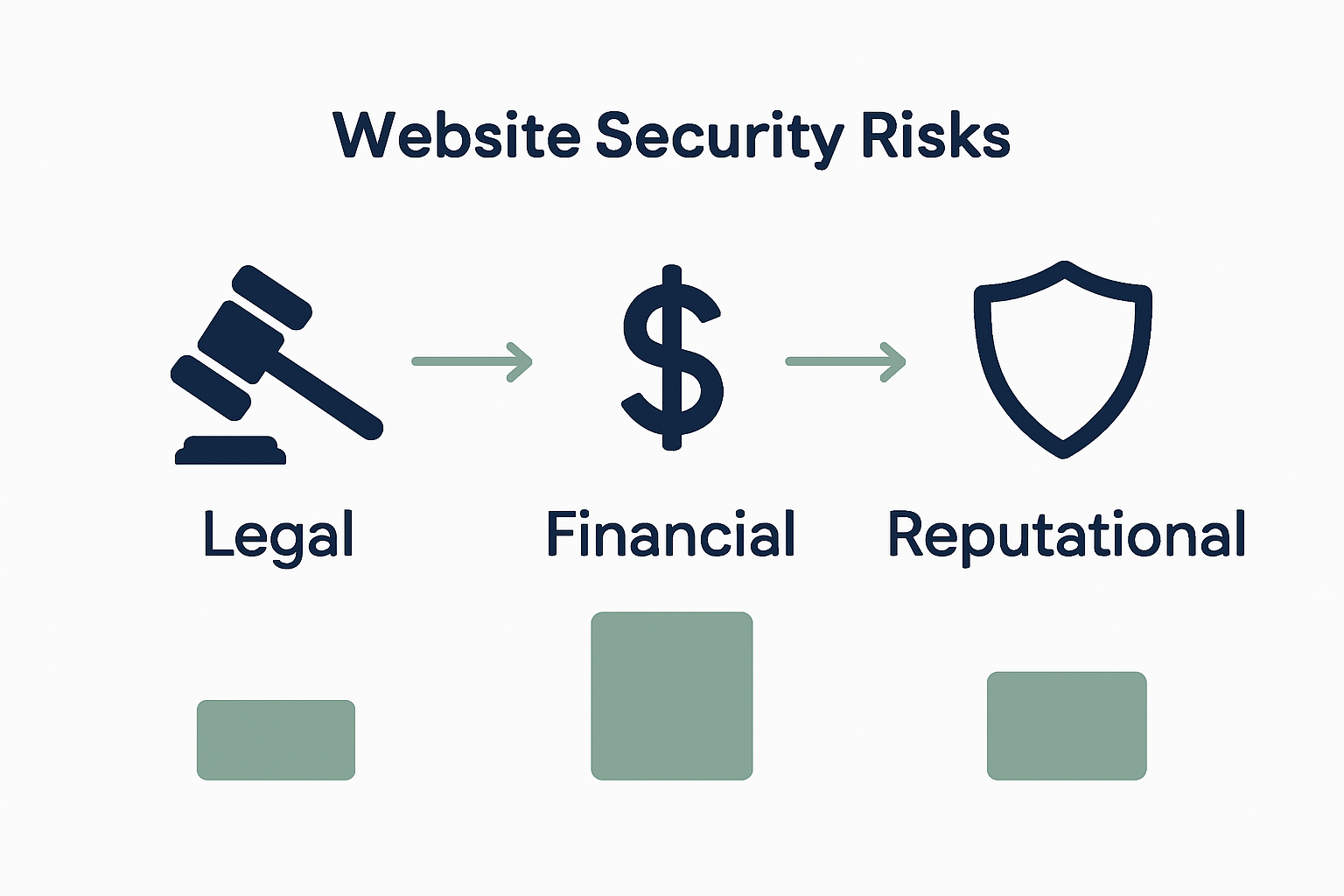
Net Branding recognises that compliance frameworks are not merely bureaucratic checklists but critical defence mechanisms. Digital security compliance demands comprehensive approaches that protect sensitive data, maintain customer trust, and mitigate potential legal ramifications arising from security breaches.
The financial implications of non-compliance can be devastating. A single security incident could result in substantial monetary penalties, legal action, and irreparable damage to brand reputation. Businesses must understand that cybersecurity is not an optional investment but a fundamental requirement for operational sustainability.
Key risks and compliance considerations include:
- Data protection regulatory requirements
- Privacy law adherence
- Financial transaction security standards
- Mandatory breach notification protocols
- Industry-specific security certifications
- Cybersecurity insurance requirements
- International data transfer regulations
Businesses can proactively manage their digital risk by implementing structured website maintenance workflows that integrate compliance monitoring and risk assessment.
FAQ
What are the potential financial risks of non-compliance?
Security breaches can lead to fines up to NZD 100,000 and significant legal expenses.How often should compliance be reviewed?
Comprehensive compliance assessments should occur at least annually, with quarterly interim reviews.What is the cost of professional compliance support?
Professional compliance and risk management solutions start from NZD 799 per month, providing comprehensive protection and strategic guidance.
Protect Your Business with Expert Website Security Solutions
Ensuring your website is secure from threats such as cross-site scripting, SQL injection, and ransomware is critical for maintaining your business’s reputation and customer trust. This guide highlights the challenges of managing ongoing security, implementing robust authentication, and maintaining compliance. If these complexities worry you or you want to safeguard your online presence, there is a clearer path forward.
Explore comprehensive security and maintenance services tailored specifically for New Zealand businesses at Website Archives – ResponsiveWebsiteDesign. Our team at ResponsiveWebsiteDesign specialises in creating secure, responsive WordPress websites designed to protect your data and optimise performance. Don’t leave your website vulnerable – get in touch today to start your tailored security strategy and ensure your site is safe now and in the future.
Frequently Asked Questions
What is website security and why is it important?
Website security is a critical strategy that protects online businesses from cyber threats, data breaches, and unauthorised access, ensuring the confidentiality, integrity, and availability of digital assets.
How often should I assess my website’s security?
It is recommended to conduct comprehensive security assessments at least quarterly, with continuous monitoring in between these formal evaluations to ensure ongoing protection.
What are common types of website security threats I should be aware of?
Common threats include cross-site scripting (XSS), SQL injection attacks, distributed denial-of-service (DDoS) attacks, malware infiltration, phishing attempts, ransomware, and authentication bypass techniques.
What key measures should I implement for effective website security?
Key measures include utilizing SSL/TLS encryption, employing web application firewalls (WAF), conducting regular security patch management, implementing intrusion detection systems, and ensuring continuous vulnerability scanning.
Recommended
- Website Maintenance Checklist for Business Success – ResponsiveWebsiteDesign
- 7 Essential Business Website Must-Haves for Success – ResponsiveWebsiteDesign
- Why Update Your Website: Complete Guide for 2025 – ResponsiveWebsiteDesign
- Website Maintenance Explained: Complete Business Guide – ResponsiveWebsiteDesign
- Benefici della sicurezza informatica: Comprendere il valore – Security Hub