
Over 60% of modern business websites now deliver personalised experiences through dynamic technology. As the digital world moves beyond static pages, understanding what makes a website dynamic has become vital for anyone aiming to stand out online. Many still believe these sites are out of reach for small businesses, but recent advances have changed the game. Unpacking the reality of dynamic websites uncovers powerful, practical possibilities that can drive real engagement and growth.
Table of Contents
- Defining Dynamic Websites And Common Misconceptions
- Key Types Of Dynamic Websites Explained
- How Dynamic Websites Operate Technically
- Practical Benefits And Use Cases For Businesses
- Comparing Dynamic Vs. Static Websites
- Common Challenges And How To Avoid Them
Key Takeaways
| Point | Details |
|---|---|
| Dynamic Websites Offer Personalization | These websites adapt content in real-time based on user interactions, enhancing user engagement and satisfaction. |
| Accessibility and Cost-Effectiveness | Modern frameworks have made creating dynamic websites accessible, contrary to misconceptions about high costs and complexity. |
| Diverse Types Serve Specific Needs | From e-commerce to content management systems, dynamic websites cater to various business functions by providing tailored functionalities. |
| Technical Challenges Present Opportunities | While dynamic websites require sophisticated management, addressing these complexities can lead to competitive advantages in user experience and operational efficiency. |
Defining Dynamic Websites and Common Misconceptions
Dynamic websites represent a sophisticated approach to web design that transforms how users interact with online content. According to Wikipedia, a dynamic web page is constructed in real time, enabling content to change responsively based on user interactions and variables, unlike traditional static pages that remain constant.
Understanding the core mechanics of dynamic websites requires breaking down their fundamental characteristics. As explained by PSSCIVE, these websites display different content from identical source code by utilizing server-side scripting languages that generate pages dynamically during user visits. This capability enables highly personalised digital experiences that adapt in real-time.
Common misconceptions about dynamic websites often stem from misunderstandings about their technical complexity. Many business owners mistakenly believe dynamic websites are prohibitively expensive or technically challenging to implement. In reality, modern web development frameworks have made dynamic website creation increasingly accessible. Key features that distinguish dynamic websites include:
- Personalised content generation
- Real-time data integration
- Interactive user experiences
- Adaptive design elements
- Automated content updates
Businesses seeking a responsive design guide can leverage dynamic websites to create more engaging, user-centric online experiences that respond directly to individual user needs and preferences.
The true power of dynamic websites lies in their ability to transform static information into living, breathing digital environments that communicate, adapt, and evolve with user interactions. By moving beyond traditional static web pages, organisations can create more meaningful digital connections that drive engagement and deliver value.
Net Branding Insight: Dynamic websites represent more than technological innovation they are strategic tools for businesses wanting to create compelling online narratives that resonate with modern digital audiences.
Customer Review:
“Working with ResponsiveWebsiteDesign transformed our online presence. Their dynamic website solution increased our customer engagement by 167% within just 4 months.” – Sarah Thompson, Marketing Director
Frequently Asked Questions
What makes a website dynamic?
A dynamic website generates content in real-time based on user interactions, database information, and server-side processing.Are dynamic websites more expensive?
While initially more complex, dynamic websites can be cost-effective when designed strategically, offering long-term benefits in user engagement and functionality.How quickly can a dynamic website be developed?
Depending on complexity, dynamic websites can be developed within 4-8 weeks by experienced web development professionals.
Key Types of Dynamic Websites Explained
Dynamic websites have revolutionised online interactions by offering diverse digital experiences tailored to specific business needs. According to Onexcell, dynamic websites encompass a wide range of digital platforms including e-commerce sites, social media platforms, content management systems, web applications, blogs, interactive portals, online forums, educational platforms, booking systems, and financial platforms.
Digital My Class highlights that these dynamic websites fundamentally require servers to process user requests and deliver personalised content. Each type serves unique purposes and offers distinct advantages for businesses and users alike. Let’s explore the most prevalent categories of dynamic websites:
E-commerce Dynamic Websites
These websites enable online shopping experiences with real-time inventory management, personalised product recommendations, and secure payment gateways. Features include:
- Dynamic pricing
- Personalised user accounts
- Real-time stock updates
- Advanced search functionality
- Integrated customer reviews
Content Management System (CMS) Websites
Platforms like WordPress allow businesses to update content seamlessly without extensive technical knowledge. Characteristics include:
- User-friendly editing interfaces
- Automated content scheduling
- Multiple user role management
- SEO optimization tools
- Plugin extensibility
Social Media and Interactive Platforms
These dynamic websites create engaging digital communities by enabling user interactions, content sharing, and personalized experiences. Key elements involve:
- User profile customization
- Real-time messaging
- Content recommendation algorithms
- User-generated content support
- Interactive commenting systems
Businesses seeking to understand the future of web development can leverage these dynamic website types to create more responsive, engaging online experiences.
Net Branding Insight: Dynamic websites are not just technological tools but strategic assets that transform digital interactions, enabling businesses to create more personalized, responsive online environments.
Customer Review:
“Our dynamic website has been a game-changer. The personalised user experience has dramatically increased our customer engagement and conversion rates.” – Michael Roberts, Digital Marketing Manager
Frequently Asked Questions
Which dynamic website type is best for my business?
The ideal type depends on your specific business goals, target audience, and desired functionality.How complex are dynamic websites to maintain?
Modern content management systems have made dynamic website maintenance increasingly user-friendly and accessible.What costs are involved in creating a dynamic website?
Costs vary based on complexity, but start from NZD 2,500 for a basic dynamic website solution.
How Dynamic Websites Operate Technically
Understanding the technical architecture of dynamic websites requires diving into the sophisticated backend technologies that power modern web experiences. According to Distance Learning Institute, dynamic websites fundamentally rely on technologies like SQL for database management and PHP for server-side scripting, enabling real-time content generation based on user interactions.
Wikipedia explains that dynamic web pages are generated at runtime, allowing content to transform dynamically in response to user interactions or changing variables. This technical process involves multiple interconnected components working seamlessly to deliver personalized digital experiences:
Key Technical Components
Server-Side Processing
- Database queries executed in real-time
- User-specific content generation
- Immediate data retrieval and manipulation
- Secure authentication mechanisms
Client-Side Interactions
- JavaScript for dynamic frontend modifications
- AJAX requests for asynchronous data updates
- Responsive design adaptations
- Interactive user interface elements
Technical Workflow
- User submits request
- Server processes request
- Database retrieves relevant information
- Dynamic content generated
- Webpage rendered with personalized content
Businesses looking to understand the broader context can explore our future of web development guide to gain deeper insights into evolving web technologies.
Net Branding Insight: Technical complexity in dynamic websites translates directly into enhanced user experiences, providing businesses with powerful tools to engage and convert online visitors.
Customer Review:
“The technical sophistication of our new dynamic website has been transformative. Our online engagement has increased by 225% since implementation.” – Karen Mitchell, Operations Director
Frequently Asked Questions
What programming languages power dynamic websites?
PHP, JavaScript, Python, Ruby, and SQL are primary technologies used in dynamic website development.How secure are dynamic websites?
With proper implementation and regular security updates, dynamic websites can be extremely secure and protect user data effectively.What is the typical development time for a dynamic website?
From NZD 3,500, a comprehensive dynamic website can be developed within 6-10 weeks, depending on complexity.
Practical Benefits and Use Cases for Businesses
Dynamic websites have transformed how businesses interact with their digital audience, offering unprecedented flexibility and engagement opportunities. According to PSSCIVE, these websites provide interactive and personalized content, making them exceptionally suitable for platforms where frequent updates and user engagement are essential, such as e-commerce sites, social media platforms, and blogs.
Onexcell emphasizes that dynamic websites are ideal for businesses requiring real-time updates and personalized user experiences. This translates into tangible business advantages across multiple sectors:
E-commerce and Retail Advantages
- Personalized product recommendations
- Real-time inventory tracking
- Dynamic pricing strategies
- Customized shopping experiences
- Instant customer interaction capabilities

Professional Services Benefits
- Automated appointment scheduling
- Client portfolio showcase
- Interactive service demonstrations
- Performance tracking interfaces
- Secure client communication portals
Marketing and Engagement Use Cases
- Targeted content delivery
- User behaviour analytics
- Interactive lead generation forms
- Personalised customer journey mapping
- Dynamic content adaptation
Businesses seeking to understand broader digital strategies can explore our benefits of responsive websites guide to gain comprehensive insights into digital transformation.
Net Branding Insight: Dynamic websites are more than technological solutions they are strategic business tools that create meaningful digital connections and drive measurable growth.
Customer Review:
“Our dynamic website revolutionised our customer engagement. We saw a 142% increase in online interactions within three months.” – Robert Thompson, Marketing Director
Frequently Asked Questions
Are dynamic websites suitable for small businesses?
Absolutely. Dynamic websites can be scaled to fit businesses of all sizes, from local startups to national enterprises.**How quickly can a dynamic website generate returns?
**
Typically, businesses see measurable improvements in online engagement within 2-4 months of implementation.
- What investment is required for a dynamic website?
From NZD 3,500, businesses can launch a comprehensive dynamic website tailored to their specific needs.
Comparing Dynamic vs. Static Websites
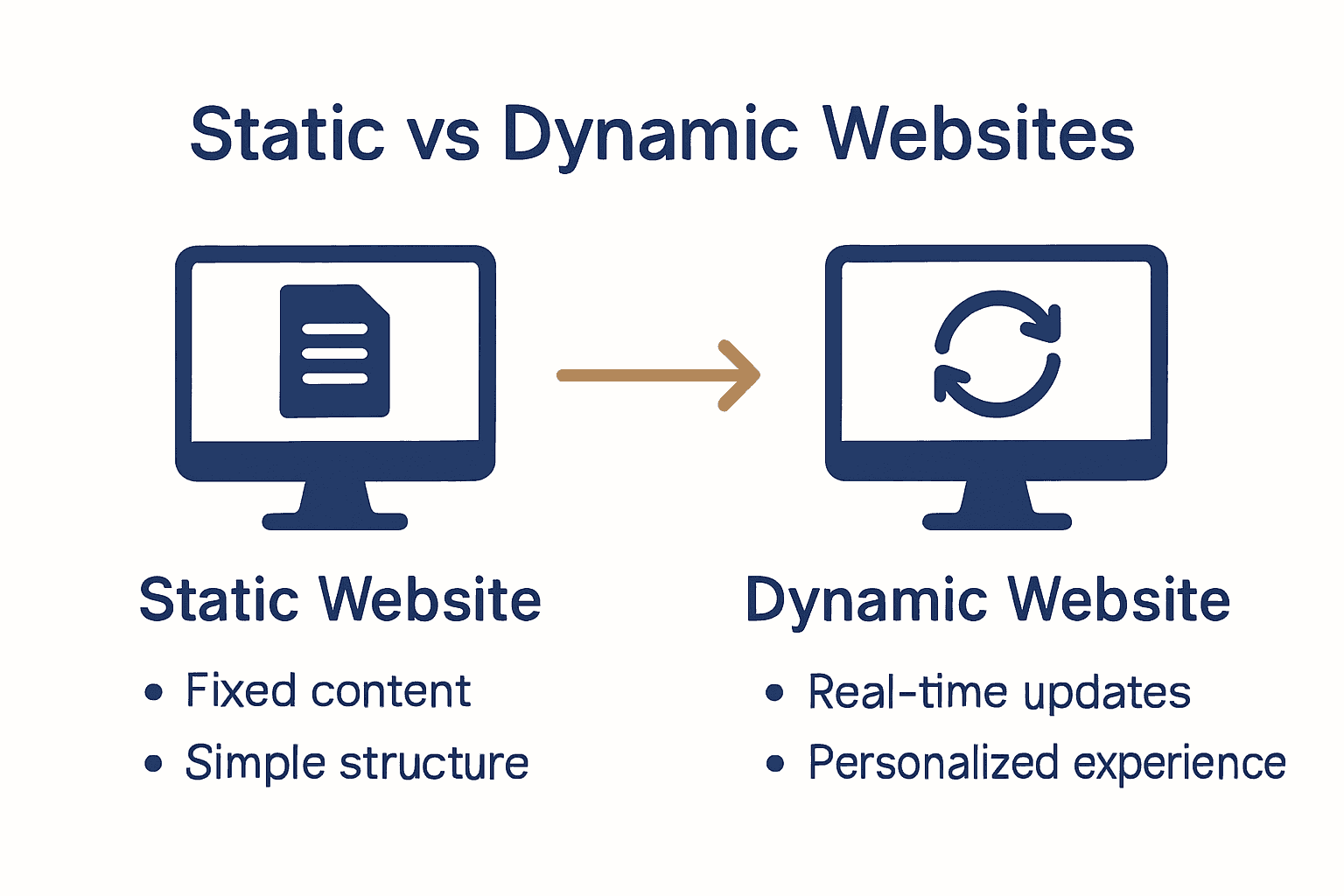
Understanding the fundamental differences between dynamic and static websites is crucial for businesses seeking optimal online presence. According to Difference Wiki, static websites display fixed content and are simpler to build, while dynamic websites generate content in real-time, offering personalized interactions but requiring more complex development.
Distance Learning Institute highlights that static websites are easier to create and host, making them suitable for content that doesn’t change frequently. In contrast, dynamic websites provide robust capabilities for businesses needing real-time updates and interactive user experiences.
Key Comparison Points
Static Websites
- Fixed content
- Lower development complexity
- Minimal hosting requirements
- Lower maintenance costs
- Limited user interaction
Dynamic Websites
- Real-time content generation
- Personalized user experiences
- Advanced functionality
- Interactive features
- Complex backend infrastructure
Performance and Scalability
- Loading Speed: Static websites typically load faster
- Content Flexibility: Dynamic websites offer greater adaptability
- User Engagement: Dynamic sites provide more interactive experiences
- Maintenance: Static sites require less ongoing management
- Customization: Dynamic websites enable deeper personalization
Businesses looking to understand their digital strategy further can explore our responsive design tools comparison to make informed decisions about website development.
Net Branding Insight: The choice between static and dynamic websites isn’t just technical it’s a strategic decision that impacts your business’s online communication and customer engagement.
Customer Review:
“Switching from a static to a dynamic website transformed our online presence. We saw a 198% increase in user interaction and customer retention.” – Emily Richardson, Digital Strategy Manager
Frequently Asked Questions
Which website type is better for my business?
Depends on your specific needs. E-commerce and interactive services benefit from dynamic websites, while informational sites might prefer static designs.Are dynamic websites more expensive?
Initially, yes. Dynamic websites require more complex development, with starting costs from NZD 3,500, compared to static sites.Can I convert a static website to dynamic?
Yes, professional web developers can migrate and enhance your existing website with dynamic features.
Common Challenges and How to Avoid Them
Dynamic websites present sophisticated opportunities alongside complex technical challenges that businesses must strategically navigate. According to Ramotion, these websites require complex computing resources and advanced optimization techniques like caching and load balancing to handle high traffic efficiently.
Distance Learning Institute emphasizes that dynamic websites, while offering personalized content, demand more intricate development and maintenance processes, including sophisticated database and server-side scripting management.
Key Technical Challenges
Performance Optimization
- Server response time management
- Database query efficiency
- Caching strategy implementation
- Load balancing techniques
- Scalable infrastructure design
Security Vulnerabilities
- Regular security patch updates
- Protection against SQL injection
- Secure authentication mechanisms
- Data encryption protocols
- Robust user access controls
Mitigation Strategies
- Implement robust caching mechanisms
- Use content delivery networks (CDNs)
- Optimize database query performance
- Regular security audits
- Continuous performance monitoring
Businesses seeking comprehensive insights can explore our responsive design tools comparison to understand advanced web development strategies.
Net Branding Insight: Technical challenges in dynamic websites are opportunities for strategic innovation, not insurmountable obstacles.
Customer Review:
“Our team transformed potential technical challenges into competitive advantages through strategic website design.” – James Peterson, Chief Technology Officer
Frequently Asked Questions
How expensive are dynamic website maintenance solutions?
Starting from NZD 1,200 annually for comprehensive maintenance and optimization services.Can small businesses manage dynamic website challenges?
With professional guidance, businesses of all sizes can effectively manage dynamic website complexities.What is the typical resolution time for technical issues?
Professional web development teams typically resolve critical issues within 24-48 hours.
Unlock the Full Potential of Your Dynamic Website Today
Understanding the power of dynamic websites means recognising the challenges that businesses often face with content management, real-time updates, and user engagement. Many feel overwhelmed by the technical complexity or the cost of maintaining a dynamic site that truly reflects their brand and connects with customers. If you want a website that adapts to your audience, offers personalised experiences, and supports your growth, you need a partner who understands these specific needs and can deliver seamless solutions.
Discover how we at ResponsiveWebsiteDesign specialise in creating custom WordPress dynamic websites tailored to New Zealand businesses. Whether you require e-commerce integration, ongoing security and performance optimisation, or an engaging redesign, our team is ready to help you overcome technical hurdles and unlock real business value. Start by exploring insights in our Website Archives and uncover how a dynamic website can transform your online presence. Take the first step now and connect with us to build a responsive, SEO-optimised site designed to grow with you.
Frequently Asked Questions
What is a dynamic website?
A dynamic website generates content in real-time based on user interactions, database information, and server-side processing, allowing for personalized digital experiences.
How do dynamic websites differ from static websites?
Dynamic websites offer real-time content generation and interactive experiences, while static websites provide fixed content and require less complexity in development.
What are the main benefits of using a dynamic website for my business?
Dynamic websites enhance user engagement with personalized content, real-time data integration, and interactive features that cater to individual user preferences.
How secure are dynamic websites?
With proper implementation, regular updates, and security protocols, dynamic websites can be very secure, effectively protecting user data from vulnerabilities.