
Standing out in the crowded New Zealand market often feels impossible when your website design falls short. For small and medium business owners, losing potential customers to confusing navigation or slow-loading pages can be both frustrating and costly. Investing in professional design means transforming your website into a strategic asset that combines technical expertise, universal design principles, and compelling visuals to create a seamless eCommerce experience and build lasting trust with your audience.
Table of Contents
- What Sets Professional Design Apart
- How Expert Design Drives Business Growth
- User Experience, Brand Trust, And SEO Impact
- Key Differences: DIY Versus Professional Design
- Common Pitfalls When Skimping On Design
Key Takeaways
| Point | Details |
|---|---|
| Professional Design as a Strategic Asset | Investing in professional design enhances business communication and strengthens brand perception. |
| Impact on User Experience | Quality design improves user interaction, leading to higher customer satisfaction and loyalty. |
| Long-Term ROI of Design | Professional design ensures brand consistency and higher returns by minimizing future fixes and enhancing user engagement. |
| Avoiding Design Pitfalls | Skimping on design can result in significant hidden costs, negatively affecting conversion rates and brand credibility. |
What Sets Professional Design Apart
Professional design transcends basic visual creation, representing a strategic approach that transforms business communication and user experience. Unlike amateur designs, professional designers combine artistic skill with strategic understanding to deliver impactful visual solutions.
Professional designers distinguish themselves through several critical capabilities:
- Comprehensive user understanding through universal design principles
- Strategic visual communication aligned with business objectives
- Technical expertise in layout, color theory, and typography
- Ability to create inclusive designs serving diverse audiences
The hallmark of professional design lies in its intentionality. Where amateur designs might look attractive, professional designs are crafted to achieve specific business goals. Graphic designers create visual concepts that communicate ideas effectively, inspiring and captivating consumers through carefully selected elements.
Professional designers invest significantly in understanding target audiences. They meticulously analyse cultural contexts, user demographics, and psychological triggers to develop designs that resonate deeply. This approach ensures visual communication is not just aesthetically pleasing but strategically powerful.
Professional design transforms visual communication from decoration to strategic business asset.
Key technical differentiators include advanced skills in:
- Sophisticated layout techniques
- Precise color psychology application
- Advanced typography selection
- Responsive design principles
Net Branding recognises that professional design goes beyond mere aesthetics. It’s about creating visual narratives that connect emotionally with target audiences while meeting precise business communication objectives.
Pro Tip: Invest in professional design as a strategic business tool, not just a visual enhancement.
How Expert Design Drives Business Growth
Business growth in today’s competitive landscape demands more than traditional marketing strategies. Expert design emerges as a powerful catalyst for organisational advancement, transforming visual communication into a strategic business tool.
Professional design drives business growth through several critical mechanisms:
- Design-led innovation that opens new market opportunities
- Enhanced customer engagement through strategic visual storytelling
- Improved product-market alignment
- Differentiation from competitors through unique visual identity
By implementing human-centered design principles, businesses can create solutions that directly address customer needs. This approach goes beyond aesthetic appeal, focusing on developing products and services that solve real-world problems efficiently.
The strategic impact of expert design is multifaceted. Professional designers analyse market trends, user behaviours, and psychological triggers to create visual communications that resonate deeply with target audiences. This nuanced understanding enables businesses to communicate more effectively, build stronger brand connections, and ultimately drive revenue growth.
Expert design transforms business communication from a cost centre to a strategic growth engine.
Key growth strategies through professional design include:
- Developing intuitive user interfaces
- Creating memorable brand experiences
- Simplifying complex information
- Generating emotional connections with customers
Net Branding understands that design is not just about looking good—it’s about creating meaningful connections that translate directly into business performance and market success.
Pro Tip: Treat design as a strategic investment, not just a visual expense.
User Experience, Brand Trust, And SEO Impact
User experience represents the critical intersection where design, technology, and customer perception converge. Effective digital interactions directly influence how customers perceive and engage with a brand, making professional design a pivotal factor in business success.
Key components of exceptional user experience include:
- Intuitive navigation pathways
- Responsive and accessible design
- Clear and compelling visual communication
- Seamless interaction across multiple devices
Professional design transforms user experience by creating strategic touchpoints that build brand trust. When websites and digital platforms communicate clearly and function smoothly, businesses signal reliability and competence to their audience.
The relationship between user experience, brand trust, and search engine optimization is intricate. Search engines increasingly prioritize websites that demonstrate superior usability, loading speed, and user engagement. This means that investing in professional design is not just about aesthetics—it’s about creating digital experiences that both users and algorithms appreciate.
Professional design bridges the gap between technical functionality and emotional connection.
Critical SEO and trust-building strategies through design include:
- Creating mobile-responsive layouts
- Optimising page load speeds
- Implementing clear navigation structures
- Ensuring content readability and accessibility
Net Branding recognises that modern businesses must view design as a strategic communication tool that goes far beyond visual appeal.
Below is a summary of how professional design enhances user experience, brand trust, and SEO performance:
| Area Improved | Professional Design Effect | Business Outcome |
|---|---|---|
| User Experience | Streamlines navigation and usability | Increased customer satisfaction |
| Brand Trust | Builds credibility and reliability | Higher customer loyalty |
| SEO Impact | Optimises site speed and structure | Improved search rankings |
Pro Tip: Prioritise user-centric design that speaks directly to your target audience’s needs and expectations.
Key Differences: DIY Versus Professional Design
Professional design represents a strategic approach that goes far beyond simple visual creation. Systematic design methodologies distinguish professional designers from do-it-yourself attempts, ensuring comprehensive and sophisticated outcomes for businesses.
Key differences between DIY and professional design include:
- Technical expertise and advanced skill sets
- Comprehensive understanding of user experience
- Strategic approach to visual communication
- Adherence to industry design standards
- Sophisticated problem-solving capabilities
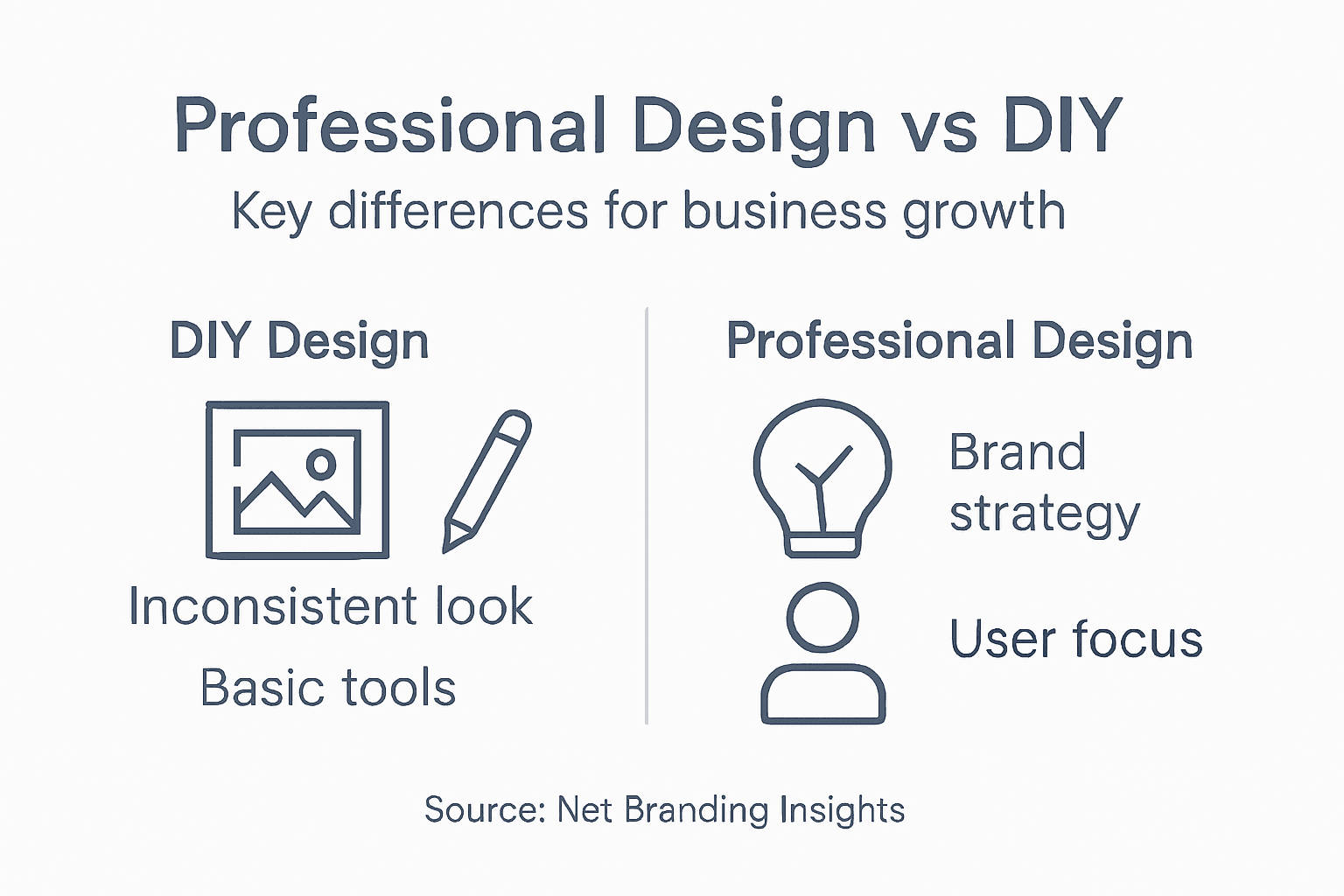
DIY design often emerges from good intentions but lacks the depth of professional expertise. Businesses attempting to create their own design solutions frequently encounter challenges such as inconsistent branding, poor user experience, and technical limitations that can undermine their professional image.
Professional designers bring specialised knowledge that transforms design from a mere visual exercise into a strategic business tool. They understand complex user interactions, implement universal design principles, and create solutions that are not just aesthetically pleasing but functionally superior.
Here’s a comparison of DIY versus professional design approaches and their business impact:
| Aspect | DIY Design | Professional Design |
|---|---|---|
| Brand Consistency | Often inconsistent | Always aligned with standards |
| User Engagement | Frequently limited | Designed for maximum impact |
| Technical Quality | Basic or unpolished | Advanced and refined |
| Long-term ROI | Typically low due to fixes | High via strategic focus |
DIY design represents enthusiasm, while professional design delivers strategic excellence.
Critical professional design advantages include:
- Comprehensive usability testing
- Advanced accessibility considerations
- Consistent brand representation
- Technically optimised digital experiences
Net Branding recognises that true design excellence requires more than creativity—it demands strategic thinking, technical proficiency, and a deep understanding of business objectives.
Pro Tip: Invest in professional design as a strategic business asset, not a cosmetic expense.
Common Pitfalls When Skimping On Design
Design shortcuts can devastate business performance in ways most entrepreneurs never anticipate. Overlooking user experience considerations represents a critical mistake that undermines digital effectiveness and customer engagement.
Common design pitfalls businesses encounter include:
- Inconsistent visual branding
- Poor user navigation pathways
- Inadequate mobile responsiveness
- Limited accessibility features
- Confusing information architecture
Businesses that attempt to minimise design investment frequently discover hidden costs far exceeding potential savings. Poorly designed digital platforms create friction points that drive potential customers away, reducing conversion rates and damaging brand perception.
Professional designers understand that effective design is more than aesthetic decoration. They strategically map user journeys, anticipate potential interaction challenges, and create intuitive experiences that guide customers seamlessly towards desired actions.
Cheap design is always the most expensive option in the long run.
Specific risks of inadequate design include:
- Reduced customer trust
- Lower conversion rates
- Increased customer frustration
- Diminished brand credibility
Net Branding recognises that design represents a strategic investment, not merely a visual expense. Quality design communicates professionalism, builds trust, and creates meaningful connections with target audiences.
Pro Tip: Invest in professional design as a strategic business asset that generates long-term returns.
Elevate Your Brand with Professional Website Design
Struggling to turn your business goals into impactful digital experiences is a common challenge faced by many. This article highlights the importance of strategic, user-focused professional design to build trust, improve user engagement and drive growth. If your website lacks consistency, responsiveness or SEO power you need solutions that align perfectly with your business objectives and audience needs.
ResponsiveWebsiteDesign specialises in creating visually engaging and SEO-optimised WordPress websites tailored for New Zealand businesses. Our expertise goes beyond aesthetics to deliver mobile responsive layouts, intuitive navigation and brand consistency that transform websites into strategic assets. Learn how we help businesses overcome common pitfalls and build websites that connect, convert and grow by exploring our Website Archives and discover insights from our Uncategorized Archives.
Ready to turn your design challenges into growth opportunities Act now to partner with ResponsiveWebsiteDesign and unlock the full potential of expert WordPress solutions designed to boost your brand, increase trust and enhance SEO performance. Contact us today and take the next step towards a professional website that truly works for your business.
Frequently Asked Questions
What is the difference between professional design and DIY design?
Professional design involves a strategic approach and technical expertise, leading to consistent branding, superior user experiences, and a higher return on investment, whereas DIY design often lacks this depth and can result in inconsistent and unpolished outcomes.
How does professional design contribute to business growth?
Professional design enhances business growth by creating unique visual identities, improving customer engagement, aligning products with market needs, and driving emotional connections with consumers, ultimately transforming design into a strategic asset for business success.
Why is user experience important in professional design?
User experience is crucial in professional design as it influences how customers perceive and interact with a brand. Great user experience ensures intuitive navigation, accessibility, and responsiveness, leading to increased customer satisfaction and retention.
How does professional design impact SEO performance?
Professional design positively impacts SEO performance by optimising site structure, improving loading speeds, and ensuring mobile responsiveness, which aligns with search engine algorithms that prioritise user-friendly websites.
Recommended
- Why Choose a Professional Web Agency: Complete Guide – ResponsiveWebsiteDesign
- Why Invest in Web Design: Complete Guide for Business – ResponsiveWebsiteDesign
- Why Invest in Web Design: Complete Guide for Business – ResponsiveWebsiteDesign
- How to Choose Website Layouts for Business Success – ResponsiveWebsiteDesign
- Mastering Success: Elevate Your Business with a Professional Phone Messaging System – Voipcom