
Over 60 percent of australian businesses still choose static websites for their simplicity and reliability. The need for fast-loading, secure online platforms is stronger than ever, especially with today’s short attention spans and rising security concerns. Static websites offer straightforward solutions for those who want dependable information delivery without complex backend systems. Discover why this classic website approach continues to meet the expectations of australian organisations focused on performance, security, and hassle-free management.
Table of Contents
- Static Websites Defined: Core Principles
- How Static Sites Differ From Dynamic Ones
- Key Benefits And Limitations For Business
- Common Use Cases And Modern Applications
- Static Versus WordPress And CMS Options
Key Takeaways
| Point | Details |
|---|---|
| Static Websites Offer Performance and Security | They provide faster load times and lower security risks due to their straightforward architecture. |
| Ideal for Stable Content | Best suited for portfolios and informational resources that do not require frequent updates. |
| Lower Hosting Costs | Typically less expensive to host compared to dynamic websites, making them cost-effective for small businesses. |
| Limited Interactivity | They cannot support features like user logins or real-time content personalisation, which are better suited for dynamic sites. |
Static Websites Defined: Core Principles
A static website represents a fundamental approach to web design characterised by fixed, predefined content delivered identically to every visitor. Websites composed of fixed content rely exclusively on HTML, CSS, and JavaScript without requiring complex server-side processing or database interactions.
Static websites function through pre-built HTML pages that remain constant regardless of user interaction. Unlike dynamic websites that generate content on-the-fly, static sites present identical information to all users. These websites are particularly suited for organisations needing straightforward, information-focused web presence such as portfolios, small business landing pages, or informational resources where content remains relatively unchanged.
The architecture of static websites offers compelling advantages. Websites built with fixed content structures deliver significantly faster load times and enhanced security compared to more complex web platforms. Their simplicity means reduced server resource requirements, lower hosting costs, and minimised vulnerability to potential security breaches. For businesses seeking a reliable, efficient online presence without frequent content updates, static websites provide an elegant solution.

Pro Web Design Tip: Carefully evaluate your content update frequency and functional requirements before selecting between static and dynamic website architectures to ensure optimal digital strategy alignment.
Net Branding Insight: Static websites remain an excellent choice for businesses prioritising performance, security, and cost-effectiveness in their digital presence.
How Static Sites Differ from Dynamic Ones
The fundamental distinction between static and dynamic websites lies in their content generation and delivery mechanisms. Websites with different architectural approaches fundamentally transform how digital content is presented and experienced by users.
Static websites deliver identical, pre-built content to every visitor without real-time customisation. These sites rely on fixed HTML files that remain constant regardless of user interaction. In contrast, dynamic websites generate personalised content through server-side processing, retrieving information from databases and adapting presentations based on user preferences, login status, or specific interactions. This means a dynamic website might show different content to different users, whereas a static site presents the same information universally.
Performance characteristics further highlight the differences between these web architectures. Content delivery mechanisms in web design demonstrate that static websites typically offer faster load times and superior security. Their simplicity means fewer computational requirements, reduced server load, and minimised potential security vulnerabilities. Dynamic websites, while offering rich interactivity and personalisation, require more complex backend infrastructure, database queries, and server-side scripting.
Pro Web Design Tip: Assess your specific business requirements carefully, considering factors like content update frequency, interactivity needs, and performance expectations when choosing between static and dynamic website architectures.
Net Branding Insight: Understanding the fundamental differences between static and dynamic websites enables businesses to make informed digital strategy decisions that align with their specific communication and user engagement objectives.
Here’s a concise comparison of static and dynamic websites to highlight their most important characteristics for business decisions:
| Characteristic | Static Websites | Dynamic Websites |
|---|---|---|
| Content Personalisation | Identical for all users | Customised for each visitor |
| Maintenance Requirements | Minimal updates needed | Frequent updates, higher complexity |
| Security Risk | Lower due to limited backend | Higher due to server/database exposure |
| Hosting Cost | Usually low, basic hosting sufficient | Higher, needs advanced infrastructure |
| Best Use Cases | Portfolios, brochures, landing pages | E-commerce, memberships, news portals |
Key Benefits and Limitations for Business
Static websites offer a strategic digital solution for businesses seeking streamlined online presence. Business website architectural considerations reveal critical trade-offs between simplicity and functionality that organisations must carefully evaluate.
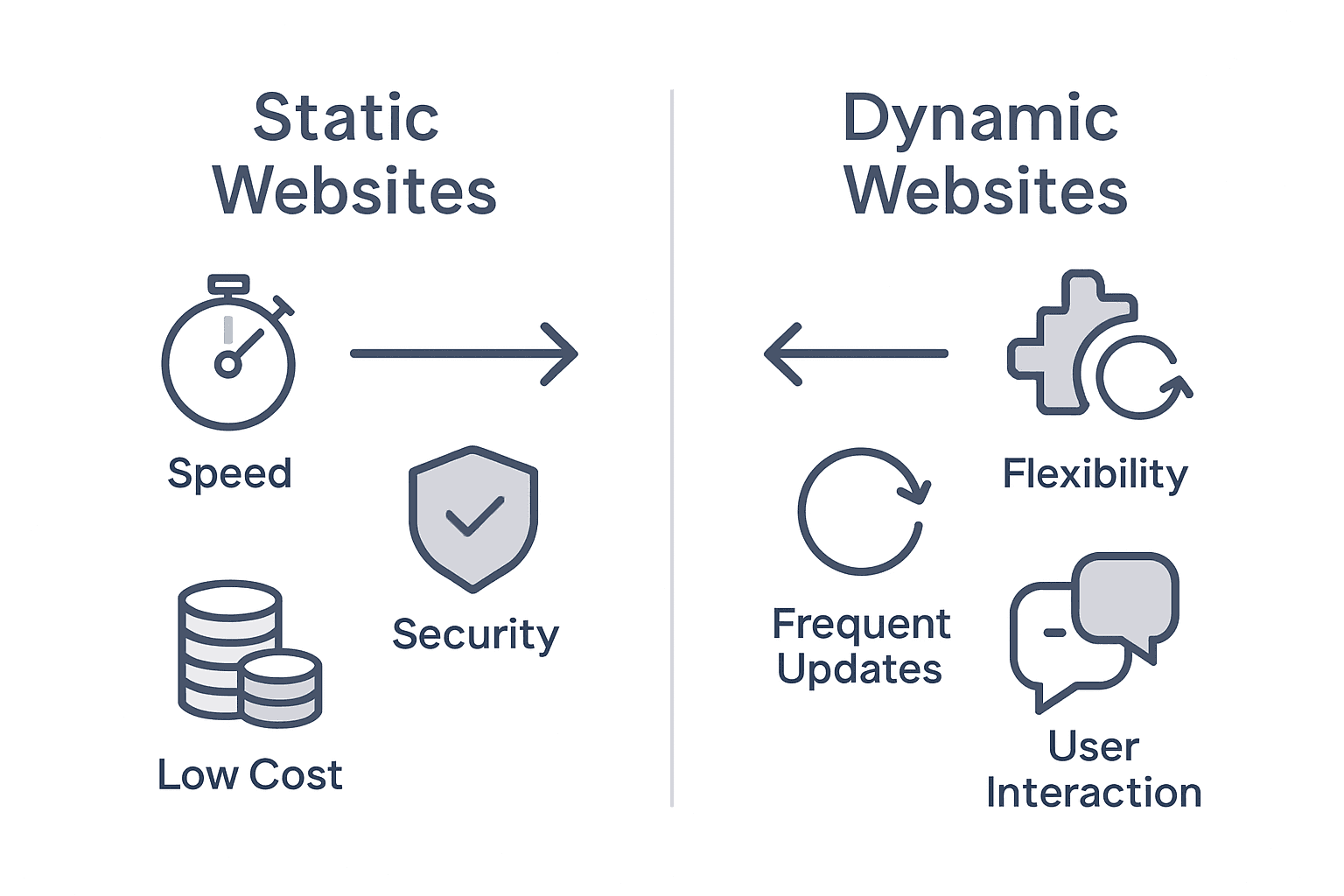
The primary advantages of static websites include dramatically reduced hosting costs, superior performance, and minimal maintenance requirements. These sites excel for businesses with relatively stable content such as professional portfolios, service brochures, or informational landing pages. Their lightweight architecture ensures rapid page load times, enhanced security, and reduced technical complexity. Small to medium enterprises can leverage static websites to establish professional digital footprints without substantial technical infrastructure investments.
Web design strategies for small businesses highlight significant limitations alongside these benefits. Static websites cannot support dynamic features like user accounts, real-time content personalisation, or complex interactive elements. E-commerce platforms, membership sites, or organisations requiring frequent content updates will find static websites restrictive. Businesses needing personalised user experiences, customer login systems, or database-driven content must consider alternative web architectures.
Pro Web Design Tip: Conduct a comprehensive audit of your business’s digital communication requirements before selecting between static and dynamic website frameworks to ensure optimal online strategy alignment.
Net Branding Insight: Successful digital presence demands strategic alignment between website architecture and specific business communication objectives.
Common Use Cases and Modern Applications
Static websites have evolved beyond simple informational platforms, finding innovative applications across diverse digital landscapes. Modern website design strategies reveal a range of compelling use cases that leverage their inherent strengths.
Professional portfolios represent a quintessential application for static websites. Freelance designers, photographers, writers, and consultants can showcase their work through visually stunning, performance-optimised sites that load instantaneously. Startup businesses and individual professionals can establish credible online presences without substantial technical investments. These websites excel at presenting curated content, displaying professional achievements, and creating powerful first impressions with minimal backend complexity.
Content presentation approaches for small businesses demonstrate that static websites are particularly effective for specific industry segments. Local businesses like cafes, tradies, consultancy firms, and small service providers can benefit from lightweight websites that communicate essential information rapidly. Marketing landing pages, event websites, documentation sites, and company brochure-style platforms find static architectures especially suitable. The ability to deploy secure, fast-loading websites with minimal maintenance makes static sites an attractive option for organisations seeking straightforward digital communication channels.
Pro Web Design Tip: Select static website architectures when your content remains relatively stable and prioritises speed, security, and simplicity over complex interactive features.
Net Branding Insight: Strategic website selection demands a nuanced understanding of your organisation’s digital communication requirements and user engagement objectives.
Static Versus WordPress and CMS Options
Content management systems represent a fundamental shift in website development approaches. Website architecture and content management strategies reveal critical distinctions between static websites and dynamic platforms like WordPress that fundamentally transform digital content creation and management.
WordPress and similar Content Management Systems (CMS) offer robust, feature-rich environments that enable non-technical users to create, modify, and manage website content without extensive coding knowledge. These platforms provide extensive plugin ecosystems, theme customisation options, and dynamic content generation capabilities that static websites cannot match. Businesses requiring frequent content updates, user interactions, e-commerce functionality, or complex website architectures typically find CMS platforms more suitable for their evolving digital communication needs.
Web platform selection considerations for businesses demonstrate that static websites remain compelling for specific use cases. While WordPress excels at dynamic content management, static websites provide unparalleled performance, enhanced security, and simplified maintenance. Small businesses, personal portfolios, and organisations with relatively stable content can leverage static website architectures to achieve faster load times, reduced hosting costs, and minimised technical complexity. The choice between static websites and CMS platforms ultimately depends on specific business requirements, content update frequency, and desired user interaction levels.
Pro Web Design Tip: Conduct a comprehensive assessment of your organisation’s digital communication needs, content update frequency, and technical capabilities before selecting between static websites and comprehensive CMS platforms.
Net Branding Insight: Strategic digital presence demands careful evaluation of website architecture, balancing technical capabilities with practical business communication objectives.
The following table summarises common business scenarios and suggests the website architecture best suited for each situation:
| Business Scenario | Recommended Site Type | Rationale |
|---|---|---|
| Small consultancy needing brochure site | Static website | Cost-effective and easy to maintain |
| Online shop requiring user logins | Dynamic/CMS | Supports personalisation and databases |
| Portfolio for a freelance photographer | Static website | Fast loading, rarely updated |
| Event registration with live updates | Dynamic/CMS | Requires user input and real-time data |
| Corporate news portal with frequent posts | Dynamic/CMS | Supports regular content updates |
Unlock the Power of the Right Website Architecture for Your Business
Understanding the difference between static and dynamic websites is crucial for building an effective digital presence. If you are challenged by frequent content updates, need enhanced security, or want to ensure exceptional performance, choosing the right website framework can feel overwhelming. This article highlights how static websites offer speed and simplicity but may lack dynamic features needed by growing businesses.
At Responsive Website Design we specialise in WordPress website design and development tailored to New Zealand businesses seeking a balance of engaging design, robust functionality, and ongoing support. Our solutions provide the customisation and scalability that static sites often cannot, especially if you require ecommerce capabilities, user interaction, or seamless content management. Discover how we combine responsive, SEO-optimised websites with secure ongoing maintenance so your site stays fast and relevant without the headaches of complex updates.
Explore our custom WordPress development to elevate your business beyond static limitations.
Take control of your online presence today and partner with experts who understand your digital goals. Visit Responsive Website Design to start building a website that grows with your business needs and delivers the professional impact your clients expect.
Frequently Asked Questions
What is a static website?
A static website is a type of web design characterised by fixed, pre-defined content that remains the same for every visitor. It primarily uses HTML, CSS, and JavaScript without requiring complex server-side processing or database interactions.
What are the main advantages of a static website?
Static websites offer several benefits, including faster load times, enhanced security, reduced hosting costs, and minimal maintenance requirements. They are ideal for organisations that need a straightforward online presence with relatively stable content.
How do static websites differ from dynamic websites?
Static websites deliver identical content to all users, using pre-built HTML files. In contrast, dynamic websites generate personalised content based on user interactions, database queries, and server-side processing, allowing for a more tailored user experience.
When should a business consider a static website over a dynamic one?
Businesses should consider a static website when they require a cost-effective, fast-loading, and low-maintenance web presence, particularly for stable content formats like portfolios, brochures, and informational landing pages.
Recommended
- What Is a Dynamic Website? Complete Guide for 2025 – ResponsiveWebsiteDesign
- Why Update Your Website: Complete Guide for 2025 – ResponsiveWebsiteDesign
- What Is Responsive Design? Complete Guide Explained – ResponsiveWebsiteDesign
- What Is Responsive Design? Complete Guide Explained – ResponsiveWebsiteDesign
- Understanding Essential Website Hosting Tips for Businesses|BM