
Rising cyber threats have put New Zealand small business owners on alert as hackers increasingly target WordPress sites with automated scans for weak points and vulnerable plugins. Protecting your website goes beyond simply avoiding attacks—it safeguards your reputation, maintains customer trust during online purchases, and supports your business continuity. By focusing on layered website security, you create a solid foundation that protects sensitive information and reassures customers, setting your business apart in the competitive digital marketplace.
Table of Contents
- Website Security Defined For Small Business
- Frequently Asked Questions
- How Hackers Target WordPress And Ecommerce Sites
- Frequently Asked Questions
- The Big Impact: Data Protection And Legal Risks
- Frequently Asked Questions
- Costs Of Breaches Versus Security Investment
- Frequently Asked Questions
- How Security Builds Trust And Supports SEO
- Frequently Asked Questions
Key Takeaways
| Point | Details |
|---|---|
| Importance of Website Security | Robust website security is crucial for small businesses to protect digital assets and maintain customer trust. |
| Cost of Security vs. Breaches | Investing in proactive cybersecurity measures is significantly cheaper than the potential costs associated with data breaches. |
| Common Threats | Small businesses should be aware of prevalent cyber threats like malware and phishing and implement preventive strategies. |
| SEO and Trust Relationship | Enhanced website security can improve search engine rankings and user trust, benefiting online visibility and business success. |
Website Security Defined For Small Business
Website security represents a comprehensive strategy for protecting digital assets, online infrastructure, and sensitive business information from potential cyber threats. For New Zealand small businesses, understanding and implementing robust security measures is no longer optional but a critical necessity in today’s interconnected digital landscape.
At its core, website security encompasses multiple protective layers designed to safeguard websites from unauthorized access, data breaches, malware infections, and potential digital vulnerabilities. Practical cybersecurity frameworks provide structured approaches for businesses to systematically identify, assess, and mitigate potential digital risks. These frameworks help small businesses develop comprehensive strategies that align with their specific operational needs and technological capabilities.
The fundamental components of website security typically include several key elements. Businesses must implement robust SSL encryption to protect data transmission, regularly update software and plugins to address potential security gaps, utilise strong authentication mechanisms, and maintain comprehensive backup systems. Net Branding recommends small businesses prioritise these foundational security practices to create resilient digital infrastructures that protect both business operations and customer information.
Understanding the potential consequences of inadequate website security is crucial for Kiwi business owners. Cyber incidents can result in significant financial losses, reputational damage, and potential legal complications. Government cyber security guidance emphasises that effective cybersecurity enables business continuity and maintains customer trust, even for organisations without extensive technical expertise.
Pro Tip: Implement a quarterly security audit to proactively identify and address potential vulnerabilities in your digital infrastructure.
Frequently Asked Questions
How much does website security cost for small businesses?
Website security solutions can start from $49 NZD per month, depending on complexity and specific business requirements.What are the most common website security threats?
Most common threats include malware infections, phishing attacks, SQL injections, and brute force login attempts.Can I manage website security myself?
While basic security measures can be self-implemented, professional cybersecurity services are recommended for comprehensive protection.
How Hackers Target WordPress And Ecommerce Sites
WordPress and ecommerce websites represent prime targets for cybercriminals due to their widespread usage and potential vulnerabilities. These digital platforms store sensitive customer information, financial data, and offer multiple entry points for malicious actors seeking to exploit system weaknesses.

Sophisticated malware campaigns frequently target WordPress websites through advanced stealth techniques designed to establish persistent backdoor access. Hackers systematically scan for known vulnerabilities in plugins, themes, and core user management functions, allowing them to manipulate administrator privileges and inject malicious code undetected.
The attack methodologies employed by cybercriminals are remarkably systematic. Automated scanning techniques enable attackers to identify websites with known security gaps, particularly those running outdated plugins or misconfigured ecommerce platforms. These automated tools can rapidly probe thousands of websites, looking for specific vulnerabilities that allow remote code execution, data theft, or the potential to redirect customer transactions.
Ecommerce sites face particularly significant risks, as hackers often target payment gateways and checkout processes. Malicious actors may inject fraudulent scripts that capture credit card information, manipulate transaction details, or create backdoor access to entire website infrastructures. For New Zealand businesses, understanding these threat landscapes is crucial to implementing robust preventative security measures.
Here’s a summary of common cyber threats, their methods, and prevention tips for small business sites:
| Threat Type | How Attackers Target | Potential Impact | Prevention Tip |
|---|---|---|---|
| Malware Infection | Malicious code via plugins or downloads | Website disruption, data theft | Regular software updates |
| Phishing | Fraudulent login pages | Credential stealing, financial loss | Staff security awareness training |
| SQL Injection | Exploiting web forms | Data leaks, site takeover | Input validation, code reviews |
| Brute Force Attacks | Automated login attempts | Account compromise | Enforce strong password policies |
| Payment Gateway Hacking | Checkout code injection | Stolen customer details | Secure payment integrations |
Pro Tip: Conduct monthly comprehensive security audits of all WordPress plugins and ecommerce integrations to identify and patch potential vulnerabilities before attackers can exploit them.
Frequently Asked Questions
How quickly can hackers breach a WordPress site?
Most automated attacks can identify and exploit vulnerabilities within minutes of scanning a website.What are the most common WordPress security vulnerabilities?
Outdated plugins, weak authentication mechanisms, and unpatched core WordPress installations represent the most common entry points for hackers.How much does a serious security breach cost a small business?
A significant security breach can cost New Zealand small businesses anywhere from $10,000 to $100,000 NZD in direct and indirect damages.
The Big Impact: Data Protection And Legal Risks
Data protection represents a critical cornerstone of modern business operations, particularly for New Zealand enterprises navigating increasingly complex digital landscapes. The legal risks associated with mishandling customer information can lead to devastating financial and reputational consequences that extend far beyond immediate monetary penalties.
Small business data protection challenges require comprehensive strategies that address both regulatory compliance and potential cybersecurity vulnerabilities. Businesses must develop robust frameworks that protect sensitive customer information while maintaining transparency about data collection, storage, and usage practices. This involves implementing sophisticated security protocols, regularly updating data management systems, and ensuring clear communication with customers about their personal information.
The regulatory environment surrounding data protection continues to evolve rapidly. Data protection regulations now mandate businesses to implement stringent security measures, with potential penalties for non-compliance reaching substantial amounts. For New Zealand businesses, this means going beyond basic security measures and developing a proactive approach to data protection that considers both local and international regulatory requirements.
Net Branding recommends that businesses treat data protection as a fundamental business strategy rather than a mere compliance checkbox. This approach involves understanding the full lifecycle of customer data, implementing encryption technologies, conducting regular security audits, and maintaining transparent policies that build customer trust. The potential legal risks include significant financial penalties, potential lawsuits, and long-term damage to business reputation that can far outweigh the initial investment in robust data protection systems.
Pro Tip: Develop a comprehensive data protection policy that outlines clear procedures for data collection, storage, usage, and potential breach responses.
Frequently Asked Questions
What are the primary legal risks of poor data protection?
Legal risks include potential fines up to $100,000 NZD, legal action from affected customers, and potential business license revocations.How often should businesses review their data protection policies?
Businesses should conduct comprehensive reviews of their data protection policies at least annually or whenever significant technological changes occur.What is the most critical aspect of data protection for small businesses?
Implementing strong access controls, encryption, and regular security training for staff represents the most critical aspects of data protection.
Costs Of Breaches Versus Security Investment
The financial implications of cybersecurity are stark for New Zealand businesses, with potential breaches representing exponentially higher costs compared to proactive security investments. Small to medium enterprises often underestimate the true economic impact of digital vulnerabilities, mistakenly viewing cybersecurity as an unnecessary expense rather than a critical business protection strategy.
Small business data breach costs can range dramatically from $120,000 to $1.24 million, encompassing direct financial damages, legal expenses, revenue losses, and long-term reputational harm. These substantial financial risks underscore the importance of viewing cybersecurity as a strategic investment rather than an optional operational expense. Net Branding emphasises that the cost of prevention is invariably lower than the potential financial devastation of a comprehensive security breach.
Data breach research demonstrates that businesses deploying advanced security technologies can significantly mitigate potential financial risks. Proactive cybersecurity investments, including artificial intelligence and automated threat detection systems, enable faster breach identification and containment. For New Zealand businesses, this translates to reduced potential damages, faster recovery times, and maintained customer confidence during potential security incidents.
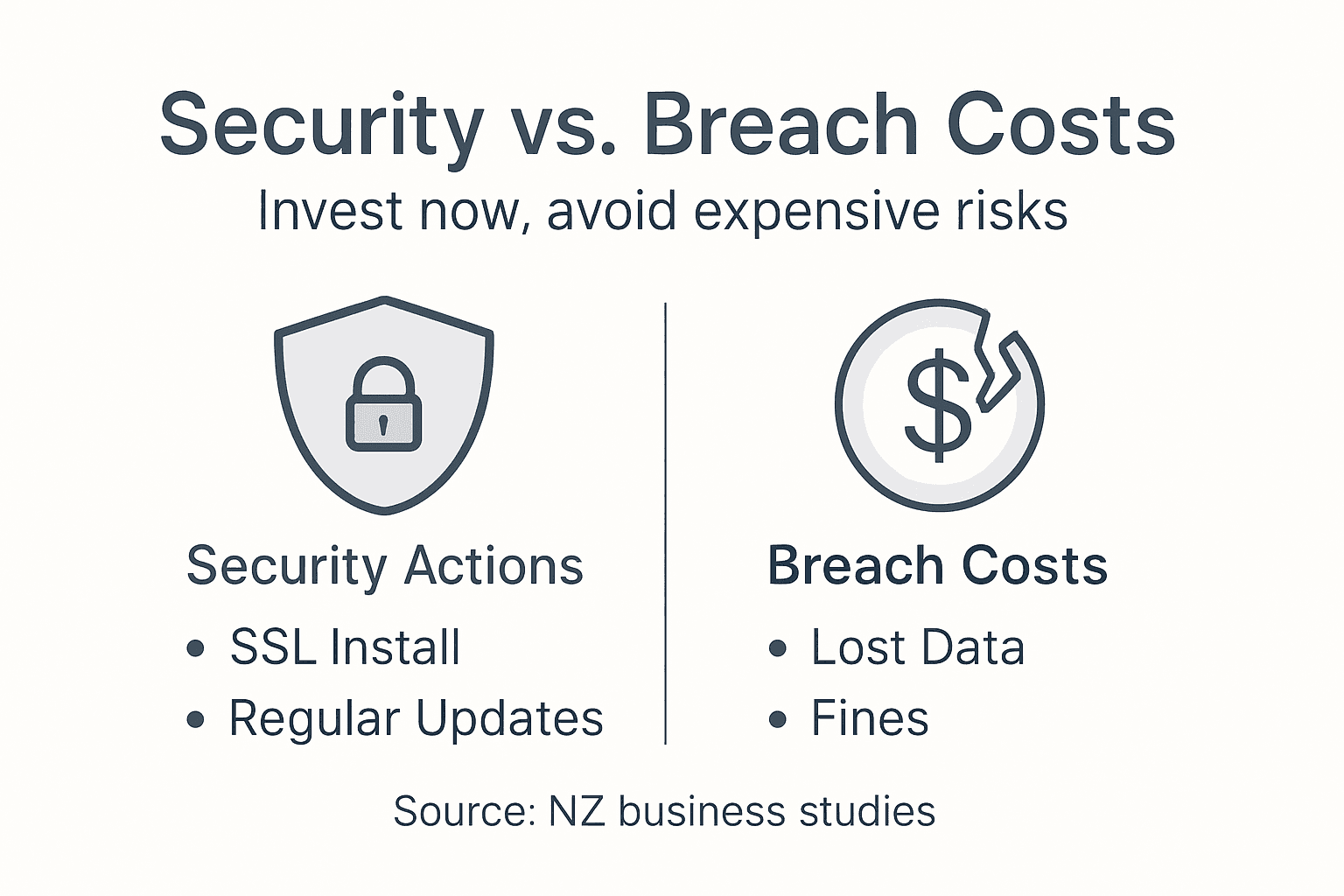
The economic calculus of cybersecurity investment becomes clear when examining the comprehensive costs associated with data breaches. Beyond immediate financial losses, businesses face increased insurance premiums, potential regulatory fines, customer churn, and diminished market reputation. Investing in robust security infrastructure represents a strategic decision that protects not just digital assets, but the entire operational ecosystem of a modern business.
Here’s a comparison of the true costs of a data breach versus regular security investment:
| Cost Factor | Data Breach Consequences | Proactive Security Investment |
|---|---|---|
| Upfront Cost | $120,000 – $1.24 million+ | $2,000 – $10,000/year |
| Reputational Damage | High, long-lasting | Low, bolsters brand trust |
| Legal and Regulatory Fines | Up to $100,000 NZD or more | Avoided/minimised |
| Business Continuity | Potential closure, downtime | Maintained, fewer disruptions |
| Customer Retention | Significant churn possible | Higher retention, trust |
Pro Tip: Allocate at least 10% of your annual IT budget specifically to proactive cybersecurity measures and continuous staff training.
Frequently Asked Questions
What percentage of small businesses recover after a major data breach?
Approximately 60% of small businesses close within six months of a significant data breach.How much should a small business invest in cybersecurity?
Small businesses should typically invest between $2,000 to $10,000 NZD annually in comprehensive cybersecurity measures.What are the most cost-effective cybersecurity investments?
Implementing multi-factor authentication, regular staff training, and maintaining updated security software represent the most cost-effective cybersecurity strategies.
How Security Builds Trust And Supports SEO
Website security represents a multifaceted strategy that directly impacts both user trust and search engine performance for New Zealand businesses. Modern digital consumers have become increasingly sophisticated in evaluating website credibility, making security an essential component of online success.
Search engine trust signals demonstrate that Google and other search platforms prioritise websites perceived as secure and reliable. Implementing robust security measures creates a positive feedback loop where enhanced protection translates into improved search rankings, lower bounce rates, and increased user engagement. This means that investing in comprehensive website security is not just a protective measure, but a strategic approach to digital marketing and online visibility.
Net Branding recognises that trust is built through multiple interconnected elements. Beyond basic security protocols like SSL certificates and HTTPS implementations, businesses must demonstrate transparency, maintain updated content, and provide clear contact information. Search engines reward websites that exhibit consistent, trustworthy behaviour by improving their organic search positioning. For New Zealand small businesses, this translates into a competitive advantage that extends beyond mere technical compliance.
The relationship between security and search performance is increasingly complex. Websites with strong security infrastructure signal to search engines that they are legitimate, professional operations committed to protecting user data. This commitment manifests through multiple technical and content-related factors, including fast loading speeds, mobile responsiveness, minimal security vulnerabilities, and a clean backlink profile. By prioritising comprehensive security strategies, businesses can simultaneously protect their digital assets and improve their online discoverability.
Pro Tip: Conduct quarterly security and SEO audits to identify and address potential vulnerabilities that could impact your website’s trust and search rankings.
Frequently Asked Questions
How quickly can security improvements impact SEO?
Security improvements can positively influence search rankings within 3-6 months of comprehensive implementation.What are the most critical security features for SEO?
SSL certificates, website speed, mobile responsiveness, and regular security updates represent the most critical security features.Do security badges actually improve user trust?
Visible security badges can increase user confidence by up to 42%, particularly for ecommerce and service-based websites.
Enhance Your Kiwi Business Website Security with Expert WordPress Solutions
Website security is not just a technical requirement it is a vital safeguard against costly cyber threats and legal risks for New Zealand businesses. After exploring key challenges like malware attacks, data breaches, and SEO impacts you understand how crucial it is to protect your digital presence and build trust with your customers. At Responsive Website Design, we specialise in developing secure, responsive, and optimised WordPress websites tailored to meet these exact needs.
Take control of your website’s security today by partnering with experts who prioritise both safety and performance. From custom WordPress development to ongoing security management and SEO optimisation, our solutions help you prevent breaches and elevate your online reputation. Discover more in our Website Archives and learn how comprehensive security can boost your digital footprint. Don’t wait for a breach to happen visit Responsive Website Design now and secure your business future with professional WordPress services designed for Kiwi companies.
Frequently Asked Questions
What is website security and why is it important for businesses?
Website security refers to the measures taken to protect digital assets and sensitive information from cyber threats, making it crucial for businesses to safeguard their operations and maintain customer trust.
What are common cybersecurity threats that businesses face?
Common threats include malware infections, phishing attacks, and SQL injections, all of which can compromise business operations and customer data.
How can small businesses implement effective cybersecurity measures?
Small businesses can implement effective measures by using SSL encryption, regularly updating software, enforcing strong password policies, and conducting security audits to identify vulnerabilities.
What are the potential consequences of inadequate website security?
Inadequate website security can lead to significant financial losses, reputational damage, and legal complications, resulting in a loss of customer trust and potential business closure.
Recommended
- Why Secure Your Website – Protecting NZ Businesses Online – ResponsiveWebsiteDesign
- Web Security Explained: Protecting Your Business Online – ResponsiveWebsiteDesign
- Top Small Business Website Solutions in New Zealand: Our Top Picks – ResponsiveWebsiteDesign
- Top Small Business Website Solutions in New Zealand: Our Top Picks – ResponsiveWebsiteDesign
- Why Build a Website: Boosting UK Small Businesses – Kefihub