
Business owners across New Zealand know the frustration of a website slowing down just when customer interest surges. Whether you’re expanding ecommerce offerings or expecting seasonal traffic, an unscalable website can hold you back. Focusing on website scalability means your platform can grow with your ambitions, handling more visitors and features without costly rebuilds or performance drop-offs. This guide unpacks practical methods and clear strategies to future-proof your digital presence as your business moves forward.
Table of Contents
- Website Scalability Explained For Small Business
- Types Of Website Scalability And Differences
- How Scalability Impacts Site Performance
- Common Pitfalls In Scaling WordPress Sites
- Building A Scalable Website For Business Growth
Key Takeaways
| Point | Details |
|---|---|
| Understanding Scalability | Small businesses must prioritise website scalability to manage increasing traffic and content demands effectively without performance loss. |
| Types of Scaling | Different scalability approaches—vertical, horizontal, and diagonal—offer varying benefits and trade-offs; choose based on growth needs and budget. |
| Performance Implications | Scalable websites enhance user experience, improve search engine rankings, and adapt quickly to market changes. |
| Regular Audits | Conduct regular performance audits and plan for technological upgrades to prevent bottlenecks and maintain optimal website functionality. |
Website scalability explained for small business
Small businesses seeking sustained digital success must understand website scalability – the ability to handle growing user traffic and content demands without compromising performance. Scalable website infrastructure enables businesses to expand online capabilities smoothly and efficiently.
Scalability isn’t just technical jargon – it’s a critical strategic approach that determines how your digital presence can adapt and grow. At its core, scalability means your website can seamlessly manage increased visitor numbers, additional features, and expanding content without experiencing slowdowns or complete system failures.
Key aspects of website scalability include:
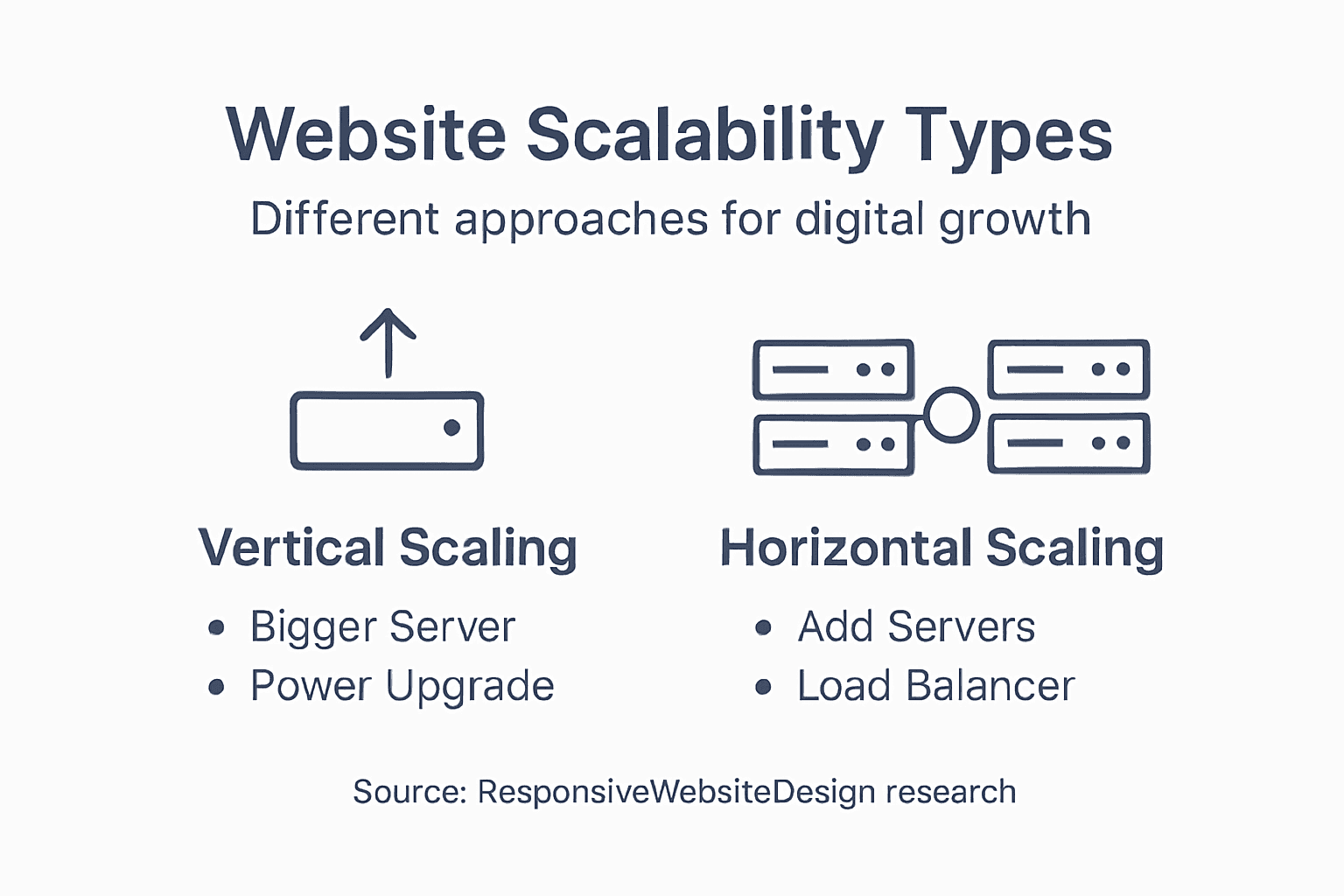
- Vertical scaling: Enhancing server power and computing resources
- Horizontal scaling: Adding multiple servers to distribute website load
- Feature scalability: Integrating new modules and functionality
- Data scalability: Managing growing amounts of digital content
- Operational scalability: Creating flexible systems that adapt to changing business needs
For New Zealand small businesses, scalability represents more than technical infrastructure – it’s about creating a digital platform that can support growth without constant expensive rebuilds. Scalable business models enable organisations to increase revenue without proportionally increasing operational costs.
Performance Considerations
When evaluating website scalability, businesses should assess:
- Current website architecture
- Expected growth trajectories
- Potential traffic increases
- Future feature requirements
- Budget for technological upgrades
Why Scalability Matters for NZ Businesses
Net Branding understands that scalable websites provide crucial advantages:
- Consistent user experience during growth phases
- Reduced long-term technological investment
- Faster adaptation to market changes
- Improved search engine rankings
- Enhanced customer engagement capabilities
Pro Tip: Regularly audit your website’s performance metrics and plan infrastructure upgrades before they become critical necessities.
By prioritising scalability from the outset, New Zealand small businesses can create robust digital platforms that grow alongside their ambitions.
Types of website scalability and differences
Understanding the different types of website scalability is crucial for New Zealand businesses seeking robust digital infrastructure. Website scalability approaches fundamentally revolve around three primary strategies: vertical, horizontal, and diagonal scaling methods.

Vertical scaling, often the first approach businesses consider, involves enhancing the capabilities of a single server by upgrading its core resources. This method means adding more CPU power, increasing RAM, or expanding storage capacity on an existing machine. While straightforward and initially cost-effective, vertical scaling eventually hits physical hardware limitations.
Key characteristics of scaling approaches include:
Here’s a comparison of scalability approaches and their business implications:
| Scaling Method | Key Benefit | Main Trade-off | Suitability for Growth |
|---|---|---|---|
| Vertical Scaling | Rapid resource boost | Hardware limits, bottlenecks | Early-stage websites |
| Horizontal Scaling | System resilience | Higher initial complexity | Ongoing expansion |
| Diagonal Scaling | Flexible adaptation | More complex management | Dynamic businesses |
- Vertical Scaling (Scale Up)
- Upgrade existing server resources
- Quick implementation
- Limited by hardware constraints
- Lower initial investment
- Horizontal Scaling (Scale Out)
- Add multiple servers
- Distribute workload across machines
- Improved system resilience
- Higher long-term flexibility
- Diagonal Scaling (Hybrid Approach)
- Combine vertical and horizontal methods
- Adaptable to changing business needs
- Balanced resource allocation
Performance and Scalability Considerations
Web application scalability techniques demonstrate that horizontal scaling offers significant advantages for growing businesses. By distributing website traffic across multiple servers, organisations can achieve:
- Enhanced system reliability
- Improved load handling
- Reduced risk of complete system failure
- Better performance during traffic spikes
- More efficient resource utilisation
Net Branding recognises that choosing the right scalability approach depends on several factors:
- Current website traffic volumes
- Expected growth rate
- Budget constraints
- Performance requirements
- Technological infrastructure
Pro Tip: Conduct regular performance audits and plan your scaling strategy proactively to avoid potential bottlenecks before they impact user experience.
By understanding these scalability types, New Zealand businesses can make informed decisions about their digital infrastructure, ensuring their websites remain responsive, reliable, and ready for future growth.
How scalability impacts site performance
Website performance is the critical foundation of digital success for New Zealand businesses. Web architecture scalability directly influences user experience, determining whether visitors stay engaged or abandon a slow-loading website within seconds.
Scalability fundamentally transforms how websites handle increasing traffic and complex user interactions. When a website cannot efficiently manage growing demands, performance deteriorates rapidly. This means slower page loads, increased latency, and potential system crashes that can irreparably damage user trust and search engine rankings.
Key performance impacts of scalability include:
- Reduced page load times
- Consistent user experience during traffic spikes
- Improved search engine visibility
- Enhanced site responsiveness
- Minimised system downtime
- Better resource utilisation
Technical Performance Factors
Scalable web architectures employ sophisticated strategies to maintain peak performance. These approaches ensure websites can handle sudden traffic increases without compromising speed or functionality. Critical techniques involve:
- Implementing robust load balancing
- Developing efficient caching mechanisms
- Optimising database queries
- Utilising cloud infrastructure
- Designing microservices architecture
Net Branding understands that performance scalability represents more than technical infrastructure. It’s about creating a digital ecosystem that grows seamlessly with your business, maintaining responsiveness and user satisfaction.
Additional performance considerations for New Zealand businesses include:
The following table summarises crucial website performance metrics for evaluating scalability:
| Performance Metric | What It Measures | Business Impact |
|---|---|---|
| Server Response Time | Speed of data delivery | Affects user satisfaction |
| Page Load Time | How quickly pages render | Influences bounce rates |
| Uptime Percentage | Reliability of access | Impacts trust and revenue |
| Resource Utilisation | Efficiency of resources | Lowers costs, improves speed |
- Monitoring server response times
- Tracking user experience metrics
- Implementing content delivery networks
- Regularly updating technological infrastructure
- Conducting periodic performance audits
Pro Tip: Invest in continuous performance monitoring tools that provide real-time insights into your website’s scalability and user experience.
By prioritising scalable design, New Zealand businesses can create robust digital platforms that adapt, perform, and grow consistently.
Common pitfalls in scaling WordPress sites
Scaling WordPress websites presents unique challenges for New Zealand businesses seeking robust digital infrastructure. WordPress scaling limitations reveal critical bottlenecks that can dramatically impact website performance and user experience.
The dynamic nature of WordPress means each page load triggers multiple database queries, creating potential performance vulnerabilities. When traffic increases, these inherent architectural constraints become more pronounced, leading to slower response times and potential site crashes. Understanding these limitations is crucial for proactive performance management.
Common WordPress scalability pitfalls include:
- Inefficient plugin configurations
- Excessive database queries
- Limited caching mechanisms
- Single point of failure in admin-ajax endpoints
- Unoptimised theme architectures
- Inadequate hosting infrastructure
Technical Performance Challenges
WordPress performance strategies highlight several critical areas where sites frequently encounter scalability issues. These technical challenges often emerge from:
- Poor database query optimization
- Lack of content delivery network (CDN) integration
- Inefficient caching strategies
- Unmanaged concurrent user loads
- Complex theme and plugin interactions
Net Branding recognises that WordPress scalability requires a holistic approach. Businesses must look beyond simple technical fixes and develop comprehensive performance strategies that anticipate growth and potential bottlenecks.
Additional scalability considerations for WordPress sites include:
- Regular performance audits
- Strategic plugin selection
- Implementing advanced caching mechanisms
- Choosing scalable hosting solutions
- Monitoring server response times
Pro Tip: Conduct quarterly performance reviews and progressively eliminate unnecessary plugins that might compromise your WordPress site’s scalability.
By understanding and proactively addressing these common pitfalls, New Zealand businesses can develop WordPress sites that remain responsive, reliable, and ready for sustained growth.
Building a scalable website for business growth
Scalable websites represent more than technical infrastructure – they are strategic digital assets for New Zealand businesses seeking sustainable growth. Scalable website architecture fundamentally transforms how organisations manage digital resources, enabling seamless expansion without compromising performance.
Building a scalable website requires a comprehensive approach that anticipates future business needs. It’s not just about handling increased traffic, but creating a flexible digital ecosystem that can adapt to changing market demands, user expectations, and technological advances.
Key scalability dimensions include:
- Functional scalability (adding new features)
- Data scalability (managing growing content)
- Geographic scalability (serving global audiences)
- Infrastructure scalability (supporting increased loads)
- Team scalability (enabling multiple developer interactions)
Architectural Foundations
Website scalability strategies emphasise several critical architectural patterns for sustained digital performance. These include:
- Separation of concerns
- Stateless design principles
- Multi-level caching mechanisms
- Asynchronous processing capabilities
- Microservices architecture
Net Branding understands that scalability goes beyond technical implementation. It’s about creating a digital platform that grows intelligently with your business, providing consistent user experiences while maintaining optimal performance.
Critical infrastructure considerations for scalable websites include:
- Containerisation technologies
- Auto-scaling cloud infrastructure
- Content delivery network (CDN) integration
- Comprehensive performance monitoring
- Flexible hosting solutions
Pro Tip: Implement modular design principles that allow individual components to be upgraded or replaced without disrupting the entire website ecosystem.
By prioritising scalability from the outset, New Zealand businesses can develop robust digital platforms capable of supporting ambitious growth trajectories.
Unlock Scalable Growth with Expert WordPress Solutions for NZ Businesses
Growing your website without sacrificing performance is a real challenge highlighted in this article. Many New Zealand businesses struggle with issues like slow page loads, limited feature scalability, and costly infrastructure upgrades. Key terms such as vertical and horizontal scaling, caching strategies, and performance audits underline the complexity but also the potential of scalable website design.
Imagine your website growing effortlessly while maintaining peak performance and user engagement. ResponsiveWebsiteDesign specialises in creating custom WordPress websites designed to scale with your business needs. Whether you require feature scalability, improved load handling, or a complete redesign, our team focuses on responsive, SEO-optimised, and user-friendly solutions tailored for long-term success.
Explore articles about Website Archives – ResponsiveWebsiteDesign for insights on ensuring your site never slows down as you grow.
Don’t let scalability challenges hold your business back. Visit ResponsiveWebsiteDesign today to get started on a website that grows alongside your ambitions. Discover how ongoing management, security, and performance optimisation can transform your digital presence into a reliable growth engine.
Frequently Asked Questions
What is website scalability?
Website scalability refers to a website’s ability to handle increasing user traffic and content demands without compromising performance, ensuring that organisations can maintain a robust digital presence as they grow.
What are the types of website scalability?
The main types of website scalability include vertical scaling (enhancing a single server’s resources), horizontal scaling (adding multiple servers to manage load), and diagonal scaling (a combination of both methods).
Why is scalability important for my business?
Scalability is crucial because it allows your website to manage growing visitor numbers and additional features reliably, providing a consistent user experience, reducing long-term costs, and improving search engine rankings.
How can I ensure my website is scalable?
To ensure your website is scalable, regularly audit its performance, invest in robust infrastructure, implement caching mechanisms, optimise your database, and consider cloud solutions that support flexible resource allocation.
Recommended
- Leading Web Development Companies in New Zealand – ResponsiveWebsiteDesign
- Leading Web Development Companies in New Zealand – ResponsiveWebsiteDesign
- Top Small Business Website Solutions in New Zealand: Our Top Picks – ResponsiveWebsiteDesign
- Top Small Business Website Solutions in New Zealand: Our Top Picks – ResponsiveWebsiteDesign