
Struggling to make your New Zealand business website accessible can feel overwhelming when technical terms stack up and regulations loom. Website accessibility standards matter because they set clear rules for allowing everyone to use your digital platforms, including those with disabilities. By focusing on Digital Inclusivity, you create online spaces that welcome a wider audience and reduce legal risks. This article helps clarify what accessibility standards mean and shows how meeting them leads to better user experience and compliance.
Table of Contents
- What Website Accessibility Standards Mean
- Key Types And Principles Explained
- Core Legal Frameworks In Australia And NZ
- Meeting Accessibility Requirements In Practice
- Risks, Penalties And Common Pitfalls
Key Takeaways
| Point | Details |
|---|---|
| Website Accessibility Standards | These standards ensure digital platforms are usable for all individuals, focusing on inclusivity regardless of physical abilities or technological limitations. |
| Core Principles of WCAG | The four principles—Perceivable, Operable, Understandable, and Robust—guide businesses in creating accessible digital experiences for diverse users. |
| Legal Frameworks | Australian and New Zealand regulations underscore the importance of compliance with accessibility standards to prevent legal risks and enhance digital inclusivity. |
| Business Benefits of Accessibility | Prioritising accessibility can improve user engagement, enhance brand reputation, and demonstrate a commitment to social responsibility. |
What Website Accessibility Standards Mean
Website accessibility standards represent a critical framework designed to ensure digital platforms remain usable and inclusive for all individuals, regardless of their physical capabilities or technological limitations. Web Content Accessibility Guidelines provide comprehensive technical specifications that transform how websites are developed and maintained.
At their core, these standards address multiple dimensions of digital interaction, focusing on making web content perceivable, operable, understandable, and robust for users with diverse abilities. This means creating digital experiences that can be:
- Accessed by people using screen readers
- Navigated without requiring precise mouse movements
- Understood with clear, simple language
- Compatible with assistive technologies
- Functional across different devices and browsers
The fundamental goal of website accessibility standards extends beyond technical compliance. Digital Inclusivity represents a fundamental human right in our increasingly online world. By implementing these guidelines, businesses demonstrate their commitment to serving all potential users, regardless of their physical capabilities.
Key Accessibility Considerations include:
- Providing text alternatives for images
- Ensuring keyboard navigability
- Creating sufficient colour contrast
- Supporting screen reader compatibility
- Designing clear, logical page structures
Net Branding recognises that accessibility is not just a regulatory requirement but a strategic business approach. Businesses that prioritise inclusive design often see improved user engagement, broader market reach, and enhanced brand reputation.
Pro tip: Conduct regular accessibility audits to identify and rectify potential barriers in your digital platforms.
Key Types And Principles Explained
The Web Content Accessibility Guidelines (WCAG) are structured around four fundamental accessibility design principles that transform digital experiences for users with diverse needs. These principles – Perceivable, Operable, Understandable, and Robust – form the backbone of inclusive web design, ensuring that digital platforms are genuinely accessible to everyone.
Each principle represents a critical dimension of digital interaction:
- Perceivable: Information must be presentable in ways all users can sense
- Operable: User interface components and navigation must be functional for everyone
- Understandable: Content and operations must be clear and predictable
- Robust: Content must be compatible with current and future assistive technologies
These principles go beyond simple compliance. They represent a comprehensive approach to creating digital environments that accommodate users with visual, auditory, motor, and cognitive differences. Net Branding recognises that true accessibility means designing with empathy, anticipating diverse user needs before they become barriers.
Practical Implementation Strategies for these principles include:
- Adding alternative text for images
- Ensuring keyboard-navigable interfaces
- Using clear, simple language
- Providing multiple ways to access information
- Supporting screen reader compatibility
Accessibility is not a feature – it’s a fundamental requirement of digital design.
By embracing these principles, New Zealand businesses can create more inclusive digital experiences that not only meet legal standards but also demonstrate genuine commitment to serving all potential users.

Pro tip: Conduct regular accessibility testing with users who have different abilities to gain authentic insights into your digital platform’s usability.
Core Legal Frameworks In Australia And NZ
Navigating the legal landscape of digital accessibility requires a nuanced understanding of both Australian and New Zealand regulatory environments. Website compliance standards have become increasingly critical for businesses seeking to create inclusive digital experiences while mitigating potential legal risks.
In Australia, accessibility regulations are primarily guided by several key legislative frameworks:
- Disability Discrimination Act 1992: Mandates equal access to services, including digital platforms
- Web Accessibility National Transition Strategy: Provides guidelines for government websites
- Australian Human Rights Commission Act: Supports anti-discrimination principles in digital spaces
New Zealand’s approach similarly emphasises digital inclusivity through:
- Human Rights Act 1993: Prohibits discrimination based on disability
- New Zealand Bill of Rights Act: Ensures equal treatment and access
- Web Accessibility Standard: Requires government websites to meet international WCAG guidelines
Legal compliance is not just about avoiding penalties – it’s about creating genuinely inclusive digital experiences.
Net Branding recognises that these frameworks are more than bureaucratic requirements. They represent a fundamental commitment to ensuring digital platforms are accessible to all users, regardless of their physical or cognitive abilities. Small to medium enterprises must proactively integrate these standards to demonstrate social responsibility and avoid potential legal complications.
Key Compliance Considerations for NZ SMEs include:
- Understanding specific accessibility requirements
- Conducting regular digital accessibility audits
- Implementing WCAG 2.1 guidelines
- Training staff on inclusive design principles
- Documenting accessibility efforts
Pro tip: Consult with a digital accessibility specialist to develop a comprehensive compliance strategy tailored to your specific business needs.
To better understand regional accessibility obligations, here is a summary of key legal frameworks and their practical business impacts across Australia and New Zealand:
| Country | Main Regulation | Required Actions | Business Impact |
|---|---|---|---|
| Australia | Disability Discrimination Act | Provide equal access online | Avoid lawsuits, improve trust |
| Australia | Human Rights Commission Act | Support anti-discrimination | Protect reputation |
| New Zealand | Human Rights Act | Ensure digital inclusivity | Increase customer base |
| New Zealand | Web Accessibility Standard | Meet international guidelines | Reduce compliance risks |
Meeting Accessibility Requirements In Practice
Transforming digital platforms into genuinely accessible spaces requires a strategic and comprehensive approach. Web accessibility best practices involve systematic implementation of technical and design strategies that ensure inclusive user experiences across diverse abilities.
Practical implementation of accessibility standards encompasses several critical dimensions:
- Technical Modifications: Implementing specific coding and design interventions
- Content Strategy: Developing clear, understandable digital communication
- User Experience Design: Creating intuitive navigation and interaction pathways
- Assistive Technology Compatibility: Ensuring seamless integration with screen readers and alternative input devices
Net Branding recognises that accessibility is not a one-time checklist but an ongoing commitment to digital inclusivity. Small to medium enterprises must integrate accessibility into their core web development and content creation processes, viewing it as a fundamental aspect of quality digital design.
Key Practical Steps for SMEs include:
- Conduct comprehensive accessibility audits
- Implement WCAG 2.1 guidelines systematically
- Train development and content teams on inclusive design
- Use automated and manual testing tools
- Regularly update and review digital platforms
Accessibility is about creating digital experiences that work for everyone, not just compliance.
Technical considerations involve detailed interventions such as:
- Providing alternative text for images
- Ensuring keyboard navigability
- Creating sufficient colour contrast
- Implementing semantic HTML structures
- Supporting screen reader compatibility
Pro tip: Engage users with disabilities during your testing phase to gain authentic insights into real-world accessibility challenges.
Risks, Penalties And Common Pitfalls
Businesses operating in the digital landscape face significant challenges when neglecting website accessibility standards. Web accessibility legal risks can result in substantial financial penalties and reputational damage that far outweigh the initial investment in creating inclusive digital platforms.
The potential consequences for non-compliance encompass multiple critical areas:
- Legal Liability: Potential lawsuits under discrimination legislation
- Financial Penalties: Substantial fines and potential compensation claims
- Reputation Damage: Loss of customer trust and market credibility
- Competitive Disadvantage: Reduced accessibility limiting potential customer engagement
Net Branding recognises that accessibility failures often stem from common misconceptions and overlooked technical details. Small to medium enterprises frequently encounter specific pitfalls that compromise their digital platforms:
Common Accessibility Mistakes include:
- Inadequate alternative text for images
- Poor keyboard navigation support
- Insufficient colour contrast designs
- Complex, unclear website navigation structures
- Lack of screen reader compatibility
Digital exclusion is not just a technical failure – it’s a fundamental breach of user rights.
The financial implications can be significant. A single accessibility lawsuit in New Zealand could potentially cost businesses upwards of 50,000 NZD in legal fees and potential settlements, not including potential brand reputation damage.
Technical Warning Signs businesses should monitor:
- Automated accessibility testing revealing multiple errors
- User complaints about website usability
- High bounce rates from users with assistive technology
- Inconsistent interface interactions
- Limited keyboard navigation options
Pro tip: Develop a proactive accessibility compliance strategy that includes regular professional audits and user testing with individuals using assistive technologies.
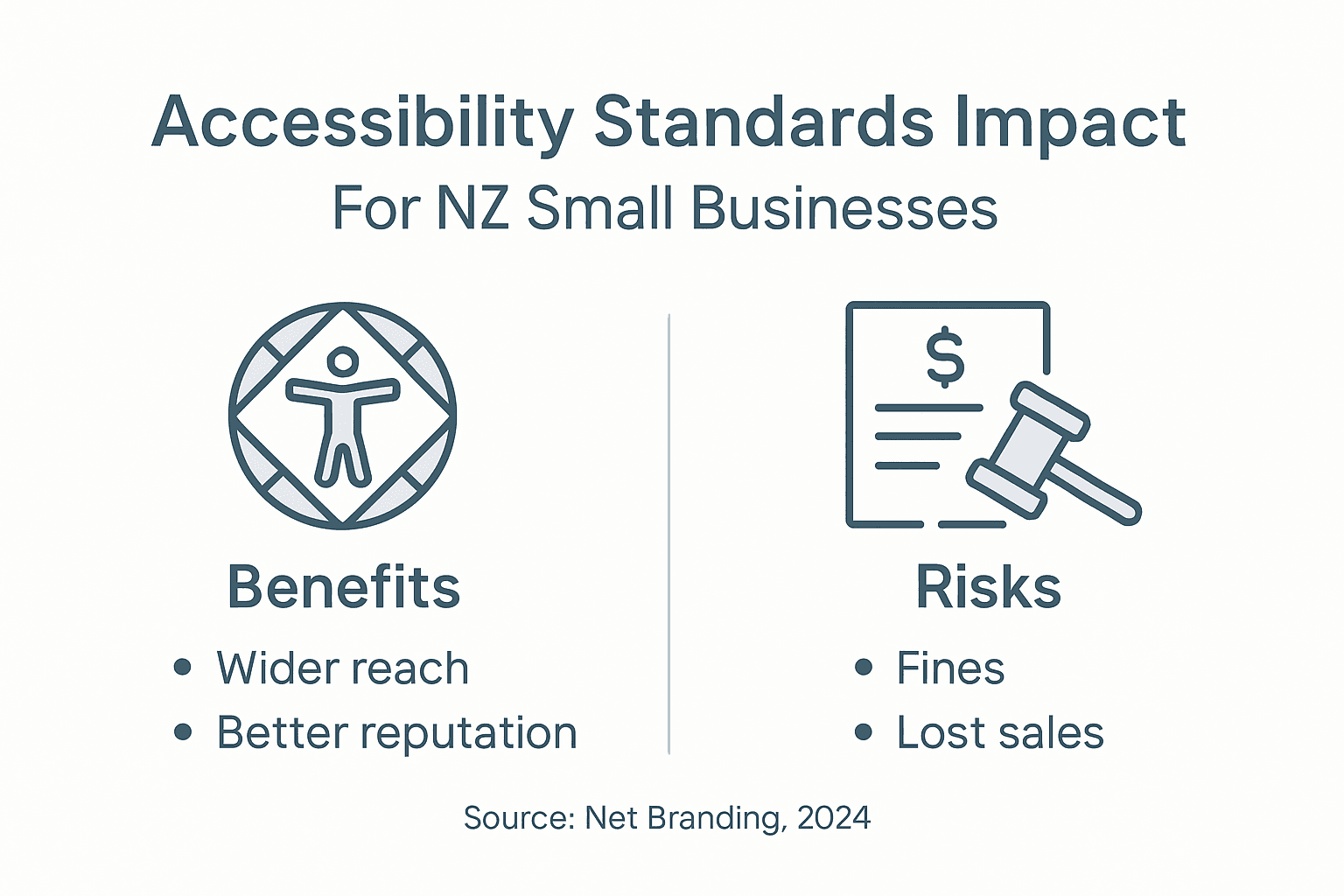
Here’s a comparison of the main business benefits and potential risks associated with website accessibility:
| Aspect | Benefits for Businesses | Risks of Neglecting Standards |
|---|---|---|
| Market Reach | Higher client diversity | Limited audience, lost sales |
| Brand Reputation | Enhanced public image | Negative publicity, trust decline |
| Legal Compliance | Mitigates legal action | Lawsuits, financial penalties |
| User Experience | Improved usability for all | Customer frustration, high bounce rate |
| Strategic Value | Demonstrates social responsibility | Competitive disadvantage |
Enhance Your Website Accessibility with Tailored WordPress Solutions
Struggling to meet the growing demands of website accessibility standards can feel overwhelming for many New Zealand small to medium enterprises. With key challenges like ensuring screen reader compatibility, keyboard navigability, and clear content structure, it is crucial to build digital platforms that comply with the latest WCAG guidelines while delivering a seamless user experience. At ResponsiveWebsiteDesign, we understand that accessibility is not just about compliance but about reaching a wider audience and protecting your brand reputation.
Explore our Website Archives – ResponsiveWebsiteDesign to discover how our expert team crafts accessible, responsive, and SEO-optimised WordPress websites tailored specifically for NZ businesses. Partner with us at https://responsivewebsitedesign.co.nz to turn your website into an inclusive digital space that meets legal frameworks and offers every visitor a user-friendly experience. Act now to future-proof your online presence and transform accessibility challenges into growth opportunities.
Frequently Asked Questions
What are website accessibility standards?
Website accessibility standards are guidelines designed to ensure that digital platforms are usable and inclusive for individuals with diverse physical capabilities and technological limitations. They aim to make web content perceivable, operable, understandable, and robust for all users.
Why is website accessibility important for small to medium enterprises (SMEs)?
Website accessibility is crucial for SMEs as it demonstrates a commitment to inclusivity, broadens market reach, and enhances brand reputation. Additionally, it helps to avoid legal risks and financial penalties associated with non-compliance.
What are the key principles of the Web Content Accessibility Guidelines (WCAG)?
The key principles of the WCAG are Perceivable, Operable, Understandable, and Robust (POUR). These principles ensure that information is accessible to users in various ways and can be navigated and understood across different devices and assistive technologies.
What are common pitfalls that SMEs should avoid in website accessibility?
Common pitfalls include inadequate alternative text for images, poor keyboard navigation support, insufficient colour contrast, and complex website navigation structures. These issues can hinder usability for individuals with disabilities and increase the risk of legal challenges.
Recommended
- Web Accessibility: Why It Matters for NZ Businesses – ResponsiveWebsiteDesign
- Website Accessibility How To for Business Owners – ResponsiveWebsiteDesign
- Website Compliance: Why It Matters for NZ Businesses – ResponsiveWebsiteDesign
- 7 Must-Have Website Features for NZ Business Success – ResponsiveWebsiteDesign
- Wix Accessibility Statement — A Nice to Have or a Must to Have?
- Complete Guide to International SEO Strategies – Jarrod Harman