
Almost 90 percent of customers now research businesses online before making a decision, including many australian visitors who view New Zealand brands as trusted options. Building a powerful digital presence is more than just setting up a website. It means actively shaping your reputation and visibility across every corner of the internet. This guide highlights essential strategies and common mistakes to help New Zealand business owners create a seamless user experience and maximise SEO impact using WordPress.
Table of Contents
- What Digital Presence Means For Businesses
- Core Elements Of A Strong Digital Presence
- How Digital Presence Impacts Business Growth
- Essential Strategies For Building Visibility
- Common Mistakes And Pitfalls To Avoid
Key Takeaways
| Point | Details |
|---|---|
| Importance of Digital Presence | A strong digital presence is essential for SMEs, as it builds credibility, engages customers, and expands market reach. |
| Core Elements | Key components include a responsive website, strategic social media activity, consistent brand messaging, and active reputation management. |
| Impact on Growth | Leveraging digital platforms significantly contributes to business growth by attracting new customers and creating sustainable revenue streams. |
| Common Pitfalls | Avoid inconsistent branding, neglecting engagement, and ignoring performance data to maintain a professional online reputation. |
What Digital Presence Means for Businesses
Digital presence represents a business’s entire online footprint and visibility in the digital ecosystem. It encompasses more than just having a website – it includes social media profiles, online reviews, digital marketing efforts, and how customers perceive and interact with a brand across digital platforms.
For Small and Medium Enterprises (SMEs), a digital presence is no longer optional but a critical business strategy. Establishing digital credibility allows businesses to reach wider audiences, build trust, and compete effectively in today’s interconnected marketplace. Potential customers instinctively research businesses online before making purchasing decisions, making a strong digital footprint essential for survival and growth.
A robust digital presence helps SMEs achieve multiple strategic objectives. It enables businesses to expand market reach beyond traditional geographical limitations, open new sales channels, and engage customers through multiple touchpoints. By leveraging digital platforms, companies can showcase their unique value proposition, share customer testimonials, and demonstrate expertise in ways that were impossible just a decade ago.
Modern businesses must understand that a digital presence is not just about being online, but about creating meaningful digital experiences that resonate with target audiences. This means developing responsive websites, maintaining active social media engagement, managing online reputation, and consistently delivering value through digital content.
Pro tip: Invest time in creating a comprehensive digital strategy that aligns your online presence with your business goals and target audience preferences.
Core Elements of a Strong Digital Presence
A strong digital presence goes beyond simply existing online. It requires strategic planning and consistent execution across multiple digital platforms. Businesses must create a cohesive and professional online identity that communicates their unique value proposition and builds trust with potential customers.
The fundamental elements of a robust digital presence include a professionally designed website, active and strategic social media profiles, and consistent brand messaging. Developing a professional digital identity involves carefully curating how your business appears and interacts across different online channels. This means ensuring your website is responsive, your social media profiles are up-to-date, and your content reflects your brand’s core values and expertise.
Key components of an effective digital strategy encompass several critical areas. These include search engine optimisation (SEO) to improve online visibility, content marketing that provides genuine value to your target audience, and maintaining a consistent brand voice across all digital touchpoints. Net Branding plays a crucial role in this process, helping businesses create a unified and recognisable online presence that resonates with potential customers.
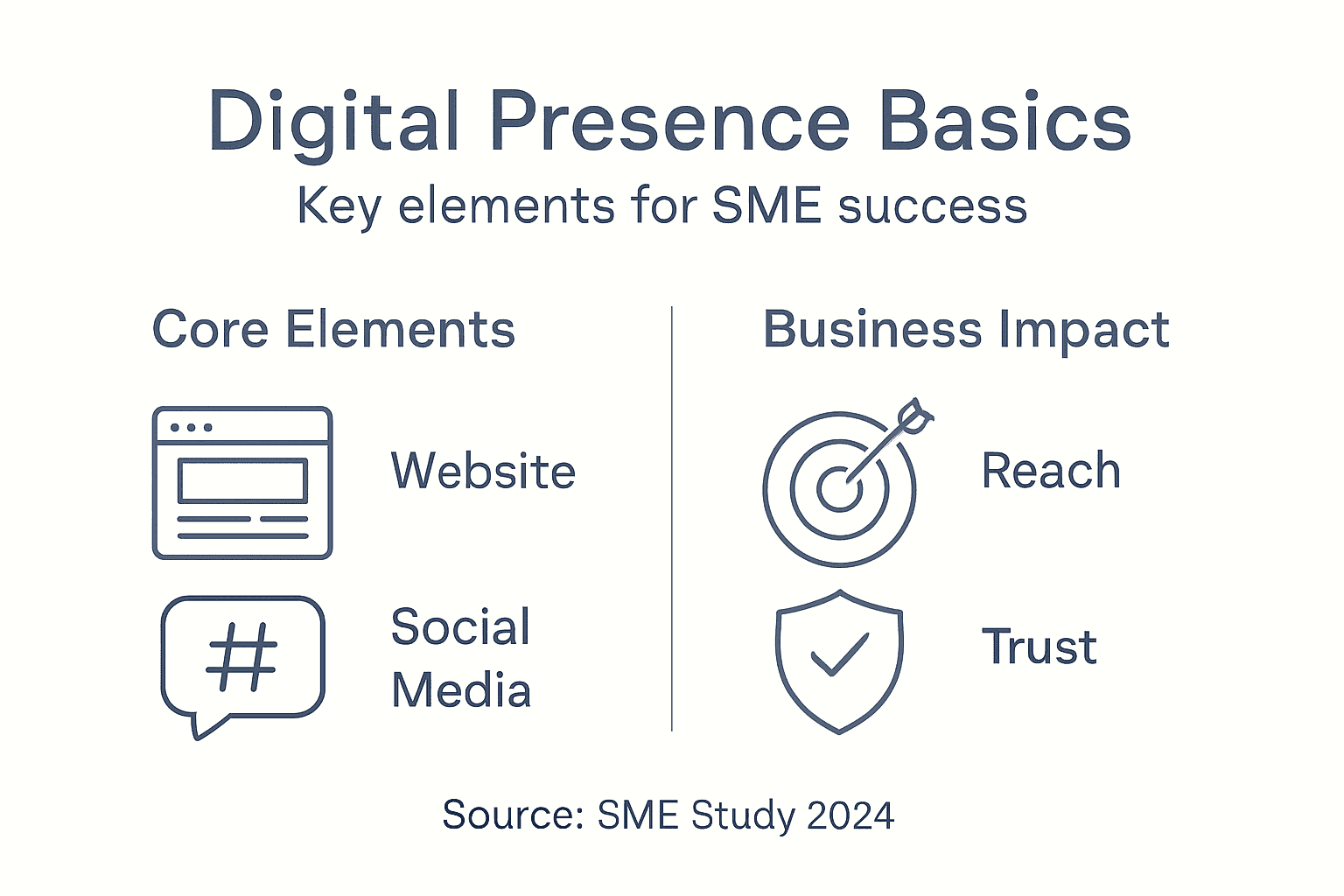
Businesses should also focus on managing their online reputation by monitoring customer reviews, engaging with feedback, and proactively addressing any negative perceptions. This involves regularly updating digital profiles, sharing authentic content, and demonstrating transparency and responsiveness in all online interactions.
Pro tip: Conduct a comprehensive digital audit every six months to ensure your online presence remains aligned with your current business goals and target audience expectations.
Here’s how four core elements of a strong digital presence contribute to business outcomes:
| Core Element | Main Function | Result for SMEs |
|---|---|---|
| Responsive Website | Ensures accessibility on any device | Increases customer engagement |
| Strategic Social Media | Builds community discussions | Enhances brand awareness |
| Consistent Brand Messaging | Establishes unified identity | Builds lasting customer trust |
| Active Reputation Management | Responds to reviews and feedback | Protects online credibility |
How Digital Presence Impacts Business Growth
Digital presence has transformed from a supplementary marketing tool to a critical driver of business growth. Small and Medium Enterprises (SMEs) that effectively leverage their online platforms can significantly expand their market reach, attract new customers, and create sustainable revenue streams beyond traditional business boundaries.

Breaking geographical barriers enables businesses to connect with potential customers globally, opening up opportunities that were previously inaccessible. This digital expansion means companies can operate 24/7, engage with customers in real-time, and implement targeted marketing strategies that directly contribute to business growth and competitive advantage.
A robust digital presence builds credibility and trust through professional websites, engaging social media content, and responsive customer interactions. By consistently delivering valuable content, businesses can establish themselves as thought leaders in their industry, attract higher-quality leads, and convert those leads more effectively. Net Branding plays a crucial role in this process, helping businesses create a cohesive and compelling online narrative that resonates with their target audience.
Moreover, digital platforms provide unprecedented insights through analytics, allowing businesses to understand customer behaviour, refine their marketing strategies, and make data-driven decisions. These insights help SMEs optimise their resources, reduce marketing costs, and create more targeted approaches to customer acquisition and retention.
Pro tip: Regularly analyse your digital performance metrics to identify strengths and areas for improvement, ensuring your online strategy remains dynamic and responsive to market changes.
Essential Strategies for Building Visibility
Building digital visibility requires a multifaceted approach that goes beyond simple online presence. Small and Medium Enterprises (SMEs) must develop strategic methods to stand out in an increasingly competitive digital landscape, ensuring their brand gets noticed by potential customers and industry peers.
Optimising search engine keywords plays a crucial role in enhancing online discoverability. This involves carefully selecting and integrating relevant terms into website content, metadata, and digital marketing materials that align with potential customer search behaviours. Net Branding emphasises the importance of creating a consistent message across all digital platforms to reinforce brand recognition and credibility.
Effective digital visibility strategies encompass multiple channels. This includes maintaining active and engaging social media profiles, producing high-quality content that provides genuine value, and leveraging professional networks to expand reach. Businesses should focus on creating multimedia content such as videos, infographics, and blog posts that demonstrate expertise and solve customer problems. Consistent, authentic communication helps build trust and positions the brand as an industry leader.
Moreover, businesses must invest in technical aspects of online visibility. This includes ensuring websites are mobile-responsive, loading quickly, and optimised for search engines. Regular performance analysis, tracking engagement metrics, and adapting strategies based on data insights are critical for maintaining and improving digital visibility in a rapidly evolving online environment.
Pro tip: Develop a content calendar that ensures regular, high-quality digital updates across all your online platforms to maintain consistent visibility and engagement.
Common Mistakes and Pitfalls to Avoid
Digital presence requires strategic navigation, and Small and Medium Enterprises (SMEs) often encounter significant challenges that can undermine their online effectiveness. Understanding and proactively addressing these common pitfalls is crucial for maintaining a professional and impactful digital reputation.
Maintaining consistent branding across different digital platforms is essential. Inconsistent messaging, visual identity, and tone can confuse potential customers and erode brand credibility. Net Branding emphasises the importance of developing a unified brand voice that remains recognisable and coherent whether communicating through websites, social media, or email marketing.
Many businesses make critical errors in their digital communication strategies. These include over-posting or under-posting content, neglecting audience engagement, and failing to analyse performance metrics. Businesses must strike a delicate balance between maintaining an active online presence and avoiding content saturation. This means creating high-quality, valuable content that genuinely serves audience needs, rather than posting for the sake of maintaining visibility.
Perhaps the most damaging digital mistakes relate to reputation management. Unprofessional online behaviour, inappropriate language, and poorly managed customer interactions can quickly damage a business’s digital reputation. Small businesses must approach their online presence with the same professionalism they would apply to in-person interactions, carefully curating content and responding to feedback with respect and thoughtfulness.
Below is a comparison of common digital presence mistakes and recommended preventative actions:
| Common Mistake | Why It Hurts | Preventative Action |
|---|---|---|
| Inconsistent branding | Confuses or alienates visitors | Regular brand guideline reviews |
| Neglecting engagement | Reduces trust and loyalty | Timely responses to comments |
| Over-posting content | Annoys or overwhelms audience | Monitor engagement and adjust |
| Ignoring performance data | Misses improvement chances | Review analytics quarterly |
| Unprofessional tone | Erodes reputation quickly | Set clear communication policies |
Pro tip: Conduct a quarterly digital audit to review your online content, engagement strategies, and brand consistency across all platforms.
Elevate Your SME Digital Presence with Expert WordPress Solutions
For SMEs striving to build a strong and engaging digital presence, having a responsive and SEO-optimised website is essential. This article highlights the challenges of creating consistent branding, managing online reputation, and expanding market reach—all critical factors that your website must address to succeed in today’s digital landscape. At ResponsiveWebsiteDesign, we specialise in tailored WordPress website design and development that transforms these challenges into opportunities. Our services focus on delivering visually engaging, mobile-friendly websites that reflect your brand’s identity and meet your business goals.
Ready to turn your digital presence into a powerful growth engine? Explore our Website Archives – ResponsiveWebsiteDesign to see the range of customised solutions we offer. Whether you are launching a new site or redesigning your existing one, our expert team supports you through every step including ongoing maintenance and SEO optimisation. Don’t wait for your competitors to outshine you online—visit ResponsiveWebsiteDesign now to get started on building a digital presence that makes your SME stand out and drives lasting success.
Frequently Asked Questions
What is digital presence and why is it important for SMEs?
Digital presence refers to a business’s entire online footprint, including its website, social media profiles, and online reputation. For SMEs, a strong digital presence is crucial for reaching wider audiences, building trust, and staying competitive in the market.
How can I improve my business’s digital presence?
To enhance your digital presence, focus on creating a professional website, maintaining active and engaging social media profiles, ensuring consistent branding across platforms, and regularly delivering valuable content that resonates with your target audience.
What are the core elements of a strong digital presence?
A robust digital presence includes four core elements: a responsive website that works on all devices, strategic social media engagement, consistent brand messaging, and proactive reputation management to address customer feedback and reviews.
How does digital presence impact business growth?
Digital presence drives business growth by expanding market reach beyond geographical limits, attracting new customers, building credibility and trust, and providing valuable insights through analytics to refine marketing strategies.
Recommended
- Website Strategy – Why It Matters for SME Success – ResponsiveWebsiteDesign
- Top Small Business Website Solutions in New Zealand: Our Top Picks – ResponsiveWebsiteDesign
- Top Small Business Website Solutions in New Zealand: Our Top Picks – ResponsiveWebsiteDesign
- 7 Essential Types of E-Commerce Sites for Small Businesses – ResponsiveWebsiteDesign
- Cyber Security Vulnerabilities – Why Brisbane SMEs Need Protection – IT Start