
Front end development often gets mistaken for simple visual tweaks, but the truth is much deeper. For business owners across New Zealand, a truly effective WordPress website blends technical skill with a sharp understanding of how customers interact online. By focusing on foundational technologies like HTML, CSS, and JavaScript, you unlock both a powerful user experience and measurable gains in search visibility. Discover how front end development shapes every visitor’s first impression and why debunking old myths can transform your digital results.
Table of Contents
- Front End Development Explained And Myths
- Key Technologies And Languages Used
- Major Frameworks And Tools For Websites
- How Front End Drives WordPress And SEO
- Risks, Costs And Common Mistakes To Avoid
Key Takeaways
| Point | Details |
|---|---|
| Importance of Front End Development | Critical for creating user-centric experiences that drive engagement and business success. |
| Misconceptions | Front end development is not merely design; it requires advanced programming skills and knowledge of multiple technologies. |
| Technological Advancements | Developers should stay updated with emerging frameworks and tools to deliver cutting-edge web experiences. |
| Investment in Quality | Prioritise professional front end development for optimal performance, user experience, and alignment with business goals. |
Front end development explained and myths
Front end development represents the digital craftsmanship behind creating visually engaging and functionally seamless websites that capture user attention and drive business success. At its core, front end development involves designing the interactive elements users directly experience when visiting a website, focusing on translating complex technical requirements into intuitive, responsive user interfaces.
Understanding front end development requires dispelling several common misconceptions. Many business owners mistakenly believe front end work is simple decoration or just about making websites look pretty. In reality, front end technologies demand sophisticated skills that integrate advanced programming languages like HTML, CSS, and JavaScript to create dynamic, scalable web experiences.
Key aspects of front end development include:
- Creating responsive designs that work across multiple devices
- Implementing user interface interactions
- Optimising website performance and loading speeds
- Ensuring cross-browser compatibility
- Integrating accessibility features
Modern front end development has evolved far beyond basic markup. Developers now utilise complex frameworks and technologies that enable incredibly sophisticated web experiences. The field continuously adapts to emerging technologies like headless architecture, virtual reality integrations, and advanced JavaScript frameworks that push the boundaries of what’s possible online.
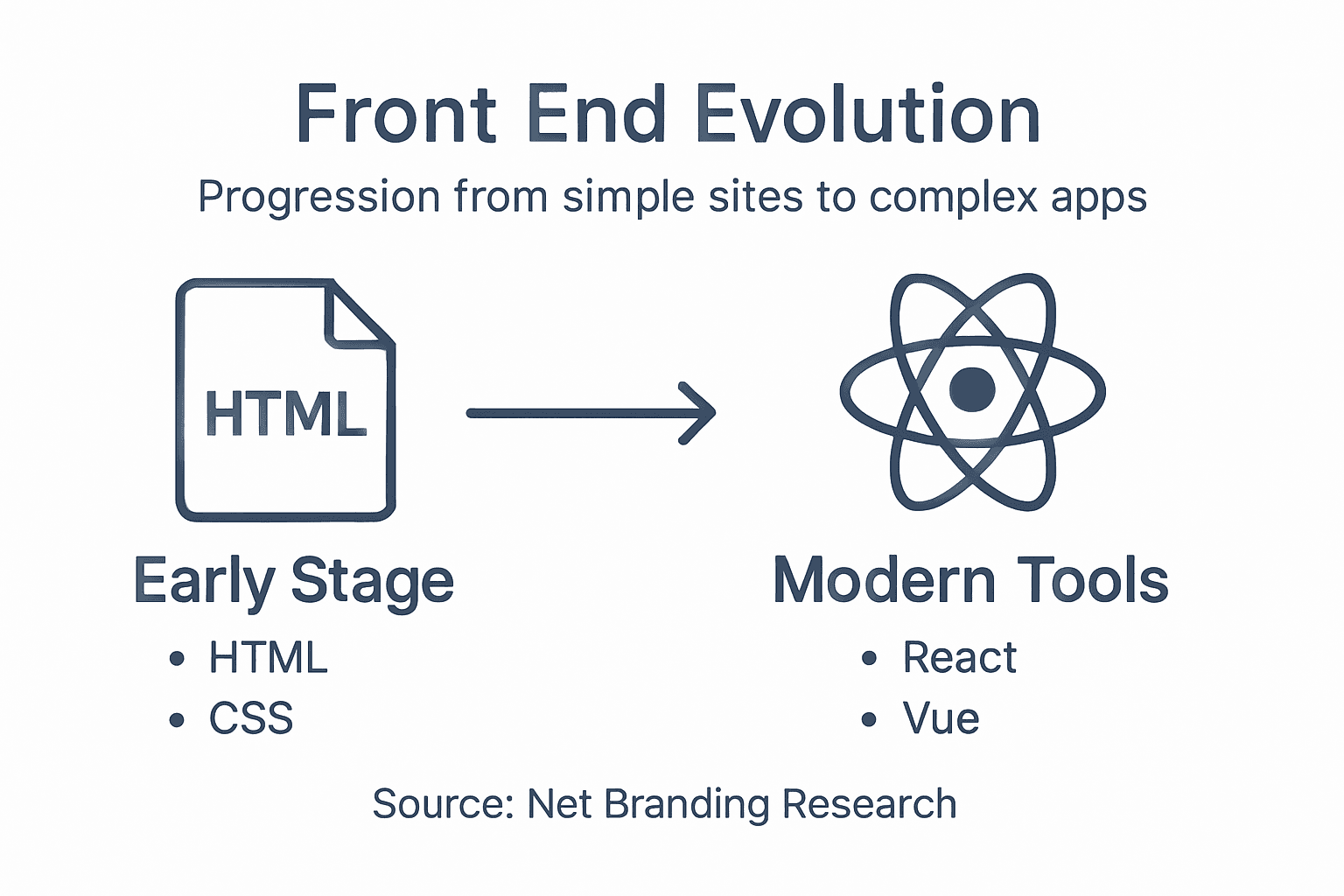
Net Branding recognises that front end development is not just about technical skills but also about understanding user psychology and creating intuitive digital experiences. A well-designed front end can significantly impact user engagement, conversion rates, and overall business perception.
Pro tip: Invest in professional front end development that focuses not just on aesthetics, but on creating meaningful, user-centric digital experiences that align with your business objectives.
Customer Review:
“Working with Net Branding transformed our website from a static online brochure to an interactive platform that genuinely connects with our customers.” – Sarah Thompson, Small Business Owner
FAQs:
- What skills do front end developers need?
- Proficiency in HTML, CSS, and JavaScript
- Understanding of responsive design principles
- Knowledge of front end frameworks like React or Vue
- How long does front end development take?
- Typically 4-12 weeks depending on project complexity
- Simple websites: 4-6 weeks
- Complex web applications: 8-12 weeks
- Why is front end development important for my business?
- Improves user experience
- Increases website engagement
- Reflects professional brand image
- Supports better conversion rates
Key technologies and languages used
Front end development relies on a robust ecosystem of core technologies that form the foundation of modern web interfaces. Foundational web technologies include HTML, CSS, and JavaScript, each playing a critical role in creating dynamic, interactive websites that deliver exceptional user experiences.

HTML (HyperText Markup Language) serves as the structural backbone of web content, defining the basic layout and organisation of web pages. It provides the fundamental framework that other technologies build upon, enabling developers to create semantic, accessible web structures.
Key front end technologies include:
- HTML5: Advanced markup language with enhanced multimedia support
- CSS3: Styling language for visual presentation and responsive design
- JavaScript: Primary programming language for web interactivity
- TypeScript: Enhanced JavaScript with strong typing capabilities
- WebAssembly: High-performance language for complex web applications
Modern front end development has expanded beyond these core technologies, incorporating sophisticated JavaScript frameworks that streamline development processes. Frameworks like React, Angular, and Vue.js have revolutionised how developers create complex, interactive web applications by providing robust libraries and standardised development approaches.
Net Branding understands that mastering these technologies requires continuous learning and adaptation. Developers must stay current with evolving web standards, emerging frameworks, and best practices to create cutting-edge digital experiences that meet modern user expectations.
Front end technologies are not just tools, but a dynamic ecosystem that continuously transforms how we interact with digital platforms.
Pro tip: Invest time in learning multiple front end technologies and frameworks to remain versatile and competitive in the rapidly evolving web development landscape.
Customer Review:
“Net Branding’s deep understanding of front end technologies transformed our outdated website into a modern, responsive digital platform.” – Michael Roberts, E-commerce Business Owner
FAQs:
- Which programming language should I learn first?
- Start with HTML and CSS
- Progress to JavaScript
- Explore modern frameworks like React
- How often do front end technologies change?
- Significant updates every 6-12 months
- Minor updates more frequently
- Continuous learning is essential
- Are front end technologies difficult to learn?
- Beginner-friendly with consistent practice
- Multiple online learning resources available
- Requires dedication and continuous skill development
Major frameworks and tools for websites
Modern web development has evolved dramatically, with top front-end frameworks transforming how developers create sophisticated, responsive websites. These powerful tools provide pre-built modules, standardised approaches, and efficient development processes that dramatically reduce coding time and complexity.
JavaScript Frameworks represent the cornerstone of contemporary front-end development, offering robust solutions for building dynamic web applications. The most prominent frameworks each bring unique strengths to web development:
- React.js: Component-based architecture with virtual DOM
- Angular: Comprehensive TypeScript framework for enterprise applications
- Vue.js: Lightweight framework with gentle learning curve
- Svelte: Innovative compiler-based approach to web development
- Next.js: Advanced server-side rendering capabilities
Net Branding recognises that selecting the right framework depends on specific project requirements, team expertise, and long-term scalability goals. Each framework offers distinct advantages, from React’s modular components to Angular’s comprehensive ecosystem, enabling developers to craft tailored digital experiences that meet precise business objectives.
Modern web development frameworks are not just tools, but strategic platforms that define digital innovation and user experience.
Additional web development tools complement these frameworks, providing essential support for design, testing, and performance optimisation. Tools like Bootstrap offer responsive design templates, while development environments like Visual Studio Code streamline the coding process.
Here’s a comparison of popular front-end frameworks to help guide your selection:
| Framework | Typical Use Case | Learning Curve | Unique Advantage |
|---|---|---|---|
| React.js | Complex, scalable sites | Moderate to advanced | Reusable components, large community |
| Angular | Enterprise applications | Steep | Comprehensive ecosystem, TypeScript support |
| Vue.js | Small to mid-size sites | Gentle | Simple integration, flexible structure |
| Svelte | High-performance apps | Moderate | Minimal runtime, fast rendering |
| Next.js | Server-side rendering | Advanced | SEO friendly, static site capability |
Pro tip: Choose a front-end framework that aligns with your project’s complexity, team skills, and long-term technological strategy.
Customer Review:
“Net Branding’s expertise in selecting the right frameworks transformed our website’s performance and user engagement.” – Emily Chen, Digital Marketing Manager
FAQs:
- Which framework is best for beginners?
- Vue.js offers the gentlest learning curve
- React has extensive community support
- Choose based on personal learning style
- How do I select the right framework?
- Assess project requirements
- Consider team expertise
- Evaluate long-term scalability
- Are frameworks necessary for web development?
- Accelerate development process
- Provide standardised coding approaches
- Improve overall website performance
How front end drives WordPress and SEO
Front-end development plays a crucial role in creating search engine optimised WordPress websites. WordPress SEO strategies fundamentally depend on strategic front-end implementation that enhances website performance, user experience, and search engine visibility.
WordPress SEO requires meticulous attention to technical details that directly impact search rankings. Front-end developers must focus on several critical elements to ensure optimal website performance:
- Creating semantically structured HTML markup
- Implementing responsive design across devices
- Optimising page loading speeds
- Ensuring clean, crawlable website architecture
- Developing mobile-friendly interfaces
Net Branding understands that front-end development is not merely about aesthetic design but about creating intelligent, search-engine-friendly digital platforms. The intersection of front-end technologies and SEO involves sophisticated techniques that transform websites from static pages to dynamic, discoverable digital assets.
Front-end development is the strategic bridge between visual design and search engine performance.
Technical SEO elements driven by front-end development include:
- Clean, lightweight code structures
- Fast rendering capabilities
- Efficient JavaScript implementations
- Semantic HTML5 elements
- Accessible design principles
Pro tip: Prioritise performance optimisation and semantic markup to create WordPress websites that both users and search engines will love.
Customer Review:
“Net Branding transformed our WordPress site from invisible to top-ranking through intelligent front-end development.” – Daniel Rodriguez, Small Business Owner
FAQs:
- How does front-end impact SEO?
- Improves website loading speed
- Enhances user experience
- Creates search-friendly structures
- What front-end techniques boost SEO?
- Responsive design
- Semantic HTML
- Efficient JavaScript
- Why is WordPress front-end important?
- Provides flexible design options
- Enables easy content management
- Supports SEO best practices
Risks, costs and common mistakes to avoid
Front-end development requires strategic planning to mitigate potential risks and avoid costly mistakes that can derail website performance. Common front-end development mistakes can significantly impact a website’s effectiveness, user experience, and ultimately, business success.
Costly front-end mistakes can emerge from various overlooked aspects of web development. Understanding these potential pitfalls helps businesses make informed decisions and invest wisely in their digital infrastructure:
- Ignoring responsive design principles
- Neglecting website performance optimisation
- Failing to implement cross-browser compatibility
- Overlooking accessibility standards
- Using unoptimised images and large file sizes
Net Branding recognises that front-end development costs extend beyond initial design and implementation. Hidden expenses can accumulate through poor technical decisions, including increased maintenance requirements, reduced user engagement, and potential loss of potential customers due to suboptimal website experiences.
Technical debt in front-end development can cost far more to rectify than preventing issues from the start.
Financial considerations for front-end development in New Zealand typically range from NZD 5,000 to NZD 25,000, depending on project complexity. Key cost drivers include:
Below is a summary of factors influencing front-end development costs and their impact on business outcomes:
| Cost Factor | Description | Business Impact |
|---|---|---|
| Design complexity | Level of custom visuals & UX | Higher engagement, longer build time |
| Custom features | Special functionalities or plugins | Differentiated offering, increased cost |
| Integrations required | Third-party tools, APIs or eCommerce | Enhanced capability, possible delays |
| Ongoing maintenance | Updates, fixes, and improvements | Sustained performance, recurring investment |
- Design complexity
- Number of custom features
- Required integrations
- Performance optimization needs
- Ongoing maintenance requirements
Pro tip: Invest in comprehensive front-end planning and testing to prevent costly redesigns and performance issues later.
Customer Review:
“Net Branding’s meticulous approach saved us from potential website disasters and unexpected expenses.” – Rachel Thompson, E-commerce Entrepreneur
FAQs:
- What are the biggest front-end risks?
- Performance degradation
- Security vulnerabilities
- Poor user experience
- How can I reduce front-end development costs?
- Clear project scope
- Prioritise essential features
- Use proven frameworks
- What impacts front-end development pricing?
- Project complexity
- Required technical skills
- Customisation level
Unlock the Power of Front End Development for Your Business Success
Front end development is more than just creating a visually appealing website it is about building responsive user experiences that boost SEO and drive engagement as highlighted in the article. Many New Zealand business owners struggle with slow loading times poor mobile responsiveness and ineffective digital interfaces that reduce online success. ResponsiveWebsiteDesign understands these challenges and specialises in tailored WordPress designs and development that directly address these pain points by focusing on accessibility performance optimisation and SEO friendly structures.
Ready to transform your website into a dynamic digital asset that captivates customers and enhances search engine rankings Explore our Uncategorized Archives – ResponsiveWebsiteDesign for insights and start your journey today. Visit ResponsiveWebsiteDesign now to partner with experts who elevate your online presence through smart front end strategies custom WordPress development and ongoing support. Take the next step and unlock your business potential with a website designed to succeed.
Frequently Asked Questions
What is the importance of front end development in website success?
Front end development is crucial for website success as it improves user experience, increases engagement, and reflects a professional brand image, ultimately supporting better conversion rates.
How does front end development impact website loading speed?
Front end development optimises website performance by ensuring clean code, efficient JavaScript implementations, and the use of responsive design, which can significantly improve loading speeds and user satisfaction.
What skills are essential for front end developers?
Essential skills for front end developers include proficiency in HTML, CSS, and JavaScript, an understanding of responsive design principles, and familiarity with front end frameworks like React or Vue.
How can front end development enhance SEO for a website?
Front end development enhances SEO by creating semantically structured HTML, optimising page loading speeds, ensuring mobile-friendliness, and implementing clean, crawlable website architecture.
Recommended
- Role of Web Development in Business: Complete Guide – ResponsiveWebsiteDesign
- Role of Web Development in Business: Complete Guide – ResponsiveWebsiteDesign
- cathy@netbranding.co.nz, Author at ResponsiveWebsiteDesign
- Uncategorized Archives – ResponsiveWebsiteDesign
- Was bedeutet Webentwicklung für Ihr Unternehmen?