
Most australian businesses have already tapped into Artificial Intelligence to make their websites smarter and more efficient. For Small and Medium Enterprises in New Zealand, ignoring this trend can mean losing ground in both user experience and search results. By adopting AI-driven design solutions, you can access powerful features often reserved for larger companies, boost engagement, and build a website that grows with your business demands.
Table of Contents
- Defining AI’s Impact On Modern Web Design
- Types Of AI Tools Used In Website Creation
- AI-Driven User Experience And Personalisation
- SEO Optimisation And Automated Content Creation
- Risks, Data Privacy And Legal Requirements
- Cost Savings And Common Mistakes To Avoid
Key Takeaways
| Point | Details |
|---|---|
| Impact of AI on Web Design | AI is transforming web design for SMEs, enabling personalised and adaptive user experiences that enhance engagement and conversion. |
| AI Tool Categories | Key AI tools like automated website builders and UX/UI design systems streamline development processes and improve design efficiency. |
| Personalisation through AI | AI technologies create dynamically tailored digital experiences by analysing user behaviour and preferences in real-time. |
| Cost Efficiency with Caution | While AI can significantly reduce web design costs, businesses should avoid overreliance on automation and maintain human oversight to ensure unique branding. |
Defining AI’s Impact on Modern Web Design
Artificial Intelligence is fundamentally transforming web design practices for Small and Medium Enterprises (SMEs), creating unprecedented opportunities for digital innovation and user engagement. By integrating advanced machine learning technologies, web designers can now develop more intelligent, responsive, and personalised digital experiences that dramatically improve user interaction and business performance.
The emergence of AI in web design represents a significant paradigm shift. Machine learning algorithms can now analyse user behaviour patterns, automatically generate design recommendations, and create adaptive interfaces that respond dynamically to individual user preferences. Web designers can leverage these technologies to create websites that are not just visually appealing, but strategically optimised for conversion and user satisfaction.
According to the W3C report on AI’s systemic web impact, artificial intelligence is reshaping web standards and interaction models. Modern AI tools enable SMEs to implement sophisticated design features previously accessible only to large corporations with extensive design budgets. These innovations include intelligent chatbots, personalised content recommendations, predictive user experience design, and automated design testing frameworks.
Net Branding recognises that AI-driven web design goes beyond aesthetic improvements. By utilising machine learning and predictive analytics, businesses can create websites that continuously learn and adapt to user needs, providing a more intuitive and engaging digital experience. This approach transforms websites from static digital brochures into dynamic, intelligent platforms that actively support business growth.
Pro tip: Start by integrating one AI-powered design tool into your web development process to experience incremental improvements in user engagement and design efficiency.
Types of AI Tools Used in Website Creation
The landscape of AI tools for website creation is rapidly evolving, offering Small and Medium Enterprises (SMEs) powerful technologies that dramatically simplify digital design processes. Comprehensive research reveals multiple categories of AI-powered website development tools that enable businesses to create sophisticated online platforms without extensive technical expertise.
These AI tools can be broadly categorised into several key functional groups. Automated Website Builders like Wix ADI use machine learning algorithms to generate complete website layouts, automatically selecting design elements, colour schemes, and content placements based on user inputs. Graphic Design AI tools such as Adobe Sensei help designers generate visual assets, create responsive design elements, and suggest creative improvements that enhance overall website aesthetics.
Moreover, advanced UX/UI design AI tools are transforming how websites are conceptualised and developed. These sophisticated platforms offer predictive user behaviour models, automated content generation capabilities, and intelligent design quality assessment mechanisms. Such tools enable businesses to create more intuitive, personalised digital experiences that adapt in real-time to user interactions.

Net Branding recognises that AI tools are not replacing human creativity but augmenting design capabilities. By integrating these intelligent technologies, SMEs can streamline website development processes, reduce design iterations, and create more engaging online experiences that effectively communicate their brand narrative and drive business objectives.
Here is a summary of common AI tool categories and their main benefits for SME web development:
| AI Tool Category | Key Function | Example Platform | Business Impact |
|---|---|---|---|
| Automated Website Builder | Generates site structure | Wix ADI | Rapid launch, less manual effort |
| Graphic Design AI | Visual asset creation | Adobe Sensei | Enhanced visuals, faster iterations |
| UX/UI Design AI | Predicts user interactions | Uizard, Figma | Improved engagement, better user flow |
| Content Generation AI | Drafts SEO-optimised articles | Jasper, Copy.ai | Higher rankings, streamlined content |
Pro tip: Experiment with AI design tools progressively, starting with simple features to understand their potential before fully integrating them into your web development workflow.
AI-Driven User Experience and Personalisation
Artificial Intelligence is revolutionising user experience design by enabling unprecedented levels of personalisation and adaptive interactions for Small and Medium Enterprises (SMEs). Advanced research reveals AI’s transformative potential in creating dynamic user journey mappings that fundamentally change how websites engage and retain visitors.
Personalisation Engines powered by machine learning algorithms can now analyse user behaviour in real-time, creating highly tailored digital experiences. These intelligent systems track multiple data points including browsing history, interaction patterns, demographic information, and past purchase behaviours to dynamically adjust website content, layout, and recommendations. By understanding individual user preferences, AI enables websites to present the most relevant information, products, and services precisely when users are most likely to engage.
Net Branding recognises that AI-driven personalisation extends beyond simple content recommendations. Advanced AI technologies can now predict user intent, anticipate potential friction points in the user journey, and proactively adjust website elements to improve overall user satisfaction. This might include dynamically changing navigation menus, suggesting contextually relevant content, or even adapting visual design elements to match individual user preferences.
The future of web design lies in creating intelligent, responsive digital experiences that feel uniquely crafted for each visitor. By leveraging AI technologies, SMEs can develop websites that not only look professional but also provide a deeply personalised interaction that increases engagement, reduces bounce rates, and ultimately drives conversions.
Pro tip: Start by implementing basic AI personalisation features like dynamic content recommendations to understand how these technologies can enhance your website’s user experience.
SEO Optimisation and Automated Content Creation
Artificial Intelligence is transforming search engine optimisation and content creation strategies for Small and Medium Enterprises (SMEs), offering powerful tools that streamline digital marketing efforts. Advanced AI technologies are revolutionising how websites generate SEO-friendly content, enabling businesses to achieve higher search rankings with significantly reduced manual intervention.
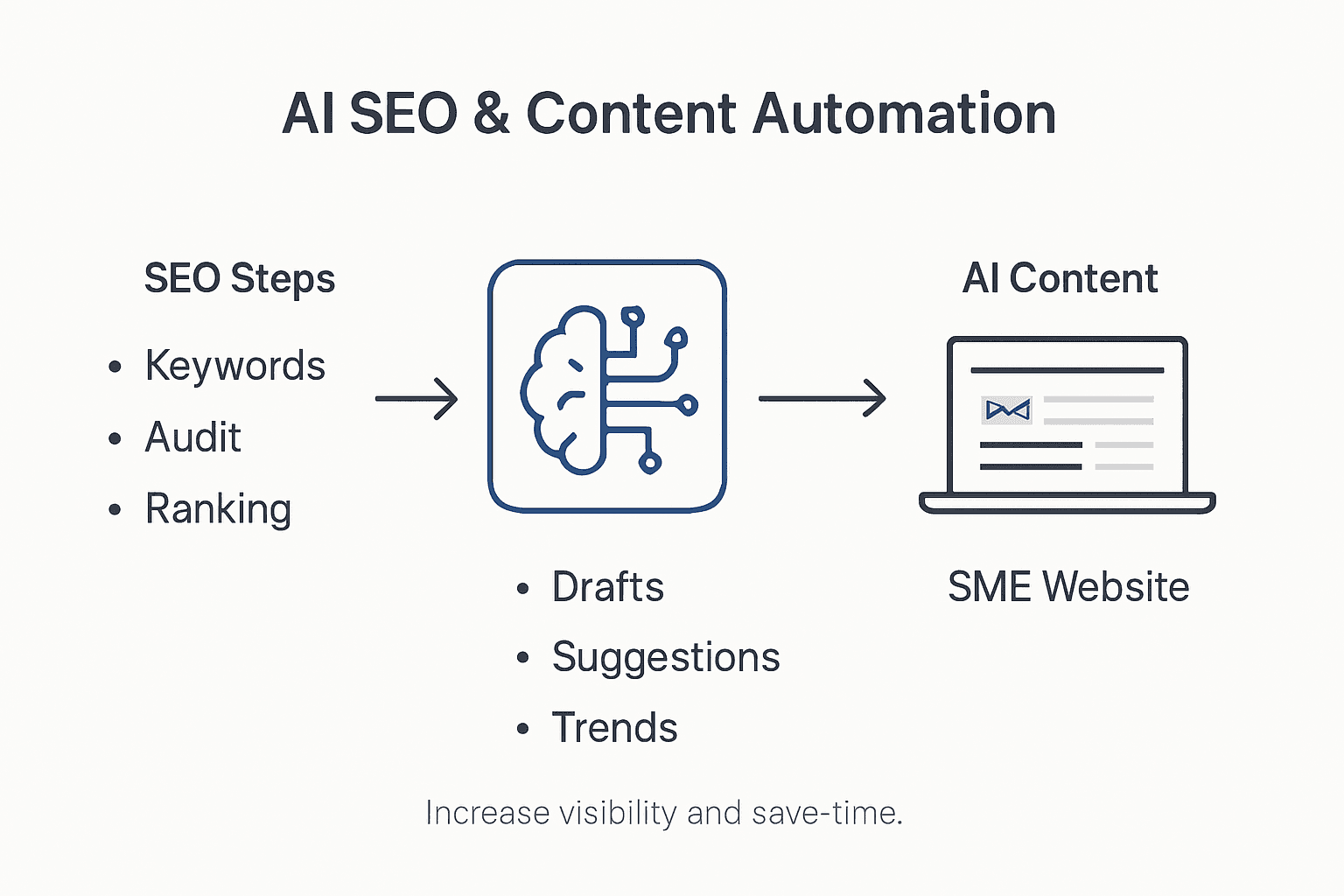
Automated Content Generation systems powered by machine learning can now analyse complex keyword strategies, produce contextually relevant articles, and optimise meta descriptions with remarkable precision. These intelligent platforms understand search engine algorithms, enabling them to create content that not only reads naturally but also meets technical SEO requirements. By tracking user engagement metrics, AI can dynamically adjust content strategies to improve overall search performance and website visibility.
The W3C report highlights critical considerations for responsible AI-powered content creation, emphasising the importance of maintaining content transparency and quality. Advanced AI tools can now generate sophisticated content that balances technical SEO requirements with genuine user value, ensuring that automated content remains authentic and engaging. These systems can analyse competitor content, identify content gaps, and produce targeted articles that improve a website’s search engine positioning.
Net Branding understands that AI is not about replacing human creativity but augmenting it. By leveraging these intelligent technologies, SMEs can develop more sophisticated content strategies that adapt quickly to changing search engine algorithms, reduce content production time, and maintain high-quality standards that drive organic traffic and improve overall digital marketing effectiveness.
Pro tip: Start by using AI content tools for initial drafts and keyword research, then refine the output with human expertise to maintain authenticity and brand voice.
Risks, Data Privacy and Legal Requirements
Artificial Intelligence introduces complex legal and ethical challenges for Small and Medium Enterprises (SMEs) navigating digital design and web development. Comprehensive global research highlights critical considerations surrounding AI’s privacy and regulatory landscape, emphasising the need for transparent, accountable AI implementation that protects user rights and maintains legal compliance.
Data Protection Frameworks demand rigorous scrutiny of AI technologies, particularly regarding user information collection, storage, and processing. These systems must adhere to stringent regulations like New Zealand’s Privacy Act, which requires explicit user consent, transparent data handling practices, and robust security measures. AI-powered websites must implement mechanisms that allow users to understand how their personal information is being collected, used, and potentially shared by intelligent design systems.
Ethical considerations in AI deployment extend beyond technical compliance, addressing potential algorithmic biases and discriminatory outcomes. SMEs must critically evaluate AI tools to ensure they do not perpetuate unfair practices or inadvertently create exclusionary digital experiences. This involves regular audits of AI systems, maintaining diverse training datasets, and implementing checks that prevent unintended discriminatory decisions.
Net Branding understands that responsible AI integration requires a proactive approach to managing potential risks. By establishing clear governance frameworks, conducting regular privacy impact assessments, and maintaining transparency with users, businesses can harness AI’s transformative potential while mitigating legal and ethical challenges. This balanced approach ensures that technological innovation does not compromise user trust or legal standards.
Pro tip: Develop a comprehensive AI ethics policy that outlines your approach to data protection, user consent, and algorithmic fairness before implementing any AI technologies.
Cost Savings and Common Mistakes to Avoid
Artificial Intelligence offers Small and Medium Enterprises (SMEs) significant opportunities for reducing web design and development costs, but requires strategic implementation to maximise financial benefits. Comprehensive design trend research highlights both the potential savings and potential pitfalls of AI integration, emphasising the importance of balanced technological adoption.
Cost Reduction Strategies in AI-driven web design can dramatically lower operational expenses. Automated design tools reduce human labour hours, streamline prototyping processes, and enable faster content generation. SMEs can potentially reduce design and development costs by up to 40% by leveraging intelligent technologies that automate repetitive tasks, generate initial design concepts, and provide sophisticated design recommendations without extensive manual intervention.
However, businesses must be acutely aware of common mistakes that can negate potential financial advantages. Overreliance on AI without human oversight can lead to generic, impersonalised design outcomes that fail to capture brand uniqueness. Critical errors include accepting AI-generated content without thorough review, neglecting to validate design recommendations, and assuming AI tools can completely replace human creativity and strategic thinking.
Net Branding recognises that successful AI integration requires a nuanced approach. By viewing AI as a collaborative tool rather than a complete replacement for human expertise, SMEs can achieve optimal results. This means using AI to augment designer capabilities, generate initial concepts, and handle routine tasks while maintaining human creativity, strategic oversight, and brand-specific insights.
The following table highlights cost savings strategies and mistakes to avoid with AI-powered web design:
| Strategy or Mistake | Business Outcome | Recommended Action |
|---|---|---|
| Automate repetitive tasks | Reduced labour costs | Use AI for basic design workflows |
| Neglect human review | Risk of generic designs | Always apply creative oversight |
| Overreliance on AI tools | Loss of brand uniqueness | Balance AI input with strategy |
| Use 70/30 AI/Human blend | Optimal creativity and efficiency | Refine AI output with expert touch |
Pro tip: Implement a 70/30 rule for AI integration where 70% of the work involves human refinement and strategic guidance, and 30% relies on automated AI tools.
Elevate Your SME Website with AI-Powered WordPress Solutions
Struggling to fully harness AI’s benefits for your SME’s web design and boost ROI? This article highlights key challenges like integrating AI-driven personalisation, optimising SEO with automated content, and avoiding common pitfalls that can dilute your brand identity. If you want to transform your website into a responsive, intelligent platform that engages visitors and drives conversions, the right digital partner is essential.
At ResponsiveWebsiteDesign, we specialise in custom WordPress development tailored to New Zealand SMEs keen to leverage AI-enhanced design and SEO strategies. From creating mobile responsive interfaces to delivering ongoing SEO archive support and sophisticated website redesigns found in our Website archive, our expert team ensures your site not only looks impressive but continuously adapts and performs at its best.
Take control of your digital growth by partnering with specialists who understand how to apply AI technologies thoughtfully and effectively. Dive into intelligent web design with us today at ResponsiveWebsiteDesign and start transforming your online presence. Contact our team now to begin elevating your SME website’s ROI with smart, SEO-optimised WordPress solutions.
Frequently Asked Questions
How does AI improve web design for SMEs?
AI enhances web design for SMEs by using machine learning to analyse user behaviour, generate design recommendations, and create adaptive interfaces. This leads to more personalised and engaging digital experiences that boost user interaction and conversions.
What types of AI tools can SMEs use for website creation?
SMEs can use various AI tools, including automated website builders (like Wix ADI), graphic design AI (such as Adobe Sensei), UX/UI design AI platforms (like Uizard), and content generation AI tools (like Jasper). These tools simplify web development and enhance the overall user experience.
How can AI-driven personalisation impact website engagement?
AI-driven personalisation improves website engagement by dynamically adjusting content, layout, and recommendations based on real-time user behaviour. This tailored approach ensures visitors receive the most relevant information, increasing their satisfaction and likelihood of conversion.
What are the potential cost savings from using AI in web design?
Utilising AI in web design can lead to significant cost savings, with estimates suggesting reductions of up to 40% in design and development costs. Automated tools help streamline workflows and decrease the time spent on repetitive tasks, allowing teams to focus on more strategic aspects of design.