
Over 80 percent of australian businesses consider a website essential for growth, but few truly understand what powers their digital presence. Web hosting acts as the invisible engine behind every online experience, making or breaking your business’s ability to reach customers around the world. Learn how the right web hosting choice impacts your website speed, security, and reliability, so you can avoid costly mistakes and stay ahead of the competition.
Table of Contents
- What Is Web Hosting And Why It Matters
- Frequently Asked Questions
- Types Of Web Hosting Solutions For Businesses
- Frequently Asked Questions
- Key Features That Influence Website Success
- Frequently Asked Questions
- Web Hosting Security And Data Protection Responsibilities
- Frequently Asked Questions
- Common Web Hosting Pitfalls And Cost Implications
- Frequently Asked Questions
Key Takeaways
| Point | Details |
|---|---|
| Importance of Web Hosting | Web hosting is essential for creating a viable online presence, ensuring that website files are stored and accessible globally. |
| Choosing the Right Provider | Businesses should select hosting providers based on security, uptime guarantees, and scalable infrastructure to meet growth needs. |
| Understanding Hosting Types | Different hosting options, such as Shared, VPS, and Cloud Hosting, cater to varying business requirements and budget constraints. |
| Security Responsibilities | Both businesses and hosting providers must work together to implement strong security measures and maintain the integrity of digital assets. |
What Is Web Hosting And Why It Matters
Web hosting serves as the critical digital foundation that enables businesses to establish a robust online presence. At its core, web hosting is a cloud service where all website files are securely stored and made accessible to internet users worldwide. Web hosting provides the essential infrastructure that transforms static website files into a dynamic, interactive online experience for potential customers.
Understanding web hosting involves recognising its fundamental role in digital connectivity. When a business creates a website, every image, video, text document, and interactive element requires digital storage space. Web hosting providers allocate server space where these digital assets are maintained, ensuring websites remain continuously accessible. Without web hosting, websites would simply exist as disconnected files on a computer, unable to communicate with global internet networks.
The impact of web hosting extends far beyond mere file storage. Professional web hosting influences critical website performance metrics such as loading speed, security, and reliability. Businesses depend on high-quality hosting to maintain seamless user experiences, prevent potential downtime, and protect sensitive digital assets. Net Branding recommends selecting hosting solutions that offer robust security protocols, consistent uptime guarantees, and scalable infrastructure to support growing business needs.

Pro Hosting Selection Tip: Research web hosting providers offering comprehensive packages with clear performance metrics, including guaranteed uptime percentages and responsive technical support tailored for New Zealand businesses.
Frequently Asked Questions
- What is the difference between web hosting and a domain name?
- A domain name is your website’s address, while web hosting is the service storing your website’s actual files.
- How much does web hosting cost in NZD?
- Hosting costs from NZD 15 per month for basic services, with enterprise solutions ranging from NZD 100 to NZD 500 monthly.
- Can I change web hosting providers?
- Yes, most hosting services offer migration assistance to help transfer your website files seamlessly between providers.
Types Of Web Hosting Solutions For Businesses
Businesses have several web hosting solutions to choose from, each designed to meet specific digital infrastructure needs. Web hosting services vary significantly in performance, security, and scalability, enabling organisations to select the most appropriate option for their unique operational requirements. Understanding these hosting types allows companies to make informed decisions that align with their technological capabilities and growth strategies.
The primary web hosting solutions include Shared Hosting, which represents the most economical option where multiple websites share a single server’s resources. Virtual Private Server (VPS) Hosting offers more dedicated resources and enhanced performance, providing a balanced approach for growing businesses seeking improved reliability. Dedicated Hosting provides an entire server exclusively for one organisation, delivering maximum control, security, and customisation potential. Cloud Hosting represents the most flexible solution, distributing website resources across multiple interconnected servers, ensuring high availability and seamless scalability.
Here is a comparison of key web hosting types to help guide your business decision:
| Hosting Type | Ideal For | Main Strength | Potential Limitation |
|---|---|---|---|
| Shared Hosting | Small businesses, startups | Low cost | Limited resources, slower speeds |
| VPS Hosting | Growing businesses | Dedicated resources | Higher cost than shared |
| Dedicated Hosting | Large, high-traffic websites | Maximum control | High ongoing expense |
| Cloud Hosting | Businesses needing flexibility | Scalability, uptime | Complex setup for novices |
Selecting the appropriate hosting solution requires careful consideration of several critical factors. Businesses must evaluate their anticipated website traffic, expected growth, security requirements, and budget constraints. Smaller enterprises might find shared hosting sufficient, while medium to large organisations often require more robust VPS or dedicated hosting options. Net Branding recommends conducting a comprehensive analysis of your specific digital infrastructure needs before committing to a particular hosting solution.
Pro Hosting Selection Tip: Conduct a thorough performance and resource audit of your current website to accurately determine the most suitable hosting solution that balances performance, security, and cost-effectiveness.
Frequently Asked Questions
- How do I know which hosting type is right for my business?
- Assess your website’s traffic, performance needs, budget, and anticipated growth to select the most appropriate hosting solution.
- What are typical hosting costs in NZD?
- Shared hosting starts from NZD 15 per month, VPS hosting ranges from NZD 50 to NZD 200, and dedicated hosting can cost from NZD 200 to NZD 500 monthly.
- Can I upgrade my hosting plan later?
- Most web hosting providers offer flexible upgrade paths, allowing businesses to scale their hosting resources as they grow.
Key Features That Influence Website Success
Website success hinges on multiple critical technical and performance features that collectively determine online effectiveness. Key features influencing website performance include scalable storage, compute capabilities, and robust security protocols, which ensure businesses maintain a competitive and reliable digital presence. Understanding these fundamental elements helps organisations strategically optimise their online infrastructure.
The most crucial features that directly impact website performance encompass Bandwidth Capacity, Server Reliability, Security Measures, and Technical Support. Bandwidth determines how quickly content loads and how many simultaneous visitors a website can accommodate. Server reliability ensures minimal downtime, preventing potential revenue loss and maintaining customer trust. Security measures protect sensitive business and customer data from potential cyber threats, while responsive technical support provides rapid resolution for any operational challenges that may emerge.
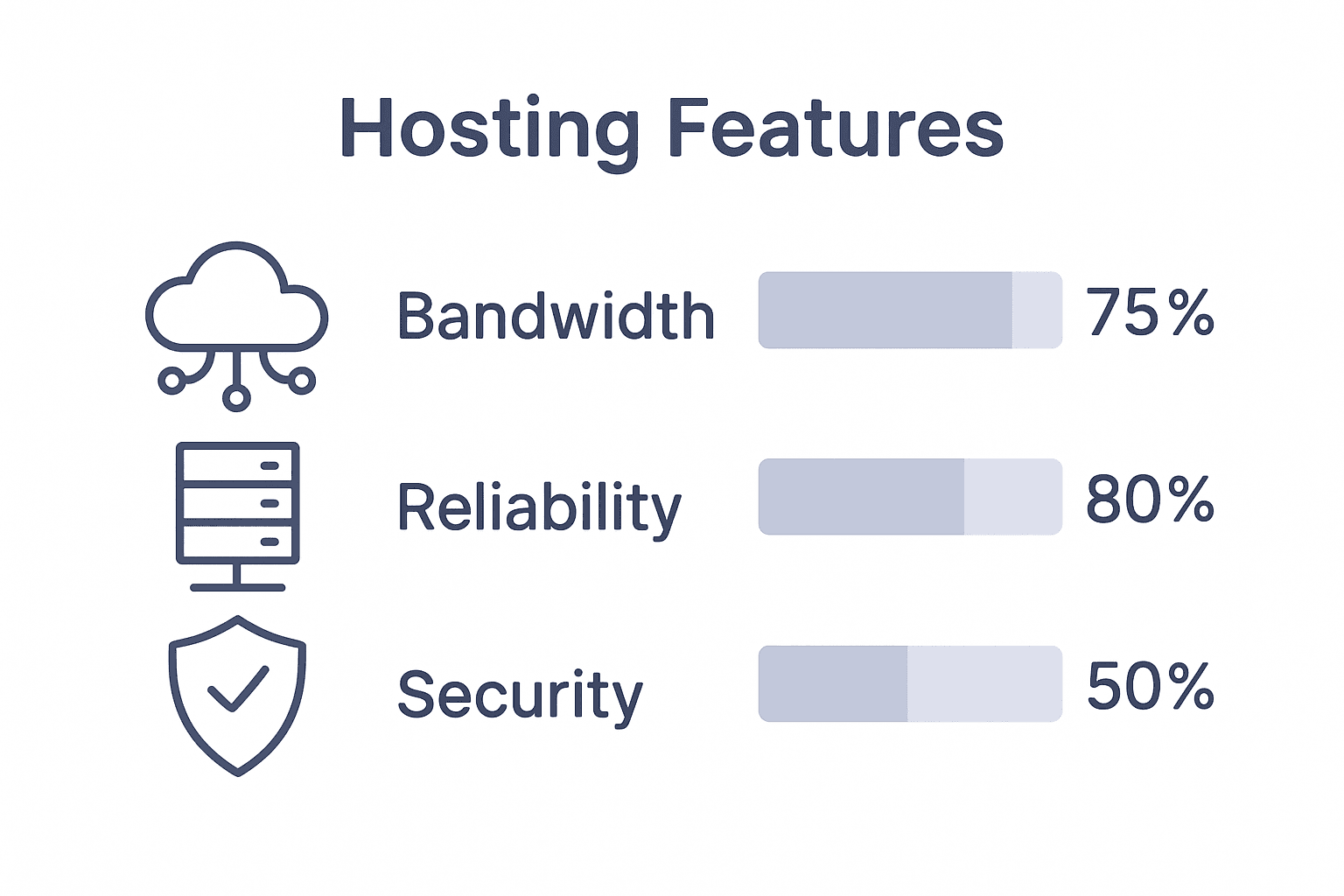
This summary table outlines how website hosting features impact business outcomes:
| Feature | Primary Role | Impact on Business Success |
|---|---|---|
| Bandwidth Capacity | Manages visitor traffic and speed | Fast loading, supports more users |
| Server Reliability | Ensures site uptime | Minimises downtime, maintains trust |
| Security Measures | Protects data and systems | Reduces risk of cyber incidents |
| Technical Support | Resolves technical issues quickly | Maintains smooth website operation |
Businesses must critically evaluate these features when selecting web hosting solutions. Net Branding recommends conducting a comprehensive assessment of your website’s specific requirements, considering factors such as expected traffic volume, data storage needs, and potential future growth. Advanced hosting solutions offer features like automatic backups, scalable resources, content delivery networks (CDNs), and advanced security protocols that can significantly enhance overall website performance and user experience.
Pro Performance Optimisation Tip: Conduct regular website performance audits, measuring loading speeds, uptime reliability, and user experience metrics to ensure your hosting solution continues to meet your evolving business needs.
Frequently Asked Questions
- How often should I review my website hosting features?
- Conduct a comprehensive review of your hosting features at least annually or whenever your business experiences significant growth or changes.
- What are the most critical website performance metrics?
- Key metrics include page load speed, uptime percentage, server response time, and user engagement rates.
- How do I measure my website’s performance?
- Utilise tools like Google Analytics, PageSpeed Insights, and uptime monitoring services to track your website’s performance comprehensively.
Web Hosting Security And Data Protection Responsibilities
Data security represents a critical responsibility for web hosting providers, requiring comprehensive strategies to protect businesses from evolving cyber threats. Web hosting services must implement robust security protocols that safeguard sensitive digital assets, ensuring organisations maintain their digital integrity and customer trust. These protective measures extend far beyond simple technical configurations.
The primary security responsibilities of web hosting providers encompass several critical domains. Firewall Protection creates the first line of defence against potential cyber intrusions, monitoring and blocking suspicious network traffic. Data Encryption ensures that sensitive information remains unreadable to unauthorized parties, protecting critical business and customer data. Regular Security Audits help identify potential vulnerabilities before they can be exploited, while Comprehensive Backup Systems guarantee business continuity in case of unexpected data loss or system compromise. Net Branding emphasises the importance of selecting hosting providers who demonstrate a proactive approach to these essential security measures.
Business owners must actively engage with their web hosting provider’s security framework, understanding the specific protections in place and their own responsibilities. This collaborative approach involves implementing strong password policies, limiting administrative access, maintaining updated software, and conducting regular internal security assessments. Advanced hosting solutions now offer multi-layered security approaches, including intrusion detection systems, distributed denial of service (DDoS) protection, and real-time threat monitoring that provides comprehensive digital asset protection.
Pro Security Management Tip: Develop a comprehensive incident response plan that outlines clear protocols for addressing potential security breaches, ensuring your business can react swiftly and effectively to any unexpected cybersecurity challenges.
Frequently Asked Questions
- How often should security protocols be updated?
- Conduct security protocol reviews quarterly and implement updates immediately when new vulnerabilities are discovered.
- What are the most critical security measures?
- Key measures include robust firewalls, data encryption, regular security audits, and comprehensive backup systems.
- Who is responsible for website security?
- Both the web hosting provider and the business share responsibility, with each having specific roles in maintaining comprehensive digital protection.
Common Web Hosting Pitfalls And Cost Implications
Selecting an inappropriate web hosting solution can create significant challenges for businesses, potentially leading to unexpected financial burdens and operational disruptions. Understanding the most common web hosting pitfalls helps organisations make more informed decisions that protect their digital infrastructure and budget. These potential issues can transform what initially seems like a cost-effective solution into a complex and expensive problem.
The most prevalent web hosting pitfalls include Insufficient Bandwidth, Limited Storage Capacity, Inadequate Security Measures, and Poor Technical Support. Businesses frequently underestimate their digital resource requirements, selecting hosting packages that cannot accommodate their growth trajectory. Bandwidth constraints can result in slow website performance, leading to customer frustration and potential revenue loss. Storage limitations restrict a company’s ability to expand digital content, while weak security protocols expose organisations to significant cybersecurity risks. Net Branding emphasises the critical importance of selecting hosting solutions that provide scalable, comprehensive infrastructure.
Cost implications extend beyond the monthly hosting fee, encompassing potential expenses related to unexpected migrations, security breaches, and performance upgrades. Organisations must conduct thorough cost benefit analyses, considering not just the immediate pricing but the long-term financial impact of their hosting choices. Advanced hosting solutions might appear more expensive initially but can provide substantial savings by preventing downtime, reducing security risks, and offering more flexible scalability. Businesses should evaluate hosting providers based on their ability to support growth, maintain performance, and provide robust technical support.
Pro Cost Management Tip: Develop a comprehensive hosting budget that accounts for potential scalability needs, including migration costs, potential security investments, and performance enhancement expenses.
Frequently Asked Questions
- How can I avoid unexpected hosting costs?
- Conduct detailed research, request transparent pricing structures, and choose providers offering clear upgrade pathways.
- What hosting expenses should I anticipate?
- Budget for monthly hosting fees, potential migration costs, security upgrades, and additional resource requirements.
- How often should I review my hosting solution?
- Conduct a comprehensive hosting review annually or whenever your business experiences significant digital infrastructure changes.
Strengthen Your Business Website with Expert Web Hosting and WordPress Solutions
Choosing the right web hosting solution is essential to avoid pitfalls such as slow loading speeds, downtime, and security risks mentioned in the article. If you are a New Zealand business owner seeking a responsive, secure, and optimised online presence, your next step is integrating professional web design with reliable hosting. At ResponsiveWebsiteDesign, we specialise in WordPress website design and maintenance tailored to support your hosting needs and enhance your site’s performance.
Discover how our custom WordPress development and ongoing management services can perfectly complement your hosting infrastructure. From seamless WooCommerce ecommerce solutions to proactive security and performance optimisation, we provide a complete package designed to help your business grow without digital disruption. Explore our insights and service details on the Uncategorized Archives and start building a website that truly works for you.
Visit ResponsiveWebsiteDesign now and partner with experts who understand how web hosting impacts your website’s success. Take control of your digital future today.
Frequently Asked Questions
What is web hosting and how does it impact my business website?
Web hosting is a cloud service that stores your website files, making them accessible to users online. It influences your website’s performance, loading speed, security, and reliability, all of which are critical for ensuring a seamless user experience.
How do I choose the right type of web hosting for my business?
Evaluate your website’s traffic, performance needs, budget, and anticipated growth. Shared hosting is suitable for small businesses, while VPS or dedicated hosting options are better for medium to large organisations needing more resources and control.
What key features should I consider when selecting a web hosting provider?
Look for features such as bandwidth capacity, server reliability, security measures, and technical support. These factors significantly impact your website’s loading speed, uptime, data protection, and overall user experience.
How can inadequate web hosting affect my business?
Insufficient web hosting can lead to slow website performance, downtime, security vulnerabilities, and ultimately loss of customer trust and revenue. Choosing the right solution is essential to avoid these pitfalls.
Recommended
- Top Web Hosting Services for Companies – Expert Comparison 2025 – ResponsiveWebsiteDesign
- Website Maintenance – Why Reliability Matters for Business – ResponsiveWebsiteDesign
- Role of Web Development in Business: Complete Guide – ResponsiveWebsiteDesign
- Role of Web Development in Business: Complete Guide – ResponsiveWebsiteDesign